Amir Mahmud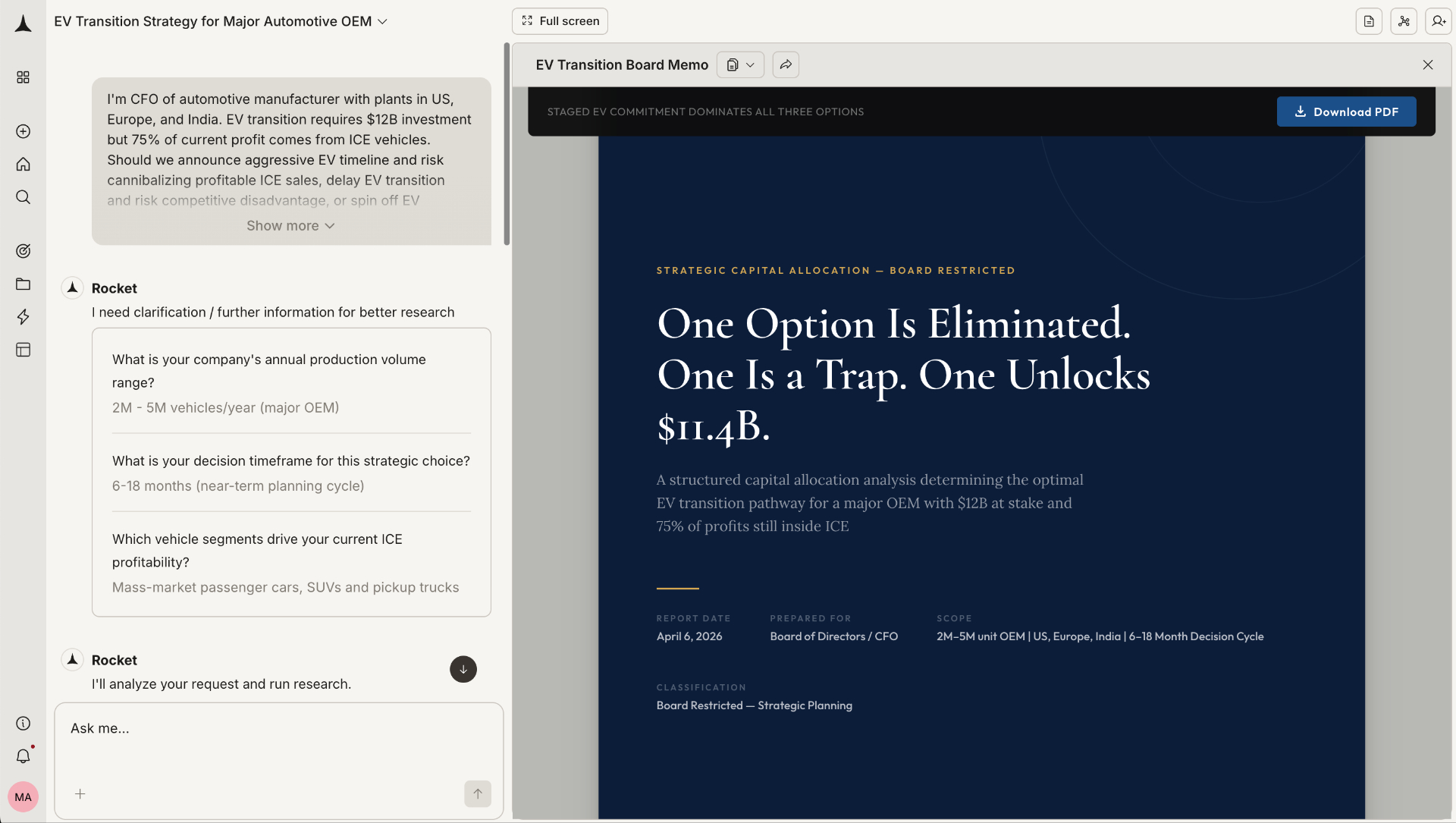
A burgeoning Indian startup, Rocket, is poised to reshape the landscape of product development by introducing an artificial intelligence-driven platform designed to generate sophisticated, consulting-grade product strategies at a fraction of the traditional cost. Launched recently, Rocket 1.0 aims to address a critical void in the rapidly evolving tech ecosystem: determining what to build in an era where the how of coding has become increasingly commoditized by AI tools.
Addressing the Strategic Gap in AI Development
The past decade has witnessed a profound transformation in software development, largely driven by advancements in artificial intelligence. From early code completion tools, AI has evolved to power sophisticated "agentic coding" platforms such as Cursor, Replit, and Lovable, alongside integrated features like Claude Code and OpenAI’s Codex. These innovations have dramatically accelerated the pace of software creation, making code generation faster and more accessible. This proliferation has effectively transformed the technical execution of coding into a more efficient, almost commoditized process for many standard applications.
However, a fundamental challenge has persisted at the upstream of product development: strategic decision-making. Businesses, from nascent startups to established enterprises, still grapple with complex questions of market viability, user needs, competitive positioning, and sustainable business models. Traditionally, answering these questions involves extensive market research, competitor analysis, financial modeling, and strategic planning, often facilitated by high-end management consulting firms. These firms, exemplified by industry giants like McKinsey & Company, command substantial fees—often running into hundreds of thousands or even millions of dollars—making them largely inaccessible to small and medium-sized enterprises (SMBs) and bootstrapped startups. Vishal Virani, co-founder and CEO of Rocket, articulates this dichotomy: "Everyone can generate the code now… it has become a commodity. But what to build is something which everyone is missing." He emphasizes that "running a business and just building a codebase are two different things," highlighting the chasm between technical execution and strategic foresight.
The Genesis and Vision of Rocket
Rocket’s emergence from Surat, India, a city gaining recognition for its tech innovation, underscores India’s growing prominence as a hub for global solutions. The startup’s premise is rooted in leveraging AI to democratize access to sophisticated product strategy, empowering a broader spectrum of entrepreneurs and businesses. Rocket’s journey gained significant traction with a successful $15 million seed round in September, backed by prominent investors including Accel, Salesforce Ventures, and Together Fund. This investment signaled strong confidence in Rocket’s unique value proposition and its potential to disrupt established market dynamics. Since its funding, Rocket has reported remarkable user growth, expanding from 400,000 to over 1.5 million users across 180 countries, indicating widespread global demand. The company operates with a lean team of 57 employees, headquartered in Surat, India, with additional operations in Palo Alto, California, strategically positioning it within both an emerging tech ecosystem and a global innovation epicenter.
A Deep Dive into Rocket 1.0’s Capabilities
Rocket 1.0, the platform at the heart of this innovation, seamlessly integrates research, product building, and competitive intelligence into a singular, streamlined workflow. Users interact with the platform through simple prompts, from which it generates comprehensive product strategy documents in PDF format. These outputs are structured to resemble the detailed, analytical reports characteristic of top-tier consulting firms. Each report encompasses crucial strategic components such as precise pricing models, robust unit economics analysis, and actionable go-to-market recommendations.
Beyond internal strategy formulation, Rocket 1.0 offers sophisticated competitive intelligence. The platform continuously monitors competitor activities, tracking website changes, analyzing traffic trends, and identifying shifts in product offerings or marketing strategies. This robust analytical framework draws from over 1,000 distinct data sources, including publicly available datasets, APIs from industry leaders like Similarweb for web analytics, Meta’s extensive advertising libraries for market insights, and Rocket’s proprietary web crawlers. This multi-faceted data ingestion allows the platform to synthesize a holistic view of market dynamics and competitive landscapes, providing users with a comprehensive foundation for strategic decisions.
Navigating the Nuances: AI’s Strengths and Limitations
While Rocket 1.0 represents a significant leap in AI-driven strategy, it also necessitates considerations regarding the nature of AI-generated insights. Early tests, including those by TechCrunch, confirmed that the generated product requirement documents mirrored the format and depth of consulting-style reports. However, some analysis appeared to be a sophisticated synthesis of existing data—combining established pricing models, observed user behavior patterns, and publicly available competitive insights—rather than generating entirely novel or independently verifiable primary research. This characteristic suggests that while the platform excels at structuring and presenting information, it primarily operates by drawing connections and extrapolating from its vast dataset.
This distinction is critical for users. While the reports provide a strong foundation, the necessity for human validation remains paramount. Businesses utilizing Rocket’s platform are advised to treat its outputs as highly informed recommendations and starting points for further investigation and critical assessment, rather than infallible decrees. Vishal Virani acknowledges this, noting Rocket can offer human support when users encounter issues, underscoring a hybrid approach blending AI efficiency with human oversight. This analytical perspective highlights a broader debate: AI’s unparalleled speed in processing data versus human capacity for intuitive judgment, creative problem-solving, and discerning truly novel insights that transcend existing patterns. AI’s current strength lies in identifying trends and optimizing within defined parameters, but truly disruptive strategic thinking often still requires human ingenuity.
Market Disruption and Economic Accessibility
Rocket’s business model is explicitly designed to democratize access to high-quality strategic insights, directly challenging the often-prohibitive cost structures of traditional management consulting. The platform offers a tiered subscription model, making its capabilities accessible to a wide range of users. Plans begin at $25 per month for basic application building features, extending to $250 per month for comprehensive strategy and research functionalities, and up to $350 per month for the full platform, including advanced competitive intelligence.
The $250 plan, in particular, is highlighted for its ability to generate "two to three ‘McKinsey-grade’ research reports alongside product builds," as stated by Virani. This direct comparison to an industry benchmark, whose services can cost thousands of dollars per day or millions for a full project, underscores Rocket’