Amir Mahmud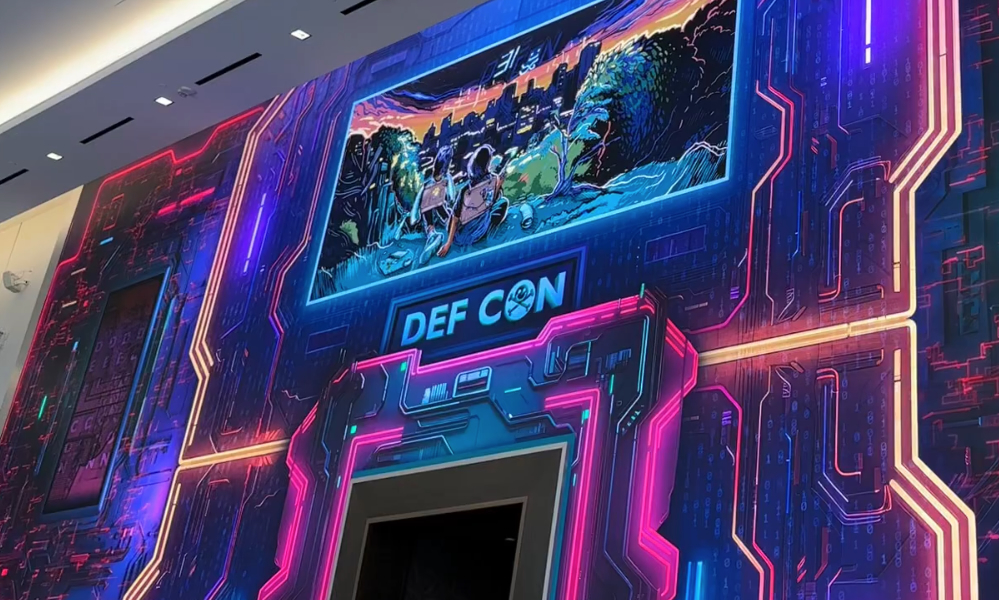
The venerable Def Con, one of the world’s most significant and enduring annual gatherings for hackers and cybersecurity professionals, recently announced its decision to bar three prominent individuals from attending its future events. This decisive action, unveiled on Wednesday, targets Pablos Holman, Vincenzo Iozzo, and Joichi Ito, citing their documented connections to the late convicted sex offender, Jeffrey Epstein. The move by Def Con, a conference renowned for its blend of technical prowess and often anti-establishment ethos, underscores a broader ethical reckoning permeating the tech and academic spheres in the wake of ongoing revelations surrounding Epstein’s vast network.
Def Con’s Stance and the Weight of Exclusion
Def Con justified its inclusion of Holman, Iozzo, and Ito on its public list of banned individuals by pointing to their appearance in recently unsealed Department of Justice files pertaining to its investigation into Epstein. Further substantiating its decision, the conference also referenced a detailed article published by Politico, which delved into email exchanges between the three individuals and Epstein. For a conference that prides itself on community and a certain degree of open access for those within the cybersecurity world, a public ban from Def Con carries substantial weight, signaling a clear repudiation of any association with the scandal.
Def Con, often colloquially known as "hacker summer camp," has been a pivotal event in the cybersecurity calendar since its inception in 1993. Founded by Jeff Moss (also known as Dark Tangent), it brings together researchers, government officials, corporate security experts, and ethical hackers to share knowledge, demonstrate vulnerabilities, and discuss the future of digital security. Its reputation as a bastion of free information exchange and a platform for pushing the boundaries of technology makes its ethical pronouncements particularly impactful. The "transparency list" of banned individuals, while not new, is a testament to the conference’s commitment to maintaining a certain standard of conduct within its community, even if that standard evolves with public sentiment and new information.
The Broader Context of the Epstein Scandal
Jeffrey Epstein’s story is a chilling narrative of power, abuse, and the complicity of elite circles. A financier with opaque origins, Epstein cultivated an image of intellectual curiosity and philanthropic interest, using his wealth to gain access to, and influence over, a wide array of prominent figures in politics, science, business, and entertainment. His criminal activities, involving the sexual abuse and trafficking of underage girls, first came to light definitively with a 2008 conviction in Florida, where he pleaded guilty to soliciting prostitution from a minor and registered as a sex offender. However, the extent of his network and the allegations against him continued to unfold, culminating in a 2019 federal indictment in New York for sex trafficking minors. Epstein died by suicide in a federal jail cell later that year, but his death did not close the chapter on his crimes or his associates.
The subsequent legal proceedings and the gradual unsealing of court documents have cast a long shadow, revealing the names of individuals who interacted with Epstein, some with varying degrees of knowledge about his activities. This ongoing process has fueled public demand for accountability and scrutiny, leading institutions and organizations across various sectors to re-evaluate their past associations and take action against those found to have links to Epstein. The cybersecurity industry, despite its focus on digital integrity and security, is not immune to these broader societal pressures.
Profiles of the Banned Individuals
Vincenzo Iozzo: A veteran of the cybersecurity industry, Iozzo’s professional trajectory is marked by significant achievements. He is currently the founder and chief executive of identity startup SlashID. Before this, he served as a director at CrowdStrike, a prominent cybersecurity firm, following its acquisition of his own cybersecurity startup, IperLane, in 2017. Iozzo’s interactions with Epstein reportedly spanned from 2014 to 2018, a period that notably includes time after the Miami Herald first published new allegations in 2018 detailing Epstein’s alleged abuse of dozens of women and children.
In response to Def Con’s decision, Joan Vollero, a spokesperson for Iozzo, issued a statement to TechCrunch, characterizing the ban as "entirely performative." The spokesperson argued that Iozzo had "barely attended the conference in the past twenty years," suggesting the action was a "rush to judgment not based on any investigation or wrongdoing by Mr. Iozzo." Iozzo previously stated that his interactions with Epstein were "limited to business opportunities that never materialized, as well as discussion of the markets and emerging technologies," and that he "never observed nor participated in any illegal activity or behavior."
Joichi Ito: Ito’s fall from grace in 2019 was one of the earliest and most high-profile instances of an Epstein association impacting a prominent figure in the tech and academic worlds. He served as the director of the prestigious MIT Media Lab until his resignation amid reports that he was not only aware of Epstein’s status as a convicted sex offender but also facilitated extensive personal and financial relationships between Epstein and the university. The scandal at MIT Media Lab revealed a pattern of accepting donations from Epstein despite his known history, and Ito’s personal involvement in these dealings, including accepting personal funds from Epstein, ultimately led to his departure. Iozzo, prior to his startup ventures, was a research affiliate at MIT Media Lab during Ito’s directorship, and the two appear together in several Epstein-related emails, suggesting a nexus of connections within that institution.
Pablos Holman: Describing himself on his website as "a hacker, inventor & technology futurist," Holman is currently a general partner at venture capital firm Deep Future. His profile in the tech world has been built on a reputation for innovation and forward-thinking ideas. Documents indicate Holman’s contact with Epstein began as early as 2010. More disturbingly, records suggest he planned to stay at one of Epstein’s New York City apartments in 2013 and allegedly attempted to assist Epstein in suppressing negative online news stories about himself. While an email suggested Epstein had plans to attend Def Con with Holman in 2013, Def Con founder Jeff Moss has stated that, to his knowledge, Epstein never actually attended the conference.
The Ripple Effect Across the Cybersecurity Landscape
Def Con’s decision is not an isolated incident but rather part of a broader trend within the cybersecurity and tech communities to distance themselves from individuals linked to Epstein. Days before Def Con’s announcement, other major cybersecurity conferences, Black Hat and Code Blue, had already removed Iozzo from their official review board pages. These actions collectively signal a growing intolerance for associations with such a morally reprehensible figure, particularly as more detailed information continues to surface.
The cybersecurity industry, which often grapples with issues of trust, ethics, and the responsible use of powerful technologies, finds itself at a critical juncture. The revelations surrounding Epstein’s connections highlight the uncomfortable truth that even sectors focused on protecting digital infrastructure can have their own vulnerabilities to moral compromise and complicity.
Ethical Scrutiny and Reputational Risk
The ongoing unraveling of Epstein’s network has brought unprecedented ethical scrutiny to various professional communities. For the tech industry, often characterized by its rapid innovation and disruptive spirit, this moment forces a pause for reflection. The allure of powerful connections, potential funding, or access to influential circles, which Epstein masterfully leveraged, appears to have ensnared individuals across multiple domains, including technology. The question for many institutions now is not just about direct wrongdoing, but about the implications of association and the moral compass guiding their leaders and members.
From a social and cultural impact perspective, these bans contribute to a larger public discourse about accountability in an era where past actions and associations are increasingly difficult to conceal. While some might frame such actions as "cancel culture," many argue they represent a necessary shift towards holding powerful individuals accountable for their choices, even if those choices involve mere proximity to egregious criminality. The reputational damage for individuals and organizations associated with Epstein is profound and often irreversible. For conferences like Def Con, maintaining the trust and ethical integrity of its community is paramount, especially when sensitive topics like privacy, surveillance, and security are at the core of its mission.
The analytical commentary surrounding these events often centers on the varying degrees of alleged involvement. While some individuals might have had purely professional or superficial interactions, others, like those facing bans, appear to have had deeper, more personal, or even facilitative relationships. Distinguishing between these levels of engagement is crucial for a nuanced understanding, yet the sheer gravity of Epstein’s crimes means that even perceived proximity can trigger significant repercussions. The cybersecurity community, by taking these steps, is effectively drawing a line, asserting that certain associations are incompatible with its values and the safe environment it aims to foster for its members.
A Continuing Reckoning
The saga of Jeffrey Epstein and his extensive network continues to unfold, revealing layer after layer of uncomfortable truths about power, influence, and moral responsibility. Def Con’s decision to ban these three individuals is a clear indicator that the ethical fallout from the Epstein scandal is far from over. It serves as a stark reminder that no industry, no matter how forward-looking or technically advanced, is immune to the demand for ethical conduct and accountability. As more information emerges from the ongoing investigations and document releases, it is highly probable that other institutions and individuals will face similar reckonings, challenging them to confront their past associations and reaffirm their commitment to ethical principles in a world increasingly unwilling to overlook moral compromise.









 Azin Asro