Amir Mahmud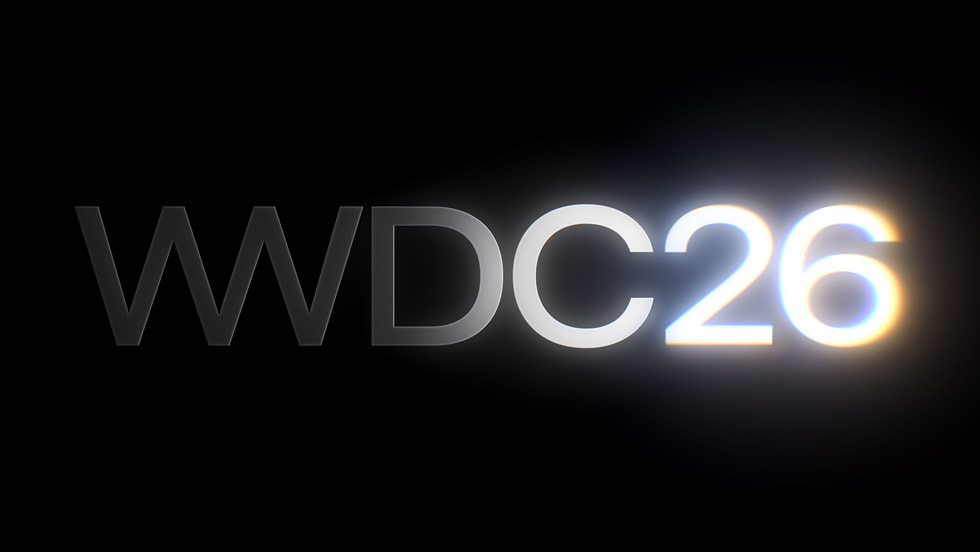
Apple Inc. has officially announced that its annual Worldwide Developers Conference (WWDC) will commence on June 8 and extend through June 12, 2026. The highly anticipated event, a cornerstone for the global developer community, will adopt a hybrid format, blending online presentations with select in-person experiences at Apple Park in Cupertino, California. This year’s iteration carries a distinct emphasis, with the technology giant explicitly signaling a profound focus on "AI advancements," alongside the customary unveilings of new software and features for its expansive ecosystem of devices.
The AI Transformation: A Strategic Shift for Apple
For years, Apple’s approach to artificial intelligence has been characterized by a blend of cautious integration and a strong commitment to user privacy, often contrasting with the more aggressive, data-hungry strategies of its competitors. While AI has subtly powered various features across iOS, macOS, and other platforms, this explicit declaration marks a significant strategic pivot. In the previous year, WWDC 2025 primarily showcased the "Liquid Glass" interface design, with artificial intelligence remaining largely in the background. The shift for WWDC 2026 indicates a recognition of the burgeoning mainstream importance of AI and the imperative for Apple to assert its vision in a rapidly evolving technological landscape.
The tech industry has witnessed an unprecedented acceleration in AI development, with companies like Google, Microsoft, OpenAI, and Meta investing heavily in large language models (LLMs), generative AI, and advanced intelligent agents. This competitive environment has placed immense pressure on Apple, a company often lauded for its integrated hardware and software experiences, to demonstrate its prowess and innovation in this critical domain. Analysts suggest that a robust AI strategy is no longer a luxury but a necessity for maintaining market leadership and user loyalty. Apple’s unique challenge lies in delivering powerful AI capabilities while upholding its long-standing principles of user privacy and on-device processing, which differentiates its approach from cloud-centric solutions favored by others.
Historical Context of WWDC
The Worldwide Developers Conference has been a pivotal annual event for Apple since its inception. Originally known as the Apple Worldwide Developers Conference, it dates back to the early days of NeXTSTEP, a key predecessor to macOS. Over the decades, WWDC has evolved from a relatively niche gathering for software engineers into a global spectacle, attracting millions of virtual viewers and thousands of in-person attendees. Its primary purpose has always been to provide developers with early access to upcoming software, new APIs (Application Programming Interfaces), and advanced tools, enabling them to build the next generation of applications for Apple’s platforms.
Historically, WWDC has been the launchpad for groundbreaking innovations that have shaped the modern computing landscape. Iconic announcements include the introduction of the iPhone SDK and the App Store in 2008, which revolutionized mobile software distribution and created an entirely new economy. Subsequent conferences saw the debut of Swift, Apple’s powerful and intuitive programming language, the Metal graphics API, and frameworks like ARKit, which brought augmented reality to mainstream devices. More recently, WWDC introduced watchOS, tvOS, and visionOS, expanding Apple’s ecosystem into wearables, home entertainment, and spatial computing. Each year, the keynote address, typically delivered by CEO Tim Cook and other senior executives, sets the tone for the company’s strategic direction and offers a glimpse into its product roadmap.
Apple’s Evolving AI Journey: A Timeline
While the overt emphasis on "AI advancements" for WWDC 2026 is novel, Apple’s engagement with artificial intelligence is not. Its journey can be traced through several key milestones:
- 2011: Introduction of Siri. Apple acquired Siri Inc. in 2010 and integrated its voice assistant into the iPhone 4S. While groundbreaking at the time, Siri’s capabilities were initially limited, primarily serving as a reactive command-and-control interface. Its early performance often drew criticism for its lack of contextual understanding and conversational fluency.
- 2017: Core ML Framework. Apple introduced Core ML, a framework that allowed developers to integrate machine learning models directly into their apps, leveraging the on-device processing power of Apple’s silicon. This marked a significant step towards empowering developers with AI tools while maintaining user privacy by keeping data local.
- Subsequent Years: Incremental AI Integration. Apple continued to infuse AI into various aspects of its operating systems, from intelligent photo sorting and facial recognition to predictive text and battery optimization. These advancements were often presented as "smart features" rather than explicit AI.
- WWDC 2025: Foundation Model Framework. At last year’s conference, Apple unveiled its "Foundation Model framework," designed to enable AI models to operate efficiently offline. This initiative underscored Apple’s commitment to on-device AI, prioritizing privacy and reducing reliance on cloud infrastructure. The company also announced the integration of third-party AI models like ChatGPT for coding assistance within Xcode, its integrated development environment.
- Early 2026: Agentic Coding Tools. Building on previous integrations, Apple further expanded Xcode’s capabilities by introducing agentic coding tools, including Anthropic’s Claude Agent and OpenAI’s Codex. These tools represent a significant leap in leveraging generative AI to assist developers with code generation, debugging, and project management.
- Recent Developments: Siri Revamp and Google Gemini Deal. Rumors of a long-overdue revamp of Siri, promising enhanced personal context and on-screen awareness, have circulated for some time, with reports suggesting previous delays. Furthermore, earlier this year, Apple reportedly finalized a significant agreement with Google to utilize Gemini, Google’s advanced large language model, to power certain AI features on its platform. This partnership suggests a pragmatic approach from Apple, leveraging external expertise to accelerate its AI ambitions while likely retaining control over critical user experiences and privacy protocols.
The Competitive Landscape and Market Implications
Apple’s explicit AI focus at WWDC 2026 positions it squarely in the global AI race, a high-stakes competition among tech giants to dominate the next era of computing. Competitors like Google, with its powerful Gemini models, and Microsoft, through its extensive partnership with OpenAI and integration of Copilot across its product suite, have already made substantial inroads into generative AI. Apple’s historical inclination towards a more deliberate, polished release schedule means it often enters new technology frontiers after others, but typically with a highly integrated and user-friendly experience.
The market implications of Apple’s AI strategy are profound. Investors and consumers alike will be scrutinizing the announcements for evidence of truly innovative and differentiated AI capabilities that can justify Apple’s premium positioning. A successful AI rollout could stimulate a new upgrade cycle for hardware, as advanced AI features often demand more powerful neural engines and processing capabilities. Conversely, a perceived lack of innovation could lead to concerns about Apple’s competitive standing in the long term. Analysts anticipate that Apple’s unique selling proposition in AI will likely center on seamless integration across its ecosystem, unparalleled privacy protections, and a focus on practical, everyday utility rather than abstract, cutting-edge experiments.
Developer Ecosystem and Future Opportunities
The developer community is the lifeblood of Apple’s ecosystem, and WWDC is their annual touchstone. The focus on AI advancements promises a wealth of new tools and APIs that could unlock unprecedented opportunities for app development. By providing robust frameworks for on-device AI, Apple empowers developers to create intelligent applications that are faster, more private, and more responsive. The expansion of agentic coding tools within Xcode suggests a future where AI assists developers not just in writing code, but also in conceptualizing, testing, and deploying complex software.
This evolution could lead to a new wave of highly personalized and adaptive applications. Imagine apps that understand user intent with greater accuracy, automate multi-step tasks across different services, or offer real-time, context-aware assistance. The potential for innovation in areas like health and wellness, creative arts, productivity, and accessibility is immense. Furthermore, the integration of third-party LLMs and the promise of a revamped Siri could enable developers to build more sophisticated conversational interfaces and intelligent agents directly into their applications, fostering a richer, more intuitive user experience.
Social and Cultural Resonance of AI
The proliferation of advanced artificial intelligence carries significant social and cultural implications. As AI becomes more deeply embedded in our daily lives, questions around ethics, privacy, bias, and the future of work become increasingly pertinent. Apple’s long-standing stance on privacy and data security positions it uniquely to address some of these concerns. By emphasizing on-device AI, the company can mitigate anxieties about personal data being constantly uploaded to and processed by remote servers.
The potential for a truly intelligent, context-aware Siri could redefine human-computer interaction, shifting from simple commands to more natural, intuitive dialogues. Such a transformation could have a profound impact on how individuals interact with their devices, access information, and manage their digital lives. However, it also raises questions about autonomy, dependency on AI, and the potential for "black box" algorithms influencing decisions. Apple’s challenge will be to balance innovation with responsibility, ensuring that its AI advancements serve to augment human capabilities rather than diminish them, and that users retain ultimate control over their data and experiences.
What to Expect from WWDC 2026
While Apple maintains a high degree of secrecy leading up to WWDC, the explicit "AI advancements" tease, combined with recent reports and historical trends, allows for several educated predictions:
- Siri’s Grand Reintroduction: A comprehensively revamped Siri is highly anticipated. This could include significantly improved natural language understanding, enhanced contextual awareness across apps and user activities, multi-modal input (voice, text, vision), and potentially a more proactive, agent-like capability to assist users.
- System-Wide AI Features: Expect AI to be deeply integrated across all major operating systems. This might include AI-powered summarization tools in Safari and Mail, generative text and image capabilities in Pages and Keynote, advanced photo and video editing features, and more intelligent automation options in Shortcuts.
- New AI Frameworks and Developer Tools: Apple will likely introduce new or significantly updated AI frameworks, building on Core ML and the Foundation Model framework. These could offer developers greater flexibility and power to incorporate advanced AI into their applications, potentially with new APIs for accessing system-level AI capabilities.
- Hardware-Software Synergy: While WWDC is primarily software-focused, the demands of advanced AI often necessitate powerful underlying hardware. Expect discussions on how Apple’s custom silicon (A-series for iPhone/iPad, M-series for Mac) provides the optimal platform for running complex AI models efficiently and privately on-device.
- Privacy-Centric AI Differentiators: Apple will undoubtedly highlight how its AI approach prioritizes user privacy, contrasting it with competitors. This could involve specific features that keep personal data on-device, transparent controls for AI usage, and robust security measures.
- Enhanced Xcode with Generative AI: Further integrations of generative AI tools within Xcode are expected, making the development process more efficient and accessible for a wider range of developers.
Conclusion: A Pivotal Moment for Apple
WWDC 2026 is poised to be a watershed moment for Apple, signaling its definitive entry into the mainstream AI era. After years of incremental improvements and a more understated approach, the company is now explicitly laying its cards on the table, promising "AI advancements" that could redefine user interaction and developer capabilities across its vast ecosystem. The stakes are exceptionally high, as Apple seeks to differentiate its AI strategy in a crowded and competitive market, balancing innovation with its core values of privacy and user experience. The global tech community will be watching intently to see how Apple articulates its vision for an intelligent future and what groundbreaking technologies will emerge from Cupertino in June.