Amir Mahmud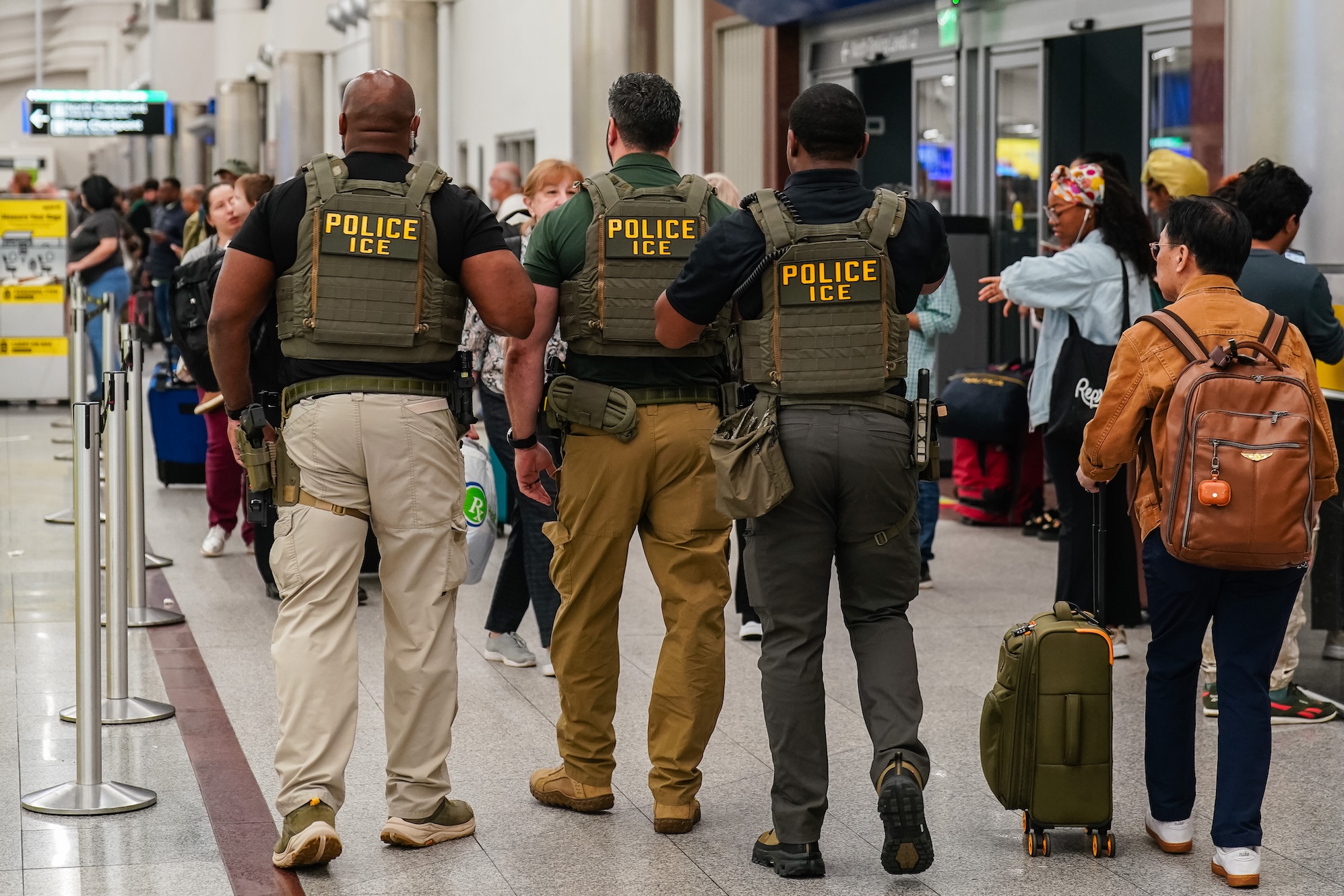
Federal immigration officers from U.S. Immigration and Customs Enforcement (ICE) were visibly deployed at numerous American airports, a move initiated by the Trump administration to reportedly alleviate mounting security line delays exacerbated by a protracted partial government shutdown. This controversial deployment, first reported on Monday, thrust the agency into an unfamiliar public-facing role at transportation hubs, immediately sparking widespread debate over federal authority, civil liberties, and the intersection of immigration enforcement with domestic security logistics.
The Catalyst: A Government Standoff Paralyses Services
The backdrop to this unusual federal action was a partial government shutdown, which commenced on February 14th of that year. This fiscal impasse arose from a bitter dispute between the White House and congressional Democrats over funding for a proposed wall along the U.S.-Mexico border. As a result of the failure to pass new appropriations bills, hundreds of thousands of federal employees, particularly those within the Department of Homeland Security (DHS), including Transportation Security Administration (TSA) agents, were forced to work without pay. This unprecedented situation led to significant operational strains across various federal functions.
At airports nationwide, the impact on the TSA was particularly acute. Morale plummeted among agents working without compensation, leading to increased rates of absenteeism. This directly translated into substantially longer wait times at pre-gate security checkpoints, frustrating travelers and creating logistical nightmares for airlines and airport authorities. Reports from various airports indicated wait times stretching into several hours, causing missed flights, significant stress, and a growing sense of public exasperation. The deployment of ICE agents was presented by the administration as a temporary measure to address these burgeoning security line delays, effectively repurposing an agency primarily tasked with immigration enforcement for a domestic security screening function.
ICE’s Expanded Role and Official Justification
The decision to deploy ICE agents to assist with airport security lines was publicly articulated by figures within the Trump administration. Tom Homan, a former acting director of ICE and a vocal proponent of stricter immigration enforcement, indicated in media interviews that ICE agents would be dispatched to airports experiencing the most severe delays. While specific operational details remained under discussion, the stated intent was to leverage federal personnel to mitigate the passenger bottlenecks. This rationale, however, was met with skepticism and outright opposition from various quarters, who questioned the appropriateness and legality of using immigration enforcement officers in such a capacity.
Historically, ICE’s presence at airports is not entirely novel, particularly in areas designated as ports of entry. However, their typical operations involve targeted enforcement actions, often related to international arrivals or departures, or working in conjunction with Customs and Border Protection (CBP) to identify individuals attempting to enter or exit the country illegally, or those with outstanding warrants. The proposed deployment to directly alleviate domestic security screening queues marked a significant departure from these established roles, effectively placing immigration agents in a more visible, general public safety context traditionally handled by TSA.
Controversy Ignites: Eyewitness Accounts and Public Reaction
The implementation of this plan immediately generated controversy, amplified by eyewitness accounts and viral social media content. One notable incident occurred at San Francisco International Airport (SFO) on a Sunday night, where federal agents were filmed making at least one arrest. Videos widely shared on platforms like TikTok and Reddit depicted plain-clothed individuals, identified as federal agents, detaining a person, reportedly including a child, past the security line at a terminal gate. Crucially, these agents reportedly declined to identify themselves when questioned by bystanders, raising immediate concerns about transparency and accountability.
These visual reports fueled a firestorm of criticism. Critics argued that the presence of ICE agents, particularly those operating without clear identification or explanation, would inevitably heighten tensions and foster an environment of fear among travelers. Advocacy groups and civil liberties organizations swiftly condemned the move, asserting that it blurred the lines between security screening and immigration enforcement, potentially leading to increased racial profiling and harassment, particularly within diverse airport populations. The lack of immediate comment from an ICE spokesperson regarding the SFO arrest further exacerbated public anxiety and distrust.
A Broader Presence: National Deployment and Scope
The deployment was not confined to a single location. Reports from various news outlets confirmed ICE agents were observed at multiple major U.S. airports. The Associated Press noted their presence at Hartsfield–Jackson Atlanta International Airport, one of the world’s busiest. The Guardian reported sightings at Newark Liberty International Airport, Louis Armstrong New Orleans International Airport, and New York’s John F. Kennedy International Airport. CNN further expanded the list, identifying airports in Chicago (likely O’Hare or Midway), Cleveland, Houston (likely George Bush Intercontinental), Phoenix Sky Harbor, and Luis Muñoz Marín International Airport in San Juan, Puerto Rico, as locations where ICE had been deployed. This widespread presence underscored the national scale of the administration’s response to the shutdown-induced delays and the far-reaching implications of integrating immigration enforcement into airport operations.
Understanding Immigration and Customs Enforcement (ICE)
To fully grasp the implications of this deployment, it is essential to understand the institutional history and operational scope of ICE.
Historical Context and Evolution
ICE was established in 2003 as part of the Department of Homeland Security (DHS), created in the aftermath of the September 11, 2001, terrorist attacks. Its formation involved merging the enforcement components of the former Immigration and Naturalization Service (INS) and the U.S. Customs Service. The agency’s primary mission, as defined, is to protect national security, public safety, and the integrity of the U.S. borders. This encompasses enforcing federal immigration laws, investigating financial crimes, cybercrime, and transnational criminal organizations. Over the years, particularly during administrations focused on stricter immigration control, ICE’s interior enforcement activities—those occurring away from the immediate border—have expanded, leading to increased scrutiny and public debate.
Operational Scope and Tools
ICE employs a wide array of tools and strategies to identify, track, and apprehend individuals suspected of violating immigration laws. These include sophisticated surveillance technologies, data analysis, and interagency cooperation. Among the tools often cited by civil liberties advocates are:
- Facial Recognition Technology: Used to identify individuals by comparing images from databases (e.g., driver’s licenses, mugshots) with live feeds or existing photographs.
- Mobile Device Forensics: The capability to unlock and extract data from individuals’ phones and other digital devices, raising privacy concerns.
- Commercial Data Acquisition: The practice of purchasing commercially available location data, often harvested from smartphone applications and games, to monitor individuals’ whereabouts without a warrant. This practice has been heavily criticized for bypassing traditional legal safeguards for privacy.
- Database Access: Extensive access to federal, state, and local law enforcement databases, as well as private sector information, to build profiles and locate individuals.
The use of these technologies, particularly for interior enforcement, has consistently drawn fire from privacy advocates and immigrant rights groups, who argue that they facilitate mass surveillance and disproportionately target vulnerable communities.
Legal and Civil Liberties Implications
The deployment of ICE agents to airport security lines immediately triggered a cascade of legal and civil liberties concerns.
Constitutional Concerns and Traveler Rights
Legal experts highlighted potential conflicts with Fourth Amendment protections against unreasonable searches and seizures. While airports are considered unique environments where certain Fourth Amendment protections may be modified due to security imperatives (e.g., TSA screenings), the expansion of ICE’s role into general airport patrols raised questions about the scope of their authority to question, detain, or arrest individuals not immediately suspected of immigration violations or criminal activity, particularly in non-border zones. The distinction between "ports of entry" (where immigration enforcement powers are broad) and interior airport areas (where such powers are typically more circumscribed) became a focal point of discussion. The refusal of agents to identify themselves, as seen in the SFO video, further exacerbated concerns about due process and the right to know who is exercising governmental authority.
Advocacy Group Stance
Organizations like the American Civil Liberties Union (ACLU) were quick to issue strong condemnations. They argued that deploying ICE agents to airport security lines would inevitably increase tensions with travelers, foster an atmosphere of fear, and potentially lead to instances of racial profiling. The ACLU emphasized that airports are critical public spaces and that a visible, enforcement-focused immigration presence could deter legitimate travel, particularly for immigrant communities, legal permanent residents, and even U.S. citizens who might be perceived as "foreign." They urged for a clear separation of roles, maintaining that airport security is the domain of the TSA, while immigration enforcement should remain distinct and operate within clear legal boundaries.
The Human and Social Impact
The human and social impact of this deployment extended beyond legal arguments.
Traveler Experience and Trust
For the average traveler, the sight of immigration agents in areas typically staffed by TSA or airport police could fundamentally alter the travel experience. It could breed confusion, anxiety, and a diminished sense of trust in airport authorities. The perception of airports could shift from efficient transit hubs to potential enforcement zones, where any interaction with officials might carry unforeseen immigration implications, regardless of citizenship status. This fear, even if unfounded for most, could contribute to a more stressful and less welcoming travel environment.
Impact on Immigrant Communities
The chilling effect on immigrant communities was particularly pronounced. For undocumented immigrants, or even legal residents and naturalized citizens with family members or friends who are undocumented, the increased visibility of ICE at airports could instill profound fear. It might lead to a reluctance to travel, even for essential purposes, or to pick up or drop off loved ones, out of concern for potential encounters and enforcement actions. This fear has broader societal implications, potentially isolating communities and exacerbating existing anxieties about immigration policies.
Political Undercurrents and Future Outlook
The deployment of ICE agents was not merely a logistical solution but a deeply political act, embedded within the broader context of the government shutdown and the Trump administration’s aggressive immigration policies.
Political Divide
The move underscored the deep partisan divide on immigration. For supporters of the administration, it might have been viewed as a decisive action to address a crisis and assert federal authority, consistent with a "law and order" approach. For critics, it was seen as an overreach, a militarization of domestic spaces, and a cynical attempt to use a government shutdown as leverage to advance a controversial immigration agenda. It became another flashpoint in the ongoing national debate about border security, federal spending, and the role of immigration enforcement agencies.
Precedent and Future Implications
The deployment raised critical questions about the precedents it might set. Could this normalize the practice of repurposing federal agencies outside their primary mandates during future crises? What does it signify for the future of immigration enforcement in public spaces? The incident forced a reevaluation of the boundaries of federal power and the balance between national security concerns and individual civil liberties in a rapidly evolving political landscape.
In conclusion, the deployment of ICE agents to U.S. airports during a partial government shutdown represented a multifaceted event with immediate operational impacts, profound legal and civil liberties implications, and significant social and political ramifications. It highlighted the strains on federal services during political impasses, the contentious nature of immigration enforcement, and the ongoing struggle to balance security imperatives with the protection of individual rights in a modern, interconnected society. The incident left many questions unanswered regarding federal jurisdiction, public accountability, and the long-term trust between citizens and their government.