Azin Asro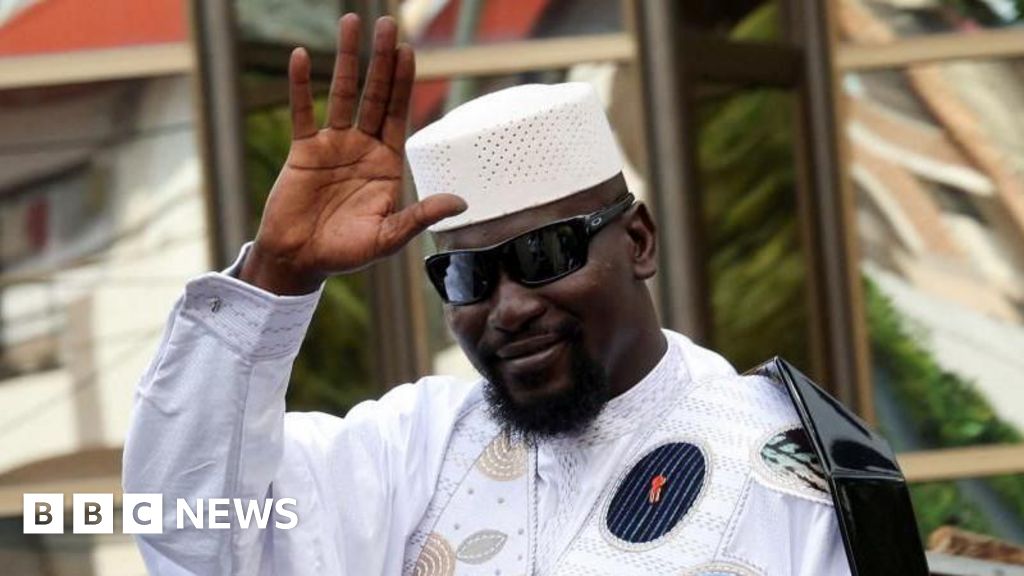
General Mamady Doumbouya, the military leader who seized power in Guinea through a 2021 coup, has officially been declared the winner of the country’s recent presidential election, securing an overwhelming 86.7% of the vote. Provisional results, announced by the national election commission, pave the way for Doumbouya to assume a seven-year mandate, a move critics widely condemn as a cynical attempt to legitimize military rule and consolidate personal power. This outcome has been met with significant skepticism and outright rejection by opposition figures and civil society organizations, who decry the electoral process as deeply flawed and anti-democratic.
The Path to Power: A Coup and a Broken Promise
The current political landscape in Guinea is directly shaped by the events of September 5, 2021, when then-Lieutenant Colonel Mamady Doumbouya led a swift military takeover that deposed the octogenarian President Alpha Condé. Condé, who had been in power since 2010 as Guinea’s first democratically elected president, had ignited widespread protests and political instability by controversially amending the constitution to seek a third term. His move was perceived by many as an authoritarian power grab, drawing parallels to other leaders in the region attempting to circumvent term limits.
At the time of the coup, Doumbouya, head of the elite Special Forces Group, justified the military intervention by citing rampant corruption, economic mismanagement, and a disregard for human rights under Condé’s leadership. Crucially, in the immediate aftermath of the coup, Doumbouya made a solemn public pledge, declaring, "Neither I nor any member of this transition will be a candidate for anything… As soldiers, we value our word very much." This promise resonated with many Guineans, particularly the youth, who were weary of political stagnation and perceived corruption. The commitment was widely interpreted as an assurance that the military would oversee a genuine transition to civilian, democratic rule without seeking to perpetuate its own authority.
However, the general’s recent participation in the presidential election represents a stark reversal of that initial promise. A new constitution, implemented in September, effectively cleared the path for him to run, sparking outrage among those who believed in the original commitment to a civilian-led transition. This turn of events has cast a long shadow over the legitimacy of the entire electoral exercise, raising questions about the sincerity of the junta’s intentions from the outset.
A Contentious Electoral Process
The provisional results, announced by Djenabou Toure, the country’s top election official, indicate an improbable voter turnout exceeding 80%. This figure immediately became a point of contention. The National Front for the Defence of the Constitution (FNDC), a prominent civil society group that previously spearheaded protests against Alpha Condé’s third-term bid, issued a statement contradicting the official figures. The FNDC asserted that a "huge majority of Guineans chose to boycott the electoral charade," suggesting a significantly lower turnout than claimed by the election commission. Such a discrepancy highlights the deep mistrust pervading the political environment.
Adding to the controversy, several prominent opposition figures and major political parties were barred from contesting the election. Main opposition parties, including RPG Arc en Ciel (Alpha Condé’s former party) and UFDG (Union of Democratic Forces of Guinea), found their candidates excluded, effectively removing any serious challenge to Doumbouya’s path to victory. This exclusion strategy ensured that the eight other candidates who did participate lacked a solid political footing or widespread support, rendering the contest largely uncompetitive.
Opposition candidate Faya Millimono voiced strong criticisms, alleging "systematic fraudulent practices" marred the poll. His complaints included the expulsion of independent poll observers, instances of ballot stuffing, and widespread voter intimidation. These accusations, though yet to be officially addressed by the ruling party or the government, echo a familiar pattern in elections held under military or authoritarian regimes, where mechanisms for independent oversight are often curtailed. The absence of robust, internationally recognized election monitoring further exacerbates concerns about the fairness and transparency of the process.
Silencing Dissent: Internet Shutdowns and Media Restrictions
As Guineans awaited the full results, reports from the internet monitoring group NetBlocks confirmed that access to social media platforms such as TikTok, YouTube, and Facebook had been restricted. While no official comment on these restrictions was provided by the authorities, opponents and civil liberties advocates swiftly condemned the move as a blatant attempt by the junta to stifle criticism, control the narrative, and prevent the dissemination of information contradicting the official election results.
This digital blackout is not an isolated incident but rather indicative of a broader pattern of repression under Doumbouya’s interim administration. Throughout the run-up to the elections, human rights organizations and international observers have documented a concerning deterioration of civil liberties in Guinea. The junta has been widely criticized for restricting opposition activities, banning public protests, and actively stifling press freedom. Journalists have faced intimidation, arrests, and the closure of media outlets, creating an environment where dissenting voices are systematically silenced.
Such measures have a profound social and cultural impact. In a country with a young and digitally connected population, social media platforms serve as vital spaces for political discourse, civic engagement, and the organization of protests. Restricting access not only limits freedom of expression but also fuels public anger and frustration, potentially leading to further instability. It signals a regime unwilling to tolerate open criticism or allow for the free flow of information, deepening concerns about its authoritarian trajectory.
Historical Context: A Legacy of Instability
Guinea’s post-independence history has been largely defined by political instability, marked by a succession of authoritarian leaders and military interventions. After gaining independence from France in 1958, the nation endured the long and often repressive rule of Ahmed Sékou Touré until his death in 1984. This period was followed by another military coup led by Lansana Conté, whose rule also lasted for decades, marked by consolidation of power and suppression of opposition.
The brief democratic interlude under Alpha Condé, beginning in 2010, was initially hailed as a new chapter for Guinea. However, Condé’s increasing authoritarian tendencies, particularly his insistence on a third term despite constitutional limits, ultimately paved the way for the 2021 coup. This cycle of elected leaders overstaying their welcome and then being overthrown by military strongmen is a recurring theme in Guinean politics, reflecting deep-seated institutional weaknesses and a fragile democratic culture.
The recent election, therefore, cannot be viewed in isolation. It is part of a broader historical narrative where military figures often step in under the guise of restoring order or fighting corruption, only to then entrench their own power. This pattern raises critical questions about the effectiveness of regional bodies like ECOWAS (Economic Community of West African States) and the African Union in promoting democratic governance and preventing coups in the region, particularly as West Africa has seen a troubling resurgence of military takeovers in recent years.
Socio-Economic Landscape and Geopolitical Stakes
Guinea is endowed with immense natural resources, possessing the world’s largest reserves of bauxite (a primary source of aluminum) and some of the richest untapped iron ore deposits, notably the gigantic Simandou project. The recent launch of the Simandou iron-ore mine, a multi-billion-dollar undertaking, has generated widespread anticipation, promising to transform Guinea’s economic fortunes and establish it as a major player in global mineral markets.
However, this immense mineral wealth stands in stark contrast to the widespread poverty that afflicts over half of the Guinean population, according to World Bank figures. This paradox of resource abundance coexisting with pervasive poverty is a critical factor contributing to social unrest and political discontent. The perception that the nation’s vast resources are not benefiting the average citizen, but rather enriching a corrupt elite, has historically fueled popular grievances and provided fertile ground for military interventions.
The political instability resulting from the contested election could have significant market and social impacts. Foreign investors, particularly those involved in large-scale mining projects, require political stability and a predictable regulatory environment. A lack of perceived legitimacy for the government could deter further investment, complicate existing operations, and potentially disrupt global supply chains for critical minerals. Socially, continued political repression and economic inequality could exacerbate ethnic tensions, fuel youth unemployment, and lead to renewed protests and violence, further destabilizing the nation.
The Road Ahead: Challenges to Legitimacy and Governance
General Doumbouya’s declared victory and subsequent seven-year mandate present significant challenges to Guinea’s future. While the Supreme Court has eight days to validate the provisional results, the prevailing political climate suggests that any challenge is unlikely to overturn the outcome. This consolidation of military power risks alienating a significant portion of the population, particularly civil society groups and opposition factions yearning for genuine democratic reforms.
The international community’s response will be crucial. Regional bodies like ECOWAS, which initially imposed sanctions on Guinea after the 2021 coup, will face renewed pressure to address the erosion of democratic principles. However, the effectiveness of such interventions has been mixed, with many military regimes in the region proving resilient to external pressure.
Domestically, Doumbouya’s regime will grapple with the fundamental question of legitimacy. Governing a nation where a large segment of the population views the leadership as illegitimate and the electoral process as a sham will be inherently difficult. The long-term implications for governance include a potential decline in public trust, increased social fragmentation, and an environment ripe for further instability. True economic development and poverty reduction will remain elusive without a stable, inclusive, and democratically accountable government. The struggle for civilian rule in Guinea, far from over, now faces a new, deeply entrenched obstacle in the form of a military leader determined to solidify his grip on power.

 Amir Mahmud