Amir Mahmud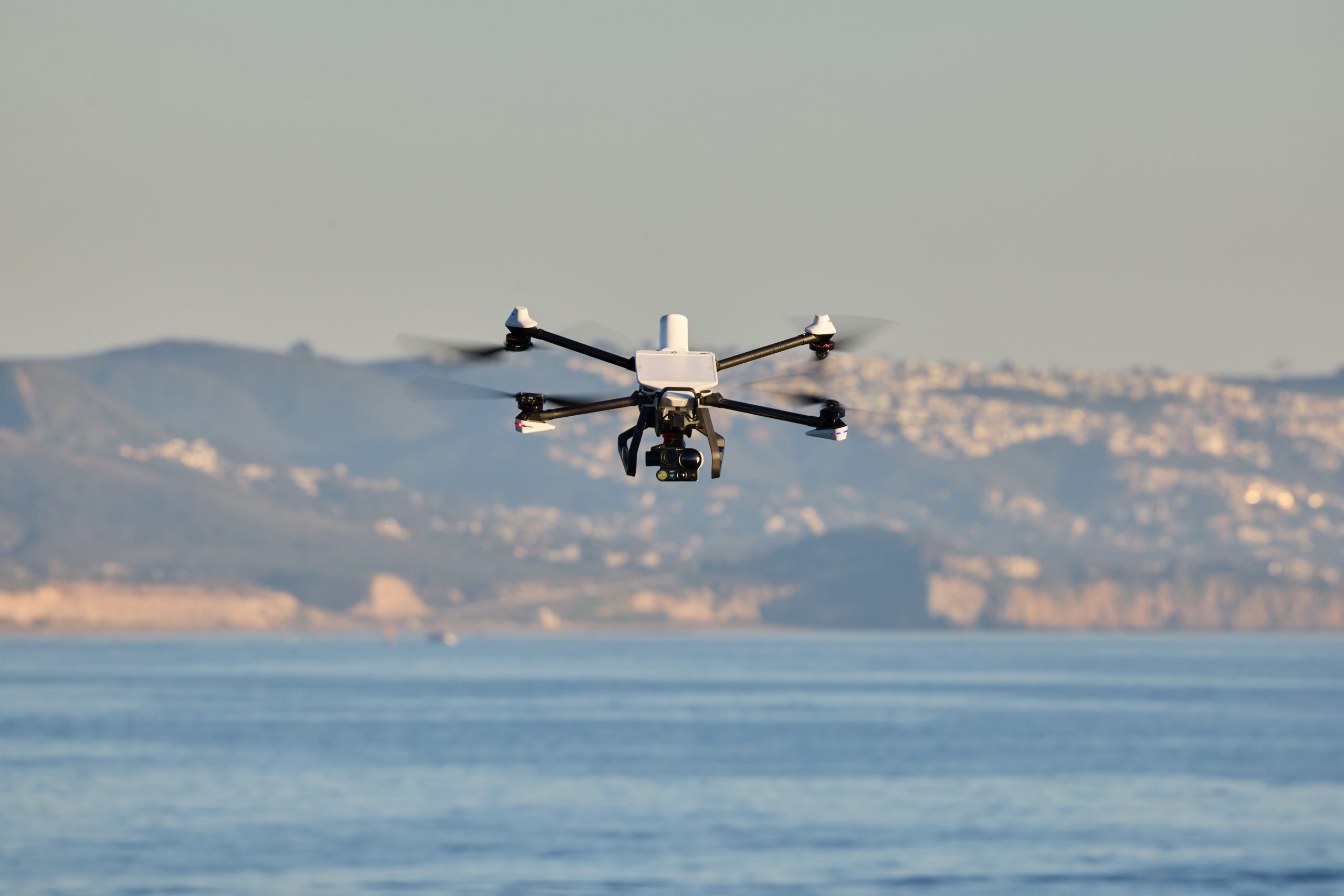
Brinc, a Seattle-based technology startup, has officially launched its newest product, the Guardian, an advanced public safety drone positioned by its creators as a revolutionary alternative to traditional police helicopters. The company’s vision extends beyond mere technological advancement, aiming to establish itself as a dominant force in the Western drone market, reminiscent of the Chinese manufacturing giant DJI. This ambition is underscored by the recent unveiling of the Guardian, a drone boasting capabilities designed to significantly enhance emergency response protocols across law enforcement and public safety agencies.
Brinc’s Ambitious Trajectory and Vision
Founded in 2017 by Blake Resnick, a recipient of the prestigious Thiel Fellowship, Brinc has rapidly ascended within the tech ecosystem. The Thiel Fellowship, a program known for awarding young entrepreneurs grants to forego or defer traditional college education in favor of entrepreneurial pursuits, provided Resnick with an early springboard. His innovative approach quickly attracted significant investor interest, including from notable figures such as then-OpenAI founder Sam Altman, who became one of Brinc’s initial seed investors. Through subsequent funding rounds, Brinc has seen its valuation soar, reaching nearly half a billion dollars, signaling strong market confidence in its mission to redefine public safety technology. The company’s expansion is palpable, as evidenced by its new 50,000-square-foot office space in Seattle, a large facility that symbolizes its rapid growth and future aspirations in a burgeoning industry.
Resnick explicitly states Brinc’s objective: to become the "DJI of the West." This declaration highlights a strategic intent to replicate DJI’s market dominance in a geopolitical context increasingly wary of Chinese technology. By developing and manufacturing advanced drone systems domestically, Brinc aims to fill a critical gap for public safety agencies seeking secure and reliable alternatives.
The Guardian: Technical Prowess and Operational Claims
The Guardian drone arrives with an impressive array of specifications, crafted to support demanding public safety operations. It can achieve speeds of up to 60 miles per hour and offers an extended flight duration of 62 minutes, crucial for sustained surveillance and rapid deployment. The drone is equipped with sophisticated imaging capabilities, including thermal cameras alongside two 4K cameras, all featuring robust zoom functions. This allows for granular detail capture, enabling law enforcement to discern critical information, such as license plate numbers, even from considerable altitudes. Beyond imaging, the Guardian integrates a powerful spotlight and a loudspeaker capable of projecting sound at volumes exceeding a standard police siren, providing effective communication and area illumination during incidents.
A significant innovation introduced with the Guardian is its "charging nest" — a fully automated landing station that facilitates seamless battery swapping. This feature is designed to minimize downtime and maximize operational readiness. Furthermore, these charging nests can be pre-stocked with essential emergency supplies, such as defibrillators, flotation devices, and Narcan, allowing for automated deployment of critical aid without human intervention, potentially saving lives in time-sensitive situations.
Perhaps the most groundbreaking technical integration is the embedded Starlink panel directly within the Guardian’s airframe. Brinc asserts this makes the Guardian the first public safety drone to incorporate SpaceX’s satellite internet service. This integration provides unparalleled connectivity, theoretically granting the drone "unlimited range anywhere in the world." For public safety operations, this means reliable communication and data transmission even in remote or disaster-stricken areas where traditional cellular networks may be unavailable or compromised, significantly extending its operational utility.
The Evolution of Drones in Public Safety
The concept of using unmanned aerial vehicles (UAVs) for public safety is not new, but its widespread adoption has been a gradual process marked by technological advancements, evolving regulations, and public perception shifts. Historically, law enforcement and emergency services relied heavily on manned aircraft, primarily helicopters, for aerial surveillance, search and rescue, and pursuit operations. While effective, these traditional assets come with substantial costs, including procurement, maintenance, fuel, and highly skilled pilot salaries. Operational limitations also exist, such as weather dependency, noise pollution, and slower deployment times for localized incidents.
The introduction of commercial drones in the early 21st century opened new possibilities. Initially, smaller, commercially available drones were cautiously adopted by some departments for tasks like accident scene reconstruction or managing large crowd events. However, these early models often lacked the durability, flight time, and specialized payloads required for critical, real-time emergency response. The mid-2010s saw a significant increase in drone capabilities, with improved cameras, longer battery life, and more robust airframes. Regulatory bodies, particularly the Federal Aviation Administration (FAA) in the U.S., began developing frameworks for drone operations, including waivers for public safety agencies to fly beyond visual line of sight (BVLOS) or at night, expanding their utility.
Brinc’s Guardian represents a significant leap in this timeline, specifically targeting the high-end capabilities traditionally reserved for helicopters. By combining extended flight times, advanced sensors, automated logistics, and global connectivity, it seeks to bridge the gap between consumer-grade drones and expensive manned aircraft, offering a compelling middle-ground solution.
Market Dynamics and Strategic Positioning
Blake Resnick envisions a substantial market opportunity for Brinc, estimating it to be in the range of $6 billion to $8 billion, encompassing both U.S. and international markets. He points to the vast number of potential customers: approximately 20,000 police departments, 30,000 fire departments, and 80,000 police and fire stations across America. Resnick predicts that a significant portion of these entities will eventually deploy 911 response drones, housed in recharging nests on their rooftops, as a standard component of their emergency infrastructure.
To facilitate this widespread adoption, Brinc has strategically partnered with the National League of Cities. This collaboration aims to scale "drone as first responder" (DFR) programs nationwide. DFR initiatives involve deploying drones as the initial response unit to emergency calls, providing immediate situational awareness to human responders en route. This can dramatically reduce response times, allowing for quicker assessment of threats, identification of victims, and guidance for ground teams, potentially leading to more effective outcomes and reduced risks for personnel. Such partnerships are crucial for fostering relationships with municipal governments and local communities, paving the way for future sales and integration.
A pivotal factor contributing to Brinc’s market potential is the evolving geopolitical landscape. For many years, DJI held an unofficial near-monopoly on the global drone market, including within the U.S., where numerous public safety agencies relied on its products. However, recent actions by the U.S. government, notably the Trump administration’s ban on foreign-made drone models for government use, have created a significant vacuum. This policy shift, driven by national security concerns regarding data integrity and potential espionage, has effectively opened up a massive domestic market for American drone manufacturers. Brinc is strategically positioned to capitalize on this opportunity, aiming to become the premier drone provider for the "free world" — a domestic and secure alternative to previously dominant foreign technologies.
Societal Impact, Ethical Considerations, and Challenges
The introduction of advanced public safety drones like the Guardian brings forth a range of societal impacts and ethical considerations. On one hand, the potential benefits are immense: faster response times, enhanced situational awareness for first responders, reduced risks for human officers in dangerous situations, and significant cost savings compared to operating manned aircraft. For instance, the operational cost of a police helicopter can run into hundreds of dollars per hour, not including maintenance and personnel, whereas drones offer a fraction of that cost. The ability to deliver critical supplies autonomously could also revolutionize emergency medical response in remote or inaccessible areas.
However, the proliferation of sophisticated drones in public safety also raises significant concerns, particularly regarding privacy and civil liberties. Drones equipped with high-resolution cameras, thermal imaging, and potentially facial recognition technology could enable extensive surveillance capabilities. There are legitimate public fears about data collection, storage, and the potential for misuse of such technology, leading to an erosion of privacy. Striking a balance between public safety needs and individual rights will require robust regulatory frameworks, clear policies on data retention, transparency in drone deployment, and strong oversight mechanisms. Public acceptance will hinge on the demonstrable benefits outweighing these privacy concerns, coupled with strict accountability.
The regulatory environment also presents ongoing challenges. While the FAA has made strides in integrating drones into national airspace, complexities remain concerning BVLOS operations, airspace management in urban environments, and interoperability between different agencies. Local ordinances regarding drone use can vary widely, creating a patchwork of rules that agencies must navigate. Furthermore, the integration of new technology demands significant investment not only in the hardware but also in training personnel, developing standard operating procedures, and establishing secure communication protocols.
Despite the promise, the journey to "replacing" police helicopters is complex. While drones excel in many areas, helicopters still offer certain advantages, such as greater payload capacity, longer endurance for certain missions, and the ability to transport personnel. The Guardian aims to bridge many of these gaps, but it represents an augmentation and transformation of existing capabilities rather than an immediate, wholesale replacement.
The Path Forward
Brinc’s Guardian drone represents a significant technological leap with the potential to fundamentally alter how emergency services operate. By addressing key limitations of previous drone models and strategically positioning itself within a changing geopolitical landscape, Brinc is poised to capture a substantial share of the public safety drone market. Its focus on autonomy, connectivity, and specialized payloads highlights a forward-thinking approach to modern challenges.
However, the company’s success will ultimately depend not only on the technological prowess of its products but also on its ability to navigate complex regulatory hurdles, build public trust, and demonstrate the tangible benefits of its solutions in real-world scenarios. As public safety agencies continue to seek more efficient, safer, and cost-effective tools, innovations like the Guardian will play a crucial role in shaping the future of emergency response, marking a new era where unmanned aerial systems become an indispensable component of community protection.