Amir Mahmud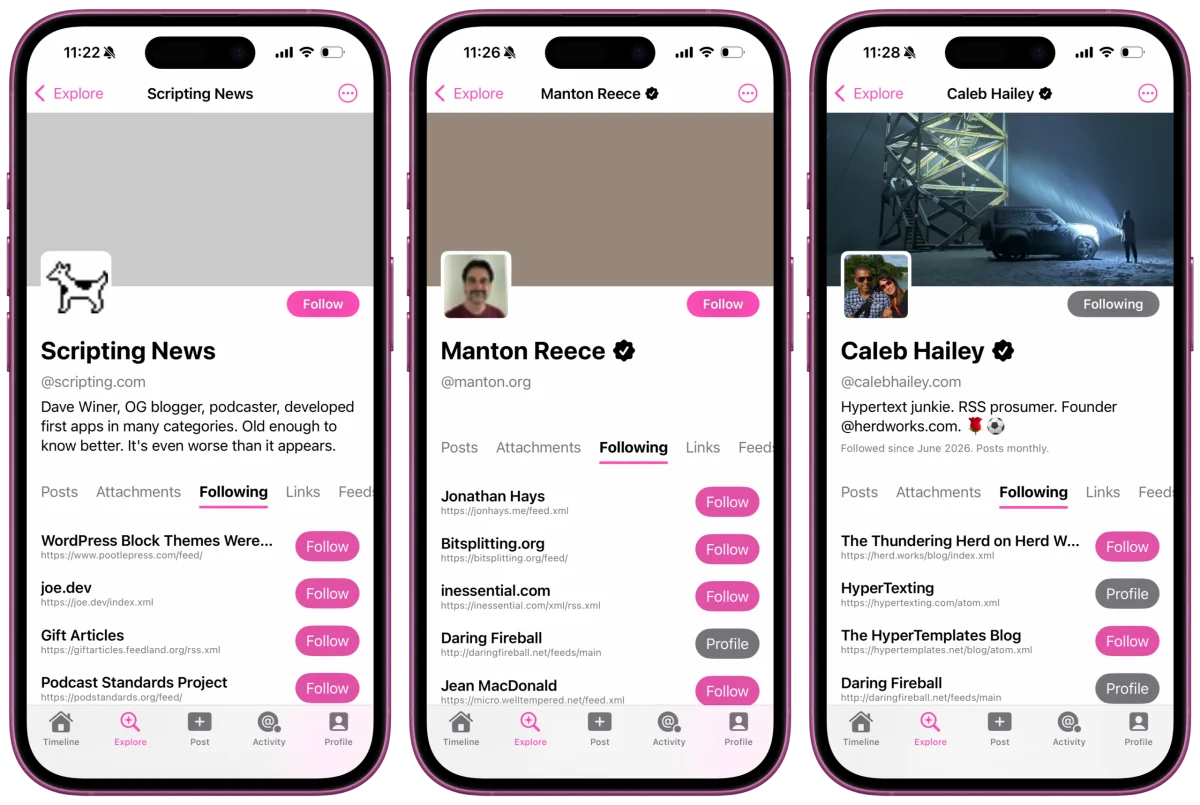
A novel application, HyperTexting, has launched on iOS, aiming to fundamentally alter how users engage with the vast expanse of the World Wide Web. This innovative platform endeavors to blend the intuitive, scrollable feed interface characteristic of contemporary social media giants like Facebook and X, formerly Twitter, with the foundational principles of the open internet. Beyond merely simplifying web browsing, HyperTexting also seeks to democratize content creation, making the process of updating a personal website as straightforward as sending a text message.
A Return to Roots: The Vision Behind HyperTexting
At its core, HyperTexting represents a deliberate pivot back to an earlier vision for the internet—one where individual ownership and decentralized publishing were paramount. The app operates on an algorithm-free philosophy, promising users a feed curated by their own choices, rather than dictated by opaque algorithms designed to maximize engagement. This ambitious undertaking is the brainchild of Caleb Hailey, a seasoned technology professional with two decades of experience, who recalls the nascent days of the internet when the promise of every individual owning their own domain and publishing content on a personal corner of the web seemed within reach.
However, this initial promise gradually receded with the meteoric rise of social media platforms. These centralized services offered unparalleled ease of use, allowing individuals to create profiles and share content without the complexities of website development or hosting. "Somewhere along the way, social media came, and it was easier to make a page and post to your page than it was a website," Hailey reflected in a recent discussion. "And the rest is history." This shift marked a profound transformation in how the majority of internet users interacted with online content and each other.
The Internet’s Evolution: From Decentralized Dreams to Walled Gardens
To fully appreciate HyperTexting’s premise, it is essential to consider the historical trajectory of the internet. In its early days, particularly through the 1990s and early 2000s, the web was largely a collection of disparate, individually owned or managed websites. Services like GeoCities and personal homepages were common, fostering a sense of digital individualism. The advent of blogging platforms such as LiveJournal and Blogger further empowered individuals to publish their thoughts and creations with relative ease, albeit still requiring some technical proficiency or familiarity with content management systems.
During this period, technologies like RSS (Really Simple Syndication) emerged as crucial tools for navigating the burgeoning web. RSS allowed users to subscribe to feeds from their favorite websites, news outlets, and blogs, aggregating updates into a single reader application. This facilitated a personalized and efficient content consumption experience, giving users control over what they saw and when. Journalists, academics, and early adopters often relied on RSS readers to stay informed, effectively creating their own custom news digests.
However, the mid-2000s ushered in a new era with the explosion of social networking sites like Friendster, MySpace, and later, Facebook and Twitter. These platforms offered compelling advantages: a ready-made audience, simplified sharing mechanisms, and the allure of instant connection. They centralized not only user data but also the entire content discovery and distribution model. Users gravitated towards these "walled gardens" for their convenience, effectively trading some of the open web’s freedom for ease of access and the powerful network effects of a unified platform. This marked a significant cultural and technological shift, as the default mode of online interaction transitioned from direct navigation to aggregated, often algorithmically curated, feeds.
The Genesis of a New Approach: Frustration and Inspiration
Hailey’s journey to developing HyperTexting was deeply personal, rooted in his observations of social media’s evolution and its broader societal impact. He specifically cited the trajectory of Twitter, now X, as a catalyst. He reminisced about a time when the platform served as a valuable hub for discovery and sharing, operating primarily on a reverse chronological timeline. This allowed users to see content as it was posted, fostering a sense of real-time connection and an unfiltered view of information.
However, as Twitter prioritized growth and shifted towards an algorithmic feed, Hailey noted a decline in its utility. The algorithmic curation often meant users missed important updates in favor of "trending" or highly engaged content, which could be less relevant to their direct interests. Furthermore, changes that de-ranked or minimized the visibility of external links further diminished Twitter’s role as a gateway to the wider web. This strategic decision by social media platforms to keep users within their ecosystems, rather than directing them outwards, has been a significant point of contention for many web enthusiasts and content creators.
The onset of the COVID-19 pandemic further exacerbated the negative aspects of social media for Hailey, as the concept of "doom scrolling" gained widespread recognition. This phenomenon, characterized by the compulsive consumption of distressing news and negative content, highlighted the psychological toll that algorithmically amplified negativity could take. Feeling the adverse effects on his own well-being, Hailey took a drastic step: he uninstalled all social media applications from his phone. In doing so, he rediscovered the utility and tranquility of an old RSS news reader, NetNewsWire, as a means to stay informed without the emotional burden of endless, algorithm-driven feeds.
Concurrently, Hailey was working on another passion project—a streamlined method for publishing content to the web using a static website generator optimized for the iPhone. This dual pursuit of a better content consumption experience and easier personal publishing eventually coalesced into the vision for HyperTexting. He recognized that the core appeal of RSS—its ability to aggregate content from diverse sources—was powerful but lacked mainstream appeal due to its often uninviting user interface. He sought to package this functionality into a format that was instantly familiar and accessible to a wider audience, thereby addressing the long-standing question: "Why don’t more people care about this?"
Under the Hood: Marrying Familiarity with Open Standards
HyperTexting, therefore, emerges as a hybrid solution. While it robustly leverages the open protocol of RSS "under the hood" for its content aggregation, it intentionally avoids promoting the technical term in its user-facing marketing. This strategic choice acknowledges that while RSS is a powerful foundational technology, its branding has historically failed to capture the imagination of the average internet user. Instead, HyperTexting presents its functionality through a lens of familiarity.
The application’s design principles are deeply influenced by established social media norms. Users encounter a scrollable feed, user profiles, and intuitive buttons for following, liking, and commenting. This intentional mirroring of familiar user interfaces aims to lower the barrier to entry, making the transition from conventional social platforms seamless. Within the app, individuals can easily follow websites, news organizations, blogs, and newsletters with a simple tap. The content from these diverse sources—articles, essays, multimedia posts—then populates a unified feed, providing an experience that feels remarkably akin to scrolling through a modern social media timeline, but crucially, without algorithmic manipulation.
Hailey describes HyperTexting as "almost like a viewer to the discourse that already happens in the open web." This perspective highlights the app’s role as a conduit, not a gatekeeper. It seeks to re-centralize the experience of content discovery without centralizing the content itself. By focusing on the open web, it champions the inherent decentralization that RSS, for instance, has always offered, which continues to power countless WordPress blogs, Ghost newsletters, and podcast feeds worldwide. The app’s ad-free reading experience further enhances the user experience, eliminating distractions common on many commercial websites and social platforms.
Beyond Consumption: Empowering Individual Publishing
One of HyperTexting’s most distinctive features is its dual focus on both consumption and creation. While many tools prioritize content aggregation, HyperTexting goes a step further by integrating easy publishing capabilities. Users are encouraged to connect their own websites—whether a personal blog running on WordPress, a newsletter hosted on Ghost, or a site built with open-source static site generators like Hugo or HyperTexting’s proprietary HyperTemplates.
This integration allows users to author and publish content directly to their personal domains with the same ease as posting to a social media profile. Once published, these posts are automatically linked to the user’s original website and appear in the HyperTexting feeds of those who follow that particular site. This mechanism effectively re-empowers individuals to own their digital presence and content, fostering a direct relationship with their audience without the intermediary of a centralized platform. It represents a significant departure from the current norm where content creators often build their entire online presence within the confines of a single social media platform, subject to its rules, algorithms, and potential changes in policy or reach.
Additionally, HyperTexting includes an "Explore" section, designed to help users discover trending content from across the broader web. This feature functions as a contemporary equivalent to services like Nuzzel, which previously surfaced popular links shared within a user’s Twitter network, offering a curated glimpse into the wider online discourse. An optional Safari extension further streamlines the process of adding new websites to follow within the HyperTexting app as users browse the web, integrating the app seamlessly into their existing browsing habits.
Market Dynamics and User Adoption Challenges
The success of HyperTexting hinges on its ability to overcome significant market and user adoption challenges. The history of RSS readers, particularly the demise of Google Reader in 2013, serves as a cautionary tale. Despite their efficiency and user control, these tools have consistently struggled to achieve mainstream traction, largely due to a perceived complexity and the overwhelming network effects of established social media.
HyperTexting’s strategy of adopting a familiar social media-like interface while leveraging robust, open-web protocols is a calculated risk. It aims to bridge the gap between the power user’s desire for control and the average user’s preference for simplicity. However, the ingrained habits of billions of users on platforms like Instagram, TikTok, and X are formidable. Competing with these giants, which offer not only content but also vast social graphs and sophisticated engagement mechanisms, will require substantial user education and a compelling value proposition.
Neutral analytical commentary suggests that HyperTexting’s appeal might initially resonate most strongly with a segment of users disillusioned by the current state of social media: those seeking greater control over their information diet, privacy-conscious individuals, and independent content creators. For HyperTexting to expand beyond this niche, it must demonstrate tangible benefits that outweigh the convenience and social connections offered by mainstream platforms. Its ad-free reading experience and emphasis on personal publishing are strong differentiators, but fostering a vibrant, interactive community around decentralized content remains a significant hurdle.
Reclaiming the Web: A Broader Movement
Hailey’s philosophy for HyperTexting aligns with a broader movement advocating for a more open, decentralized, and user-controlled internet. This movement, sometimes referred to as "Web3" or the "Fediverse" (encompassing platforms like Mastodon and ActivityPub), seeks to re-engineer the internet away from centralized corporate control. While HyperTexting doesn’t explicitly brand itself within these movements, its core tenets—personal ownership, open protocols, and algorithm-free content—resonate deeply with their objectives.
"My experience in tech over the last 20 years is that things have just gotten so complicated," Hailey observed. "And to some degree, there’s this urge—this irresistible urge—to reinvent the wheel. Part of my experiment with HyperTexting is like, what if we didn’t?" He challenges the prevailing notion that new, proprietary platforms are always the answer, arguing instead for a re-evaluation of the internet’s original architecture. "Instead of chasing the platforms… and instead of trying to assert some opinion in this decentralized federated social networking thing that’s happening right now, my opinion is that the greatest decentralized social network ever created already exists, and it’s called the World Wide Web. Like, let’s just use that."
The Path Forward: Business Model and Impact
HyperTexting, developed by Hailey’s firm Herd Works, is currently available as a free download on iOS. Looking ahead, the app’s sustainability model may involve introducing premium subscriptions for enhanced features or incorporating a single sponsored post per day to generate necessary revenue. This cautious approach to monetization reflects a desire to maintain the app’s integrity and user-centric focus, avoiding the aggressive, data-driven advertising models prevalent on other social platforms.
Ultimately, HyperTexting represents a compelling experiment in re-envisioning digital interaction. By consciously blending the familiar user experience of social media with the foundational principles of the open web, it seeks to offer a fresh alternative to the dominant platforms. Its success could signal a renewed interest in individual digital sovereignty and a more diverse, user-driven content ecosystem, potentially influencing future trends in online publishing and consumption. The journey of HyperTexting will be a significant indicator of whether users are ready to reclaim more control over their online experiences and embrace a more decentralized digital public square.