Amir Mahmud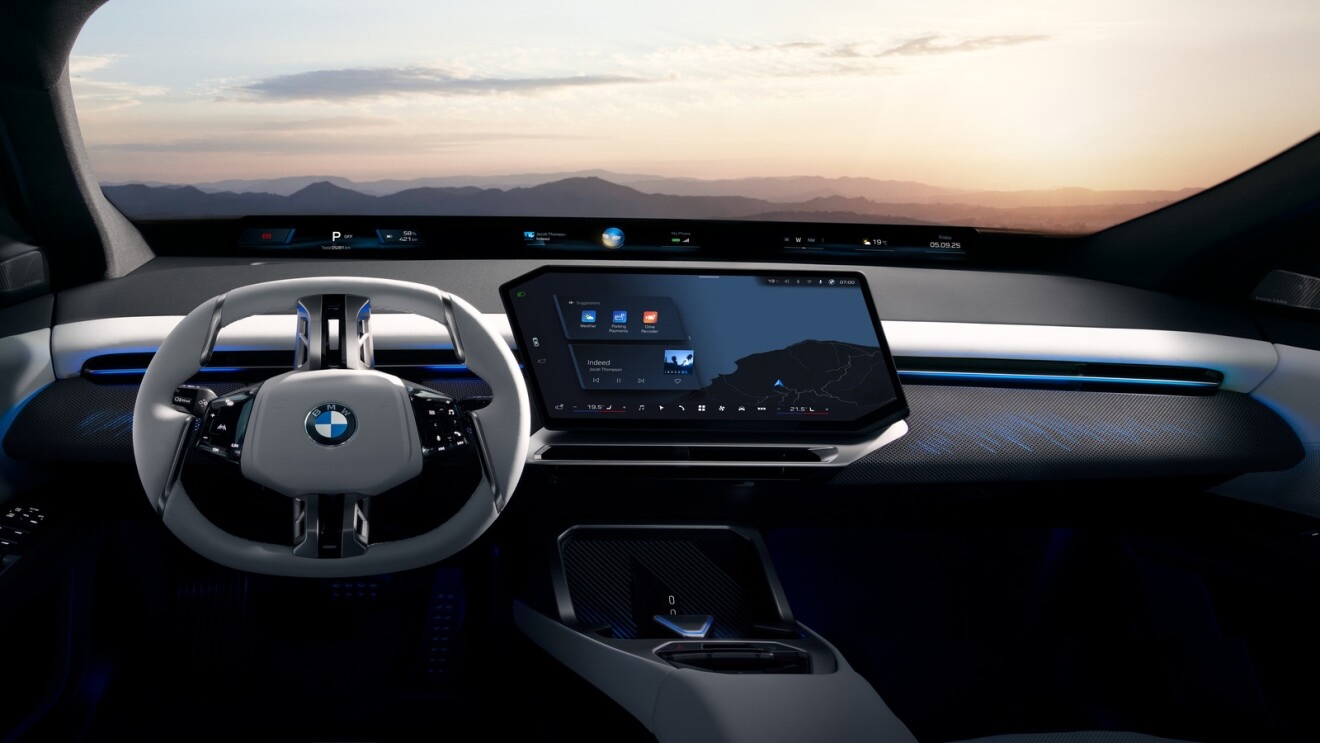
The automotive world is witnessing a significant leap in digital integration as BMW announces its 2026 iX3 model will feature Alexa+, Amazon’s next-generation voice assistant powered by generative artificial intelligence. This strategic collaboration, unveiled at the highly anticipated 2026 Consumer Electronics Show (CES) in Las Vegas, marks the first time Amazon’s sophisticated large language model (LLM)-driven voice technology will be natively embedded in a vehicle, promising a revolutionary shift in how drivers interact with their cars and the broader digital ecosystem.
The Generative AI Leap in Automotive
Amazon’s Alexa+ represents a substantial evolution from its predecessors, moving beyond script-based responses to offer more fluid, contextual, and human-like interactions. Launched last year across hundreds of millions of Amazon’s smart devices, this advanced iteration of Alexa leverages generative AI to understand complex requests, process multi-step commands, and engage in natural, multi-turn conversations. For the automotive sector, where voice assistants have historically struggled with the nuances of real-world driving conditions and diverse user demands, this development is particularly impactful. It signals a new era where in-car technology can genuinely anticipate needs, provide proactive assistance, and seamlessly manage a multitude of functions that previously required manual input or multiple application switches.
The transition to generative AI is critical for overcoming the long-standing frustrations associated with in-car voice control. For over a decade, automakers and tech companies have invested heavily in natural language processing (NLP) to enable computers to comprehend and respond to human speech. While progress has been made, these systems often hit limitations, failing to grasp context, interpret slang, or handle sequential commands. Alexa+’s foundation in large language models addresses these shortcomings by allowing the assistant to reason through steps, break down intricate requests, and execute actions across disparate services, from adjusting cabin temperature to navigating unfamiliar routes or even managing smart home devices remotely.
A Deeper Dive into the Partnership and its Genesis
The alliance between the German luxury automaker and the global tech giant is not a recent development but the culmination of a three-year strategic partnership. BMW initially declared in 2022 its intention to utilize Amazon Alexa as the technological backbone for its future voice assistant capabilities. This commitment went beyond merely embedding a standard Alexa application; instead, BMW opted to employ Amazon’s Alexa Custom Assistant platform. This bespoke approach allows manufacturers to build their own unique, branded voice assistants, retaining their distinct identity and user experience, while leveraging Amazon’s robust AI technology and vast developer ecosystem.
The initial timeline for this integration was extended as Amazon dedicated resources to refining Alexa+ specifically for the demanding automotive environment. The objective was clear: to deliver an overhauled voice assistant capable of delivering the "seamless and natural conversations, like talking to a human" that generative AI promises. This customization is powered by Amazon Bedrock, a service that provides AWS customers with access to a selection of foundational generative AI models from Amazon and third-party partners. Through Bedrock, companies like BMW can tailor these powerful models with their proprietary data, ensuring the in-car assistant not only understands general commands but also specific vehicle functions, brand-specific terminology, and user preferences, all while maintaining data security and brand consistency.
Navigating the In-Car AI Landscape
The automotive industry has long been a battleground for digital innovation, with voice control emerging as a crucial frontier. Early attempts at in-car voice command systems, dating back to the late 1990s and early 2000s, were often rudimentary, requiring precise, rigid phrasing that led to more frustration than convenience. The advent of smartphones and their integrated assistants like Apple’s Siri and Google Assistant brought a new level of sophistication, primarily through mirroring capabilities via Apple CarPlay and Android Auto. While these solutions offered familiar functionality, they often lacked deep integration with the vehicle’s core systems, existing more as an overlay than a native component.
Automakers, recognizing the critical role of intuitive user interfaces, began developing their own proprietary voice assistants, such as Mercedes-Benz’s MBUX ("Hey Mercedes") and BMW’s own "Hey BMW" system. These efforts aimed to create a more integrated experience, allowing drivers to control vehicle-specific functions like climate, navigation, and media without looking away from the road. However, even these advanced proprietary systems, while impressive, have faced challenges in matching the expansive knowledge base and contextual understanding offered by general-purpose assistants. The partnership with Amazon’s Alexa+ provides BMW with a hybrid solution: a custom-branded interface that feels native to the BMW experience, backed by the immense computational power and continuous learning capabilities of Amazon’s generative AI.
The Consumer Electronics Show (CES) has become an increasingly vital platform for automotive technology announcements, showcasing the industry’s rapid convergence with consumer electronics. For years, CES has been where automakers reveal their latest advancements in autonomous driving, electric powertrains, and, critically, in-car digital experiences. The choice to unveil the Alexa+ integration for the 2026 BMW iX3 at CES underscores the strategic importance of this technology as a key differentiator in a competitive market.
User Experience and Future Implications
The potential impact of Alexa+ in the BMW iX3 on the daily driving experience is transformative. Drivers could seamlessly transition conversations from their Alexa-enabled smart speaker at home to their vehicle, continuing tasks like adding items to a shopping list, checking calendar appointments, or managing smart home security. The system promises to simplify complex scenarios, such as asking the car to "find the nearest EV charging station, pre-condition the battery for fast charging, and play my road trip playlist," all through a single, natural voice command. This level of integration aims to reduce cognitive load and enhance safety by minimizing the need for drivers to divert their attention from the road to interact with multiple screens or physical buttons.
From a market perspective, this move solidifies Amazon’s ambitious strategy to embed its LLM-powered assistant into every aspect of consumers’ lives, extending its digital ecosystem from smart homes to mobile devices and now deeply into the automotive cabin. With Alexa+ already present in hundreds of millions of devices, its expansion into vehicles creates a powerful synergy, offering users a consistent and intelligent assistant experience across their entire digital landscape. For BMW, this partnership represents a commitment to providing cutting-edge technology and a superior user experience, potentially setting a new benchmark for in-car voice assistants and driving competitive differentiation in the luxury electric vehicle segment.
Challenges and Opportunities Ahead
While the promise of generative AI in vehicles is immense, the path forward is not without its challenges. Data privacy and security become even more critical as these systems collect vast amounts of user data to personalize experiences. Automakers and tech providers must ensure robust safeguards and transparent policies to build consumer trust. Furthermore, the complexities of diverse accents, background noise, and varying acoustic environments within a moving vehicle still present significant hurdles for even the most advanced voice recognition systems. The system’s ability to perform reliably and consistently under all driving conditions will be a crucial test.
The integration of such sophisticated AI also opens new avenues for in-car commerce and subscription services. Imagine an assistant that can proactively suggest a new podcast based on your driving route, order food for pickup at your destination, or even facilitate remote vehicle diagnostics. The "skill" ecosystem surrounding Alexa means that third-party developers can create custom applications, further expanding the utility and personalization of the in-car experience. This could lead to a dynamic marketplace of automotive-specific digital services, creating new revenue streams for both automakers and tech partners.
Ultimately, the deployment of Alexa+ in the 2026 BMW iX3 is more than just a feature upgrade; it is a strategic declaration of intent from both BMW and Amazon. It underscores the automotive industry’s accelerating shift towards software-defined vehicles and intelligent cockpits, where the digital experience is as critical as driving performance. As generative AI continues to mature, its integration into our daily lives, particularly within the confines of our vehicles, promises to redefine convenience, safety, and the very nature of human-machine interaction on the road.