Amir Mahmud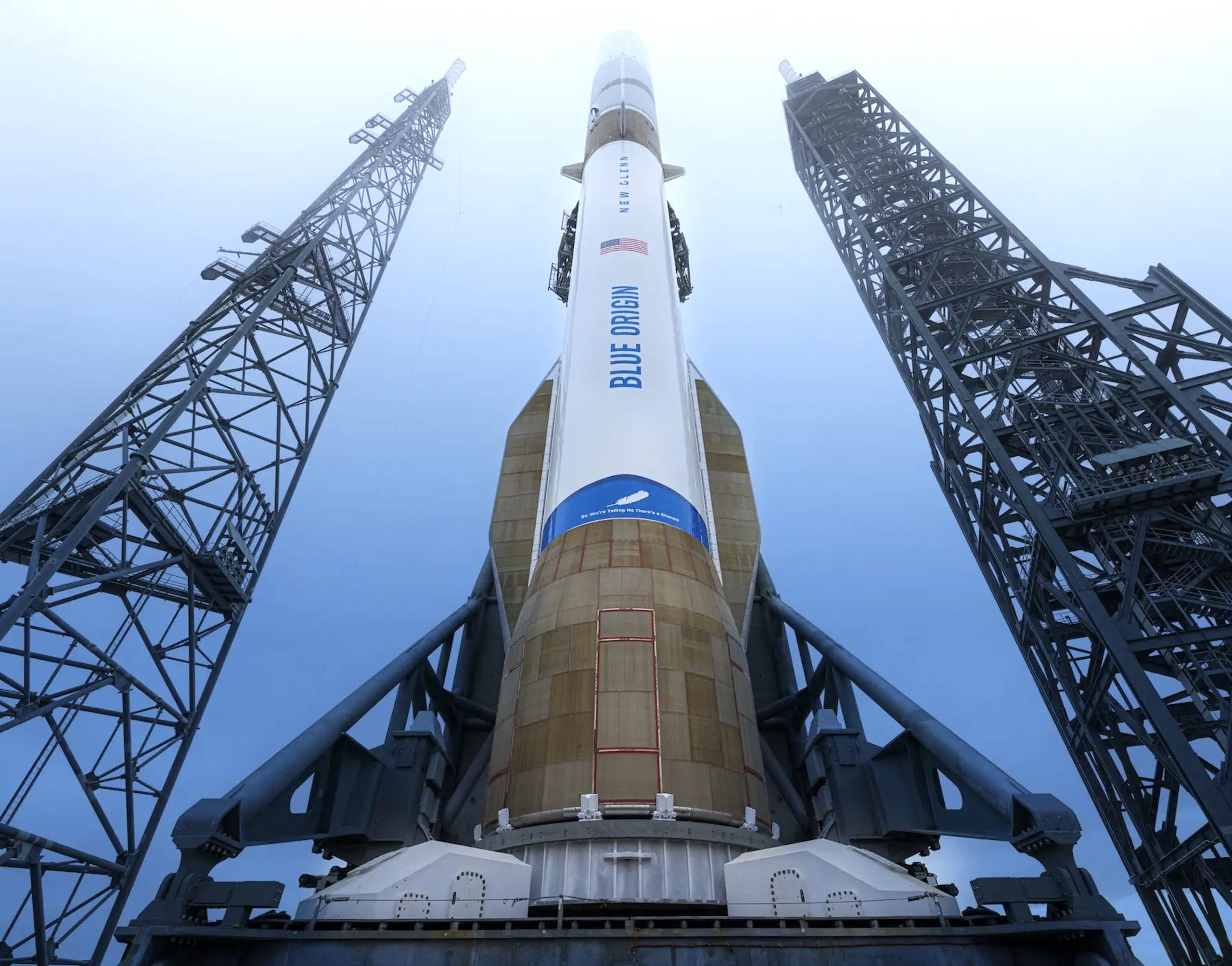
Blue Origin, the aerospace company founded by Amazon executive chairman Jeff Bezos, has formally approached the U.S. government for authorization to deploy a vast constellation of over 50,000 satellites designed to function as an advanced computational infrastructure in Earth’s orbit. This ambitious initiative, dubbed "Project Sunrise," represents a significant step into a burgeoning frontier where the demands of terrestrial data processing could potentially be offloaded to space.
Orbital Computing: A Solution to Terrestrial Strain?
The formal application, submitted to the Federal Communications Commission (FCC) on March 19, details Blue Origin’s vision for a network of spacecraft engineered to perform sophisticated computations remotely. According to legal documents filed by Blue Origin’s representatives, the primary objective of Project Sunrise is to alleviate the mounting environmental and infrastructural pressures exerted by ground-based data centers within U.S. communities. By relocating energy and water-intensive computing operations to an orbital environment, the company aims to mitigate the substantial resource consumption associated with current data processing paradigms.
Terrestrial data centers, the backbone of the modern digital economy, are notoriously resource-intensive. These facilities, which house thousands of servers, consume immense quantities of electricity for processing, storage, and, critically, for cooling systems. The U.S. Environmental Protection Agency (EPA) has previously estimated that data centers account for a significant portion of national electricity consumption, a figure projected to rise substantially with the proliferation of artificial intelligence (AI), cloud computing, and advanced analytics. Furthermore, many data centers rely on evaporative cooling methods, demanding millions of gallons of water annually, often in regions already facing water scarcity. Project Sunrise posits that by shifting these operations to space, where solar energy is abundant and cooling mechanisms can exploit the vacuum of space, these environmental burdens can be significantly reduced. While the initial filing from Blue Origin did not specify the exact computational capacity Project Sunrise intends to achieve, it clearly signals a strategic pivot towards high-performance computing in a novel environment. The company also indicated plans to integrate this orbital data center network with its proposed TeraWave constellation, another satellite system currently under development, which would serve as a high-throughput communications backbone, facilitating seamless data transfer to and from the orbital compute infrastructure.
Untapped Potential: Why Space Beckons Data Centers
The concept of deploying data centers in space is gaining traction within the tech and aerospace sectors, driven by several compelling advantages unique to the orbital environment. One of the most frequently cited benefits is the access to a virtually inexhaustible supply of solar energy. In low Earth orbit (LEO), satellites can be positioned to receive near-constant sunlight, significantly reducing the reliance on finite terrestrial power grids and the associated carbon footprint. This continuous solar exposure offers a sustainable power source that, once established, incurs minimal operational energy costs.
Beyond energy, the regulatory landscape in space presents a different set of considerations compared to Earth-bound operations. While international treaties and national regulations govern space activities, the specific legal frameworks for highly distributed, autonomously operating data centers in orbit are still evolving. Proponents suggest that this nascent regulatory environment could potentially offer greater flexibility for corporate activities, though this also raises complex questions about accountability, data sovereignty, and international governance. The vision underpinning these projects often extends to a future where advanced AI applications are ubiquitous. In this scenario, the intensive "inference" work – the process of applying trained AI models to new data – could be largely outsourced to orbital platforms. This would free up terrestrial resources, reduce latency for certain global applications, and potentially enable new types of services that benefit from distributed, low-gravity computing.
The Expanding Frontier: Key Players in Orbital Infrastructure
Blue Origin is not alone in recognizing the potential of space-based data centers. Several other prominent companies and innovative startups are actively pursuing similar ambitious projects, signaling a growing industry trend towards leveraging orbital infrastructure for computational power.
SpaceX, for instance, a direct competitor to Blue Origin in the private space sector, has already filed its own comprehensive proposal with the FCC to launch an even larger constellation, potentially comprising a million satellites, specifically intended to function as a distributed data center. Known primarily for its Starlink internet constellation, which has already deployed thousands of broadband satellites, SpaceX possesses significant experience in managing large-scale orbital networks. Their proposal underscores a broader strategy to diversify space-based services beyond internet connectivity.
Another notable entrant is Starcloud, a startup that has outlined plans to the FCC for a network of 60,000 spacecraft dedicated to similar data processing functions. While less publicly known than the giants of the industry, Starcloud’s ambitious scale highlights the widespread belief that orbital computing represents a significant future market. Even Google, through its "Project Suncatcher" initiative, is exploring the feasibility of space data centers. Collaborating with Planet Labs, a company specializing in Earth observation satellites, Google intends to launch two demonstration spacecraft in the coming year to test key technologies and concepts for its orbital computing platform. This collective push from major tech and aerospace players indicates a strong belief in the eventual viability and necessity of shifting significant computational workloads beyond Earth’s atmosphere.
Navigating the Hurdles: Technical and Economic Realities
Despite the compelling vision, the path to establishing functional and economically viable space data centers is fraught with significant technical and economic challenges. One of the foremost hurdles lies in developing and manufacturing cost-effective technology for cooling processors in the vacuum of space. Terrestrial data centers rely on air and liquid cooling systems, which are highly efficient due to convection and gravity. In space, without these forces, heat dissipation becomes a complex engineering problem, often requiring advanced radiative cooling techniques or specialized fluid loops, all of which must be robust enough to withstand the harsh space environment.
Inter-satellite communication is another critical area requiring substantial innovation. For a distributed data center network of tens of thousands of satellites to operate effectively, seamless, high-throughput communication between individual spacecraft is paramount. This will likely necessitate the development of sophisticated laser communication systems, capable of maintaining precise alignment and transmitting vast amounts of data across significant distances between rapidly moving satellites. Such technology needs to be highly reliable, energy-efficient, and affordable to deploy at scale.
Furthermore, the performance and longevity of advanced silicon chips in the high-radiation environment of space remain a subject of intensive research. Space radiation, including cosmic rays and solar flares, can cause single-event upsets (bit flips), degradation of electronic components, and even permanent damage. While radiation-hardened components exist, they are typically more expensive, less powerful, and heavier than their commercial off-the-shelf counterparts. Scientists are actively investigating how commercial chips can be adapted or protected to operate effectively and reliably for extended periods in orbit, a crucial factor for the economic viability of these long-duration missions. The cost of manufacturing and integrating these specialized components, alongside the complexity of maintaining such a vast network, contributes significantly to the challenging economics.
The Environmental and Congestion Dilemma
Beyond the technological and economic complexities, the sheer scale of proposed orbital data center constellations introduces substantial environmental and orbital safety concerns. Low Earth Orbit, where most of these satellites would reside, is becoming increasingly congested. The existing infrastructure includes thousands of operational satellites, inactive spacecraft, and a growing amount of space debris – fragments from defunct satellites, rocket bodies, and collision events.
Adding tens or even hundreds of thousands of new satellites, as proposed by Blue Origin and its competitors, significantly elevates the risk of orbital collisions. This concern is not merely theoretical; the "Kessler Syndrome" describes a hypothetical scenario where a cascade of collisions could render certain orbital altitudes unusable for generations due to an exponentially increasing amount of debris. International bodies and national space agencies are grappling with how to manage this growing problem, advocating for better tracking, debris removal technologies, and more responsible satellite design, including reliable deorbiting mechanisms. The prospect of these mega-constellations intensifies calls for stricter regulations and international cooperation to prevent a tragedy of the commons in space.
Moreover, the lifecycle management of such vast numbers of satellites poses a novel environmental challenge for Earth’s upper atmosphere. Standard industry practice dictates that satellites, once obsolete, are designed to deorbit and burn up upon re-entry into the atmosphere. While this prevents the creation of more long-lived space debris, the sheer volume of material from tens of thousands of satellites burning up annually could have unforeseen consequences. Researchers are increasingly concerned about the potential impact on the chemistry of the upper atmosphere, particularly regarding the ozone layer. The release of metallic particles and other byproducts from satellite ablation could alter atmospheric composition, with long-term effects that are not yet fully understood. This highlights the need for comprehensive environmental impact assessments and potentially new deorbiting strategies to minimize atmospheric pollution.
The Launch Equation: Reusability and Blue Origin’s Ambition
A critical determinant for the economic feasibility of any large-scale orbital deployment, including space data centers, is the cost of reaching orbit. Historically, space launches have been prohibitively expensive, making the deployment of thousands of satellites financially impractical. However, the advent of reusable rocket technology has begun to transform this equation. Companies like SpaceX, with its Falcon 9 and the development of Starship, have demonstrated the potential to drastically reduce launch costs by recovering and reusing booster stages and fairings.
Most proponents of orbital data centers are banking on a continued steep decline in launch expenses. SpaceX’s Starship, still under development and anticipating its first orbital test flights, is envisioned as a fully reusable, heavy-lift launch system capable of deploying unprecedented payloads at significantly lower costs per kilogram. This anticipated reduction in launch price is seen as an essential enabler for the mega-constellations required for orbital data centers.
In this evolving landscape, Blue Origin, which has often been characterized as a slower-moving player in the private space race compared to SpaceX, might find a significant advantage. Its New Glenn rocket, which successfully completed its inaugural flight last year, is among the most powerful operational launch vehicles currently available. Designed with reusability in mind, New Glenn features a reusable first stage that can land back on an autonomous drone ship, similar to SpaceX’s Falcon 9. If Blue Origin can achieve a regular cadence of successful launches and, crucially, efficiently recover and reuse its New Glenn rockets, it could unlock significant cost efficiencies. This vertical integration—controlling both the satellite development and the launch infrastructure—could provide Blue Origin with the same kind of strategic advantage that allowed SpaceX to dominate the space telecommunications market with its Starlink network, offering end-to-end solutions at competitive prices.
The Long Road to Implementation
Despite the excitement surrounding these ambitious projects within the tech and aerospace communities, the reality of their implementation is still many years away. Experts in the field suggest that projects of this magnitude and complexity are unlikely to achieve full operational status until well into the 2030s. This protracted timeline is attributable to a confluence of factors, including the extensive technological development still required for advanced cooling, robust radiation hardening, and inter-satellite communication systems. Regulatory approval processes, especially for constellations of tens of thousands of satellites, are inherently lengthy and complex, involving multiple government agencies and international consultations. Furthermore, the sheer scale of manufacturing, deploying, and then maintaining such vast networks in orbit will necessitate unprecedented logistical capabilities and capital investment.
In conclusion, Blue Origin’s Project Sunrise represents a bold vision for the future of computing, aiming to harness the unique advantages of space to address growing environmental and infrastructural challenges on Earth. While the promise of abundant solar energy, a less restrictive regulatory environment, and the potential for a new paradigm of AI processing is enticing, the journey is fraught with formidable technical, economic, and environmental hurdles. The race to establish orbital data centers is heating up, with major players vying for position, but the ultimate realization of this space-age dream will depend on overcoming these complex challenges through sustained innovation, strategic investment, and careful consideration of humanity’s long-term stewardship of the final frontier.