Amir Mahmud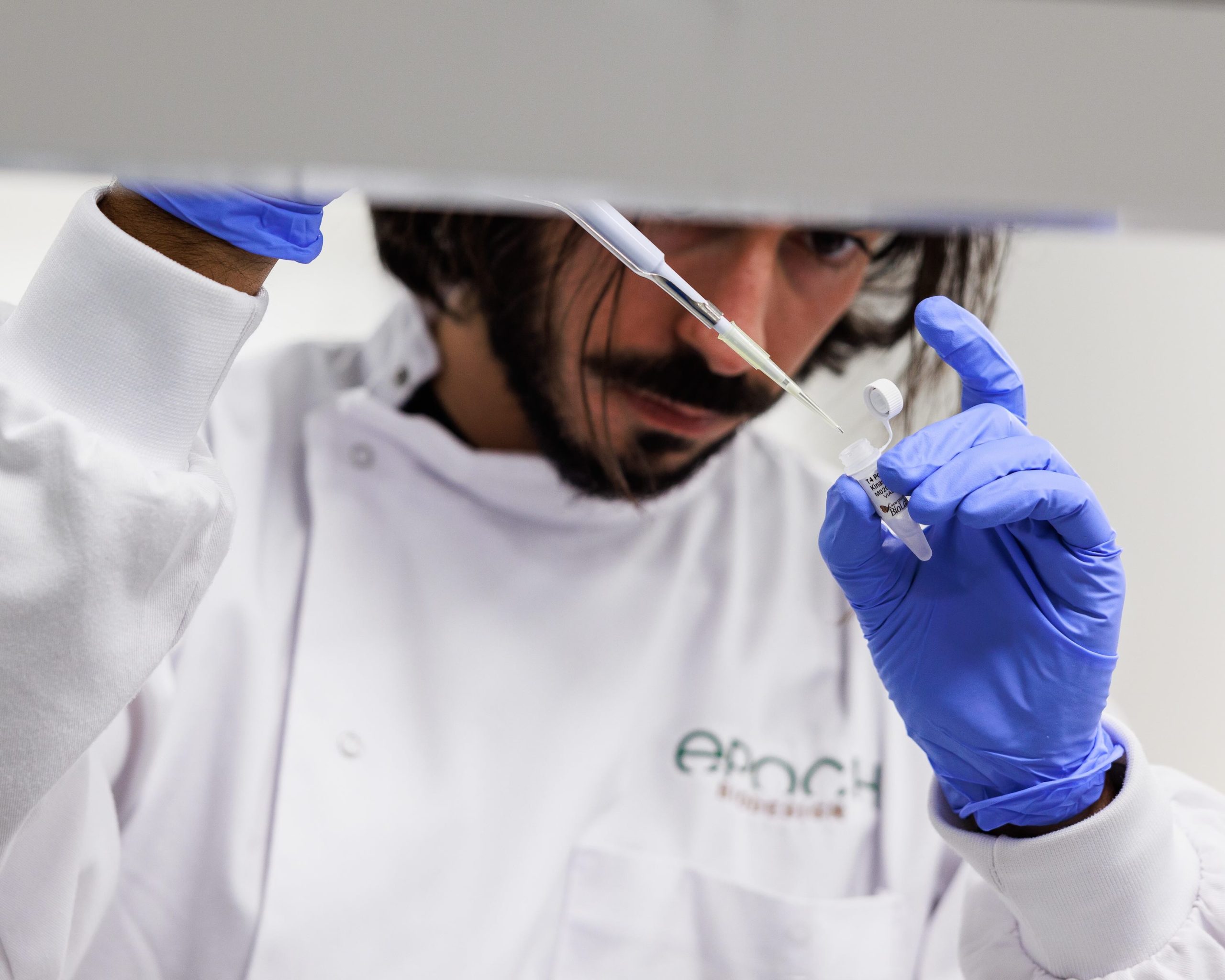
Lululemon Athletica Inc., a global athletic apparel and accessories company, has thrown its financial weight behind Epoch Biodesign, a burgeoning biotechnology firm pioneering an enzymatic approach to tackle the burgeoning global crisis of textile waste. This strategic investment underscores a growing industry commitment to sustainable practices, aiming to revolutionize how synthetic fabrics are recycled and repurposed. Epoch Biodesign, led by its visionary founder and CEO Jacob Nathan, is developing a novel process that effectively deconstructs complex plastic polymers found in discarded textiles back into their foundational components, setting the stage for a truly circular economy in materials manufacturing. The initiative represents a significant step towards decoupling material production from virgin fossil resources, addressing both environmental concerns and the volatile economics of traditional supply chains.
The Global Plastic Predicament
The world’s reliance on plastics has surged dramatically over the past century, transforming industries from packaging to construction to apparel. This omnipresence, however, comes at a steep environmental cost. Millions of tons of plastic waste accumulate annually in landfills, pollute oceans, and fragment into microplastics that infiltrate ecosystems and even the human food chain. The fashion industry, in particular, contributes significantly to this crisis. The rise of "fast fashion" and the increasing incorporation of synthetic fibers like polyester, nylon, and spandex in clothing have led to an unprecedented volume of textile waste. A staggering percentage of discarded garments, often made from these durable yet environmentally persistent materials, are either incinerated or end up in landfills, where they can take hundreds of years to decompose.
For decades, the oil and gas sector, facing a global energy transition towards renewables, has increasingly looked to plastics production as a key driver for future profits. This strategic pivot further entrenches the linear "take-make-dispose" model, where raw materials are extracted, manufactured into products, and then discarded. This trajectory is widely recognized as unsustainable, necessitating urgent innovation in waste management and material circularity.
Current mechanical recycling methods for textiles often result in "downcycling," where the quality and performance of the material degrade with each processing cycle. This limits its reuse in high-value applications, meaning recycled fibers often find their way into lower-grade products like insulation or carpet padding rather than new garments. Chemical recycling offers a promising alternative but frequently involves energy-intensive processes, high temperatures, and sometimes hazardous solvents, raising concerns about its overall environmental footprint and economic viability at scale. The pressing need for scalable, efficient, and environmentally benign solutions has never been more apparent, prompting forward-thinking companies like Lululemon to seek out disruptive technologies that can truly close the loop on textile waste.
Pioneering a Biological Solution
At the heart of Epoch Biodesign’s innovative approach lies the power of enzymes. Jacob Nathan’s journey into this field began during his high school years, driven by a profound desire to find a viable solution for plastic degradation. Enzymes are highly specific biological catalysts, nature’s microscopic workhorses, capable of facilitating complex biochemical reactions with remarkable precision and efficiency. Unlike some traditional chemical recycling methods that rely on harsh chemicals or extreme temperatures, Epoch Biodesign leverages a carefully selected cascade of enzymes to break down pre- and post-consumer plastic waste.
The key distinction of Epoch’s methodology is its focus on isolating and utilizing the enzymes themselves, rather than relying on the microbes that produce them. This allows for a more controlled and industrializable process, sidestepping the inherent fickleness and specific environmental requirements often associated with living microorganisms. By partnering with industrial suppliers already adept at producing enzymes on a large scale, Epoch ensures a reliable and consistent supply chain for its biological agents, crucial for commercial viability.
This enzymatic deconstruction process meticulously disassembles complex plastic polymers into their fundamental building blocks, known as monomers. These purified monomers are chemically identical to those derived from virgin fossil fuels, making them ready to be re-polymerized into new, high-quality plastics without any loss of performance or structural integrity. The efficacy of this enzymatic cascade is notable, with Epoch reporting the recovery of over 90% of the desired monomers. Nathan highlighted the purity of the output, stating that "the only thing that’s left over after our process are dyes, which are captured and can be dealt with separately." This high yield and purity are critical for achieving genuine circularity, enabling recycled materials to compete directly with virgin plastics in terms of quality and performance.
Nylon’s Enduring Legacy and Recycling Challenge
Epoch Biodesign’s initial focus is on nylon 6,6, a strategic choice given its widespread use and current recycling difficulties. Nylon 6,6, a high-strength synthetic polyamide, holds a significant place in industrial history. It was famously developed by DuPont in the 1930s as the "miracle fiber," revolutionizing textiles, hosiery, and various industrial applications. Its exceptional durability, elasticity, and resistance to abrasion quickly made it indispensable in everything from athletic wear and fashion garments to automotive airbags, robust carpeting, and specialized climbing ropes. As Nathan points out, "It’s the original synthetic fiber. It’s what the guys at DuPont were cooking up. The reason we still use it is it’s really good at what it does. We can’t really replace it in all these applications."
Despite its enduring utility, nylon 6,6 presents considerable challenges for conventional recycling. Its complex polymer structure, often intertwined with other fibers, and the presence of various additives and dyes make mechanical recycling particularly difficult. Such processes often lead to degraded material unsuitable for its original high-performance applications. Traditional chemical recycling methods for nylon 6,6 can also be energy-intensive and may not always yield monomers of sufficient purity for high-grade re-polymerization.
The timely nature of Epoch’s solution is further underscored by recent market fluctuations. Nathan observed significant volatility in the cost of precursors for nylon 6,6 and other materials, with spot prices surging by as much as 150% in recent weeks. This instability in the petrochemical market directly impacts manufacturers reliant on virgin plastic inputs. By utilizing waste textiles as its feedstock rather than petroleum-derived raw materials, Epoch Biodesign can entirely circumvent this price instability. This detachment from fossil carbon extraction, refinement, and its associated market volatility offers a compelling economic advantage, promising greater consistency and predictability in material costs for manufacturers. This stability could prove to be a powerful incentive for industries grappling with fluctuating raw material expenses and supply chain disruptions. "When we’re detaching the production of materials from the extraction, refinement, and volatility that comes from fossil carbon, we can create much more consistency," Nathan emphasized.
Investment and the Path to Commercialization
The compelling vision and scientific rigor of Epoch Biodesign have attracted significant investor interest, culminating in a recent $12 million funding round. Lululemon’s participation in this round is particularly noteworthy, given its prominent position in the athletic apparel sector and its stated commitment to sustainability. Lululemon, like many contemporary clothing brands, utilizes substantial quantities of synthetic fibers, including nylon, in its product lines. Investing in advanced recycling technologies aligns directly with the company’s broader environmental, social, and governance (ESG) objectives and its strategy to reduce its reliance on virgin materials. This strategic move not only helps Lululemon address its own material footprint but also positions it as a leader in fostering innovative solutions for the wider industry.
Other investors in this crucial funding round included Exantia, Happiness Capital, Kompas VC, and Leitmotif, signifying a diverse consortium of backers recognizing the potential impact of Epoch’s technology. This capital infusion is earmarked for critical next steps in the company’s development: the establishment of a demonstration-scale facility. This pilot plant, strategically located near Imperial College London, will serve as a crucial proving ground for the technology, allowing for optimization of the enzymatic processes, validation of output purity, and refinement of operational efficiencies at a larger scale.
Following the successful operation of the demonstration facility, Epoch Biodesign plans to escalate to a full commercial-scale plant. This ambitious facility is projected to come online by 2028 and is designed to achieve an impressive production capacity of 20,000 metric tons of monomer per year. To put this into perspective, while global textile waste far exceeds this figure, 20,000 metric tons represents a substantial volume of high-value raw material that would otherwise contribute to landfills or incineration. This marks a significant contribution to circularity for a specific type of plastic, setting a precedent for future expansion.
Transforming the Apparel Industry Landscape
The implications of Epoch Biodesign’s technology, particularly with Lululemon’s backing, extend far beyond just waste management; they could fundamentally reshape the apparel industry’s material sourcing and sustainability narratives. The fashion sector has faced increasing scrutiny over its environmental footprint, from prodigious water consumption and chemical usage to the sheer volume of textile waste it generates. Consumers are increasingly demanding transparency and genuinely sustainable options from brands, and regulatory bodies are implementing stricter environmental standards, particularly in regions like the European Union with its ambitious Green Deal initiatives.
By investing in and potentially adopting technologies like Epoch’s, companies like Lululemon can not only mitigate their environmental impact but also significantly enhance their brand reputation and meet evolving consumer and regulatory expectations. This move could also inspire other major apparel manufacturers to accelerate their investments in advanced recycling solutions, fostering a competitive drive towards circularity throughout the industry.
The ability to transform waste textiles into high-quality monomers offers a stable, domestically sourced alternative to petroleum-based raw materials, reducing geopolitical risks and price volatility associated with global oil markets. This shift represents a crucial step towards supply chain resilience, allowing brands to better manage costs and ensure a consistent flow of materials, especially for specialized performance fabrics like those Lululemon is known for. The long-term vision is a paradigm shift where discarded yoga pants or athletic wear become the raw material for new products, closing the loop on a historically resource-intensive and often wasteful industry.
The Broader Vision for Circularity
While nylon 6,6 is the immediate focus, Jacob Nathan emphasizes that the underlying enzymatic technology developed by Epoch Biodesign is highly adaptable. "The technology can be repurposed for different types of materials and plastics," he stated, hinting at a future where a broader spectrum of synthetic polymers could be recycled using similar biological processes. This adaptability is a critical advantage, as the challenge of plastic waste is multifaceted, encompassing numerous types of polymers with diverse chemical structures.
Expanding the application of their enzyme cascade to other prevalent plastics, such as polyethylene terephthalate (PET) commonly found in plastic bottles and some textiles, or other polyamides, would significantly amplify their potential impact. This phased approach, starting with a high-value, difficult-to-recycle material like nylon 6,6, allows the company to refine its processes and demonstrate commercial viability before tackling an even wider array of waste streams. Nathan alluded to this broader strategy, noting, "Nylon 6,6 will reach maturity before the others, but we’ve got some exciting stuff in the pipeline."
The long-term potential for such a versatile platform is immense, offering a pathway to reduce reliance on virgin plastics across multiple industries, from automotive and construction to packaging and consumer electronics. The vision is not merely to recycle but to establish a robust, biologically driven infrastructure that systematically dismantles plastic waste, preserving its intrinsic value and enabling its continuous reuse within the economy. This represents a fundamental shift from waste management to resource management, moving closer to a truly closed-loop industrial ecosystem.
Challenges and Future Prospects
Despite the promising outlook, the journey from demonstration to widespread commercialization and industry adoption for Epoch Biodesign, and indeed for the broader advanced recycling sector, is not without its challenges. Scaling up any innovative technology from laboratory or pilot scale to industrial volumes requires substantial capital investment, meticulous engineering, and robust operational expertise. Ensuring the consistent quality and purity of recycled monomers at a commercial scale, while maintaining cost-effectiveness and energy efficiency, will be paramount.
Furthermore, establishing efficient collection and sorting infrastructures for post-consumer textile waste remains a significant hurdle. For enzymatic recycling to thrive, a reliable and consistent supply of feedstock is essential, which necessitates collaboration across the entire value chain, from consumers and waste management companies to brands and recyclers. Competition from other recycling technologies, both mechanical and chemical, also presents a dynamic market landscape. However, Epoch Biodesign’s enzymatic approach offers distinct advantages, particularly in its precision and ability to yield high-quality monomers, positioning it as a potentially superior solution for certain complex polymers.
The commitment from influential brands like Lululemon provides not just financial backing but also crucial market validation and a potential anchor customer for the recycled output. As the world increasingly grapples with the environmental consequences of linear consumption, innovations like Epoch Biodesign’s offer a beacon of hope, paving the way for a future where waste is no longer an endpoint but a valuable resource in a truly circular economy. The coming years will be critical in demonstrating the full commercial and environmental potential of this biotechnological frontier, potentially ushering in a new era for sustainable material production.







 Azin Asro