Amir Mahmud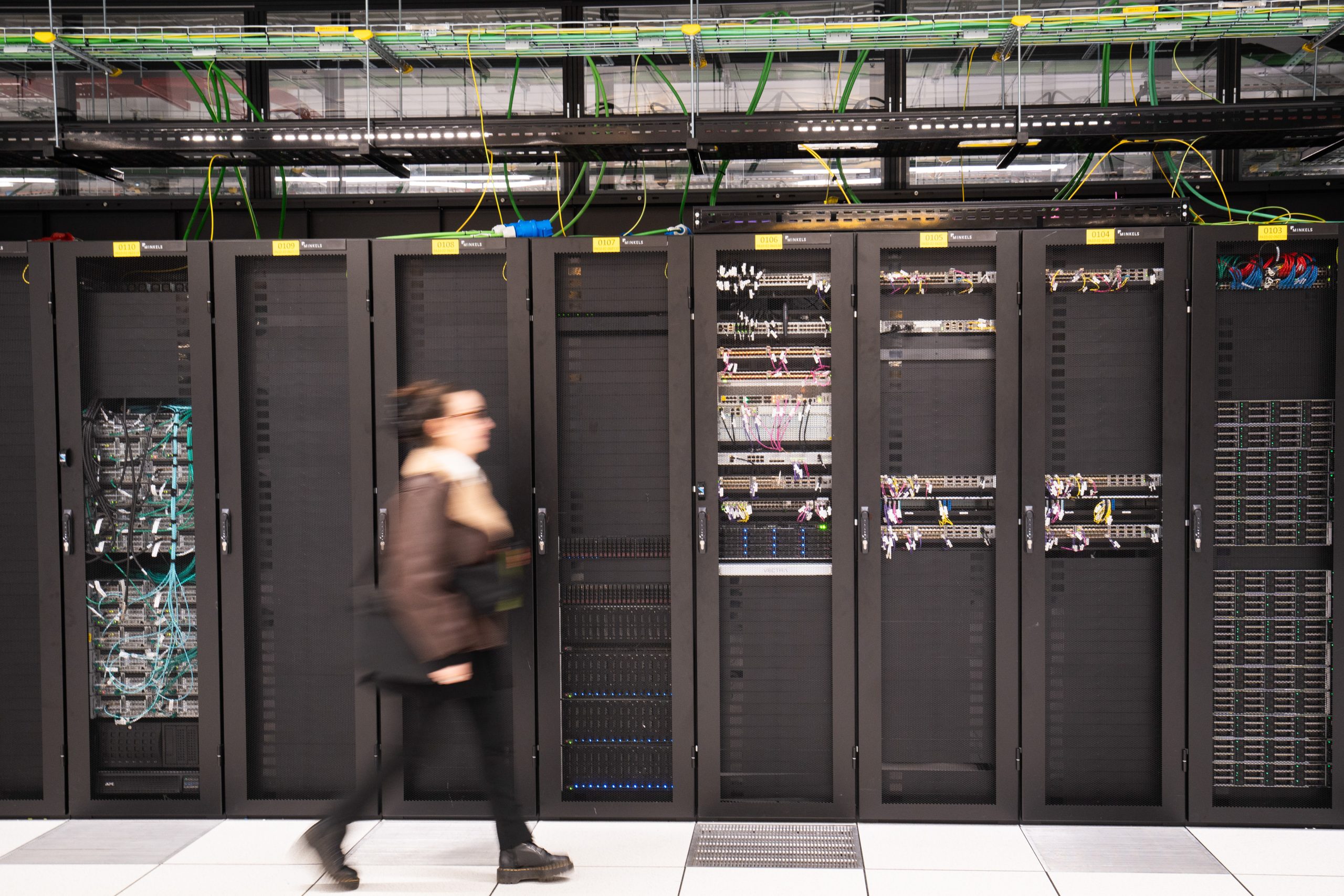
In an era defined by the explosive growth of artificial intelligence, cloud computing, and ubiquitous digital services, the underlying infrastructure supporting this technological revolution faces unprecedented demands. While much attention focuses on the computational prowess of leading AI models and the soaring valuations of chip manufacturers, a critical yet often overlooked challenge resides within the very heart of these digital fortresses: data centers. As these facilities proliferate, consuming vast amounts of power and, crucially, water, the risks associated with operational failures, particularly water leaks, escalate dramatically. It is within this context that MayimFlow, the Built World stage winner at this year’s TechCrunch Disrupt, emerges as a pivotal player, offering a proactive solution to a problem traditionally addressed only after disaster strikes.
The Unseen Threat: Water in Data Centers
Data centers are the nerve centers of the modern digital world, housing the servers, storage systems, and networking equipment essential for everything from social media to scientific research. To prevent these high-density computing environments from overheating, sophisticated cooling systems are indispensable. These systems often rely heavily on water, whether for evaporative cooling towers, chilled water loops, or, in some advanced setups, direct-to-chip liquid cooling. While vital for maintaining optimal operating temperatures and extending equipment lifespan, this reliance on water introduces a significant vulnerability: the potential for leaks.
The consequences of a water leak in a data center are far-reaching and potentially catastrophic. Even a seemingly minor drip can lead to short circuits, equipment damage, data corruption, and system outages. In a facility where every second of downtime can translate into millions of dollars in lost revenue and services, the impact is immense. Beyond immediate financial losses from damaged hardware and lost data, there are costs associated with remediation, business interruption, and potential reputational damage. Traditional leak detection methods often involve simple floor sensors that only trigger an alarm once water has already pooled, making them inherently reactive. This "find out when it happens" approach, as highlighted by MayimFlow founder John Khazraee, has long been a major pain point for operators.
A History of Cooling and Growing Risk
The evolution of data center cooling parallels the increasing density and power consumption of computing hardware. Early data centers, often converted office spaces, relied on basic air conditioning. As server racks became denser and chips more powerful, the need for more efficient cooling grew. This led to the widespread adoption of raised floors with cold aisle/hot aisle containment and computer room air conditioners (CRACs) or computer room air handlers (CRAHs). Many of these systems, especially larger centralized ones, utilize chilled water loops, circulating coolant through heat exchangers to dissipate heat.
More recently, driven by the demands of AI and high-performance computing, innovative cooling solutions like direct liquid cooling (DLC) and even full immersion cooling are gaining traction. While these methods promise greater efficiency and heat dissipation, they also introduce more complex plumbing and a higher volume of liquid within the server environment, amplifying the risk profile for potential leaks. The historical timeline shows a continuous drive for more effective cooling, inadvertently increasing the potential for water-related incidents, making proactive monitoring solutions not just an advantage but a necessity. The shift from reactive to predictive maintenance has been a broader industrial trend, driven by advancements in sensor technology, data analytics, and machine learning, and it is now critically impacting the specialized world of data centers.
From Reactive to Proactive: MayimFlow’s Innovative Approach
MayimFlow distinguishes itself by shifting the paradigm from reactive damage control to proactive prevention. The company leverages a sophisticated combination of Internet of Things (IoT) sensors and edge-deployed machine learning models to detect the subtle precursors of a leak before it manifests as visible water. This innovative approach is designed to provide data center operators with a crucial window of opportunity – typically 24 to 48 hours of advanced warning – to address potential issues, schedule repairs, and mitigate risks without incurring significant downtime or financial losses.
John Khazraee, MayimFlow’s founder, brings over 15 years of experience building critical infrastructure for technology giants like IBM, Oracle, and Microsoft. His extensive background in these demanding environments provided him with first-hand insight into the inefficiencies and costs associated with traditional leak management. "I’ve noticed these issues in data centers, and the only solution they had was: ‘when the leak happens, we find out,’" Khazraee remarked in an interview, underscoring the motivation behind his venture. "Now you have to spend a lot of money to go remediate the situation. Now you got to turn off the servers. Now the data is being disrupted. So I decided to do something about it." This personal experience is central to the company’s mission, aiming to provide a solution that truly anticipates problems rather than merely reacting to them.
The Technology Behind Predictive Prevention
MayimFlow’s core technology relies on a network of IoT sensors strategically placed throughout a data center’s water infrastructure. These sensors are not just detecting the presence of water; they are continuously monitoring various environmental and operational parameters that can indicate an impending failure. This might include subtle changes in pressure, flow rates, humidity levels, temperature fluctuations, or even acoustic signatures that could signify a loose connection, a hairline crack, or a failing component.
The raw data collected by these sensors is then fed into edge-deployed machine learning models. The decision to process data at the "edge" – meaning closer to the data source rather than sending everything to a centralized cloud – is strategic. It reduces latency, enhances security by keeping sensitive operational data local, and minimizes bandwidth requirements. These ML models are trained on a vast dataset of industrial water system behaviors, including patterns associated with both normal operation and various failure modes. By continuously analyzing incoming sensor data against these learned patterns, the models can identify anomalies and predict potential leaks with high accuracy, often long before any physical water is detected. MayimFlow’s flexibility allows them to provide and install their own proprietary sensors or integrate their machine learning models into existing sensor hardware that a data center might already have in place, offering a seamless and cost-effective upgrade path.
A Founder’s Vision: Efficiency and Impact
Khazraee’s entrepreneurial drive is rooted in a personal philosophy of efficiency and resourcefulness. He often attributes this to his upbringing, recalling his father’s admonitions about conserving water during showers. This ingrained mindset of optimizing resources and preventing waste has been a guiding principle throughout his career, particularly as he pursued engineering. His early experiences, such as working at a facility converting frying oil into biodiesel, reinforced his appreciation for impactful, practical solutions to real-world problems.
This blend of personal conviction and professional expertise forms the bedrock of MayimFlow. Khazraee has assembled a team with complementary skills, including Chief Strategy Officer Jim Wong, a veteran of the data center industry with decades of experience, and Chief Technology Officer Ray Lok, whose career has focused on water management and IoT infrastructure. This collective experience provides a robust foundation for tackling the complex challenges of data center infrastructure. Khazraee’s commitment to MayimFlow’s vision is so strong that he has reportedly turned down offers from major tech companies, choosing instead to dedicate the last two years to building and scaling his startup. He firmly believes in the significant impact MayimFlow can make, especially as global concerns about water scarcity and resource management continue to mount.
Market, Social, and Cultural Impact
MayimFlow’s predictive leak prevention system has profound implications across several dimensions.
- Economic Impact: For data center operators, the most immediate benefit is financial. Preventing a single major leak can save millions of dollars in repair costs, equipment replacement, data recovery efforts, and lost revenue due to downtime. This translates into improved operational efficiency, reduced insurance premiums, and enhanced service level agreement (SLA) compliance, which is critical for cloud providers and enterprises reliant on continuous service.
- Operational Reliability: In an increasingly interconnected world, the reliability of data centers underpins vast sectors of the economy. From financial transactions and healthcare systems to communication networks and entertainment platforms, disruptions can have cascading effects. By ensuring the integrity of cooling infrastructure, MayimFlow contributes directly to the stability and resilience of the global digital ecosystem.
- Environmental Responsibility: While MayimFlow’s primary focus is leak prevention, its technology indirectly supports broader environmental goals. Uncontrolled leaks contribute to water waste, a significant concern given that data centers are major water consumers. By preventing leaks and encouraging more efficient water management, the solution aligns with growing corporate environmental, social, and governance (ESG) initiatives, helping companies reduce their ecological footprint.
- "Picks and Shovels" for the AI Gold Rush: The analogy of "picks and shovels" providers during a gold rush perfectly captures MayimFlow’s strategic position. As the demand for AI processing power fuels an unprecedented expansion of data center capacity, the need for robust, reliable, and efficient underlying infrastructure becomes paramount. Companies like MayimFlow, which offer specialized tools and services to support this growth, are poised for significant success, regardless of which specific AI models or services ultimately dominate the market.
Broader Horizons: Beyond the Data Center
While data centers represent a critical initial market, Khazraee envisions a much broader application for MayimFlow’s predictive leak detection technology. The principles of monitoring water systems for subtle anomalies and applying machine learning to predict failures are highly transferable. He believes that commercial buildings, hospitals, manufacturing facilities, and even municipal utilities could significantly benefit from early leak detection and optimized water usage.
In hospitals, for instance, water leaks can compromise sterile environments, damage sensitive medical equipment, and disrupt critical patient care. In manufacturing, leaks can halt production lines, spoil materials, and create safety hazards. Utilities, facing aging infrastructure and mounting pressure to conserve water, could use such systems to identify and repair leaks in their vast distribution networks before they become major breaks. Khazraee’s expansive vision underscores the universality of the problem MayimFlow is addressing: wherever water is used in complex systems, there is a need for intelligent, proactive management to ensure efficiency, prevent waste, and safeguard operations.
As the digital landscape continues its relentless expansion, underpinned by an ever-growing network of data centers, the demand for sophisticated solutions that ensure their resilience and efficiency will only intensify. MayimFlow stands at the forefront of this critical need, transforming reactive maintenance into predictive prevention and offering a vital safeguard against one of the most insidious threats to modern infrastructure: the silent, damaging drip of a water leak.