Amir Mahmud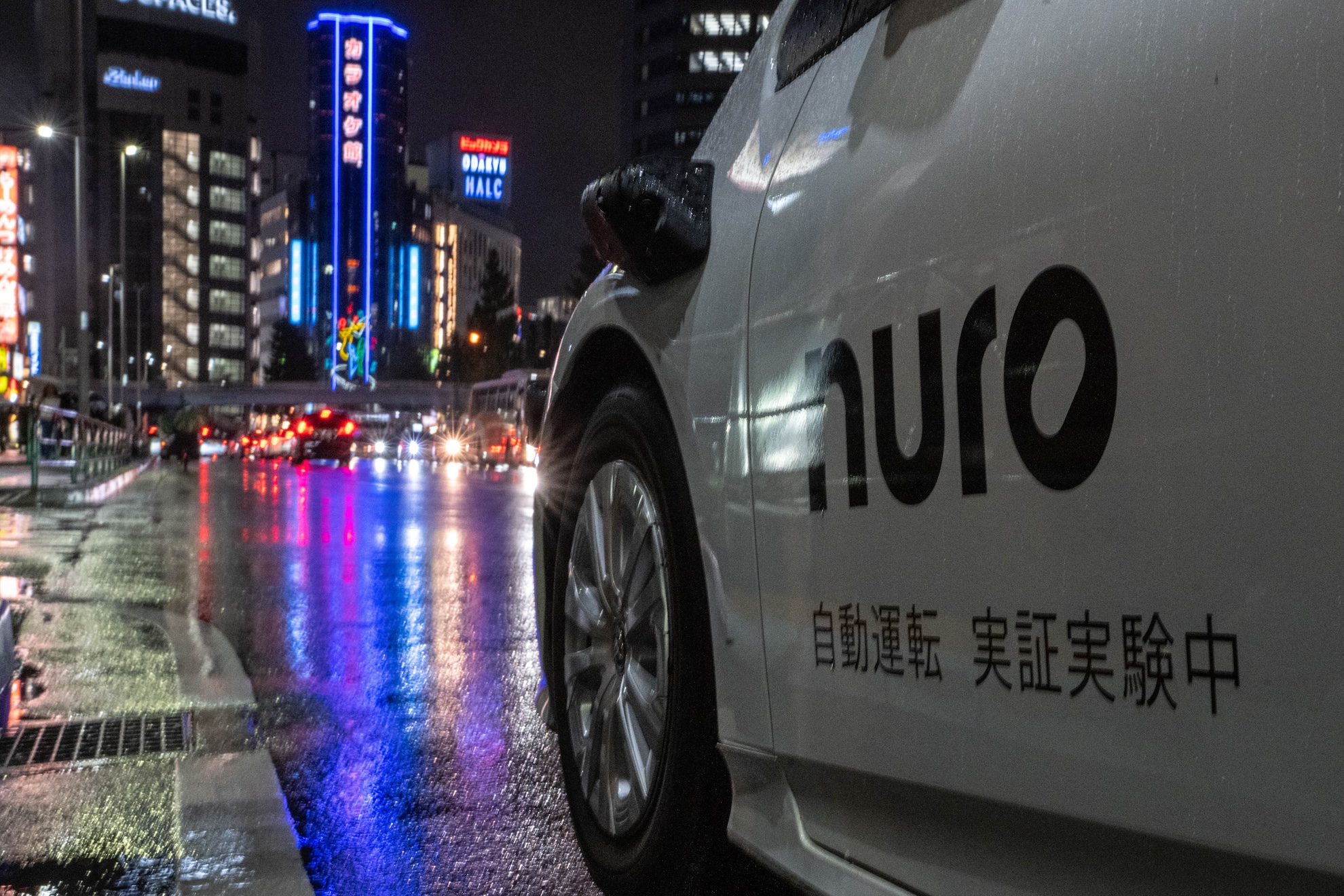
The dynamic landscape of autonomous vehicle development recently witnessed a significant milestone as Nuro, the Silicon Valley-based startup known for its innovative approach to self-driving technology, initiated public road testing of its advanced systems in Tokyo, Japan. This strategic move marks the company’s inaugural expansion into international markets, signaling a pivotal moment in its evolution and a broader trend within the autonomous vehicle (AV) industry towards global deployment. For months, specially equipped Toyota Prius vehicles, outfitted with Nuro’s sophisticated self-driving software and overseen by human safety operators, have been navigating the intricate and often congested thoroughfares of the Japanese capital, gathering critical data and refining algorithms in one of the world’s most challenging urban environments.
Nuro’s Strategic Evolution and AI Foundation
Nuro’s journey within the competitive autonomous vehicle sector has been characterized by both ambitious innovation and pragmatic adaptation. Founded in 2016 by Dave Ferguson and Jiajun Zhu, two early engineers from Google’s pioneering self-driving car project (now Waymo), the company initially carved a niche by focusing on the development and operation of low-speed, unmanned robotic vehicles designed specifically for local goods delivery. This initial strategy, centered on purpose-built delivery bots, garnered significant attention and substantial investment, notably a $940 million injection from SoftBank Vision Fund in 2019, alongside backing from industry titans like Nvidia and Uber. The promise was clear: to revolutionize last-mile logistics with safe, efficient, and driverless delivery solutions.
However, the path to commercial viability in the AV space proved more arduous and capital-intensive than many anticipated. The complexities of scaling hardware manufacturing, navigating diverse regulatory frameworks, and achieving widespread public acceptance for fully autonomous vehicles led to a significant reassessment of Nuro’s core business model. In 2024, the company announced a strategic pivot, shifting away from its direct-to-consumer delivery bot operations to instead license its proprietary self-driving technology stack to established automakers and mobility service providers, including ride-hailing and delivery companies. This change reflected a broader industry trend of consolidation and a recognition that specialized technology development might offer a more sustainable path than full-stack vehicle manufacturing and operation. By focusing on its core strength—the AI software—Nuro aimed to accelerate adoption and leverage existing infrastructure.
At the heart of Nuro’s technology lies an end-to-end AI foundation model, a sophisticated architecture designed to enable the system to learn and adapt dynamically as it encounters diverse driving conditions. This "zero-shot autonomous driving" approach, as Nuro terms it, posits that the AI can generalize from vast datasets and real-world experience, theoretically allowing it to operate in novel environments without extensive prior training on region-specific data. The company’s blog post announcing the Tokyo trials highlighted this capability, stating that its software navigated public roads in Japan autonomously, despite no previous specific training on Japanese driving data. This paradigm represents a significant departure from traditional AV development, which often relies on meticulously mapped environments and extensive, localized data collection. Another U.K.-based startup, Wayve, which recently secured $1.2 billion in funding, has also championed a similar end-to-end AI approach, indicating a potential shift in the foundational strategies for autonomous driving.
Navigating Tokyo’s Unique Urban Tapestry
The decision to expand into Tokyo presents Nuro with a unique set of engineering and operational challenges, distinct from its testing grounds in the United States. The Japanese capital is renowned for its incredibly dense urban environment, labyrinthine street networks, and a driving culture characterized by intricate lane discipline and often constrained spaces. Crucially, Japan adheres to left-hand traffic rules, a fundamental difference from the right-hand driving prevalent in Nuro’s primary U.S. testing locations. This necessitates significant adaptation of the perception and planning modules of any autonomous system.
Beyond the directional change, Tokyo’s urban landscape introduces a multitude of other complexities. Road signs, traffic signals, and lane markings employ different symbologies and conventions compared to those found in the U.S. The sheer volume of traffic, combined with the presence of pedestrians, cyclists, and mopeds navigating tight urban corridors, demands an exceptionally robust and reactive autonomous system. Furthermore, local driving styles can differ subtly, requiring the AI to not just follow rules but also anticipate human behavior effectively. The company acknowledged these difficulties in its announcement, underscoring that testing in Japan "introduces a number of new challenges and different driving styles and rules." This intricate environment serves as an invaluable crucible for refining Nuro’s AI models, pushing the boundaries of their adaptability and resilience.
The "Zero-Shot" AI Paradigm and Safety Validation
Nuro’s "zero-shot" approach, while promising for rapid scalability, naturally raises questions about safety, particularly in uncharted territories like Tokyo. The company emphasizes that this broadly capable AI strategy does not come at the expense of safety. Its validation process is multi-layered and rigorous. Before any new release of its universal autonomy model is deployed on public roads, it undergoes extensive closed-course testing, where performance is meticulously evaluated against a battery of scenarios, including challenging edge cases. This is further complemented by comprehensive simulation testing, which allows for the rapid iteration and assessment of the software’s behavior in a vast array of virtual environments, far exceeding what could be tested physically.
Once the autonomous vehicles transition to public roads, they initially operate in a "shadow mode." In this critical phase, human safety operators remain fully in control, actively driving the vehicles, while Nuro’s self-driving software runs concurrently in the background. The AI processes sensory data and generates driving commands, but these commands are not transmitted to the vehicle’s controls. Instead, the system’s proposed actions are logged and meticulously compared against the human driver’s actual inputs. This shadow mode serves as a vital real-world validation step, allowing Nuro to verify the foundational AI model’s decision-making capabilities in live traffic without direct vehicle control, ensuring that the system is reliably producing appropriate actions before it is ever allowed to operate autonomously. Only after exhaustive analysis and demonstrated proficiency is the system deemed ready for autonomous operation on public roads, albeit still with human oversight initially.
Investment Momentum and Industry Consolidation
The strategic shift and technological advancements at Nuro have continued to attract significant investor confidence, even amidst a period of consolidation and recalibration within the broader AV industry. Last year, Nuro successfully raised $203 million in a Series E funding round, drawing capital from both existing backers like Baillie Gifford and new investors including Icehouse Ventures, Kindred Ventures, and, notably, Nvidia. Uber, a long-standing partner and an entity with its own history in AV development, also participated in this round, further solidifying its commitment to Nuro. This investment was part of a broader deal that also saw Uber making a multi-hundred-million-dollar investment in electric car maker Lucid, signaling a holistic strategy towards future mobility solutions.
These investments underscore the ongoing belief in Nuro’s technology and its revised business model. In an industry where the capital requirements are immense and the timeline to profitability extended, securing consistent funding is paramount. Nuro’s pivot to licensing its AI stack rather than developing and deploying its own fleet of vehicles positions it as a technology enabler, potentially offering a faster route to market and broader impact by integrating its solutions into existing automotive and logistics ecosystems. This approach contrasts with some of its peers who continue to pursue vertically integrated models, and it reflects a maturation of the AV sector as companies seek more viable and scalable pathways to commercialization.
Japan’s Proactive Stance on Autonomous Technology
Japan, as a nation, has consistently demonstrated a proactive and forward-thinking approach to integrating advanced robotics and artificial intelligence into its society, driven in part by demographic challenges such as an aging population and a shrinking workforce. The Japanese government has actively supported the development and deployment of autonomous driving technologies, viewing them as crucial for addressing issues like driver shortages in logistics, enhancing public transportation accessibility, and improving road safety. Regulatory frameworks have been progressively introduced to facilitate testing and eventual commercialization of AVs.
Tokyo, with its status as a global technology hub and its unique urban density, serves as an ideal testbed for autonomous systems. The city’s infrastructure, while complex, is also highly maintained and digitally mapped, offering a robust foundation for AV development. For Nuro, entering the Japanese market is not merely about technical challenges; it is about engaging with a society and a regulatory environment that are increasingly receptive to autonomous solutions. The experience gained here could inform future deployments in other dense urban centers across Asia and beyond, providing invaluable insights into global scalability.
Broader Market Impact and Future Horizons
Nuro’s expansion into Tokyo represents more than just an engineering endeavor; it is a strategic move with significant implications for the global autonomous vehicle market. It validates the company’s "zero-shot" AI approach as potentially capable of transcending geographical and cultural driving differences, offering a pathway for more rapid international deployment. The data collected from navigating Tokyo’s unique traffic patterns and regulatory landscape will undoubtedly enhance Nuro’s foundational AI model, making it more robust and versatile for future applications.
The company’s blog post hinted at these broader ambitions, stating, "Our autonomous operations in Tokyo are the beginning of the compounding benefits of global deployment." This suggests that Nuro views its Tokyo foray as a crucial stepping stone, generating a virtuous cycle of learning and improvement that will facilitate future expansions into other international markets. As the autonomous vehicle industry continues its evolution, the ability to adapt to diverse environments, cultures, and regulatory frameworks will be a key differentiator. Nuro’s bold move into Tokyo positions it at the forefront of this global expansion, demonstrating a commitment to pushing the boundaries of what AI-driven autonomy can achieve on the world stage. The success and learnings from this pilot will undoubtedly shape not only Nuro’s future trajectory but also contribute significantly to the broader understanding and acceptance of autonomous technology worldwide.