Amir Mahmud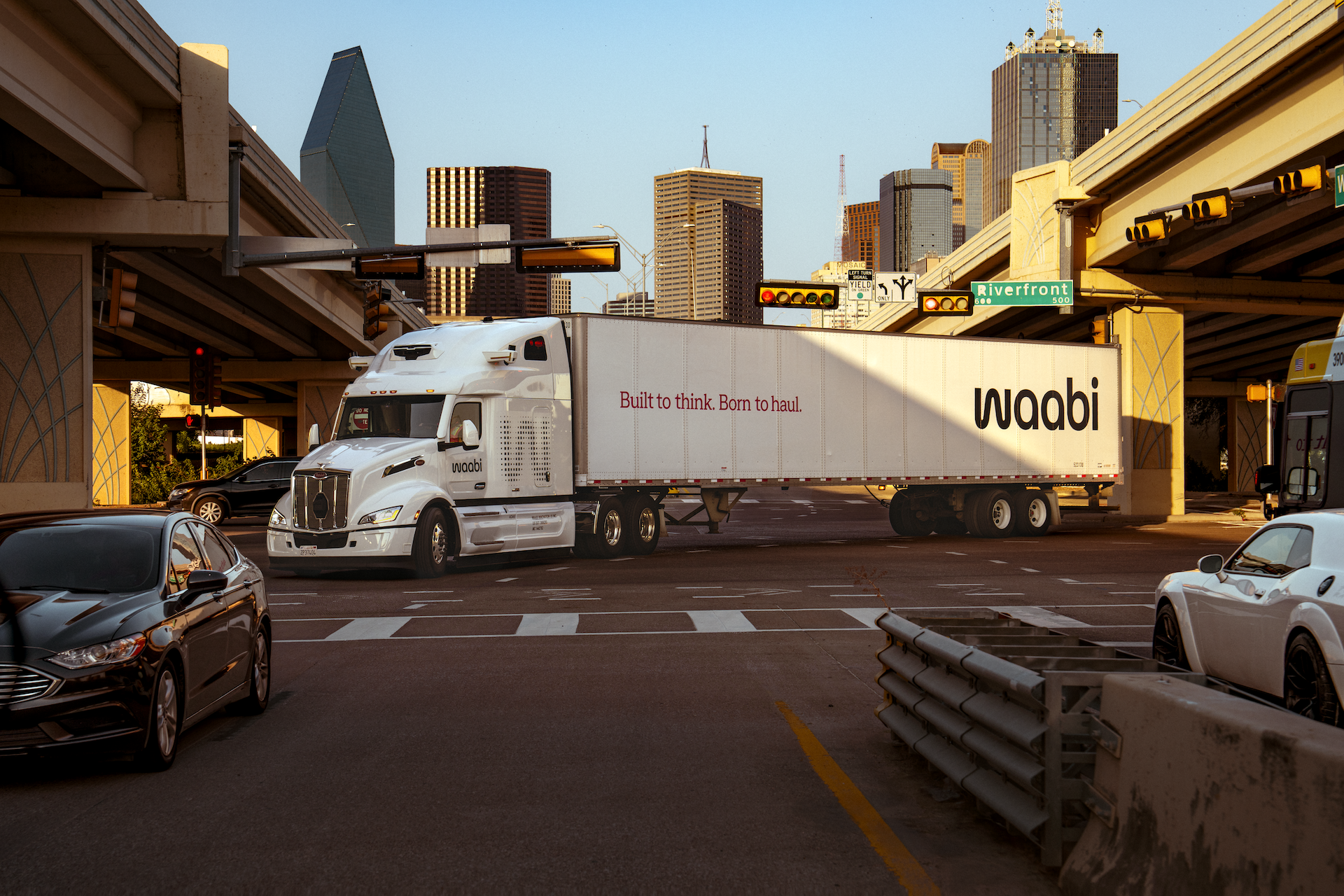
The landscape of autonomous vehicle technology is undergoing a significant transformation, marked by a monumental capital injection for Waabi, a startup at the forefront of AI-driven self-driving solutions. The company has successfully closed an oversubscribed $750 million Series C funding round and secured an additional $250 million in milestone-based capital from ride-hailing giant Uber, bringing its total new funding to an impressive $1 billion. This substantial investment not only bolsters Waabi’s financial runway but also signals a strategic pivot for the company as it expands its proven autonomous trucking technology into the competitive robotaxi sector through an exclusive, large-scale deployment partnership with Uber.
A New Chapter for Autonomous Mobility
This latest funding round, co-led by prominent venture capital firms Khosla Ventures and G2 Venture Partners, underscores a renewed investor confidence in the long-term viability and disruptive potential of autonomous technology, particularly in Waabi’s distinctive approach. The commitment from Uber is especially noteworthy, as it includes a provision for the deployment of 25,000 or more Waabi Driver-powered robotaxis exclusively on its global platform. While a specific timeline for such an ambitious rollout remains undisclosed, the sheer scale of the agreement highlights Uber’s strategic intent to integrate self-driving capabilities deeply into its service offerings and Waabi’s emergence as a key player in this endeavor.
This move represents a crucial diversification for Waabi, which has, until now, concentrated its efforts on autonomous trucking. The company’s founder and CEO, Raquel Urtasun, a distinguished figure in artificial intelligence and computer vision, asserts that Waabi’s capital-efficient methodology and a singularly designed, generalizable AI architecture provide a distinct advantage. This integrated approach, she contends, allows the company to tackle multiple self-driving verticals simultaneously, a strategy that many competitors have found challenging. Historically, several autonomous vehicle developers, including industry leader Waymo, have attempted to concurrently pursue both robotaxi and freight operations, with some eventually opting to narrow their focus, such as Waymo’s decision to discontinue its freight program. Waabi’s conviction, however, is that its core technology is inherently versatile enough to transcend these domain-specific limitations.
The Evolution of Self-Driving Ambitions
The journey toward fully autonomous vehicles has been protracted and punctuated by both groundbreaking advancements and significant setbacks. Early pioneers, often emerging from academic research and government-sponsored challenges like the DARPA Grand Challenge in the mid-2000s, laid the foundational groundwork. By the 2010s, tech giants and startups alike began pouring billions into developing self-driving cars, envisioning a future free from human error on the roads. Google’s Waymo, founded in 2009, was an early frontrunner, demonstrating impressive capabilities in controlled environments. Tesla, with its Autopilot and Full Self-Driving (FSD) initiatives, pushed the envelope with consumer-facing advanced driver-assistance systems, albeit with ongoing debates about their true autonomous capabilities.
Uber’s own history in this space is particularly relevant to the current partnership. The company once harbored grand ambitions of developing its proprietary self-driving technology through its Advanced Technologies Group (Uber ATG). Raquel Urtasun herself played a pivotal role as chief scientist at Uber ATG. However, after substantial investment and a series of operational challenges, including a fatal accident involving an Uber autonomous test vehicle in Arizona in 2018, Uber made the strategic decision to divest its self-driving division. In 2020, Uber ATG was sold to Aurora Innovation, an autonomous trucking firm, in a deal that saw Uber take a significant stake in Aurora. This marked a crucial shift for Uber, moving away from in-house development toward an "asset-light" partnership model, where it would leverage the expertise of specialized AV developers rather than building the technology itself. This latest collaboration with Waabi, along with an existing partnership between Waabi and Uber Freight, brings Urtasun’s professional journey with Uber full circle, demonstrating a renewed alignment on autonomous goals, albeit under a different operational framework.
Waabi’s Differentiated AI Approach
At the heart of Waabi’s audacious strategy lies its unique technological foundation, particularly its "Waabi Driver" system and the proprietary simulation platform, "Waabi World." Unlike many traditional autonomous driving systems that rely heavily on vast quantities of real-world driving data collected through extensive physical fleets, Waabi claims to adopt a more capital-efficient and scalable approach. The Waabi Driver is primarily trained, rigorously tested, and validated within Waabi World, a sophisticated closed-loop simulator. This platform is designed to automatically construct high-fidelity digital twins of real-world environments, perform real-time sensor simulations, and generate an infinite array of complex and rare driving scenarios to stress-test the Waabi Driver.
Crucially, Waabi World also enables the autonomous system to learn from its mistakes and improve without direct human intervention, a characteristic that aligns with the principles of advanced artificial intelligence and machine learning. Urtasun emphasizes that this enables the Waabi Driver to "reason about its surroundings as a human would," allowing it to make optimal maneuvers even in novel or ambiguous situations. This paradigm, the company suggests, leads to a system that can generalize effectively from a significantly smaller dataset than conventional autonomous driving architectures, accelerating development cycles and reducing the immense computational and logistical overhead typically associated with AV development. This focus on simulation-driven development, according to Urtasun, allows Waabi to operate with a leaner infrastructure, requiring fewer human operators for development, smaller data centers, and less reliance on the very latest, most power-hungry chips, contributing to its claim of a more cost-effective and faster path to commercialization.
Uber’s Strategic Pivot: A Platform for Innovation
Uber’s decision to partner with Waabi, following its earlier divestment of Uber ATG, is indicative of a broader strategic shift within the company. Recognizing the astronomical costs and technical complexities associated with developing autonomous driving technology from scratch, Uber has embraced a partnership model. Instead of competing directly in the AV development race, Uber aims to be the leading platform for deploying diverse self-driving solutions. This approach allows Uber to integrate the best-in-class technology from various specialists, spread its risk, and focus on its core competency: logistics and ride-hailing platform management.
The company has forged alliances with a growing ecosystem of autonomous vehicle developers globally, including established players like Waymo, specialized delivery robot companies like Nuro, and international partners such as Avride, Wayve, WeRide, and Momenta. This multi-partner strategy ensures that Uber is not beholden to a single technology provider and can potentially offer varied autonomous services tailored to different markets or use cases. To further support these collaborations, Uber recently launched a new division called Uber AV Labs. This initiative leverages Uber’s existing fleet of vehicles to collect valuable driving data, which is then anonymized and shared with its AV partners. This data, encompassing a vast array of real-world driving conditions, can be instrumental for partners like Waabi in refining their autonomous systems and expanding their operational design domains.
Market Dynamics and Societal Impact
The prospect of 25,000 Waabi robotaxis on Uber’s platform, alongside Waabi’s autonomous trucking initiatives, carries profound implications for various sectors. In urban mobility, robotaxis promise to reshape public transportation, reduce traffic congestion (theoretically, if optimized), and offer a new dimension of accessibility for riders. For Uber, it represents a path towards significantly reduced operational costs by eliminating the need for human drivers, potentially boosting profitability and offering more competitive pricing. However, the social impact, particularly concerning job displacement for human drivers, remains a significant concern that policymakers and industry leaders must address.
Autonomous trucking similarly promises to revolutionize supply chains and logistics. With ongoing driver shortages and rising fuel costs, self-driving trucks offer the potential for increased efficiency, reduced operational expenditures, and enhanced safety on highways, as autonomous systems are theoretically less susceptible to fatigue or distraction. The cultural acceptance of these technologies, both robotaxis and autonomous trucks, is a critical hurdle. Public trust, which has been fragile due to safety incidents involving other AV companies, will hinge on transparent testing, rigorous validation, and a demonstrable record of safety. Regulatory frameworks, which currently vary significantly across different states and countries, also need to evolve to create a clear and consistent path for large-scale deployment.
The Road Ahead: Challenges and Opportunities
While Waabi’s substantial funding and Uber partnership represent a significant vote of confidence, the path to widespread autonomous deployment is fraught with challenges. The industry has grappled with the "last mile" problem of achieving true Level 4 or Level 5 autonomy in unpredictable real-world conditions. Scaling autonomous operations from limited pilot programs to tens of thousands of vehicles across diverse geographic and environmental conditions requires immense technical prowess and operational expertise. Waabi’s claim of a single, generalizable AI stack is a bold one, promising efficiency but also carrying the risk that a flaw in the core architecture could have far-reaching implications across all verticals.
The regulatory environment continues to be a complex mosaic, with states like California and Arizona leading the way in permitting robotaxi services, while others remain more cautious. Companies like Waabi must navigate this fragmented landscape, ensuring compliance and building robust safety cases that satisfy regulators and the public alike. Furthermore, the capital intensity of the AV industry, despite Waabi’s claims of efficiency, remains high. Competitors like Aurora Innovation have raised over $3.46 billion, and Kodiak Robotics has secured $448 million, highlighting the massive financial resources required to develop and deploy this technology. Waabi’s total funding now stands at approximately $1.28 billion, including a $200 million Series B round closed in June 2024.
Investment Confidence and Future Outlook
Waabi’s leadership remains optimistic, with Raquel Urtasun noting that the company has spent the past four and a half years meticulously developing its technology for both highway and surface street capabilities with trucks. While a fully driverless truck rollout on public highways has been delayed slightly from its initial target, now expected within the next few quarters, Urtasun emphasizes that the core Waabi Driver technology is ready. The company is collaborating with Volvo to build purpose-built autonomous trucks, which were unveiled last October, and these vehicles are currently undergoing final validation. Waabi’s direct-to-consumer model for its trucks aims to ensure strong market demand.
For the robotaxi expansion, Waabi intends to follow a similar strategy to its trucking rollout, integrating its sensors and proprietary technology directly into vehicles from the factory floor, in partnership with an undisclosed automaker. This approach, Urtasun states, emphasizes vertical integration with a fully redundant OEM platform, which she believes is essential for building truly safe and scalable autonomous technology. The substantial investment from a diverse group of stakeholders, including NVentures (Nvidia’s VC arm), Volvo Group Venture Capital, Porsche Automobil Holding SE, BlackRock, and BDC Capital’s Thrive Venture Fund, signals broad industry and financial confidence in Waabi’s vision. As Urtasun aptly puts it, the robotaxi deployment is still in its "first innings," indicating that while significant progress has been made, the journey to pervasive autonomous mobility is still unfolding, with much more scale yet to come.