Amir Mahmud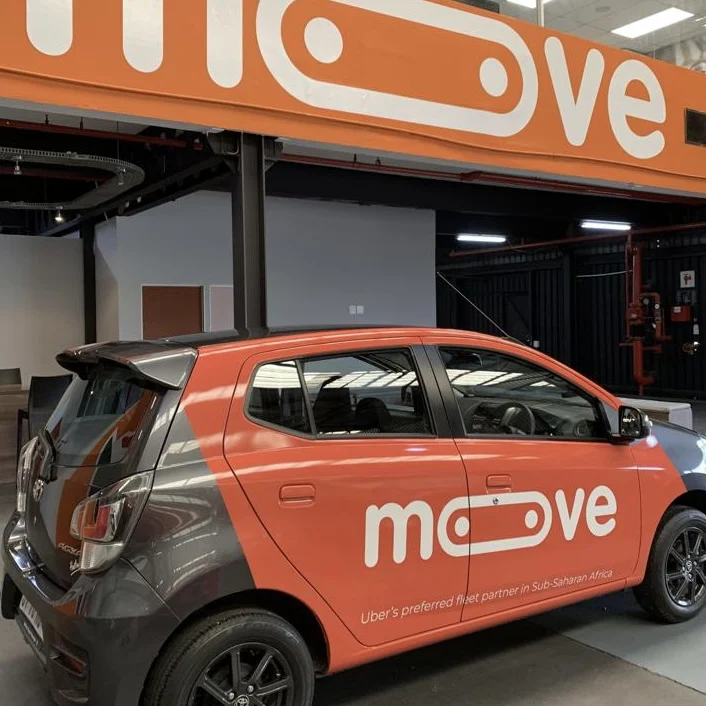
Moove, a company that began by facilitating vehicle ownership for ride-hailing and delivery drivers in emerging markets, has announced a significant Series C funding round, raising $250 million. This substantial capital injection pushes its valuation to an impressive $2.1 billion, marking a pivotal moment in its strategic evolution from a traditional mobility financing and fleet management entity to a key enabler of the burgeoning autonomous vehicle (AV) industry. The funding underscores investor confidence in Moove’s unique approach to addressing a critical operational void within the robotaxi ecosystem, positioning itself as the foundational operator for driverless fleets globally.
The latest financing round was spearheaded by Mubadala Investment Company, the sovereign wealth fund of Abu Dhabi, with co-leads Woven Capital and Ion Pacific also playing significant roles. This diverse investment consortium reflects a broad belief in Moove’s dual strategy: leveraging its established expertise in managing vast fleets and providing innovative financing solutions, while simultaneously expanding into the complex realm of autonomous vehicle operations. Ladi Delano, co-founder and co-CEO of Moove, articulated that the company’s extensive experience in financing and operating human-driven ride-hailing fleets provided an unparalleled training ground for its ambitious leap into the future of mobility.
From Gig Economy Empowerment to Autonomous Frontiers
Moove’s journey commenced in 2020, with its roots firmly planted in Nigeria before establishing its current headquarters in Dubai. The company’s initial mission was to tackle a significant barrier for gig economy workers: access to suitable vehicles. In many developing nations, traditional credit systems often exclude individuals working in the informal sector, making it exceedingly difficult for aspiring ride-hailing or delivery drivers to acquire a vehicle. Moove innovated by offering revenue-based financing and alternative credit scoring models, allowing drivers to lease or own vehicles by leveraging their earnings from platforms like Uber and Bolt. This model democratized access to economic opportunities for tens of thousands of individuals, fostering entrepreneurship and contributing to the growth of the gig economy across various regions.
Over a relatively short period, Moove has scaled its operations impressively, establishing a robust presence across 14 countries and managing a human-driven ride-hailing fleet that comprises 42,000 vehicles. This rapid expansion, supported by a global workforce of 3,300 employees, demonstrates the company’s operational prowess and its ability to navigate diverse regulatory and market landscapes. The insights gained from managing such a large and geographically dispersed fleet, handling everything from maintenance and servicing to driver support and compliance, proved invaluable. This operational bedrock, initially built to empower individual gig drivers, is now being repurposed and scaled to support the demands of an entirely new paradigm: driverless transportation. The company still actively supports its traditional mobility business, which is on track to achieve full profitability this year, providing a stable financial foundation for its more speculative autonomous ventures.
The Untapped Niche in the Autonomous Vehicle Ecosystem
The autonomous vehicle industry, despite decades of research and billions in investment, has faced considerable challenges in achieving widespread commercialization. While significant strides have been made in developing the core self-driving technology, the operational realities of deploying and managing large-scale robotaxi fleets have emerged as a distinct and complex hurdle. Delano’s strategic insight identified a crucial gap among the industry’s primary stakeholders: the AV developers focused on software, vehicle manufacturers on hardware, ride-hailing marketplaces on consumer experience, and consumers themselves. None of these players, he observed, expressed a strong desire to "own the metal"—to directly manage the physical vehicles and the myriad operational tasks they entail.
This observation led Moove to articulate a series of fundamental questions that underpin the operational backbone of any robotaxi service: Who owns the vehicle? Who operates it? Who orchestrates its movements? Who handles servicing, maintenance, cleaning, and even lost property? The answers to these questions, Moove concluded, pointed directly to a specialized fleet management provider. The company recognized that its existing capabilities in managing extensive vehicle fleets, coupled with its financing expertise, were uniquely transferable to the autonomous domain. By stepping into this operational void, Moove aims to become the essential infrastructure provider, allowing AV developers to concentrate on refining their core technology while Moove handles the demanding, capital-intensive, and labor-intensive aspects of vehicle deployment and upkeep. This strategy echoes the "picks and shovels" approach during gold rushes, providing critical services to those digging for the gold.
Scaling Robotaxi Operations and Next-Generation Infrastructure
Moove’s expansion into autonomous vehicles began in early 2023, following a comprehensive evaluation of the industry landscape. The company quickly moved to forge strategic alliances, notably partnering with Waymo, one of the pioneering leaders in autonomous driving technology. Currently, Moove functions as the fleet operator for Waymo in key U.S. markets such as Phoenix, Miami, and Las Vegas, with plans to extend this partnership to London in the near future. While Moove currently operates Waymo’s vehicles, its long-term vision includes acquiring these robotaxis directly, utilizing debt financing to build out a substantial owned fleet. This transition from operator to owner signifies a deeper commitment and greater control over the robotaxi asset base. Furthermore, Delano disclosed that Moove already owns robotaxi vehicles from another undisclosed AV developer, indicating a diversified approach to partnerships and a clear trajectory towards accumulating a significant portfolio of autonomous assets. The ultimate goal, as stated by Delano, is to own "hundreds of thousands of vehicles," underscoring the company’s ambitious scale.
The newly secured $250 million in funding is earmarked primarily for accelerating the growth of Moove’s autonomous vehicle fleet management business. A significant portion will be allocated to talent acquisition, with plans to hire approximately 350 new employees. These roles will likely span specialized areas such as robotics engineering, fleet logistics, software development for depot management, and operational oversight for AV deployments, reflecting the complex technical and logistical demands of autonomous operations.
A cornerstone of Moove’s future strategy involves the development of automated depots, which the company terms "nests." These innovative facilities are designed to operate around the clock, leveraging advanced robotics to automate critical tasks such as vehicle charging, maintenance, and servicing. The concept of "lights-out" depots, where operations can proceed largely autonomously without human intervention, represents a significant leap in operational efficiency. While Delano noted that these fully automated depots are a future product, Moove already has about 15 such facilities in various stages of development. These nests are crucial for scaling robotaxi services efficiently and cost-effectively, reducing the need for extensive human labor for routine tasks, minimizing vehicle downtime, and ensuring optimal fleet readiness. This infrastructure development is key to transforming the high fixed costs associated with AV deployment into a scalable, manageable operational expense.
Broader Implications and The Road Ahead
Moove’s aggressive push into autonomous vehicle operations and infrastructure has broader implications for the mobility sector and urban environments. By tackling the complex operational challenges of robotaxi deployment, Moove is helping to pave the way for a future where autonomous transportation becomes a ubiquitous reality. The widespread adoption of robotaxis could fundamentally alter urban planning, reduce traffic congestion, lower the cost of transportation for consumers over time, and enhance accessibility for populations currently underserved by traditional transit options.
However, the path to fully autonomous mobility is not without its hurdles. Regulatory frameworks continue to evolve, public perception and trust remain critical factors, and the societal impact on human drivers and related industries necessitates careful consideration. Moove’s strategy, by focusing on the operational backbone rather than just the driving technology, acknowledges these complexities and aims to provide a stable, scalable foundation upon which the AV future can be built.
The significant investment from a diverse group of backers, including sovereign wealth funds, venture capital firms, and strategic corporate partners like Uber, signals strong market validation for Moove’s distinctive value proposition. As the autonomous vehicle industry matures, specialized service providers like Moove are likely to become increasingly crucial, acting as the silent enablers that transform groundbreaking technology into practical, scalable, and economically viable transportation solutions. Moove is not just financing vehicles; it is aiming to orchestrate the very infrastructure that will drive the next generation of urban mobility.






 Azin Asro