Amir Mahmud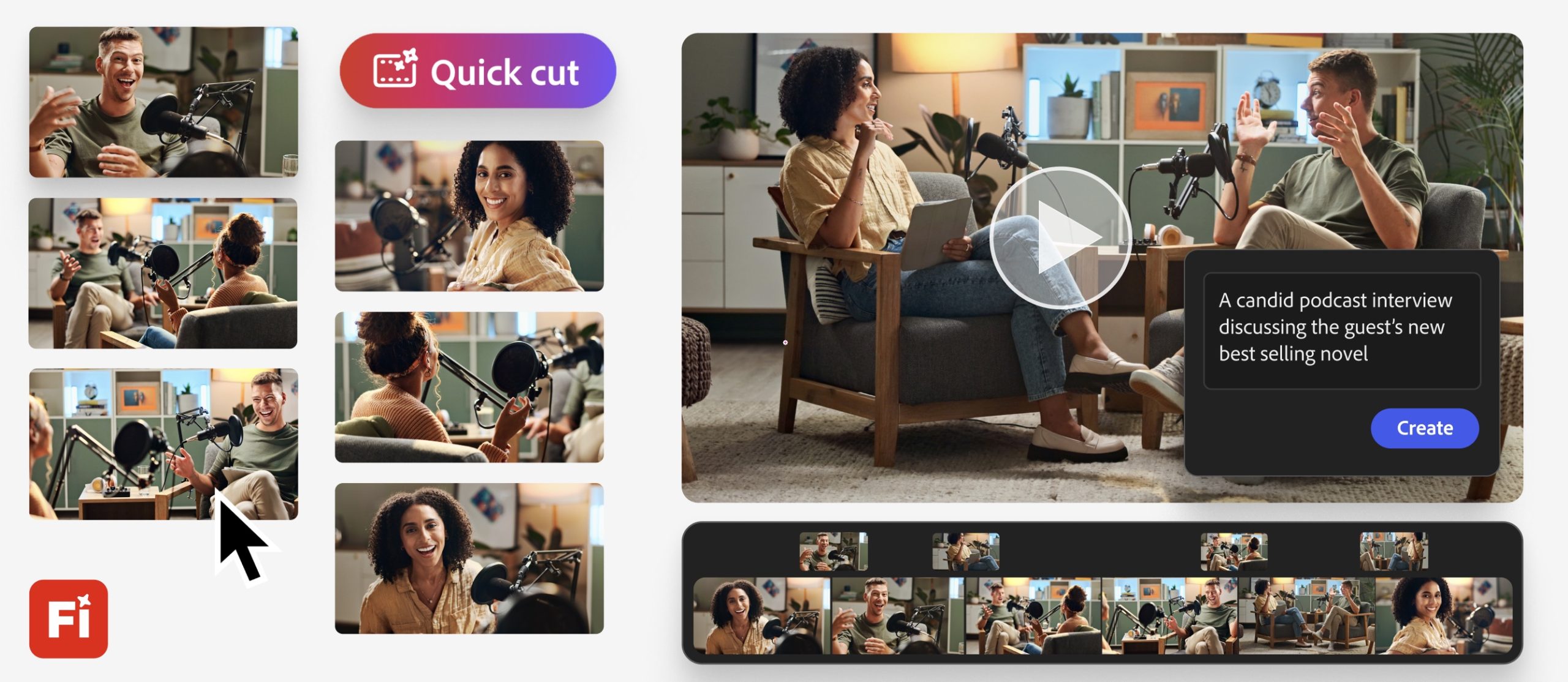
Adobe is poised to significantly transform the landscape of video production with the introduction of "Quick Cut," a groundbreaking new feature within its generative artificial intelligence platform, Firefly. This innovative tool empowers users to automatically generate a preliminary video edit from raw footage and B-roll, relying on natural language instructions to guide the AI. The development marks a pivotal moment in the ongoing integration of AI into complex creative processes, promising to streamline workflows and accelerate content creation for professionals and enthusiasts alike.
The Mechanics of Quick Cut: AI as a Creative Co-Pilot
At its core, Quick Cut addresses one of the most time-consuming aspects of video editing: the initial assembly of footage. Traditionally, editors would manually import clips, painstakingly scrub through hours of material, select the best takes, arrange them sequentially, and then meticulously craft transitions between scenes. This process, while fundamental to crafting a narrative, can be incredibly repetitive and demanding.
Quick Cut drastically redefines this workflow. Users can now simply articulate their vision using natural language prompts within the Firefly video editor. For instance, a user might instruct, "Create an energetic travel montage from these vacation clips, highlighting scenic views and local interactions, with quick, upbeat transitions." The AI then takes over, analyzing the uploaded footage and B-roll, identifying relevant segments, automatically editing out extraneous material, and intelligently piecing together different takes. It also selects and integrates appropriate B-roll footage to smooth transitions and enrich the visual narrative, all based on the user’s descriptive input.
Beyond the initial prompt, Quick Cut offers further customization. Users can specify parameters such as the desired aspect ratio, the pacing between transitions, and even designate optional B-roll footage for inclusion. The flexibility extends to application, allowing Quick Cut to be deployed across an entire project, a specific timeline, or even selected individual clips, providing granular control over the automation.
A Legacy of Innovation: Adobe’s Journey in Video Editing
The emergence of Quick Cut is not an isolated event but rather the latest evolution in a long history of technological advancement within video editing, a field Adobe has profoundly influenced. Decades ago, video production was a laborious, linear process involving physical tape and razor blades. The advent of non-linear editing (NLE) systems in the 1990s, spearheaded by software like Adobe Premiere (later Premiere Pro), revolutionized the industry. NLEs allowed editors to manipulate video digitally, instantly jump to any point in the timeline, and experiment with edits without permanent commitment, ushering in an era of unprecedented creative freedom and efficiency.
Adobe Premiere Pro quickly became an industry standard, known for its robust feature set and seamless integration within the Adobe Creative Suite ecosystem, which includes tools like After Effects for motion graphics and Photoshop for image manipulation. Over the years, Adobe has consistently pushed the boundaries of what’s possible in video editing, introducing features like Lumetri Color for advanced color grading, multicam editing, and sophisticated audio tools.
The integration of artificial intelligence into Adobe’s creative suite began subtly, with features designed to assist rather than automate. Examples include content-aware fill in Photoshop, which uses AI to intelligently remove unwanted objects from images, and speech-to-text transcription in Premiere Pro, which automates the creation of subtitles. More recently, Adobe has embraced the broader generative AI revolution, exemplified by the launch of Firefly, a family of creative generative AI models designed to assist with tasks ranging from image generation to text effects. Quick Cut represents a significant leap, moving beyond mere assistance to actively generating creative output, specifically in the realm of video editing. This progression highlights Adobe’s strategy to embed intelligent automation deeper into core creative workflows.
The "First Draft" Philosophy: Amplifying Human Creativity
Adobe emphasizes that Quick Cut is designed to deliver a "first draft," a crucial distinction that underscores its role as an accelerator rather than a replacement for human creativity. Mike Folgner, Adobe’s product lead for AI and next-generation video tools, highlighted this philosophy during an event, noting that creators and marketers consistently express a need for faster turnaround times and techniques that expedite their journey to realizing a creative vision.
Folgner articulated that the "mundane parts" of video editing, such as organizing selects and arranging footage, are not where creators find their joy or differentiate their work. Instead, their passion lies in imbuing a project with their unique "spin" – the nuanced storytelling, the precise emotional pacing, the bespoke visual style. Quick Cut aims to offload the initial, often tedious, organizational burden, allowing editors to bypass the blank canvas syndrome and quickly arrive at a coherent story cut. From this AI-generated foundation, human editors can then dedicate their expertise to refining elements, finessing transitions, perfecting pacing, and adding the distinctive creative flourishes that define professional-grade content. This iterative approach frames AI as a powerful co-pilot, enhancing efficiency and enabling creators to focus on higher-order creative decisions and artistic expression.
Market, Social, and Cultural Impact: Reshaping the Creative Landscape
The introduction of Quick Cut carries profound implications across various sectors, from independent creators to large marketing agencies.
Democratization of Video Creation: One of the most significant impacts will be the further democratization of video production. Aspiring filmmakers, social media influencers, small business owners, and educators often lack the time, budget, or specialized skills required for professional-level video editing. Quick Cut significantly lowers the barrier to entry, enabling individuals with minimal editing experience to transform raw footage into presentable video content quickly. This could lead to an explosion of new video content across platforms, fostering greater creative participation and diverse storytelling.
Increased Content Velocity for Businesses: For marketing teams and media organizations, the ability to rapidly produce multiple video drafts can dramatically increase content velocity. Companies can iterate on campaigns faster, A/B test different video versions more efficiently, and respond to trending topics with timely, high-quality visual content. This competitive edge could reshape digital marketing strategies, placing a premium on agility and consistent content output.
Evolution of Professional Editing Roles: The impact on professional video editors is a subject of ongoing discussion. While some might express concerns about job displacement, the prevailing sentiment, echoed by Adobe, positions AI as an augmentation tool. Professional editors will likely evolve into more strategic roles, overseeing AI-generated drafts, providing creative direction to the algorithms, and focusing their expertise on the most complex and artistically demanding aspects of post-production – sound design, advanced visual effects, intricate storytelling, and client communication. The demand for skilled human oversight to ensure quality, authenticity, and creative integrity will remain paramount. Editors who embrace these AI tools are likely to become more efficient, capable of handling more projects, and ultimately, more valuable.
Ethical Considerations and Challenges: As with any powerful AI technology, Quick Cut introduces ethical considerations. Questions about authenticity and the perception of AI-generated content will persist. While Quick Cut creates a "draft," the line between human and machine contribution can blur. There’s also the potential for AI models to inherit biases from their training data, inadvertently perpetuating certain stylistic preferences or representational imbalances. Ensuring responsible AI development, transparency, and user control will be critical in mitigating these challenges. Furthermore, the debate around "good enough" versus "exceptional" content will intensify, as automated tools make "good enough" more accessible, potentially raising expectations for human editors to deliver truly exceptional, unique work.
Firefly’s Expanding Ecosystem: A Glimpse into the Future
Quick Cut is not an isolated feature but a significant addition to Adobe Firefly’s rapidly expanding suite of AI-powered creative tools. Adobe has been consistently pushing updates to its video-related functionalities within Firefly. In recent months, it rolled out a new timeline-based video editor that integrates layers and prompt-based editing, allowing users to manipulate individual objects as layers through natural language commands or traditional tools like resize and rotate.
Furthermore, Firefly gained prompt-based editing capabilities that empower users to instruct the video model on how to modify video elements, adjust colors, and even alter camera angles. A refined timeline view also enables easy adjustment of frames, sounds, and other characteristics. These advancements collectively paint a picture of an increasingly intelligent and intuitive creative environment where complex tasks are simplified through AI assistance.
Looking ahead, the trajectory of creative tools suggests a future where AI acts as a sophisticated partner, learning individual user styles, offering real-time suggestions, and ultimately allowing creators to manifest their visions with unprecedented speed and precision. The ongoing development within Adobe Firefly indicates a commitment to this vision, positioning the platform at the forefront of the generative AI revolution in creative media.
Conclusion
Adobe Firefly’s Quick Cut feature represents a significant leap forward in AI-assisted video editing, promising to profoundly impact how video content is created, from initial concept to final polish. By automating the arduous process of generating a first draft, Quick Cut empowers creators to accelerate their workflows, overcome creative hurdles, and dedicate their invaluable human insight to the nuanced art of storytelling and refinement. As AI continues to integrate more deeply into creative processes, tools like Quick Cut underscore an evolving partnership between human ingenuity and artificial intelligence, poised to unlock new frontiers of creative possibility and reshape the digital media landscape for years to come.