Amir Mahmud
After a period characterized by ambitious demonstrations and speculative fervor, 2026 is poised to redefine the trajectory of artificial intelligence, transitioning from abstract potential to tangible, integrated applications. The industry’s collective focus is perceptibly shifting away from the pursuit of ever-larger foundational models and towards the more intricate, demanding task of embedding AI intelligence into everyday systems and workflows. This evolution signifies a critical turning point, emphasizing the strategic deployment of specialized, efficient models, the integration of AI into physical devices, and the meticulous design of systems that seamlessly complement human capabilities.
Leading experts in the field anticipate 2026 as a pivotal year of transformation. The prevailing sentiment indicates a move beyond the brute-force scaling of computational power and data, favoring instead a renewed emphasis on fundamental architectural research. Similarly, the industry is expected to pivot from flashy, generalized AI demonstrations to targeted, problem-specific deployments. Critically, the concept of fully autonomous AI agents, which captured significant attention in prior years, is giving way to a more pragmatic vision: agents designed to augment and enhance human productivity rather than replace it entirely. This collective recalibration suggests a maturing industry, one that, while still dynamic, is grounding its ambitions in real-world applicability and sustained utility.
From Unbridled Scaling to Focused Research
The journey of modern AI has been marked by distinct phases, each driven by seminal breakthroughs. The early 2010s, particularly following the 2012 ImageNet paper by Alex Krizhevsky, Ilya Sutskever, and Geoffrey Hinton, showcased the power of deep learning. This research demonstrated that AI systems could "learn" to discern objects within vast image datasets, a feat made feasible by the burgeoning capabilities of Graphics Processing Units (GPUs). This initial success spurred a decade of intense AI research, yielding innovative neural network architectures tailored for diverse tasks, from image recognition to natural language processing.
However, a significant paradigm shift occurred around 2020 with the introduction of OpenAI’s GPT-3. This model dramatically illustrated that by merely expanding a model’s scale—increasing its parameters, training data, and computational resources—it could spontaneously develop advanced abilities like coding and complex reasoning, without explicit instruction for these specific tasks. This moment ushered in what many, including Kian Katanforoosh, CEO and founder of AI agent platform Workera, termed the "age of scaling." This era was underpinned by the belief that continuous increases in computational power, data volume, and the size of transformer models would invariably unlock successive waves of AI breakthroughs. Investment poured into building larger data centers and training more expansive models, often without a clear understanding of the diminishing returns or long-term sustainability.
Today, a growing chorus of researchers suggests that the industry is beginning to encounter the inherent limitations of this scaling paradigm. The costs—both financial and environmental—associated with training increasingly gargantuan models are becoming prohibitive, while the incremental performance gains are starting to plateau. Visionary figures such as Yann LeCun, Meta’s former chief AI scientist, have consistently voiced skepticism regarding an over-reliance on sheer scale, advocating instead for the development of fundamentally superior architectures. Ilya Sutskever, a key architect of the scaling era, has also observed a flattening in pretraining results, underscoring the urgent need for novel theoretical and algorithmic advancements. This emerging consensus indicates that the AI industry is poised for another transition, moving back towards an intensive research phase focused on architectural innovation rather than just brute-force expansion. The expectation, as articulated by Katanforoosh, is that the next five years will likely see the discovery of new architectures that represent a significant leap beyond current transformer models, without which, substantial future model improvements may remain elusive.
The Strategic Advantage of Specialized Small Models
While large language models (LLMs) excel at broad generalization and complex reasoning across diverse topics, their resource intensity, latency, and cost often present significant hurdles for practical enterprise adoption. The next wave of AI integration, experts contend, will be propelled by the strategic deployment of smaller, more agile language models (SLMs) that can be meticulously fine-tuned for highly specific, domain-centric applications. These specialized models offer a compelling alternative, marrying efficiency with precision.
Andy Markus, AT&T’s chief data officer, highlights that fine-tuned SLMs are rapidly becoming a cornerstone for mature AI enterprises in 2026. The economic and performance advantages they offer over generalized LLMs are proving to be a powerful incentive. When properly fine-tuned, SLMs can rival the accuracy of their larger counterparts for specific business applications, all while delivering superior speed and significantly reduced operational costs. This shift is not merely speculative; companies like the French open-weight AI startup Mistral have already demonstrated that their compact models, after targeted fine-tuning, can surpass larger, more generalized models on certain benchmarks.
Jon Knisley, an AI strategist at ABBYY, an enterprise AI firm, emphasizes that the inherent efficiency, cost-effectiveness, and adaptability of SLMs make them uniquely suited for tailored applications where accuracy and resource optimization are paramount. Furthermore, the compact nature of SLMs positions them as ideal candidates for deployment on local devices, a trend significantly bolstered by ongoing advancements in edge computing. This capability allows for faster processing, enhanced data privacy (as data remains on-device), and reduced reliance on cloud infrastructure, opening up new frontiers for embedded AI solutions in various industries.
World Models: Unlocking Experiential Understanding
A fundamental limitation of current large language models is their reliance on textual data, which enables them to predict the next word or concept but provides no intrinsic understanding of the physical world. Humans, in contrast, acquire knowledge not merely through language but through direct experience—observing, interacting with, and learning how the world operates in three-dimensional space. This gap is precisely what "world models" aim to bridge. These AI systems are designed to learn the underlying physics, dynamics, and interactions of objects and environments, allowing them to make predictions and execute actions within simulated or real-world contexts.
The year 2026 is seeing a burgeoning interest and significant advancements in world models. Yann LeCun’s departure from Meta to establish his own world model laboratory, reportedly seeking substantial valuation, underscores the strategic importance of this domain. Google’s DeepMind continues to innovate with projects like Genie, which constructs real-time, interactive general-purpose world models. Startups such as Decart and Odyssey are making strides in generating playable, interactive 3D environments, while Fei-Fei Li’s World Labs has launched Marble, its first commercial world model. Further validating this trend, newcomers like General Intuition secured a substantial seed round to develop agents capable of spatial reasoning using video game clips, and video generation leader Runway released its first world model, GWM-1.
While the long-term potential of world models extends to complex applications in robotics and autonomous systems, their near-term impact is most immediately evident within the video game industry. Industry analysts like PitchBook project a dramatic expansion of the market for world models in gaming, estimating growth from $1.2 billion between 2022 and 2025 to a staggering $276 billion by 2030. This growth is driven by the technology’s capacity to generate highly interactive, dynamic virtual worlds and create far more lifelike and adaptive non-player characters. Pim de Witte, founder of General Intuition, emphasizes that these sophisticated virtual environments will not only revolutionize gaming but also serve as crucial testing grounds for the next generation of foundational AI models, offering safe and scalable spaces for experimentation.
The Agentic Revolution: Connecting AI to Action
The promise of AI agents—autonomous software entities capable of understanding goals, planning actions, and interacting with various tools to achieve those goals—was widely anticipated in 2025 but largely failed to meet the exaggerated expectations. A primary impediment was the inherent difficulty in seamlessly connecting these agents to the disparate, complex systems where actual work takes place. Without robust, standardized mechanisms to access databases, search engines, APIs, and other external tools, most agents remained confined to isolated pilot projects and impressive but limited demonstrations.
The landscape for AI agents is set for a dramatic shift in 2026, largely due to the emergence and rapid adoption of Anthropic’s Model Context Protocol (MCP). Described colloquially as a "USB-C for AI," MCP provides a standardized, universal interface that allows AI agents to communicate and interact effectively with a vast array of external tools and data sources. This "missing connective tissue" is quickly establishing itself as an industry standard, facilitating the much-needed interoperability. Both OpenAI and Microsoft have publicly endorsed MCP, and Anthropic’s decision to donate it to the Linux Foundation’s new Agentic AI Foundation signals a strong push towards open-source standardization for agentic tools. Furthermore, Google has begun deploying its own managed MCP servers, designed to effortlessly link AI agents to its extensive suite of products and services.
With MCP significantly reducing the technical friction associated with integrating agents into real-world systems, 2026 is poised to be the year when agentic workflows finally transcend the realm of conceptual demos and become an integral part of day-to-day operational practice. Rajeev Dham, a partner at Sapphire Ventures, foresees these advancements leading to agent-first solutions assuming "system-of-record roles" across a multitude of industries. He predicts that as voice agents, for example, become capable of handling more end-to-end tasks, from initial customer intake to communication, they will progressively form the foundational core systems within sectors such as home services, proptech, and healthcare, alongside horizontal functions like sales, IT, and customer support. This shift promises increased automation of routine tasks, freeing human employees for more complex, creative, and strategic endeavors.
Augmentation, Not Automation: A Human-Centric AI Future
The preceding years, particularly 2024, were often dominated by a rhetoric suggesting that AI would automate vast swathes of human jobs, leading to widespread displacement. However, as the practical realities of AI deployment set in, this narrative is undergoing a significant re-evaluation. Kian Katanforoosh of Workera articulates a more optimistic outlook, stating that "2026 will be the year of the humans."
The prevailing understanding is that the technology, despite its rapid advancements, is not yet capable of the full, autonomous operation envisioned in earlier, more speculative discussions. Furthermore, in an economic climate marked by volatility, the prospect of widespread job automation is not only technically challenging but also socially unpopular. Consequently, the conversation around AI’s role is shifting decisively towards augmentation—how AI can enhance, assist, and amplify human workflows rather than simply replace them. This perspective reframes AI as a powerful co-pilot, empowering individuals to achieve more, solve more complex problems, and engage in higher-value activities.
Katanforoosh predicts that this realization will prompt many companies to begin hiring for new roles directly related to AI integration and oversight. The expanding ecosystem of AI will necessitate specialists in areas such as AI governance, ensuring ethical and responsible deployment; transparency, making AI decisions understandable; safety, mitigating potential risks; and data management, curating the lifeblood of AI systems. This creates a new demand for human expertise, counterbalancing some of the earlier fears of job loss. Pim de Witte echoes this sentiment, suggesting that "people want to be above the API, not below it," implying a desire for humans to retain control and strategic oversight, leveraging AI as a tool rather than being subservient to it. This human-centric approach to AI promises to foster a more collaborative and productive future for the workforce.
Getting Physical: AI Beyond the Digital Realm
The confluence of advancements in small models, world models, and edge computing is creating fertile ground for a new wave of physical AI applications. This represents a significant leap from AI existing predominantly in cloud servers and software to its pervasive integration into the tangible world around us. Vikram Taneja, head of AT&T Ventures, forecasts that "Physical AI will hit the mainstream in 2026," giving rise to entirely new categories of AI-powered devices.
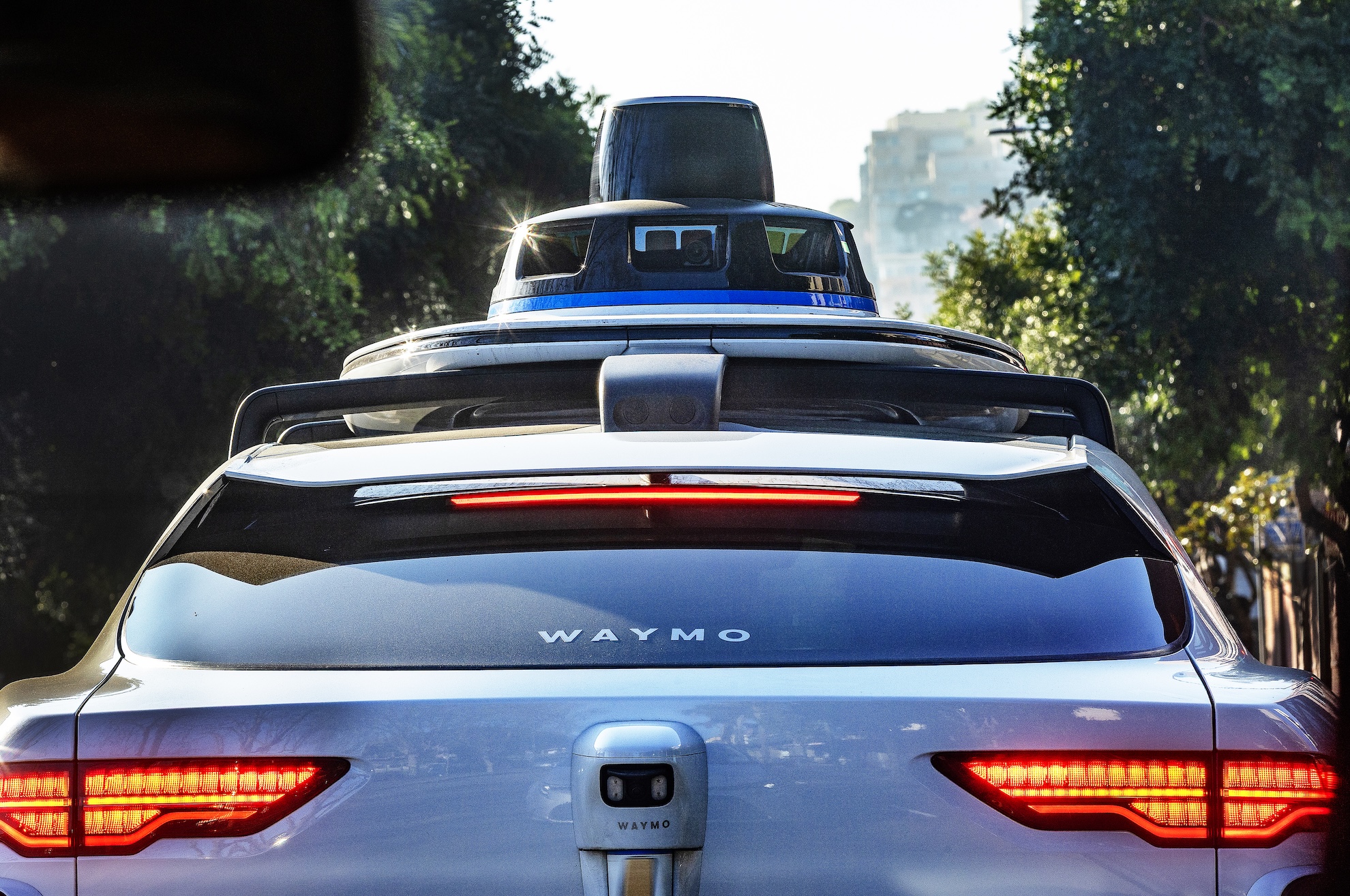
While autonomous vehicles and advanced robotics are obvious and continually evolving applications of physical AI, their extensive training and deployment still entail considerable expense and logistical complexity. Wearables, conversely, offer a more accessible and cost-effective entry point for widespread consumer adoption. Devices such as smart glasses, like the Ray-Ban Meta, are now shipping with embedded assistants capable of contextual understanding, allowing users to ask questions about what they are observing in real-time. Similarly, innovative form factors like AI-powered health rings (e.g., Oura) and sophisticated smartwatches (e.g., Apple Watch Series 11) are normalizing the concept of always-on, on-body inference. These devices leverage compact AI models and edge computing to provide personalized insights and assistance without constant reliance on cloud connectivity.
This proliferation of intelligent physical devices necessitates a corresponding evolution in underlying infrastructure. Connectivity providers are actively working to optimize their network architectures to support this burgeoning wave of devices, which demand low latency, high bandwidth, and robust reliability. Those providers demonstrating flexibility in their connectivity offerings will be best positioned to capitalize on this expanding market. The embedding of AI into physical objects promises to transform various aspects of daily life, from personalized health monitoring and enhanced navigation to more intuitive smart homes and adaptive industrial environments, ushering in an era where intelligence is truly ubiquitous.
In essence, 2026 marks a coming-of-age for artificial intelligence. The industry is moving past the initial euphoria and settling into the arduous but rewarding work of making AI truly useful, integrated, and responsible. This pragmatic shift, driven by a deeper understanding of AI’s current capabilities and limitations, promises to unlock unprecedented value across enterprises and daily life, firmly embedding AI as an indispensable tool for human progress.