Amir Mahmud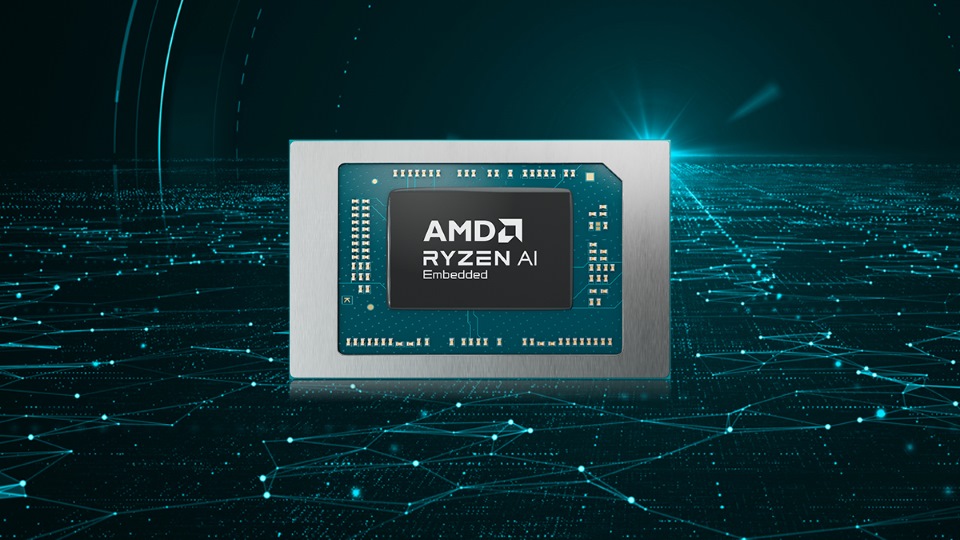
At the Consumer Electronics Show (CES) 2026 in Las Vegas, AMD Chair and CEO Lisa Su unveiled a bold vision for the future of personal computing, declaring that artificial intelligence is poised to become accessible to everyone. Her keynote address underscored a significant strategic pivot for the semiconductor giant, emphasizing the integration of AI capabilities directly into everyday devices. This commitment materialized with the announcement of a new generation of AI processors, signaling AMD’s belief that AI-powered personal computers represent the next frontier in computing evolution.
The Vision: AI for Every User
Dr. Su’s pronouncement of "AI for everyone" is not merely a marketing slogan; it encapsulates a fundamental shift in how computing resources are designed and utilized. For decades, advanced AI processing largely resided in distant data centers, accessible via cloud services. The emerging concept of the "AI PC" aims to bring these sophisticated capabilities closer to the user, enabling real-time, personalized AI functions without constant reliance on an internet connection or remote servers. This move is driven by the desire for enhanced privacy, reduced latency, and greater efficiency in handling AI workloads.
The shift towards on-device AI, or "edge AI," represents a maturation of the technology, moving it from specialized applications to ubiquitous integration. Rahul Tikoo, senior vice president and general manager of AMD’s client business, articulated this perspective during a recent press briefing. He described AI as a "multi-layered fabric that gets woven into every level of computing at the personal layer," predicting that "our AI PCs and devices will transform how we work, how we play, how we create and how we connect with each other." This vision suggests a future where personal computers adapt and respond to user needs with unprecedented intelligence, learning context and providing automation, deep reasoning, and personal customization.
Unpacking the Ryzen AI 400 Series
Central to AMD’s strategy is the new AMD Ryzen AI 400 Series processor, showcased at the annual CES conference. This latest iteration of the company’s AI-powered PC chips represents a significant leap forward in integrated intelligence. Engineered to handle complex AI workloads directly on the device, these processors boast impressive performance metrics. AMD claims the Ryzen AI 400 Series facilitates 1.3 times faster multitasking and offers a 1.7 times speed improvement for content creation compared to its direct competitors. Such performance gains are critical for tasks ranging from real-time video editing and graphic design to sophisticated AI-driven productivity tools.
Underpinning these capabilities are the architectural enhancements within the chips. The new Ryzen AI 400 Series features 12 CPU cores, which are individual processing units designed to execute instructions, paired with 24 threads, representing independent streams of instruction that can be processed concurrently. This configuration allows for highly efficient parallel processing, crucial for demanding applications. More importantly, these chips integrate a dedicated Neural Processing Unit (NPU), a specialized accelerator optimized for AI tasks. The NPU offloads AI computations from the main CPU and GPU, significantly improving efficiency, reducing power consumption, and enabling faster AI inference at the edge.
The introduction of the Ryzen AI 400 Series builds upon a lineage of innovation. AMD first launched its Ryzen processor series in 2017, marking a competitive resurgence in the CPU market. The company then introduced its Ryzen AI 300 Series processor in 2024, laying the groundwork for on-device AI. The 400 Series represents a rapid evolution, reflecting the accelerating pace of AI development and the fierce competition within the semiconductor industry to dominate this nascent market segment. This progression highlights AMD’s sustained investment in pushing the boundaries of integrated AI capabilities for consumer devices.
The Expanding AI PC Ecosystem
AMD’s commitment to the AI PC paradigm is further evidenced by the rapid expansion of its platform ecosystem. Rahul Tikoo revealed that AMD has now expanded to support over 250 AI PC platforms, a remarkable twofold growth over the past year. This statistic underscores not only AMD’s internal development but also the widespread adoption and integration of its AI technology by various original equipment manufacturers (OEMs). The proliferation of these platforms means that consumers will soon have a diverse range of laptops, desktops, and other devices incorporating AMD’s AI processors, catering to different needs and price points.
This expansion is indicative of a broader industry trend. Major PC manufacturers are actively designing and marketing "AI PCs," recognizing the demand for devices capable of handling increasingly complex AI-driven applications. For AMD, this rapid growth in platform adoption is strategically vital, solidifying its position as a key enabler of the AI PC era. It also signifies the company’s success in cultivating strong partnerships within the hardware ecosystem, ensuring its technology reaches a wide market. The competitive landscape for AI PCs is intense, with rivals like Intel also making significant strides with their Core Ultra processors, which feature integrated NPUs, and Qualcomm entering the PC market with its Snapdragon X Elite chips. AMD’s robust platform expansion positions it strongly in this burgeoning field, aiming to capture a significant share of a market projected to grow exponentially.
Elevating the Gaming Experience
Beyond general-purpose AI computing, AMD also reaffirmed its dedication to the gaming community with the announcement of the AMD Ryzen 7 9850X3D. This new gaming-focused processor integrates cutting-edge technology designed to deliver unparalleled performance for the most demanding titles. The "X3D" designation is particularly significant, indicating the incorporation of AMD’s 3D V-Cache technology. This innovative stacking of cache memory directly onto the CPU die dramatically increases the amount of available L3 cache, leading to substantial improvements in gaming frame rates and overall responsiveness. For competitive gamers and enthusiasts, the Ryzen 7 9850X3D promises a distinct advantage, minimizing bottlenecks and maximizing graphical fidelity.
The role of AI extends to gaming as well, enhancing experiences in subtle yet impactful ways. While the primary focus of gaming processors remains raw performance, AI can contribute to more realistic non-player character (NPC) behavior, dynamic game world generation, and intelligent upscaling technologies that improve visual quality without a proportional increase in processing demands. Complementing these processor advancements, AMD also unveiled the latest version of its Redstone ray tracing technology. Ray tracing, a sophisticated rendering technique, simulates the physical behavior of light to create incredibly realistic shadows, reflections, and global illumination within games. The enhancements to Redstone technology promise to deliver superior video game graphics without introducing performance or speed lags, ensuring that visual splendor does not come at the cost of smooth gameplay. Together, these innovations in both CPU and graphics technology underscore AMD’s holistic approach to elevating the immersive and efficient gaming experience for users worldwide.
Market Dynamics and Future Outlook
The availability of PCs featuring either the Ryzen AI 300 Series (which will likely see continued adoption) or the new AMD Ryzen 7 9850X3D processor is slated for the first quarter of 2026. This imminent market release sets the stage for a significant shift in the personal computing landscape. The introduction of powerful on-device AI capabilities is expected to drive a new upgrade cycle, as consumers and businesses seek to leverage the benefits of personalized, real-time AI. For businesses, AI PCs can enhance productivity, improve data security through local processing, and unlock new applications in areas like creative design, scientific research, and financial modeling. For individual consumers, the impact could range from more intuitive operating systems and smarter digital assistants to advanced content creation tools and immersive entertainment.
AMD’s strategic focus on the AI PC is crucial in its ongoing rivalry with industry giants like Intel and Nvidia. By aggressively pushing integrated AI, AMD aims to differentiate its offerings and capture a leading position in a market segment that analysts predict will grow rapidly. However, the success of the AI PC hinges not just on hardware prowess but also on the development of a robust software ecosystem. Developers will need to optimize their applications to take full advantage of NPUs and other AI acceleration features. Consumer awareness and education will also be vital in helping users understand the tangible benefits of an AI PC over traditional models. Pricing strategies will also play a key role in making these advanced machines accessible to a broad audience.
Looking further ahead, the vision presented by AMD at CES 2026 suggests that AI will become an increasingly integral component across all computing layers, from personal devices to the vast infrastructure of data centers and cloud services. The annual CES conference serves as a critical barometer for emerging technological trends, and AMD’s announcements align with a broader industry consensus that AI is the definitive technology shaping the next decade. The company’s commitment to democratizing AI by embedding it directly into the PC platform signifies a foundational shift, promising a future where computing is more intuitive, powerful, and personally tailored than ever before.
In conclusion, AMD’s keynote at CES 2026 was more than just a product launch; it was a declaration of intent to lead the charge into the era of pervasive AI. With the Ryzen AI 400 Series, AMD is equipping personal computers with the intelligence to transform how individuals interact with their technology, enhancing productivity, creativity, and daily workflows. Simultaneously, the Ryzen 7 9850X3D and Redstone ray tracing advancements underscore the company’s unwavering dedication to delivering cutting-edge gaming experiences. As these new processors become available, they are poised to redefine expectations for what a personal computer can achieve, ushering in a new chapter of innovation where AI is not just a feature, but the very fabric of computing.