Amir Mahmud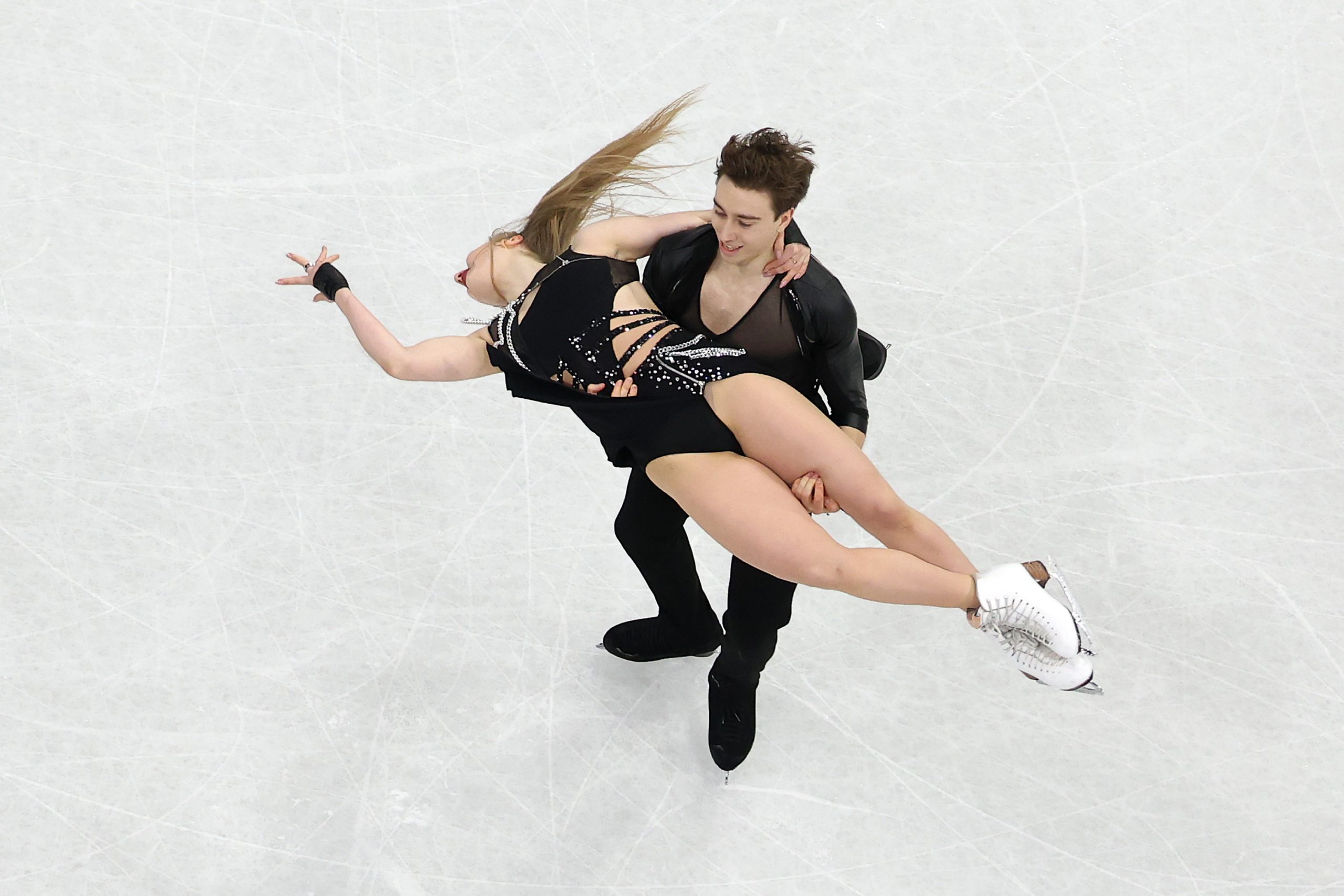
The grandeur of the Olympic stage, traditionally a testament to peak human endeavor, recently witnessed a novel intersection of artistry and artificial intelligence when Czech ice dancers Kateřina Mrázková and Daniel Mrázek performed their rhythm dance program to music partially generated by AI. This unprecedented choice, marking their Olympic debut, has ignited a global conversation about the evolving role of technology in creative fields and the very essence of human artistic expression within competitive sport.
The Controversial Choice on Olympic Ice
During their performance, as the sibling duo executed a series of intricate lifts and spins demanding superhuman precision and coordination, an NBC commentator subtly noted, "This is AI generated, this first part," referring to the accompanying music. This seemingly innocuous remark brought into sharp focus the duo’s unconventional musical selection, which blended an AI-generated track with the iconic "Thunderstruck" by AC/DC. While the International Skating Union (ISU), the sport’s global governing body, currently has no explicit rules prohibiting the use of AI-generated music, the decision has nevertheless sparked widespread discussion among fans, commentators, and industry observers alike.
The rhythm dance segment of the ice dance competition mandates that pairs adhere to a specific theme each season. For the current season, the theme harks back to "The Music, Dance Styles, and Feeling of the 1990s." Many teams embraced this theme with recognizable hits from the era; for instance, British duo Lilah Fear and Lewis Gibson captivated audiences with a Spice Girls tribute, while U.S. favorites Madison Chock and Evan Bates opted for a medley of Lenny Kravitz tracks. The Mrázek siblings’ choice, however, veered into uncharted territory by incorporating AI-created soundscapes alongside a genuine 90s rock anthem.
This was not the Mrázeks’ first foray into AI-generated music, nor their first encounter with controversy over it. Earlier in the season, their rhythm dance featured a 90s-inspired AI track that notably included lyrics directly lifted from the New Radicals’ 1990s hit, "You Get What You Give." Phrases like "Every night we smash a Mercedes-Benz!" and "Wake up, kids/We got the dreamer’s disease" were undeniably present, prompting accusations of thinly veiled plagiarism. The AI song was even titled "One Two," echoing the opening words of the New Radicals’ track. Following this backlash, the duo reportedly altered their AI-generated music. The updated version, used at the Olympics, featured lyrics and a vocal style suspiciously reminiscent of Bon Jovi, with lines such as "raise your hands, set the night on fire," which also appear in Bon Jovi’s "Raise Your Hands." Compounding the issue, "Raise Your Hands" itself is not a 90s track, raising questions about thematic compliance, even if the AI was merely attempting to emulate a 90s style of Bon Jovi.
A Deeper Look at Ice Dance and its Musical Canvas
Ice dance, one of the most aesthetically driven disciplines within figure skating, distinguishes itself by its emphasis on intricate footwork, seamless partnering, and emotional interpretation of music. Unlike pairs skating, which features overhead lifts and throws, ice dance prioritizes rhythm, character, and storytelling through movement. Music is not merely a backdrop; it is an integral partner in the performance, guiding the skaters’ tempo, mood, and narrative. The selection of music is a critical component, influencing everything from costume design to choreography. Historically, ice dancers have drawn from a vast repertoire, from classical compositions to contemporary pop, with licensing and thematic relevance often dictating choices.
The rules governing music in figure skating are extensive, covering aspects such as duration, vocal content, and thematic adherence for specific programs like the rhythm dance. While the ISU ensures music is appropriate and does not contain offensive content, the advent of generative AI introduces a new layer of complexity. The existing framework primarily addresses the source of music in terms of existing compositions and recordings, rather than the method of creation. The Mrázek duo’s use of AI, therefore, operates within a grey area, not explicitly forbidden but certainly pushing the boundaries of traditional musical sourcing.
The Evolution of AI in Music: From Novelty to Commercial Reality
The technology underpinning AI music generation, typically large language models (LLMs) or similar generative adversarial networks (GANs), has advanced rapidly. These systems are trained on vast datasets of existing music, learning patterns, melodies, harmonies, and lyrical structures. When prompted, they can produce new compositions "in the style of" a particular artist or genre. While this offers immense creative potential—allowing artists to explore new sounds, bypass expensive licensing, or even create personalized soundtracks—it also raises significant ethical and legal questions.
The core issue, as highlighted by the Mrázeks’ experience, lies in the nature of how these AI models learn. By processing immense volumes of copyrighted material, often without explicit permission from rights holders, the AI can inadvertently (or directly) reproduce elements of its training data. This statistical probability of replication is precisely what led to the New Radicals and Bon Jovi similarities. Music publishers and artists are increasingly vocal about these practices, with some initiating lawsuits against AI developers for alleged "flagrant piracy."
Despite these challenges, the music industry itself is grappling with and, in some cases, embracing AI. The example of Telisha Jones, a 31-year-old artist who secured a multi-million dollar record deal using AI to set her poetry to music under the persona Xania Monet, illustrates the burgeoning commercial viability of AI in creative endeavors. This duality—the legal battles over training data versus the industry’s investment in AI-driven talent—underscores a period of significant transition and uncertainty for music creation and intellectual property.
Navigating Copyright and Creativity: The AI Dilemma
The Mrázeks’ situation spotlights the complex interplay between copyright law, creative expression, and technological innovation. One potential driver for using AI-generated music could be the notoriously labyrinthine and costly process of securing licenses for popular songs, especially for international competitions broadcast globally. The rights for music can vary significantly by territory and usage (e.g., broadcast, live performance, streaming), making it a logistical and financial challenge for athletes and national federations. AI could appear to offer a convenient workaround, providing bespoke, seemingly original music without direct licensing fees. However, as the Mrázeks discovered, if the AI output is too derivative, it effectively becomes an unauthorized derivative work, inviting the very copyright issues it might have sought to avoid.
Beyond the legalities, the philosophical debate revolves around authenticity and artistry. In a sport like ice dance, which values human connection, passion, and unique interpretation, does AI-generated music dilute the artistic merit? Does it represent a genuine collaboration, or a shortcut that sidesteps the human element of composition? Critics argue that relying on algorithms for musical creation undermines the integrity of the performance, detaching it from the deep emotional resonance that a human-composed piece can convey. Proponents, however, might argue that the music is merely a tool, and the true artistry still lies in the skaters’ interpretation and execution. The ice dancers themselves dedicate their lives to mastering their craft; the choice of music, whether human-composed or AI-assisted, becomes another layer of their performance strategy.
The Broader Implications for Sport and Art
The Mrázeks’ Olympic performance serves as a potent symbol for a wider discussion across various creative and competitive domains. AI’s integration into sports extends beyond music, touching on analytics, coaching, refereeing, and even athlete training. Each application raises questions about fairness, data privacy, and the definition of human achievement. In artistic sports, the stakes are particularly high, as the subjective nature of judging intertwines with the objective assessment of technical skill.
The cultural impact of AI in art is also profound. As AI becomes more sophisticated, the line between human and machine creativity blurs. This challenges our traditional understanding of authorship, originality, and the value placed on human ingenuity. Will audiences come to accept AI as a legitimate creative partner, or will there always be a preference for works born purely from human experience and emotion? The response to the Mrázeks’ music suggests a mixed reception, highlighting a societal discomfort with AI-generated art, especially when it appears to imitate or borrow heavily from human predecessors.
Looking Ahead: The Future of Human-AI Collaboration
The incident with Kateřina Mrázková and Daniel Mrázek at the Olympics will likely serve as a pivotal moment for international sports federations like the ISU. It may prompt them to develop clearer guidelines or specific regulations concerning the use of AI-generated content in competitive performances. As AI technology continues to advance, the distinction between "original" and "derivative" will become increasingly complex, necessitating a robust framework to protect intellectual property while fostering innovation.
Ultimately, the future of AI in artistic sports will likely involve a delicate balance. It could offer new avenues for creativity, personalization, and accessibility, democratizing music creation for athletes who may lack the resources for custom compositions. However, this must be carefully managed to ensure ethical considerations, copyright protection, and the preservation of the unique human element that defines artistic expression. The debate surrounding the Mrázeks’ choice is not just about a single performance; it’s a precursor to the many conversations society will have as artificial intelligence increasingly permeates the realms of art, sport, and culture.