Amir Mahmud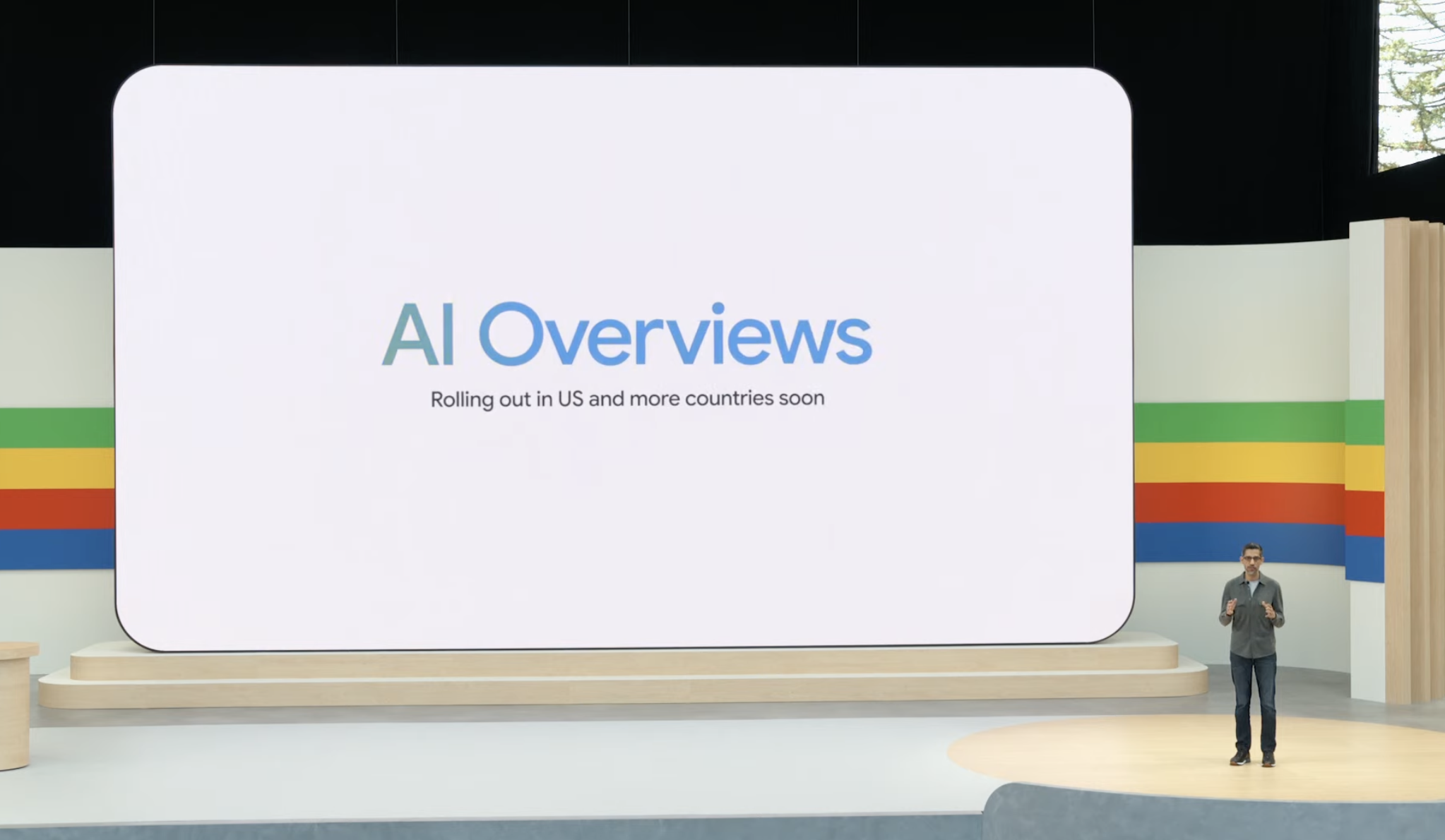
Google has recently adjusted its AI Overviews for specific health-related queries, a move that follows an investigation highlighting instances of potentially misleading medical information presented by the artificial intelligence feature. This development underscores the significant challenges and responsibilities facing technology companies as they integrate powerful generative AI into core services like search, particularly within sensitive domains such as public health. The modifications signal a cautious recalibration in how AI-powered summaries deliver medical guidance, acknowledging the profound implications of accuracy and context.
The Dawn of AI in Search
The integration of artificial intelligence into search engines marks a pivotal shift in how users access information. Google’s AI Overviews, a component of its Search Generative Experience (SGE), represent a frontier in this evolution, aiming to provide users with direct, synthesized answers rather than just a list of links. This initiative, mirrored by competitors like Microsoft’s Copilot (formerly Bing Chat), reflects a broader industry trend to leverage large language models (LLMs) for more conversational and comprehensive search results. The promise is clear: faster, more efficient access to knowledge. However, the deployment of such sophisticated AI, especially in critical areas like healthcare, also introduces a complex array of potential pitfalls, including the generation of inaccurate, incomplete, or contextually inappropriate information.
For years, Google has been a primary gateway for individuals seeking health information, often becoming the first "doctor" consulted for symptoms or conditions. Recognizing this immense responsibility, the company has invested heavily in features designed to improve the quality and trustworthiness of health-related search results, partnering with medical institutions and displaying authoritative knowledge panels. The advent of AI Overviews, however, adds a new layer of complexity. Instead of merely surfacing vetted external sources, the AI actively synthesizes information, creating new content. This generative capability, while revolutionary, brings with it the inherent risks of AI "hallucinations" – instances where the model generates plausible-sounding but factually incorrect information – or oversimplification, which can be particularly dangerous in the nuanced field of medicine.
A Guardian Investigation Unearths Concerns
The recent adjustments by Google were prompted by an in-depth investigation conducted by The Guardian, a prominent news organization. The report brought to light specific instances where Google’s AI Overviews provided information that, while seemingly authoritative, lacked crucial context, potentially leading users to misinterpret their health status. This journalistic scrutiny served as a critical check on the practical application of advanced AI in a high-stakes environment.
The investigation highlighted the delicate balance between providing quick answers and ensuring absolute accuracy, especially when medical decisions might be influenced. The core of the Guardian’s findings revolved around the AI’s tendency to present generalized information without accounting for the highly individualized nature of medical data. For conditions or diagnostic results, factors such as a person’s age, sex, ethnicity, nationality, medical history, and even specific laboratory methodologies can significantly alter what constitutes a "normal" or "healthy" range. An AI overview that omits these critical variables risks inadvertently guiding users toward incorrect conclusions about their own health, potentially delaying necessary medical consultation or causing undue anxiety.
The Specifics: Liver Function Tests Under Scrutiny
One of the most prominent examples cited in The Guardian’s initial report involved queries related to liver blood tests. When users asked questions such as "what is the normal range for liver blood tests," the AI Overviews reportedly presented numerical ranges without explicitly stating the crucial demographic and contextual factors that influence these values. For instance, what might be considered a normal liver enzyme level for an adult male in one population group could be indicative of an underlying issue for a child, an elderly woman, or an individual from a different ethnic background.
Such oversimplification carries significant risks. A user presented with a seemingly "normal" range that doesn’t apply to their specific demographic could mistakenly conclude that their own test results are healthy, even if they fall outside the appropriate reference range for their personal circumstances. Conversely, a user whose results are within their personal normal range but outside the generalized range provided by the AI might experience unnecessary alarm. In the context of liver health, where early detection of issues can be critical, such misinformation could have tangible public health consequences.
Following the Guardian’s exposé, Google appears to have taken action. Subsequent checks confirmed that AI Overviews for direct queries like "what is the normal range for liver blood tests" and "what is the normal range for liver function tests" were no longer appearing. However, the initial observation indicated that variations of these queries, such as "lft reference range" or "lft test reference range," could still trigger AI-generated summaries. This suggests an ongoing process of refinement, where the AI’s understanding of query intent and its ability to apply safety filters are continuously being updated. The rapid iteration highlights the dynamic nature of AI deployment, where real-world usage and feedback are crucial for identifying and mitigating unforeseen issues.
Google’s Response and Ongoing Evolution
In response to the concerns, Google has adopted a stance of continuous improvement, stating that it does not comment on individual removals but rather works to "make broad improvements" to its Search platform. A company spokesperson informed The Guardian that an internal team of clinicians had reviewed the specific queries highlighted by the investigation. Interestingly, this internal review concluded that "in many instances, the information was not inaccurate and was also supported by high quality websites."
This nuanced response from Google provides important analytical commentary. While the company acknowledges the need for ongoing refinement, its assertion that the information was "not inaccurate" in many cases points to a fundamental challenge: what constitutes "accuracy" in the absence of complete context, especially in medicine? From Google’s perspective, if the AI pulls data from reputable sources, the raw information might be technically correct, but its presentation without critical qualifiers can render it misleading for a specific user. This highlights the distinction between factual correctness and practical utility or safety in an AI-generated summary.
Google has previously demonstrated a commitment to enhancing healthcare-related features within its search ecosystem. Last year, the company announced new functionalities aimed at improving Google Search for healthcare use cases, including more detailed overviews and the integration of specialized health-focused AI models. These prior initiatives suggest that the recent adjustments are not an isolated incident but rather part of an ongoing, iterative process to responsibly deploy AI in a domain where precision is paramount. The company is navigating a complex landscape, balancing the innovative potential of AI with the imperative to prevent harm.
The Broader Implications for Digital Health
The incident surrounding AI Overviews for medical queries carries significant broader implications for digital health, user behavior, and the future of information consumption. For millions globally, search engines are often the first point of contact for health concerns, leading to the phenomenon often dubbed "Dr. Google." The introduction of generative AI into this equation fundamentally alters the user experience. Instead of sifting through multiple links from various sources, users are presented with a synthesized answer, which can foster a heightened sense of trust and authority, regardless of the AI’s actual limitations.
This reliance on AI-generated summaries raises crucial questions about public health. Misinformation, especially in health, can have severe consequences, ranging from delayed diagnoses and inappropriate self-treatment to heightened anxiety and distrust in legitimate medical advice. The World Health Organization has long battled "infodemics," and AI’s capacity to rapidly generate and disseminate information, both accurate and inaccurate, adds a new dimension to this challenge.
Ethically, the deployment of AI in health information demands extreme caution. AI models are trained on vast datasets, and biases inherent in these datasets—whether demographic, geographic, or cultural—can be inadvertently perpetuated or amplified in the AI’s output. The "black box" nature of many LLMs also makes it difficult to fully understand how they arrive at specific conclusions, complicating efforts to audit and ensure accountability for potentially harmful advice.
Medical professionals and organizations like the British Liver Trust have expressed a nuanced view. While welcoming the removal of problematic AI Overviews, Vanessa Hebditch, director of communications and policy at the British Liver Trust, articulated a "bigger concern." She emphasized that simply "nit-picking a single search result" and "shutting off the AI Overviews for that" does not address the "bigger issue of AI Overviews for health" as a whole. This commentary highlights the need for a systemic approach rather than a reactive, piecemeal one. The challenge isn’t just about specific inaccurate facts, but about the fundamental suitability of a general-purpose AI for providing medical advice that requires deep contextual understanding and personalized interpretation.
Navigating the Future of AI-Powered Medical Information
The incident with Google’s AI Overviews serves as a critical learning moment for the entire tech industry and the public alike. It underscores the imperative for robust testing, transparency, and continuous collaboration with domain experts, particularly in fields as sensitive as healthcare. As AI capabilities rapidly advance, the responsibility of companies deploying these technologies grows exponentially.
Moving forward, several key considerations will be paramount. First, the development of more sophisticated AI models that can better understand the nuances of medical queries and the need for contextual qualifiers is essential. Second, clear disclaimers and guidance for users, emphasizing that AI-generated information is not a substitute for professional medical advice, must be prominently displayed. Third, ongoing monitoring, user feedback mechanisms, and partnerships with medical organizations will be crucial for identifying and correcting issues promptly.
The journey to seamlessly integrate AI into health information is complex and fraught with ethical and practical challenges. While AI holds immense promise for democratizing access to knowledge and aiding in health management, its deployment demands unwavering vigilance to ensure that innovation is always tempered by safety and accuracy. The ongoing adjustments by Google signal a recognition of this delicate balance, marking a pivotal step in the responsible evolution of AI-powered digital health. The future will likely see a continuous refinement of these AI systems, driven by both technological advancements and an unwavering commitment to public well-being.