Amir Mahmud
Howie Liu, the founder and chief executive of Airtable, is spearheading a significant strategic pivot, launching Superagent, an ambitious new artificial intelligence agent product. This move arrives at a fascinating juncture for the company, which saw its valuation on secondary markets contract substantially from a peak of $11.7 billion during the fervent investment climate of 2021 to approximately $4 billion today. Despite this recalibration in perceived market value, Liu frames the decision to venture into the nascent field of AI agents not as a desperate measure but as a calculated and prescient response to the evolving technological landscape, positioning Superagent as a potential future cornerstone that could eventually eclipse even Airtable’s flagship offering.
Airtable’s Foundation and Market Journey
Airtable, founded 13 years ago, carved out a unique niche in the software-as-a-service (SaaS) ecosystem by pioneering a no-code platform that democratizes application development. At its core, Airtable functions as a sophisticated, visually intuitive database, empowering users without traditional programming expertise to construct custom software tailored precisely to their operational workflows. This innovative approach resonated deeply with businesses seeking greater agility and customization than off-the-shelf solutions, but without the time and cost associated with bespoke development. Its interface, blending the familiarity of a spreadsheet with the power of a relational database, allowed individuals and teams to build everything from project management trackers to content calendars and inventory systems with remarkable ease.
The company’s success led to rapid expansion, attracting significant venture capital investment, particularly during the era of historically low interest rates leading up to 2022. This period fostered an environment where investors eagerly backed high-growth technology companies, often prioritizing market share and expansion over immediate profitability. Airtable’s valuation soared to $11.7 billion, reflecting immense investor confidence in its future potential. However, the subsequent shift in macroeconomic conditions, marked by rising interest rates and a broader re-evaluation of tech valuations, saw a widespread correction across the industry. Many privately held companies, including Airtable, experienced substantial "paper value" reductions as secondary market valuations adjusted to a more sober outlook.
Despite the significant downturn in its secondary market valuation, Airtable remains a robust enterprise. The company has successfully raised a total of $1.4 billion in capital, with a substantial portion – roughly half – reportedly still held in reserve. Furthermore, Liu asserts that the business is currently "throwing off cash," indicating a healthy operational cash flow. This financial stability underscores that the valuation contraction, while impacting investor returns and employee stock options, did not fundamentally undermine the company’s core business operations. With a workforce exceeding 700 individuals and a clientele of over 500,000 organizations, including a commanding 80% of the Fortune 100, Airtable stands as a mature and established player, now poised to make a bold strategic bet on a new architectural paradigm in artificial intelligence.
The Genesis of Superagent: A New Architectural Vision
Superagent marks a historic milestone for Airtable, representing its inaugural standalone product launch in its 13-year existence. This strategic divergence from its core platform signals not only Airtable’s future trajectory but also encapsulates the prevailing imperative within the current artificial intelligence landscape: every prominent software entity is striving to demonstrate its capacity to deliver sophisticated AI agents. Superagent embodies Liu’s profound conviction in the transformative power of "multi-agent coordination." This concept diverges sharply from conventional AI assistants, which typically process tasks sequentially. Instead, multi-agent coordination envisions a system where a complex query is met not by a single AI grappling with a series of steps, but by a central coordinating agent that dynamically deploys an array of specialized AI agents to work in parallel.
Liu elucidates this paradigm shift, stating, "You’re not prompting an AI; you’re orchestrating a team." This metaphor highlights the collaborative and distributed intelligence at the heart of Superagent. To illustrate its functionality, Liu offers a compelling example: imagine asking Superagent to analyze the feasibility of expanding an athleisure brand into the European market. The system’s initial step involves constructing a comprehensive research plan, meticulously identifying critical areas for investigation and proactively surfacing dimensions or considerations that the user might not have initially conceived. Subsequently, it dispatches specialized agents concurrently. One agent might meticulously investigate financial implications and market entry costs, another could conduct a rigorous analysis of competitive positioning and existing market saturation, while a third reviews regulatory frameworks, management structures, and recent news pertinent to the target regions. Ultimately, Superagent synthesizes these diverse, parallel insights into a cohesive, finished deliverable.
The output generated by Superagent transcends mere textual reports. Liu emphasizes that it produces an interactive market analysis, complete with detailed demographic breakdowns, visually mapped competitive presence, and dynamic expansion timelines that users can filter, explore, and manipulate. This commitment to rich, interactive data visualization represents a significant leap from the text-heavy outputs often associated with earlier AI models. Liu passionately articulated this vision during a recent discussion, suggesting, "What if every person could have New York Times-quality data visualization built for every task they have? This would have been unfathomable ten years ago, or five years ago, where you don’t get that quality of output – you just get text. But to be able to now get truly extremely high quality, rich interactive outputs as a default format, I think that’s a game changer." This focus on not just generating information, but presenting it in an accessible, actionable, and visually compelling manner, positions Superagent to significantly enhance decision-making processes across various industries.
Defining ‘True’ AI Agents in a Crowded Field
In an increasingly competitive and often nebulous market, where the term "AI agent" is frequently applied to a broad spectrum of functionalities, Liu is keen to articulate the technical distinctions that, in his view, set Superagent apart. He draws a clear line between what he considers genuinely autonomous and intelligent agents and what he dismisses as "LLM-powered workflows." Many so-called agents, he contends, are essentially predetermined sequences of steps with integrated large language model (LLM) calls, lacking true autonomy, the capacity for dynamic course correction, or the ability to backtrack and re-evaluate their approach.
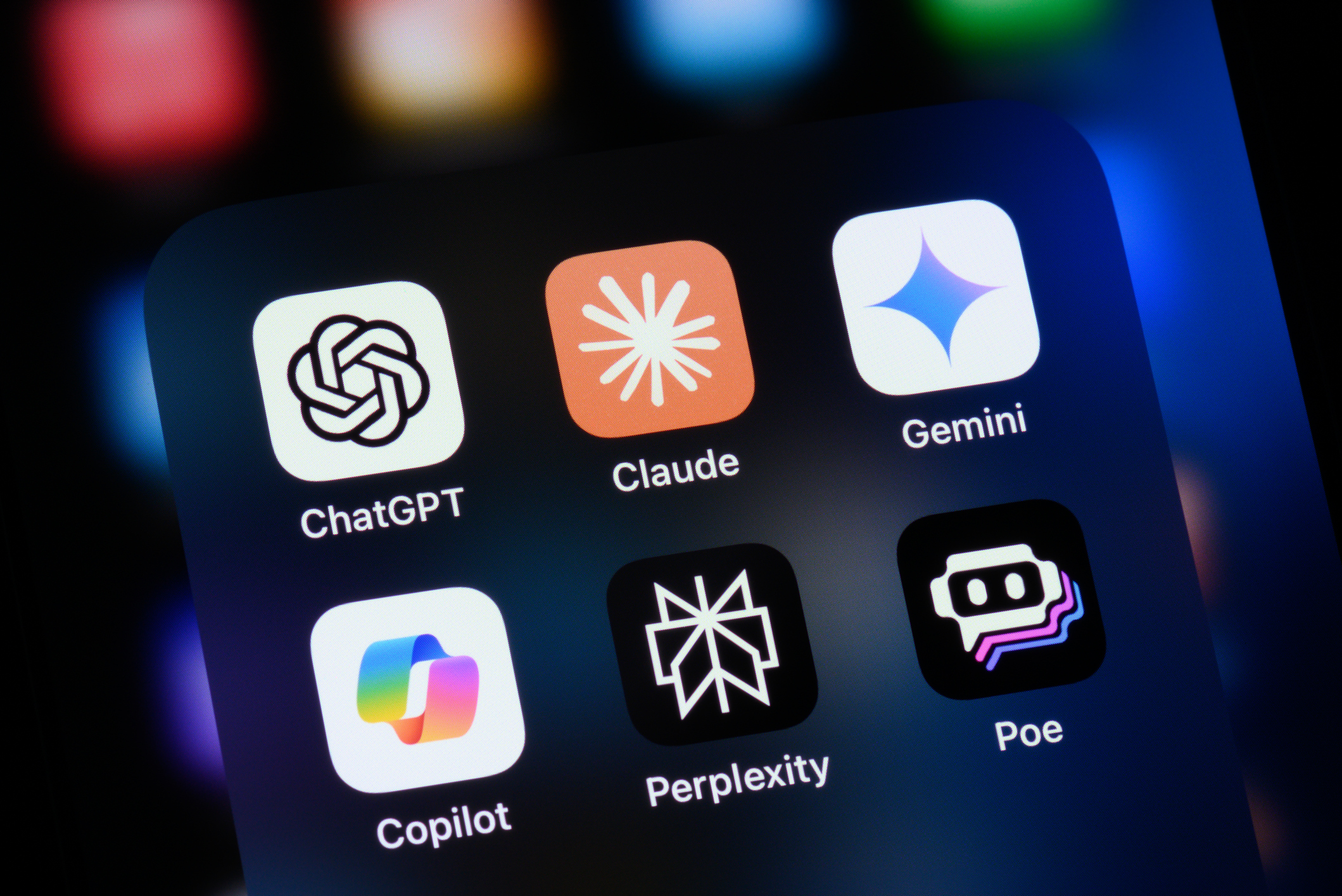
Liu places Superagent in an exclusive category alongside a select few competitors, specifically mentioning Anthropic’s Claude and Manus (a newer entrant in the AI research space that has recently garnered attention, reportedly being acquired by Meta). He characterizes these as the only products possessing "a true, generally capable, long-running and really smart agent architecture." This distinction is crucial in a market that has witnessed an explosion of AI agent announcements. OpenAI, for instance, initiated the year by unveiling new agent-building tools, while numerous other companies, from Notion to Harvey, have subsequently integrated agent functionality into their offerings. The proliferation of such claims necessitates that Superagent not only articulate its technical superiority but also tangibly demonstrate it in practical application to win over discerning customers.
In a public blog post detailing the product’s capabilities, Liu provided further concrete examples of Superagent’s potential. He illustrates how a query to evaluate Google as a three-year investment opportunity could yield a meticulously structured assessment, complete with citations to earnings calls, a defensibility analysis against emerging rivals like OpenAI and Anthropic, and a thorough enumeration of previously unconsidered risk factors. Similarly, requesting a briefing on Wells Fargo’s AI strategy prior to a pitch could furnish insights into their regulatory posture, recent AI investments, and specific pain points that a product could address. Critically, Superagent’s ability to pull from premium data sources such as FactSet, Crunchbase, SEC filings, and earnings transcripts underscores its capacity to provide depth and veracity often absent in general-purpose AI outputs. This access to authoritative financial and corporate data significantly enhances the analytical rigor and trustworthiness of its deliverables.
Strategic Imperatives and Market Dynamics
Airtable’s foray into the AI agent domain is not an isolated initiative but rather the culmination of a deliberate transformation, with Liu systematically repositioning the company as an "AI-native platform." This strategic evolution began to crystalize several months prior to Superagent’s launch. Last fall, Airtable made a pivotal hire, bringing in David Azose, who previously served as the engineering lead for ChatGPT’s business products at OpenAI, to assume the critical role of Chief Technology Officer. This appointment signaled a clear intent to infuse deep AI expertise at the highest levels of the organization.
Concurrently, Airtable executed another significant strategic maneuver: the acquisition of DeepSky (formerly known as Gradient). DeepSky was itself an AI agents startup that had successfully raised $40 million in funding, demonstrating its own innovation and market potential in this specialized sector. This acquisition provided Airtable with immediate access to cutting-edge AI agent technology, intellectual property, and, crucially, a highly skilled team. Superagent will operate with a degree of semi-independence from Airtable’s core business, with DeepSky’s original founding trio taking the helm of the new venture. This structure aims to foster the agility and entrepreneurial spirit often required for breakthrough innovation, while still benefiting from the financial and organizational backing of a larger, established entity.
The commercial strategy for Superagent is still being refined, but early indications suggest a pricing model consistent with emerging trends in AI products. Anticipated tiers range from an entry-level subscription of approximately $20 per month per user, extending up to $200 for power users, with a promise of generous inference credits. Liu’s candid remark, "We’re not trying to optimize for profit margin right now," suggests a strategic focus on market penetration and user adoption in the initial phases, rather than immediate profitability. This aggressive pricing strategy is common in nascent, high-potential markets where capturing market share and establishing a user base is paramount, even if it entails operating at lower margins initially.
Navigating the Future: Risks, Rewards, and Leadership
The ultimate trajectory of Superagent—whether it fulfills Liu’s ambitious vision of a trillion-dollar market opportunity or becomes a significant investment that fails to yield proportional returns—remains an open question. The competitive landscape is formidable, populated by well-capitalized tech giants and agile startups alike. The nuanced technical distinctions Liu emphasizes between "real agents" and "LLM-powered workflows," while academically significant, may not ultimately sway customers if rival offerings can deliver adequate results more swiftly or cost-effectively. User experience, reliability, and demonstrable value often outweigh subtle architectural differences in the marketplace.
Yet, for a chief executive whose company has navigated a substantial $7.7 billion reduction in its "paper" valuation while judiciously preserving the majority of its actual capital, this strategic pivot underscores a decisive willingness to invest in future growth rather than merely safeguarding existing assets. Liu has astutely reframed the earlier valuation compression as an unexpected recruiting advantage. He now tells prospective employees that they are acquiring "equity that’s actually much more attractively priced than the $11 billion valuation," implying significant upside potential if his bold bets materialize. Furthermore, Airtable’s robust capital reserves grant it the flexibility for strategic acquisitions, mitigating any immediate need to raise additional funding rounds, thereby preserving greater control and optionality.
When directly questioned about whether he believes Superagent represents a larger opportunity than Airtable’s established flagship product, Liu offers a pragmatic response. He concedes that Airtable "will probably be larger for at least the near term than any new products that we do, including Superagent." However, he quickly adds, "But I also like being able to bet on Superagent. Optionality is a good thing." This perspective highlights a balanced approach, acknowledging the current strength of the core business while simultaneously pursuing high-potential, transformative ventures.
This proactive and adaptive stance aligns with what Liu characterizes as "wartime" leadership. He admits that he once viewed the term as unnecessarily aggressive but now embraces it as an apt description for the current environment. In a rapidly evolving technological landscape, characterized by intense competition and unpredictable shifts, Liu believes that "being very fast on the draw to be able to adapt" represents "the most value-creative way to run things right now." He concludes, with a hint of enthusiasm, that it is "also the most exciting way to do things." This philosophy underscores a readiness to embrace disruption, make bold decisions, and continuously innovate, positioning Airtable not just to survive, but potentially to thrive in the new era of artificial intelligence.