Amir Mahmud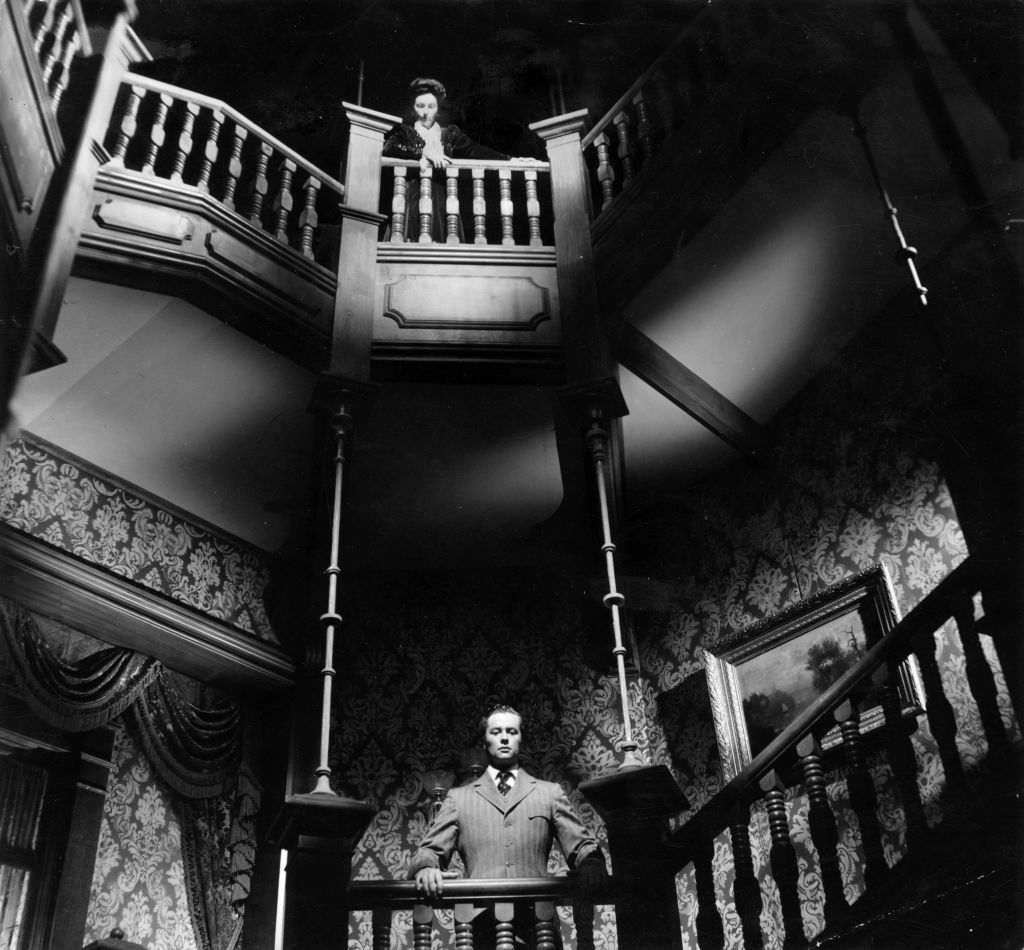
A bold initiative by the artificial intelligence startup Fable to reconstruct the legendary lost footage of Orson Welles’ 1942 film, "The Magnificent Ambersons," has ignited a fervent discussion within the film community and beyond. What initially struck many as a commercially dubious and potentially sacrilegious endeavor has, upon closer examination, revealed itself to be a deeply personal and technologically ambitious quest, driven by a profound reverence for one of cinema’s most enduring tragedies. This ambitious project, seeking to leverage generative AI to restore the excised portions of Welles’ original vision, challenges conventional notions of artistic integrity, authorship, and the very definition of a finished work.
The Genesis of a Cinematic Tragedy: "The Magnificent Ambersons"
To fully grasp the magnitude and controversy surrounding Fable’s project, one must understand the tumultuous history of "The Magnificent Ambersons." Following the groundbreaking success of "Citizen Kane" in 1941, Orson Welles was granted significant creative autonomy by RKO Pictures for his next feature. He chose to adapt Booth Tarkington’s Pulitzer Prize-winning 1918 novel, a poignant chronicle of the decline of a wealthy Midwestern family at the turn of the 20th century, symbolizing the passing of the old aristocratic order in America amidst industrialization. Welles envisioned a melancholic, reflective film, a stark contrast to the dynamic narrative of "Kane," characterized by its atmospheric cinematography, long takes, and a profound sense of loss.
Production was notoriously fraught. Welles, known for his perfectionism, shot extensive footage, meticulously crafting each scene. However, by late 1942, the tides had turned dramatically. Welles was in Brazil working on another project, "It’s All True," when the first rough cut of "Ambersons" was screened for a test audience in Pomona, California. The response was disastrous. Audiences found the film too dark, slow, and depressing, particularly in the wake of America’s entry into World War II, when studios favored more uplifting fare. RKO, under new management and grappling with financial woes, panicked.
What followed is one of the most infamous instances of studio interference in Hollywood history. The studio effectively seized control of the film, excising approximately 43 minutes of Welles’ original cut, including a pivotal ending sequence that aligned with the novel’s tragic conclusion. They commissioned editor Robert Wise and Welles’ former assistant Fred Fleck to shoot and insert a new, more palatable "happy ending" without Welles’ direct involvement or approval. The deleted footage, including Welles’ preferred final scenes, was subsequently destroyed by RKO to make space in its vaults, rendering any future restoration of Welles’ true vision impossible through conventional means. This act of cinematic vandalism left a gaping wound in film history, transforming "The Magnificent Ambersons" into a poignant symbol of artistic compromise and the destructive power of studio politics. Despite its mutilated state, the surviving version of "Ambersons" has been critically re-evaluated over decades, recognized for its innovative techniques and profound emotional resonance, cementing its status as a flawed masterpiece and a testament to Welles’ singular genius.
Fable’s Digital Quest and the Pursuit of a Lost Vision
Edward Saatchi, founder of Fable, articulates his fascination with "The Magnificent Ambersons" as a deeply personal journey, describing the lost footage as "the holy grail of lost cinema." His upbringing, steeped in film culture with "movie mad" parents, instilled in him a profound appreciation for Welles’ work from a young age. This personal connection underpins the seemingly audacious decision to dedicate significant resources to a project that many initially dismissed as fan fiction or a technical exercise devoid of artistic merit.
Saatchi is not the first to dream of restoring Welles’ vision. Filmmaker Brian Rose previously embarked on a similar quest, painstakingly creating animated scenes based on the film’s script, production stills, and Welles’ extensive notes. Rose’s efforts, while commendable, faced limitations inherent in pre-AI animation, with even close friends and family reportedly "scratching their heads" at the results. Fable’s project builds upon this legacy, aiming for a higher fidelity recreation using advanced generative AI. Their methodology involves filming new live-action scenes, which will then be meticulously overlaid with digital recreations of the original actors and their voices. This hybrid approach seeks to merge traditional filmmaking techniques with cutting-edge AI, attempting to bridge the eighty-year gap between Welles’ original production and a modern digital reinterpretation.
The technological hurdles are considerable. Recreating the nuanced performances of actors like Joseph Cotten, Anne Baxter, and Agnes Moorehead, capturing their specific mannerisms, facial expressions, and vocal inflections, pushes the boundaries of current AI capabilities. Early experiments reportedly yielded "obvious blunders," such as a "two-headed Joseph Cotten," highlighting the complexities of generating consistent and believable digital human forms. Furthermore, Saatchi himself noted a "happiness problem," where the AI tended to render the film’s female characters with an anachronistic and inappropriate cheerfulness, failing to capture the subtle melancholy and period-appropriate emotional restraint crucial to Welles’ aesthetic. Beyond actor likenesses, the challenge extends to replicating Welles’ distinctive cinematography – his use of deep focus, chiaroscuro lighting, and intricate mise-en-scène – elements that define the film’s unique visual language and contribute profoundly to its emotional depth. Achieving this level of artistic fidelity requires not just technical prowess but also a deep understanding of cinematic artistry and Welles’ specific directorial genius.
Ethical Quandaries and Intellectual Property Rights
Beyond the technical challenges, Fable’s project navigates a complex ethical and legal landscape. Saatchi acknowledged a significant misstep in not initially consulting Welles’ estate before publicly announcing the project. This oversight highlighted broader concerns regarding intellectual property rights, posthumous artistic control, and the potential for AI to infringe upon or reinterpret the legacy of deceased creators without consent. Since then, Fable has reportedly engaged in discussions with both Welles’ estate and Warner Bros., which holds the rights to the original film.
Beatrice Welles, Orson Welles’ daughter, initially expressed skepticism, a sentiment echoed by many purists. However, she has since indicated a shifting perspective, stating her belief that Fable is approaching the project "with enormous respect toward my father and this beautiful movie." This cautious endorsement from a key stakeholder suggests a recognition of Saatchi’s genuine intent and a potential path forward for collaboration. The involvement of actor and acclaimed Welles biographer Simon Callow as an advisor further lends credibility to the endeavor, with Callow describing it as a "great idea." Callow’s deep understanding of Welles’ life and work could prove invaluable in guiding the project’s artistic direction, ensuring that the AI-generated footage aligns as closely as possible with the known intentions and aesthetic sensibilities of the master filmmaker.
However, not all are convinced. Melissa Galt, daughter of actress Anne Baxter, who starred in "The Magnificent Ambersons," firmly believes her mother "would not have agreed with that at all." Galt’s stance, rooted in a "purist" view, emphasizes that "It’s not the truth. It’s a creation of someone else’s truth. But it’s not the original." This perspective underscores a fundamental philosophical divide: whether an AI-generated recreation can ever truly embody the original artistic vision, or if it remains, at best, an elaborate imitation, a ghost in the machine.
The Broader Impact: AI, Art, and the Human Condition
The "Magnificent Ambersons" AI project transcends a mere technological stunt; it serves as a potent case study for the burgeoning intersection of artificial intelligence and creative industries, raising profound questions about art, authenticity, and human mortality. The debate it sparks is not confined to cinephiles but resonates across the cultural landscape, touching upon how we perceive and value artistic legacy in an era of unprecedented digital manipulation.
At its core, the project forces a confrontation with the concept of artistic finality. For purists like Melissa Galt, a work of art, once completed and released, or tragically truncated, carries its own intrinsic history and meaning. Any attempt to "undo" or "complete" it posthumously, particularly through non-human agency, risks undermining its authenticity and the original artist’s intent. This perspective aligns with arguments made by cultural critics such as Aaron Bady, who posits that art’s power is often intertwined with its limitations and the knowledge of mortality. Bady suggests that true art emerges from the finite nature of human experience, from "death, without loss, and without the space between my body and yours," arguing that AI, like vampires, might fall short in grasping these fundamental human conditions necessary for artistic creation. From this viewpoint, Saatchi’s insistence on finding "some way to undo what had happened" could be interpreted as a romantic, perhaps even quixotic, resistance to the inherent tragedy of loss – a desire to defy the irreversible nature of time and artistic fate.
Conversely, proponents of AI recreation might argue that such projects offer a unique opportunity for artistic exploration and a form of digital resurrection, allowing audiences to glimpse what might have been. In an age where digital tools are routinely used for restoration, colorization, and special effects, the line between enhancement and recreation becomes increasingly blurred. Could AI become a tool for historical preservation, not just of what was, but of what could have been, offering new avenues for engaging with incomplete or lost works? This perspective views AI not as a threat to art, but as an extension of human creativity, enabling new forms of storytelling and artistic expression, much like photography or cinema itself once challenged traditional art forms.
The market and social implications are also significant. If Fable’s project achieves a convincing level of fidelity and is embraced by the public, it could set a powerful precedent for the "digital completion" or "resurrection" of other lost or unfinished works across various artistic domains. This raises critical questions about intellectual property ownership in the age of AI-generated content, the potential for exploitation of deceased artists’ likenesses and styles, and the ethical responsibility of creators utilizing such powerful tools. Furthermore, audience reception will be crucial. Will viewers accept an AI-generated "Magnificent Ambersons" as a legitimate extension of Welles’ work, or will it remain a fascinating novelty, an intriguing "what if" rather than a definitive statement? The "uncanny valley" effect, where digital creations fall short of perfect realism and evoke discomfort, remains a persistent challenge for AI in visual media.
Ultimately, Fable’s endeavor with "The Magnificent Ambersons" represents more than just an attempt to restore a lost film; it is a live experiment at the frontier of technology and art. It forces a re-evaluation of what constitutes authorship, authenticity, and the very boundaries of creativity in a rapidly evolving digital world. Whether it culminates in a mere technological curiosity or a genuinely moving artistic experience, its journey will undoubtedly continue to fuel vital conversations about the future of human and artificial collaboration in the realm of art.