Amir Mahmud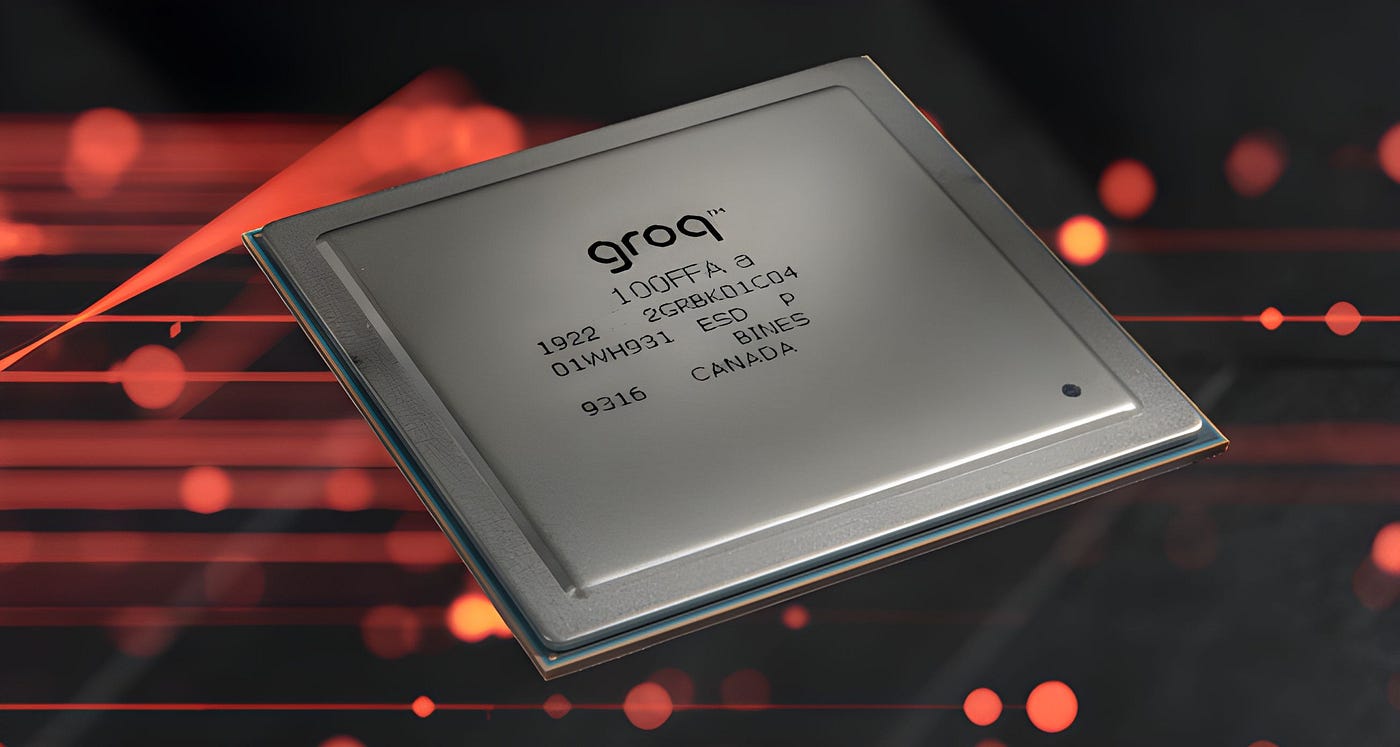
In a move poised to significantly reshape the artificial intelligence hardware landscape, Nvidia, the undisputed leader in AI accelerators, has announced a non-exclusive licensing agreement with Groq, a prominent challenger known for its innovative Language Processing Units (LPUs). This strategic pact includes the hiring of Groq’s influential founder, Jonathan Ross, its president, Sunny Madra, and a cohort of additional key personnel, signaling a profound shift in the competitive dynamics of high-performance computing for AI inference. The precise financial scope of the deal remains undisclosed by Nvidia, though earlier reports from CNBC suggested a potential acquisition of Groq’s assets valued at approximately $20 billion. Nvidia has clarified that this arrangement does not constitute a full acquisition of Groq as a company.
A Strategic Convergence in AI Hardware
This alliance underscores Nvidia’s proactive strategy to maintain its market dominance in the rapidly evolving AI sector. By integrating Groq’s distinct LPU technology and absorbing its core leadership and engineering talent, Nvidia appears to be both diversifying its technological portfolio and neutralizing a formidable emerging competitor in the specialized field of AI inference. The deal highlights a critical juncture where the demand for efficient and high-speed AI processing is escalating, particularly for large language models (LLMs) and other generative AI applications.
Nvidia’s Unrivaled Position and Emerging Challenges
Nvidia has long held a near-monopoly in the market for graphics processing units (GPUs), which have become the de facto standard for training complex AI models. Its CUDA platform and extensive software ecosystem have fostered a loyal developer community, making it challenging for newcomers to penetrate the market. The company’s GPUs, such as the H100 and A100 series, are essential components in data centers powering the global AI boom, driving its market capitalization to unprecedented heights.
However, this dominance also brings challenges. The demand for Nvidia’s chips often outstrips supply, leading to high prices and long lead times. Furthermore, the specialized needs of AI inference – the process of running a trained AI model to make predictions or generate outputs – are somewhat different from those of training. While GPUs excel at the parallel processing required for training, inference often benefits from architectures optimized for sequential processing and low latency, particularly in real-time applications. This distinction has opened the door for specialized hardware, like Groq’s LPU, to emerge as potent challengers.
Groq’s LPU: A Disruptive Force
Groq, founded by Jonathan Ross, a former Google engineer credited with helping invent the Tensor Processing Unit (TPU), has garnered significant attention for its innovative Language Processing Unit. Unlike traditional GPUs, Groq’s LPUs are designed from the ground up to handle the sequential and deterministic workloads characteristic of large language models with exceptional efficiency. The company has publicly asserted that its LPU architecture can run LLMs up to ten times faster and utilize a mere tenth of the energy compared to conventional solutions. These claims, if fully realized at scale, represent a substantial leap in performance and energy efficiency, addressing two of the most pressing concerns in the widespread deployment of AI: speed and sustainability.
Groq’s rapid ascent in the AI hardware sector is evident in its recent financial milestones. In September of the preceding year (2024), the company successfully raised $750 million, achieving a valuation of $6.9 billion. Its platform has reportedly attracted a rapidly expanding developer base, growing from approximately 356,000 users in the previous year to over two million by the time of this announcement. This rapid adoption underscores the appeal and perceived performance advantages of its LPU technology among AI practitioners.
The Anatomy of the Agreement: Licensing and Talent Acquisition
The structure of the deal—a non-exclusive licensing agreement coupled with the recruitment of key personnel—is noteworthy. A non-exclusive license permits Nvidia to utilize Groq’s LPU technology without preventing Groq from licensing it to other parties or continuing its own operations. However, the departure of Groq’s founder and president, along with other core employees, raises questions about Groq’s future as an independent, innovative entity. It suggests that Nvidia is not merely acquiring technology but also critical intellectual capital and the visionary leadership responsible for its creation.
This strategy could allow Nvidia to integrate LPU-like capabilities into its own product lines, potentially developing hybrid architectures that combine the strengths of GPUs for training with the efficiencies of LPUs for inference. For Groq, while the financial terms of the deal are not fully disclosed, it represents a significant validation of its technology and a substantial payout for its investors and key stakeholders. The retention of the "non-exclusive" clause might also imply that Groq, as a corporate entity, could potentially continue to exist, perhaps with a redefined strategic focus or under new leadership, leveraging its remaining IP. However, the loss of its pioneering leadership is undoubtedly a profound development.
Market Implications and Competitive Landscape Shifts
The implications of this deal for the broader AI hardware market are multifaceted.
- For Nvidia: This move bolsters Nvidia’s already dominant position. By acquiring access to a proven, high-performance inference technology and bringing its architects onboard, Nvidia can mitigate the threat posed by specialized inference chips and potentially integrate these advancements into its future product roadmap. It hedges against the possibility of Groq’s LPU becoming a truly disruptive alternative that could chip away at Nvidia’s market share in the crucial inference segment.
- For Groq’s Competitors: Other startups in the AI accelerator space, such as Cerebras Systems, SambaNova Systems, and various cloud providers developing custom silicon (like Google with its TPUs or AWS with Inferentia), will need to reassess their strategies. Nvidia’s move signals a clear intent to cover all bases in the AI hardware ecosystem, from training to inference, across diverse architectural approaches. This could intensify competition or spur further consolidation.
- For AI Developers and Users: The integration of LPU technology into Nvidia’s ecosystem, or its broader adoption facilitated by Nvidia, could lead to more accessible, faster, and more energy-efficient AI inference solutions. This translates to lower operational costs for deploying LLMs, quicker response times for AI applications, and potentially a broader range of AI-powered services.
The Evolution of AI Accelerators
The history of AI hardware has been one of continuous specialization. Early AI models ran on general-purpose CPUs. As models grew in complexity, GPUs, initially designed for graphics rendering, proved exceptionally adept at the parallel computations required for neural network training. This led to the "GPU computing" era. However, the sheer scale of modern AI, particularly large language models, has driven the development of even more specialized accelerators. Google’s TPUs were an early example, optimized for its TensorFlow framework. Groq’s LPU represents another evolutionary step, focusing on the unique demands of language processing and sequential inference. This deal suggests that the future of AI hardware may not be dominated by a single architecture but rather a diverse ecosystem of specialized chips, with industry leaders like Nvidia seeking to integrate or control as many of these specialized capabilities as possible.
Driving the Future of AI Inference
The burgeoning demand for AI inference is a critical factor driving this strategic alignment. While AI model training is computationally intensive, it is a finite process. Inference, on the other hand, represents the ongoing, operational cost of AI, executed billions of times daily across countless applications. As AI proliferates into every facet of technology, from search engines and virtual assistants to autonomous vehicles and medical diagnostics, the efficiency, speed, and cost-effectiveness of inference become paramount. Groq’s claims of 10x speed and 1/10th energy consumption directly address these scalability challenges, making its technology highly attractive for companies looking to deploy AI economically and sustainably at global scale. This acquisition of technology and talent could significantly accelerate the real-world deployment of advanced AI capabilities.
Potential Industry Repercussions
The substantial size of the reported asset acquisition—potentially Nvidia’s largest ever—underscores the strategic importance of Groq’s technology. While Nvidia clarified that this is not an acquisition of the entire company, the reported valuation and the recruitment of key leadership suggest a significant transfer of intellectual property and human capital. This continued consolidation of AI hardware capabilities under Nvidia’s umbrella could attract increased scrutiny from antitrust regulators, who are already monitoring the tech sector for potential monopolistic practices. The implications for innovation and competition in the long term will be closely watched by industry observers and policymakers alike.
Looking Ahead
This agreement marks a pivotal moment in the AI hardware industry. It signifies Nvidia’s unwavering commitment to maintaining its leadership position by embracing and integrating disruptive technologies rather than simply competing against them. For Groq, it represents the culmination of years of innovative research and development, resulting in a lucrative deal that validates its technological vision, even if it means its core leadership transitions to a larger entity. As AI continues its rapid expansion, the convergence of leading-edge hardware and talent will be crucial in defining the next generation of intelligent systems, and this strategic alliance is poised to play a significant role in that future.