Amir Mahmud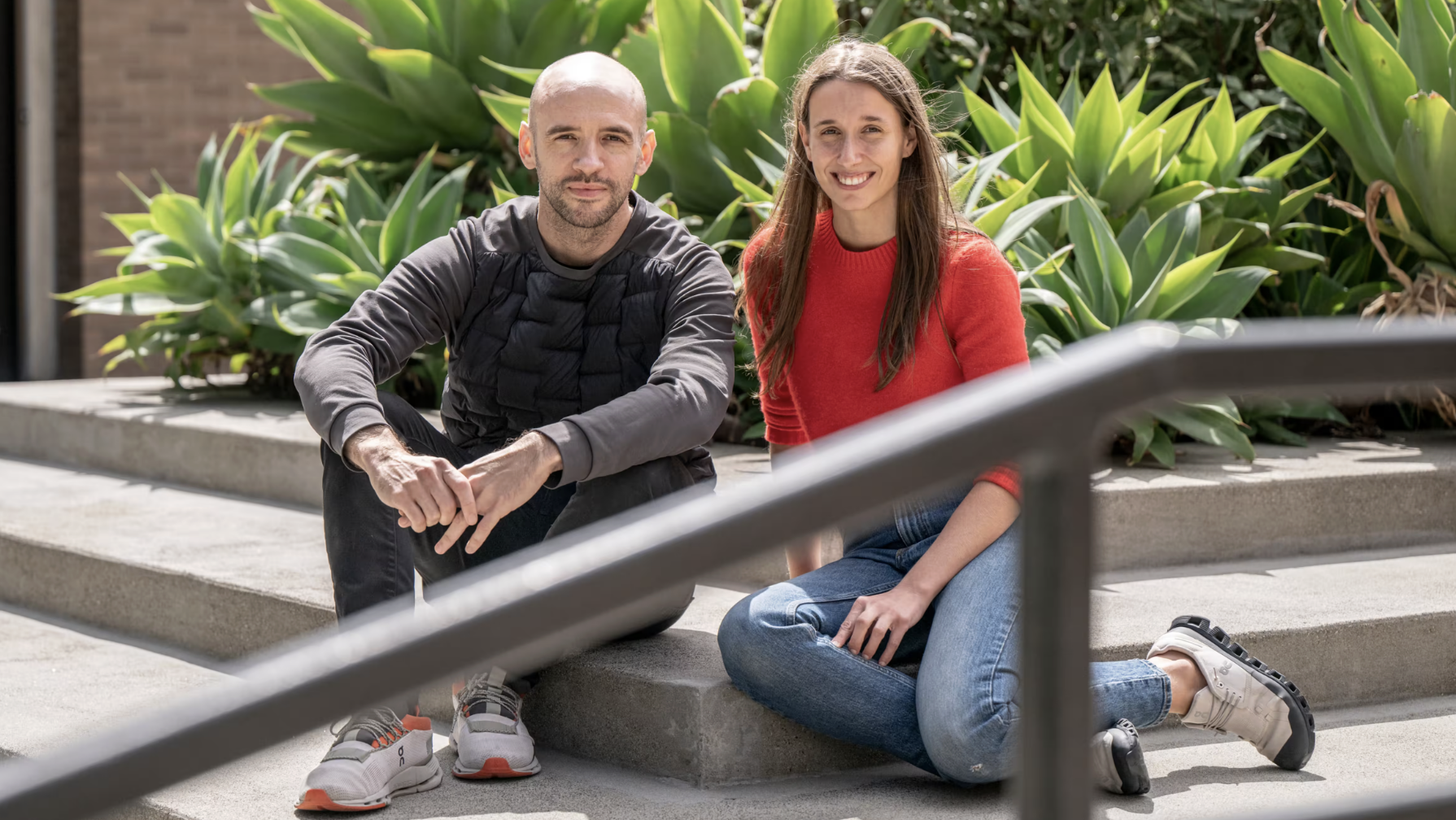
In an era defined by rapid technological advancements, the conventional landscape of customer support is undergoing a profound transformation, spearheaded by innovative companies like 14.ai. This burgeoning startup, founded by a visionary married duo, is challenging traditional business process outsourcing (BPO) models by offering an AI-native agency service that effectively replaces legacy customer support teams, particularly for agile startups seeking efficiency and scalability.
The Evolving Landscape of Customer Support
The evolution of customer service has been a journey from simple in-person interactions to complex global operations. For decades, the backbone of enterprise customer support was the call center, which expanded into the vast Business Process Outsourcing (BPO) industry. Companies outsourced their customer service functions to specialized firms, often in regions with lower labor costs, creating a globalized industry employing millions. This model, while cost-effective for many, frequently grappled with challenges such as inconsistent service quality, language barriers, high agent turnover, and the logistical complexities of managing remote teams across different time zones.
However, the advent of digital communication channels — email, chat, social media platforms like Facebook, TikTok, and messaging apps like Telegram and WhatsApp — diversified the demands on customer support. Customers now expect instant, omnichannel support, often preferring self-service options or quick, conversational interactions over lengthy phone calls. This shift laid the groundwork for the integration of artificial intelligence. Early AI applications in customer service primarily involved rule-based chatbots handling simple FAQs, but the recent breakthroughs in natural language processing (NLP) and large language models (LLMs) have dramatically expanded AI’s capabilities, allowing for more nuanced, contextual, and human-like interactions.
This "AI spring" has sent ripples through the BPO sector. Industry leaders and investors, including prominent figures like tech billionaire Vinod Khosla, have issued warnings about the impending disruption to traditional BPO services, predicting significant changes in employment and operational models within the next five years. Simultaneously, venture capitalists are pouring millions into AI-powered customer support startups such as Decagon, Parloa, and Sierra, signaling a strong belief in AI’s potential to redefine customer engagement. This confluence of technological capability and market demand has created fertile ground for new models to emerge, and 14.ai stands at the forefront of this new wave.
A New Paradigm: The AI-Native Agency Model
Unlike many contemporaries that offer AI software as a service (SaaS) for companies to integrate and manage themselves, 14.ai has carved out a distinct niche. It operates as an "AI-native customer service agency," offering a comprehensive, end-to-end solution where it takes over the entire customer support operation. This approach, as articulated by co-founder Michael Fester, stems from the understanding that "operating software is hard, especially for customer service." By combining proprietary software with a full-service agency model, 14.ai alleviates the burden on clients, allowing them to offload the complexities of technology implementation, team management, and continuous optimization.
The company’s value proposition is compelling: it aims to remove three significant line items from a startup’s balance sheet: the cost of traditional ticketing systems, the expenses associated with various AI software add-ons, and a substantial portion of human labor costs. This consolidated offering simplifies vendor management and provides a single, accountable entity for customer support performance. This strategy resonates particularly with startups, which often have limited resources, lean teams, and a pressing need for efficient, scalable solutions that don’t divert focus from core product development. The model promises not just cost reduction but also enhanced efficiency and a consistent quality of service across all customer touchpoints.
Foundational Expertise and Strategic Vision
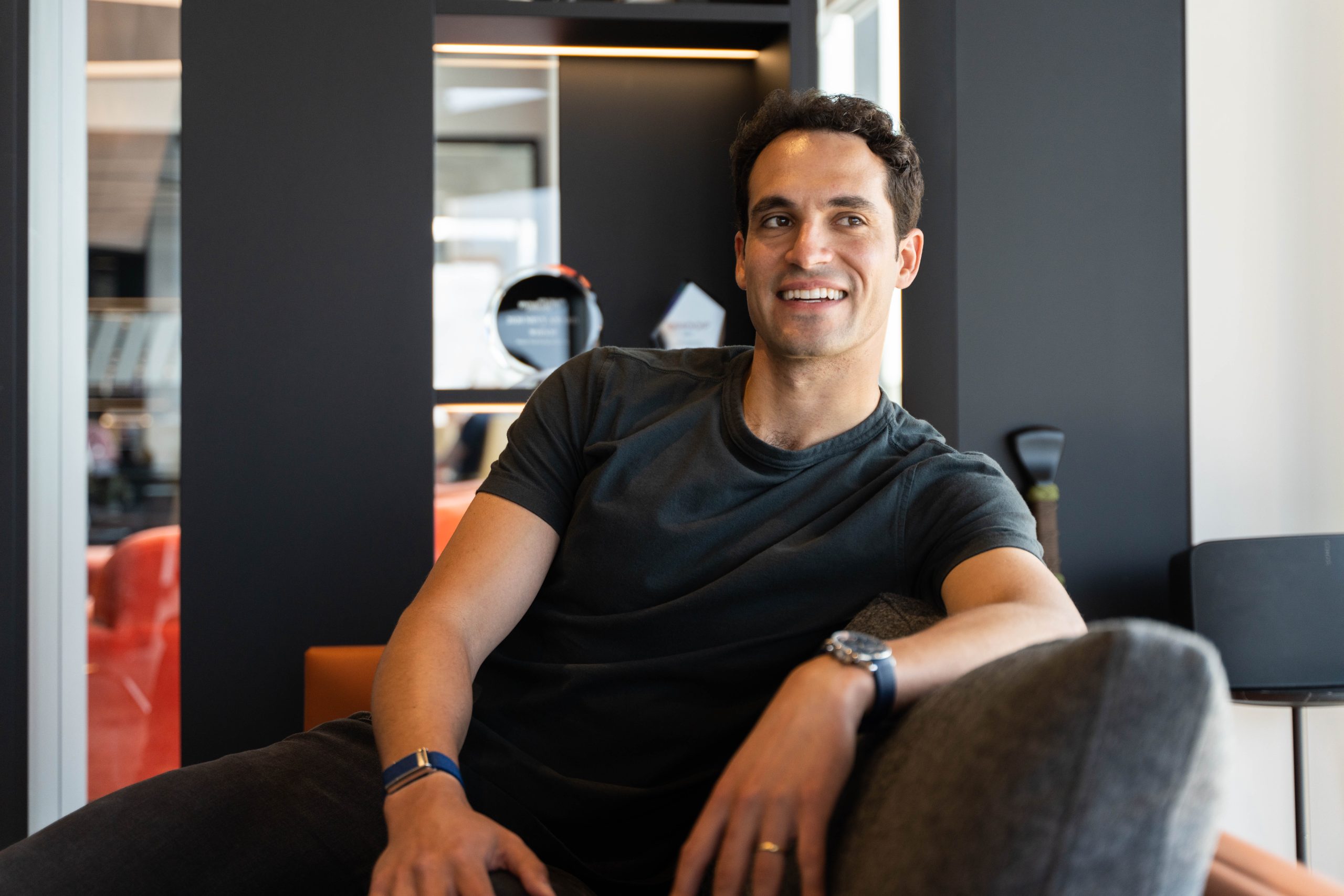
The genesis of 14.ai is rooted in the extensive entrepreneurial backgrounds of its co-founders, Marie Schneegans and Michael Fester. The married duo, who met in Paris over a decade ago, each built successful ventures independently before uniting their expertise for 14.ai. Schneegans previously co-founded Workwell, a corporate intranet company focused on enhancing internal communication and employee experience, providing her with deep insights into organizational workflows and the challenges of enterprise software adoption. Fester, on the other hand, founded Snips, a company specializing in local-first assistants for smart devices, which was notably acquired by Sonos in 2019. His experience with voice AI, on-device processing, and sophisticated natural language understanding proved invaluable.
After their individual successes, the desire to build a company together brought them to the United States. Their combined experience in B2B software, AI development, and understanding complex organizational needs naturally led them to identify customer service as a ripe area for disruption. They recognized that while AI tools were emerging, the practical implementation and management of these tools remained a significant hurdle for many businesses. This insight propelled them to move beyond a pure SaaS offering, opting instead for a full-service agency model that could leverage their AI expertise to deliver tangible, operational results. Their vision was to not just sell technology, but to operate it, effectively becoming an extension of their clients’ teams, powered by their purpose-built AI stack.
Operational Efficiency and Expanding Capabilities
The operational model of 14.ai is designed for speed and comprehensive coverage. The company boasts an impressive capability to integrate with a client’s existing support systems within a single day. Once integrated, it can rapidly begin clearing accumulated support ticket backlogs, a common pain point for rapidly scaling startups. This agility is critical for companies struggling with overwhelmed human teams or inefficient legacy systems.
14.ai’s platform is engineered to monitor and manage customer interactions across an expansive array of channels. This includes traditional avenues like email and phone calls, as well as modern digital communication platforms such as live chat, social media platforms like TikTok and Facebook, and messaging services like Telegram and WhatsApp. This omnichannel capability ensures that no customer query goes unaddressed, providing a unified and consistent support experience regardless of the platform chosen by the customer.
A compelling example of 14.ai’s impact comes from a men’s health supplement company called "Sperm Worms," founded by a former YC alumnus. The company faced a significant backlog of support tickets, overwhelming its existing team of customer service agents based in the Philippines, who struggled with efficiency. Marie Schneegans recounted that 14.ai took over the operation on a Thursday morning, and by Thursday afternoon, they had successfully cleared the entire backlog across all channels, including social media, SMS, email, chat, and voice. This rapid resolution highlights the transformative power of their AI-driven approach, demonstrating how technology can augment and even surpass traditional human-only operations in terms of speed and scale.
Despite its ambitious operational scope, 14.ai maintains a lean core team, currently comprising six individuals, all of whom are AI engineers. This specialized team rotates availability to ensure round-the-clock support for their clients. With their recent $3 million seed funding round, led by Y Combinator with participation from General Catalyst, Base Case Capital, SV Angel, and founders of major tech companies like Dropbox, Slack, Replit, and Vercel, the company plans to significantly increase its headcount, focusing exclusively on hiring more AI engineers. This strategic hiring reflects their commitment to continuous innovation and the belief that deep AI expertise is central to their service delivery.
Beyond Support: Driving Revenue Growth
14.ai views its role as extending beyond mere problem-solving. Michael Fester emphasizes that the company functions not just as a support agency, but also as a "revenue growth engine." By capturing and analyzing all customer conversations early on, 14.ai generates valuable insights that can inform sales strategies, product development, and overall business growth. This data-driven approach allows clients to understand customer pain points, preferences, and emerging trends, turning customer interactions from a cost center into a source of competitive advantage.
The AI system is designed to learn the intricate workflows of various customer support scenarios and other functions, such as sales and revenue generation. Through automation, it seeks to minimize the time human agents spend on routine or repetitive tasks, freeing them to focus on complex, high-value interactions. This optimization can lead to improved customer satisfaction, higher conversion rates, and ultimately, increased revenue.
The startup currently caters to a diverse range of clients across different sectors, demonstrating the versatility of its AI-native agency model. Its client roster includes the luxury skincare brand Yon-KA, the innovative smart glasses maker Brilliant Labs, and Creative Lighting, a lighting solutions company. These diverse engagements underscore the broad applicability of 14.ai’s services, from high-touch luxury markets to specialized tech and industrial sectors.
To continuously refine its product and push the boundaries of AI autonomy, 14.ai also operates its own internal venture, GloGlo, a glucose gummies brand aimed at Type 1 diabetics. This direct operational experience allows the company to experiment with and optimize its AI systems in a real-world, customer-facing environment, striving to operate GloGlo as autonomously as possible with AI. This internal laboratory provides invaluable feedback loops, ensuring that 14.ai’s offerings are robust, efficient, and constantly evolving.
The Human-AI Synergy and Future Outlook
The vision of 14.ai aligns closely with broader industry trends and the strategic outlook of key investors. Tom Blomfield, a partner at Y Combinator, provided insightful commentary on 14.ai’s unique balance between artificial intelligence and human intervention in customer service. He posits that with appropriate integration, AI can efficiently resolve approximately 60% of customer service tasks autonomously, leaving the remaining 40% for human agents to handle. Blomfield anticipates that this balance will dynamically shift over time, with AI progressively assuming a larger share of the workload as the technology advances.
He contrasts 14.ai’s model with traditional platforms, where companies often face the "painful" necessity of repeated headcount reductions as AI capabilities grow. In such scenarios, the burden of managing these transitions typically falls on the client. 14.ai offers an alternative: by becoming the client’s entire customer service department, encompassing both AI and human components, it gains the flexibility to reallocate support agents across various clients who may be at different stages of AI adoption. This capability for effective load balancing and resource optimization allows for a more humane and efficient transition as AI takes on more responsibilities, mitigating the disruptive impact of technology on employment.
This approach reflects a growing consensus that the future of work, particularly in service industries, will involve a collaborative synergy between humans and AI, rather than outright replacement. While some jobs may be displaced, new roles are emerging for AI trainers, supervisors, and specialists who can manage and optimize these sophisticated systems. Furthermore, the human element remains critical for complex problem-solving, empathy-driven interactions, and situations requiring nuanced understanding or creative solutions that AI currently struggles with.
It is notable that AI-powered agencies like 14.ai are not just a novel idea but a strategic focus for influential accelerators. Y Combinator specifically highlighted "AI-powered agencies" in its "requests for startups in 2026," signaling a strong belief in this model as a significant frontier for innovation and investment. This endorsement from one of the most prestigious startup accelerators further validates 14.ai’s approach and suggests that its model could become a blueprint for how service industries evolve in the AI age.
Broader Implications for Industry and Workforce
The rise of AI-native agencies like 14.ai carries significant implications across various sectors and for the global workforce. For businesses, it promises unprecedented levels of efficiency, cost savings, and scalability in customer support, allowing startups and enterprises alike to focus on their core competencies. The ability to integrate quickly and handle diverse communication channels ensures that customer service can keep pace with modern consumer expectations.
However, the social and cultural impact, particularly on the BPO industry, cannot be understated. Developing economies that have historically relied on customer service outsourcing for job creation may face substantial disruption. This necessitates a proactive approach to reskilling workforces and exploring new avenues for economic growth in these regions. The transition to an AI-powered service economy will likely require significant investment in education and training to equip workers with the skills needed to manage, train, and interact with AI systems.
Ethical considerations also come to the fore. Questions around data privacy, algorithmic bias, and the transparency of AI interactions will become increasingly important. Companies leveraging AI for customer service must ensure that their systems are fair, secure, and that customers are aware when they are interacting with an AI rather than a human. Maintaining a human "fallback" and clear escalation paths will be crucial for maintaining trust and delivering genuinely helpful support.
In conclusion, 14.ai represents a vanguard in the reinvention of customer service. By pioneering an AI-native agency model that integrates advanced technology with a full-service approach, the company is not only providing a streamlined, efficient solution for startups but also setting a precedent for the future of service industries. As AI continues to mature, the symbiotic relationship between human expertise and artificial intelligence, as championed by 14.ai, is poised to reshape customer interactions, business operations, and the global workforce for years to come.