Amir Mahmud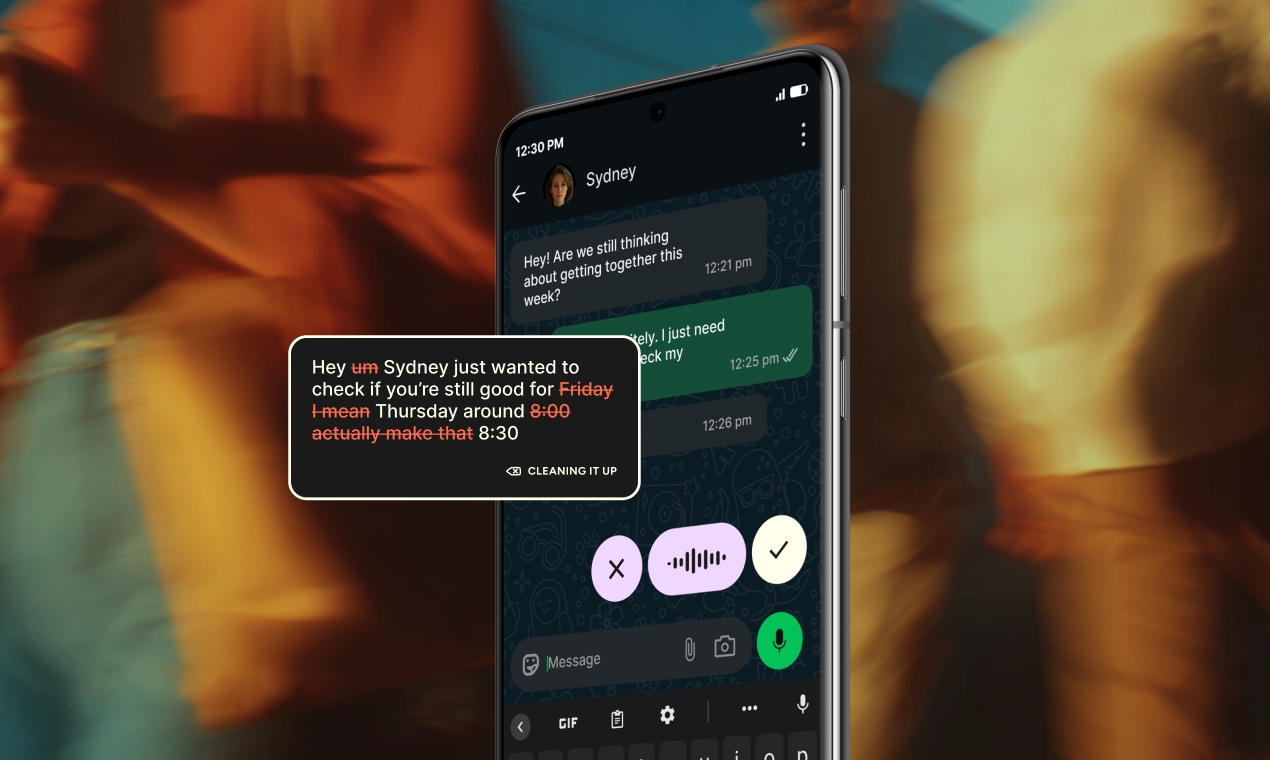
Wispr Flow, a pioneering startup in the realm of AI-powered dictation, has officially launched its highly anticipated application for Android devices, marking a significant expansion of its cross-platform presence. This strategic move extends the company’s advanced voice-to-text capabilities to the world’s most widely used mobile operating system, aiming to fundamentally transform how users interact with their smartphones for text input and productivity. The introduction on Android follows a carefully phased rollout that saw the technology first debut on desktop platforms, then make its way to Apple’s iOS ecosystem, illustrating a methodical approach to capturing diverse user bases.
The Journey to Ubiquitous Voice Control
The evolution of speech recognition technology has been a protracted journey, beginning with rudimentary systems in the mid-20th century and gradually progressing through academic research and commercial applications like Dragon NaturallySpeaking in the late 20th and early 21st centuries. However, the advent of deep learning and neural networks in recent years has propelled AI-powered dictation into a new era of accuracy, speed, and contextual understanding. Wispr Flow has positioned itself at the forefront of this revolution, seeking to make voice input not just an alternative, but a superior method for text creation across various digital environments.
The company’s platform strategy began with a focus on desktop users, recognizing the immediate need for enhanced productivity tools in professional settings. Its applications for Mac and Windows provided users with robust AI dictation capabilities, allowing for efficient document creation and communication. This initial rollout laid the groundwork for refining their core AI models and user experience. Following the success on desktop, Wispr Flow turned its attention to mobile, releasing its iOS application in June 2025. This step was crucial, as mobile devices represent the primary computing platform for billions globally, but are often hindered by the limitations of small-screen typing. The iOS launch brought the power of sophisticated AI dictation to Apple’s mobile users, offering a dedicated keyboard interface that integrated seamlessly into their existing workflows. The current Android launch completes this crucial multi-platform ecosystem, ensuring that Wispr Flow’s innovative voice technology is accessible to the vast majority of smartphone users worldwide. This phased approach has allowed the company to gather user feedback and optimize its technology for the unique characteristics of each operating system.
A New Paradigm for Mobile Input
The user interface for Wispr Flow on Android devices introduces a novel approach to mobile dictation, distinct from its iOS counterpart and traditional keyboard interfaces. Instead of a dedicated keyboard, Android users will interact with the application through a floating bubble, a design choice that reflects the Android platform’s flexibility and openness. This floating bubble can be held down for continuous dictation, or tapped once to initiate the recording process, with another tap on a designated close button to conclude. This intuitive, on-demand interaction model aims to minimize friction and maximize the spontaneity of voice input, allowing users to switch between typing and speaking effortlessly within any application.
The core functionality extends far beyond simple transcription. Wispr Flow’s AI engine is engineered to intelligently process spoken language, actively cleaning up common "filler words" such as "um," "uh," and "like" that often pepper natural speech but detract from written clarity. Furthermore, the application intelligently formats the transcribed text, discerning context from both the application in use and the content being spoken. For instance, dictating an email might lead to different formatting conventions than dictating a note or a message in a chat application. This sophisticated contextual awareness is a significant leap from basic speech-to-text engines, which typically produce raw, unformatted transcripts requiring extensive manual editing. By providing cleaner, better-structured text from the outset, Wispr Flow significantly boosts user productivity and reduces the time spent on post-dictation corrections, making voice a truly viable alternative to traditional keyboard input for a wide array of tasks.
Beyond Simple Transcription: The AI Edge
The technological backbone of Wispr Flow’s offering lies in its advanced artificial intelligence and machine learning algorithms. This sophisticated architecture is not only responsible for the high accuracy of its dictation but also for its impressive performance metrics. Alongside the Android app release, the company announced a comprehensive infrastructure rewrite, which has resulted in a remarkable 30% increase in dictation speed. This enhancement is critical for real-time communication and rapid content creation, where even marginal delays can disrupt workflow. Faster processing means a more fluid and natural dictation experience, further blurring the lines between thought, speech, and written output.
Furthermore, Wispr Flow boasts impressive linguistic versatility, supporting translation in over 100 languages. This global reach significantly broadens the application’s utility, enabling seamless communication and content creation for a diverse, international user base. The ability to dictate in one language and have the text translated into another instantaneously holds immense potential for breaking down language barriers in business, education, and personal communication. The integration of this multilingual translation capability across various apps underscores the company’s ambition to make voice an indispensable tool for global digital interaction, moving beyond mere transcription to become a powerful linguistic bridge. The underlying AI models are constantly learning and improving, fed by vast datasets of spoken language, allowing for continuous refinement of accuracy and contextual understanding across all supported languages.
Tackling Multilingualism and Cultural Nuances
A particularly noteworthy development accompanying the Android launch is the release of a specialized AI model for Hinglish. Hinglish, a fascinating linguistic phenomenon prevalent in India, involves the spontaneous and often seamless interweaving of Hindi and English words and phrases within a single conversation. This mixed-code speaking style is a common reality for millions, yet traditional dictation software often struggles to accurately transcribe such hybrid languages, typically forcing users to choose one language over the other or producing fragmented, unintelligible output.
Tanay Kothari, co-founder and CEO of Wispr Flow, highlighted the personal motivation behind this innovation, stating that the new Hinglish model was born out of a personal need to address this unique communication pattern. This initiative exemplifies a deeper understanding of linguistic diversity and cultural context in technological design. Instead of expecting users to conform to the limitations of existing technology, Wispr Flow has engineered its AI to adapt to natural human communication patterns. This is a significant cultural impact, validating and supporting the way many people genuinely speak, especially in countries like India where English and local languages are frequently blended. The Hinglish model not only offers transcription but aims to accurately capture the nuances of this mixed linguistic expression, presenting it in a readable, coherent format. This dedication to catering to specific cultural and linguistic requirements sets a precedent for how AI-powered tools can be made more inclusive and genuinely useful for a global audience, moving beyond a one-size-fits-all approach.
The Competitive Landscape of Voice AI
The market for AI-powered dictation applications is experiencing rapid growth, attracting numerous developers and significant investment. While the desktop and iOS ecosystems already feature a plethora of sophisticated options, the Android landscape for truly advanced, AI-driven dictation has been comparatively less saturated. Wispr Flow’s entry into the Android market positions it among a select few cutting-edge solutions. The original article notes Typeless as another recent entrant, having launched its Android app in the preceding month. This indicates a nascent but intensifying competition in the Android space for premium dictation services.
The differentiation factor for Wispr Flow lies in its comprehensive feature set: not just high-accuracy transcription, but also intelligent formatting, filler word removal, multilingual support, and cross-app functionality. Many existing Android voice input options are often basic, integrated functionalities provided by the operating system (like Google Assistant’s dictation) or less sophisticated third-party apps that lack the contextual intelligence and formatting capabilities of Wispr Flow. The strategic advantage for companies like Wispr Flow and Typeless is to capture early market share by offering superior performance and a more polished user experience that addresses the nuanced needs of professionals and power users. This competitive drive is beneficial for consumers, pushing innovation and making voice input more reliable and integrated into daily mobile use. The early traction is promising, with Wispr Flow reporting that even with early rollout to select users, over 1.3 million words have been dictated in English in just a few days, signaling strong user engagement and demand.
The Economic Engine: Funding and Market Valuation
The rapid ascent and technological advancements of Wispr Flow have not gone unnoticed by the venture capital community. The company has attracted substantial investment, underscoring investor confidence in the future of AI-powered dictation and Wispr Flow’s position within this burgeoning market. In June 2025, the startup secured a significant $30 million in funding, led by prominent firm Menlo Ventures. This initial major round provided the capital necessary for aggressive research and development, platform expansion, and market penetration.
Building on this momentum, just a few months later, in November 2025, Wispr Flow successfully closed another substantial funding round, securing an additional $25 million from Notable Capital. These back-to-back investments highlight the rapid progress and perceived potential of the company. In total, Wispr Flow has raised an impressive $81 million, accumulating capital that fuels its ambitious product roadmap and global expansion strategies. Sources close to the company indicate that its last funding round valued Wispr Flow at an impressive $700 million. This high valuation for a relatively young startup in the AI productivity sector reflects the immense market opportunity for sophisticated voice interfaces, particularly as artificial intelligence continues to mature and integrate more deeply into daily digital interactions. Such significant financial backing not only provides resources for scaling operations but also lends credibility and influence in a competitive tech landscape.
The Future of Human-Computer Interaction
The launch of Wispr Flow on Android is more than just a new app; it represents another significant step towards a future where voice becomes a primary, if not dominant, mode of human-computer interaction. The vision articulated by CEO Tanay Kothari, that "Only when the platform gets out of the way can we truly expect voice to replace typing on mobile," resonates with a broader industry trend towards more natural and intuitive interfaces. For decades, keyboards and touchscreens have been the default, but voice offers unparalleled speed and convenience, especially for complex tasks or when hands are occupied.
The implications of such advanced AI dictation are far-reaching. For professionals across various fields—from healthcare and law to journalism and creative writing—it promises a drastic increase in productivity by allowing thoughts to flow directly into text without the cognitive load of typing. For individuals with physical disabilities that hinder typing, it offers a powerful tool for accessibility and inclusion, leveling the playing field in digital communication. Culturally, the embrace of mixed languages like Hinglish demonstrates a vital shift: technology is increasingly adapting to diverse human behaviors rather than imposing rigid structures. As AI models continue to improve in understanding context, emotion, and subtle linguistic cues, voice interfaces like Wispr Flow’s are poised to redefine not just how we input text, but how we interact with information, express ourselves, and connect in an increasingly voice-first world.