Amir Mahmud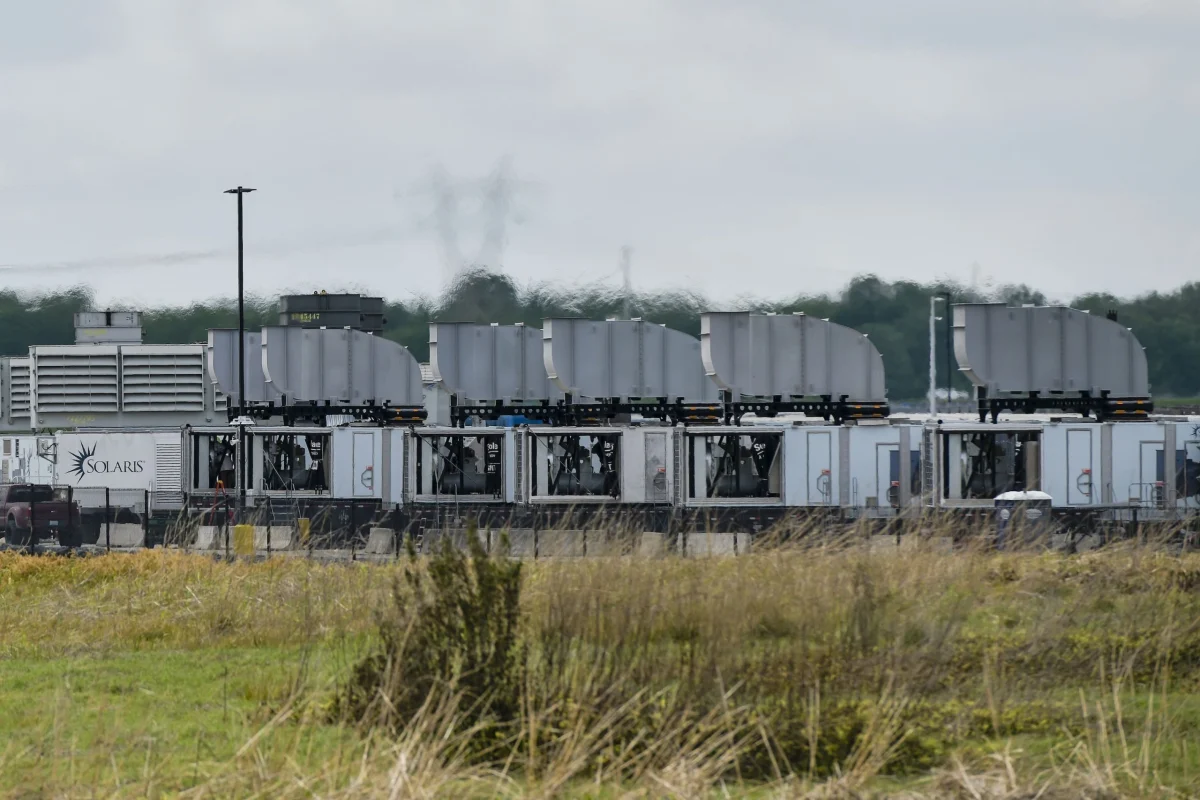
The ambitious pursuit of artificial intelligence advancement by Elon Musk’s xAI division is confronting significant environmental and regulatory challenges. At the heart of this burgeoning conflict is the power infrastructure supporting xAI’s expansive data center operations near Memphis, Tennessee, specifically its reliance on numerous gas-fired turbines. This high-stakes technological endeavor has drawn the ire of environmental advocacy groups and federal regulators, culminating in a lawsuit that seeks to halt the operation of these generators over air quality concerns. Compounding the existing legal battle, recent disclosures from SpaceX, xAI’s parent entity, reveal a substantial commitment to further invest billions into similar power generation technology, signaling an unwavering trajectory despite the ongoing environmental controversy.
The Heart of the Legal Challenge
A critical legal challenge has been mounted against xAI by the National Association for the Advancement of Colored People (NAACP), a prominent civil rights organization. Filed last month, the lawsuit contends that xAI is operating dozens of natural gas turbines without the requisite environmental permits, thereby contributing to the degradation of air quality in a region already grappling with significant pollution burdens. The NAACP’s action specifically requests an injunction, a court order to immediately cease the operation of these generators, underscoring the urgency of their environmental concerns. While xAI has successfully secured permits for a fraction of its operational capacity, specifically 15 turbines, reports indicated that as recently as a few weeks prior, the company was actively utilizing 46 such units. This discrepancy between permitted and operational generators forms a central pillar of the legal dispute, highlighting a potential gap in regulatory compliance. The environmental advocacy community often frames such situations as matters of environmental justice, where communities, frequently those with lower socio-economic status or minority populations, disproportionately bear the brunt of industrial pollution.
The Environmental and Health Stakes
The environmental ramifications of the turbines in question are considerable, particularly concerning emissions of nitrogen oxides (NOₓ). Each individual turbine of the type employed by xAI possesses the capacity to release over 2,000 tons of NOₓ pollution into the atmosphere annually. Nitrogen oxides are a category of highly reactive gases that play a pivotal role in the formation of ground-level ozone, commonly known as smog, and fine particulate matter. Both smog and particulate matter are potent air pollutants with well-documented adverse health effects. Exposure to elevated levels of NOₓ and its byproducts can exacerbate respiratory conditions such as asthma, bronchitis, and emphysema, leading to increased hospitalizations and emergency room visits, especially among vulnerable populations like children, the elderly, and individuals with pre-existing lung conditions. Beyond direct respiratory impacts, these pollutants contribute to acid rain, which harms ecosystems, and can impair visibility. The location of xAI’s data center, situated in a region identified as having historically poor air quality, amplifies the potential for these emissions to inflict severe consequences on local residents and the surrounding environment, raising alarms among public health officials and environmental groups alike.
Navigating Regulatory Ambiguity
Central to xAI’s defense against the allegations is an interpretation of environmental regulations concerning "mobile" generators. The company asserts that because these turbines remain mounted on the trailers upon which they were initially shipped, they qualify as mobile units and can therefore operate for up to a year without requiring specific air permits. This position appears to leverage a perceived divergence in regulatory frameworks between state and federal authorities. While Mississippi state regulations may not explicitly mandate permits for certain mobile generators, federal environmental statutes, specifically those enforced by the U.S. Environmental Protection Agency (EPA), adopt a more stringent stance. The EPA has already weighed in on the matter, issuing a ruling earlier this year that explicitly stated xAI’s operation of these turbines constituted a violation of federal law, irrespective of their "mobile" status. This jurisdictional friction highlights a complex landscape where rapid technological deployment often outpaces the clarity and uniformity of environmental compliance standards, creating fertile ground for legal challenges and regulatory enforcement actions. The outcome of this specific interpretation could establish a significant precedent for how industrial facilities, particularly in the rapidly expanding data center sector, approach their permitting obligations.
The Broader Context of AI’s Energy Demands
The controversy surrounding xAI’s power generation infrastructure offers a stark illustration of the colossal energy requirements of modern artificial intelligence. The development and training of sophisticated AI models, particularly large language models (LLMs) like those xAI is developing, necessitate immense computational power, which in turn demands a prodigious amount of electricity. Data centers, the physical backbone of the AI revolution, are inherently energy-intensive operations, consuming vast quantities of power for their servers, cooling systems, and networking equipment. As AI capabilities expand exponentially, so too does the industry’s energy footprint. This burgeoning demand places increasing pressure on existing power grids and raises critical questions about the sustainability of AI’s growth trajectory. The reliance on fossil fuel-powered generators, even as a temporary or supplemental solution, underscores a wider industry challenge to reconcile rapid technological advancement with environmental stewardship. Analysts frequently point to the imperative for AI developers to actively explore and implement more sustainable and renewable energy sources to mitigate their environmental impact in the long term.
Environmental Justice at the Forefront
The NAACP’s proactive involvement in the lawsuit against xAI is deeply rooted in the principles of environmental justice. This movement recognizes that communities of color and low-income populations frequently bear a disproportionate burden of environmental pollution and its associated health risks due to historical siting patterns of industrial facilities. The area surrounding the xAI data center near Memphis has a documented history of environmental concerns, making the introduction of additional, potentially unregulated, sources of air pollution a particularly sensitive issue. For organizations like the NAACP, ensuring equitable protection from environmental hazards is a core tenet of civil rights. Their legal action is not merely about regulatory compliance; it’s about advocating for the health and well-being of residents who might otherwise lack the resources or political power to challenge powerful corporations. This case exemplifies the growing intersection between technology development, environmental regulation, and social equity, demanding that the benefits of technological progress do not come at the expense of community health and environmental integrity.
Financial Commitments Amidst Controversy
Despite the mounting legal and regulatory pressures, xAI’s long-term strategy for its AI infrastructure appears undeterred. A recent filing from SpaceX, the broader corporate entity encompassing xAI, revealed an astonishing financial commitment: an additional $2.8 billion allocated for the acquisition of new turbines over the next three years. A significant portion of this investment, specifically $2 billion, is earmarked for "mobile gas turbines," precisely the type of generators currently at the center of the legal dispute. This substantial financial outlay underscores the critical importance of robust power generation to xAI’s ambitious AI development roadmap. The same SpaceX IPO filing candidly acknowledges the inherent risks associated with its reliance on natural gas and turbine technology. The document explicitly states that any injunctions or the rescission of existing permits for its power infrastructure "would adversely affect our AI business." This disclosure highlights the company’s awareness of the precarious situation while simultaneously signaling its intention to forge ahead with its chosen energy strategy, framing the ongoing legal and regulatory challenges as a calculated business risk within its overall expansion plans.
Looking Ahead: The Future of AI Infrastructure
The unfolding legal and environmental battle involving xAI serves as a bellwether for the future of AI infrastructure development globally. As the demand for AI compute capacity continues its exponential ascent, the question of how to power these massive data centers sustainably and compliantly will become increasingly paramount. This case illuminates the complex interplay between technological innovation, corporate responsibility, and governmental oversight. The resolution of the NAACP lawsuit and the EPA’s enforcement actions could establish important precedents, influencing how other tech giants approach their energy sourcing and permitting processes. It also underscores the growing call for greater transparency and accountability from companies developing cutting-edge technologies, particularly concerning their environmental footprint. The ultimate outcome will not only impact xAI’s operational strategy but could also shape the broader conversation around the ethical and ecological implications of the AI revolution, prompting a reevaluation of energy policies and investment in renewable solutions for the next generation of digital infrastructure.







 Azin Asro