Amir Mahmud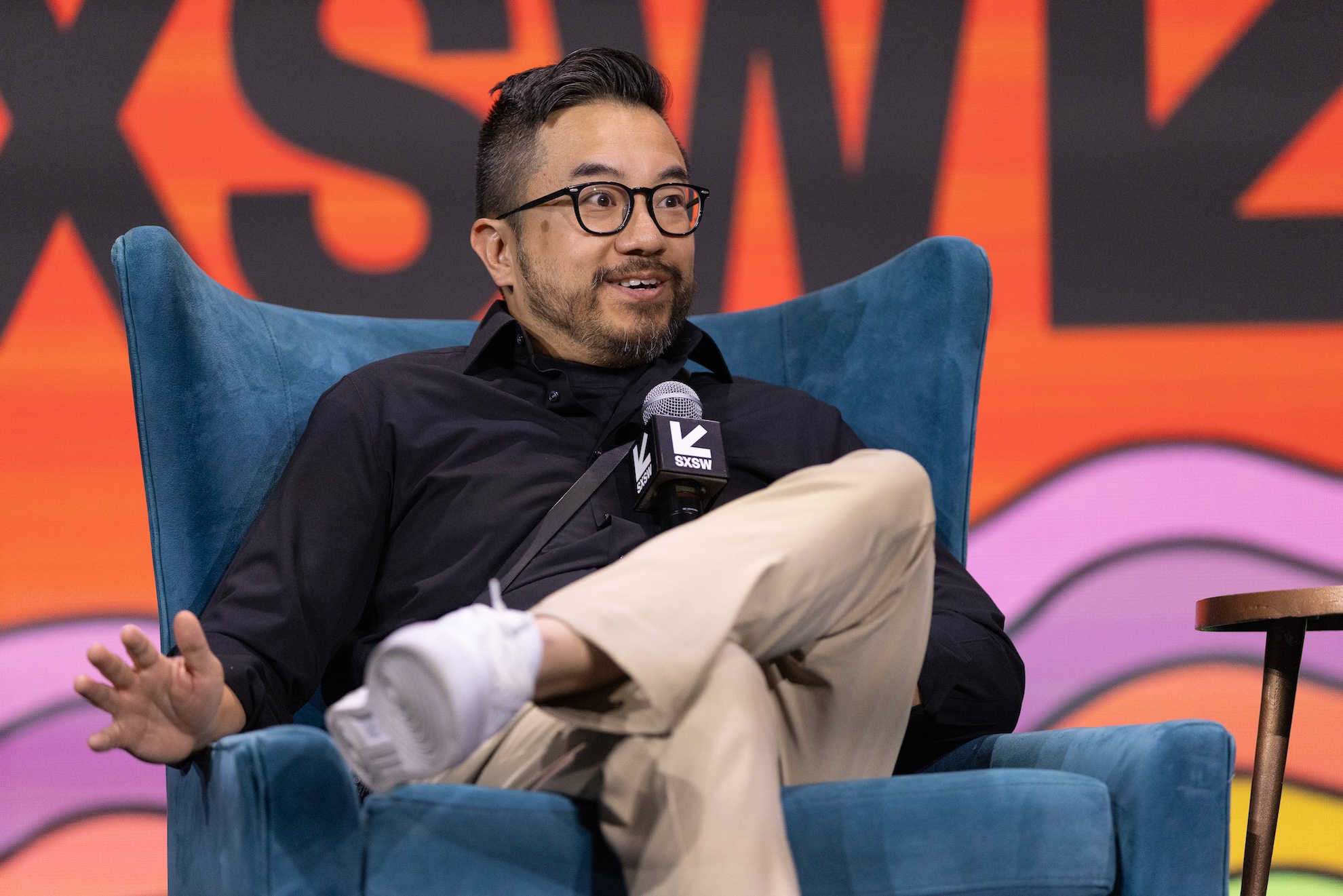
The tech world is abuzz following remarks from Garry Tan, CEO of startup accelerator Y Combinator, who recently shared his intense enthusiasm for artificial intelligence agents at the SXSW festival. His candid admission of operating on minimal sleep, playfully termed "cyber psychosis" due to his profound engagement with AI, has framed a broader conversation about the future of software development and the role of advanced AI tools. Tan’s subsequent release of his personal AI agent configuration, dubbed "gstack," sparked both fervent admiration and sharp criticism across the developer community, highlighting the escalating stakes and diverse perspectives surrounding the rapidly evolving landscape of artificial intelligence.
The Genesis of "Gstack": Tan’s AI Enthusiasm and Background
Garry Tan, a prominent figure in the startup ecosystem through his leadership at Y Combinator, a renowned seed accelerator that has funded thousands of companies including Airbnb, Dropbox, and Stripe, delivered a captivating address at the South by Southwest conference. During an onstage interview with fellow venture capitalist Bill Gurley, Tan described his current state as one of "cyber psychosis," driven by an insatiable excitement for working with AI agents. He revealed a grueling schedule, sleeping only four hours a night, yet feeling invigorately productive without the need for stimulants like modafinil, a drug he candidly admitted to using during his earlier startup days. This substance is known to be popular within the intense, often demanding "hustle culture" prevalent in the tech industry, where long hours and relentless dedication are frequently celebrated.
Tan drew a stark comparison between his current AI-powered workflow and his previous entrepreneurial venture, Posterous, a blogging platform backed by Y Combinator that was eventually acquired by Twitter in 2012. He recounted that building Posterous required significant venture capital, a team of ten individuals, and two years of arduous work, often fueled by sleep-preventing drugs. Now, he claims, AI agents enable him to replicate such efforts with unprecedented speed and efficiency, achieving similar outcomes without the same human capital or financial investment. This personal narrative underscores a common aspiration within the tech industry: to leverage cutting-edge tools to dramatically enhance productivity and reduce traditional barriers to innovation.
Deconstructing "Gstack": What It Is and How It Works
Driven by this profound personal experience, Tan publicly released his "Claude Code" setup, known as "gstack," on GitHub under an open-source license. Claude Code refers to Anthropic’s Claude AI, specifically configured for development tasks. "Gstack" is essentially a collection of "skills" – reusable prompts stored in markdown files that instruct the AI to adopt specific roles or execute particular tasks. These skills are "opinionated," meaning they embed Tan’s preferred methodologies and workflows for interacting with the AI.
At its core, gstack transforms a single AI assistant into a simulated multi-role engineering team. Instead of merely asking the AI to "build this feature," a developer can invoke gstack’s skills to guide Claude through a structured development process. For instance, one skill might prompt Claude to act as a "CEO," offering strategic insights on a startup idea or feature. Another might instruct it to behave as an "engineer," tasked with writing the actual code. Further skills could then have Claude assume the role of a "code reviewer," scrutinizing its own output for bugs, security vulnerabilities, or adherence to best practices, followed by a "designer" for interface considerations or a "technical writer" for documentation. This modular approach aims to mimic the iterative and specialized division of labor found in human engineering organizations, but entirely within an AI environment. Since its initial release with six skills, gstack has expanded, with Tan frequently updating and adding new functionalities, showcasing the dynamic and evolving nature of prompt engineering.
The Immediate Resonance: A Viral Phenomenon
The release of gstack on March 12, 2026, quickly became a sensation within the developer and tech enthusiast communities. Tan’s announcement on X (formerly Twitter) rapidly went viral, drawing thousands of retweets, likes, and comments. The project also trended prominently on Product Hunt, a platform for showcasing new products, where it garnered significant attention and discussion. On GitHub, gstack rapidly accumulated nearly 20,000 "stars," indicating strong interest and approval from developers, and over 2,200 "forks," signifying that a substantial number of users copied the repository to modify and experiment with it for their own purposes.
This immediate positive reception can be attributed to several factors. Firstly, Tan’s stature as the CEO of Y Combinator lends significant weight to any technology he endorses or develops. His personal anecdotes of hyper-productivity with AI resonated with a tech culture often seeking competitive edges and efficiency hacks. Secondly, the open-source nature of gstack encouraged rapid adoption and community engagement, allowing developers to freely access, implement, and customize the tool. Lastly, the promise of transforming a single AI into a multi-talented virtual team taps into the widespread desire for enhanced productivity and streamlined development workflows, particularly in the fast-paced startup world.
The Spark of Controversy: "God Mode" and Backlash
Despite the initial wave of enthusiasm, gstack soon became a lightning rod for criticism, particularly following a specific tweet from Tan. He shared an anecdote from a CTO friend who reportedly claimed gstack was "god mode," instantly identifying a subtle cross-site scripting (XSS) security flaw in their company’s existing codebase that their human team had overlooked. The friend allegedly predicted that "over 90% of new repos from today forward will use gstack." This particular claim ignited a fierce backlash, drawing accusations of overhyping the technology and questioning the professional standards of the CTO in question.
Critics quickly emerged on social media and forums. One prominent founder on X expressed strong disapproval, stating that Tan "should be embarrassed for tweeting this" and that if the anecdote were true, the CTO "should be fired immediately." This sentiment reflected a deep concern that such a claim could trivialize the complex work of cybersecurity and software engineering. Vlogger Mo Bitar, in a widely viewed commentary titled "AI is making CEOs delusional," dismissed gstack as "a bunch of prompts in a text file," arguing that experienced developers using tools like Claude Code already create and utilize similar prompt structures tailored to their specific needs. The implication was that gstack was not a revolutionary breakthrough but merely a repackaging of existing practices, amplified by Tan’s influential position. Commenters on Product Hunt echoed this skepticism, suggesting that gstack’s popularity was primarily a function of Tan’s celebrity status rather than its inherent uniqueness or superiority. The controversy underscored a growing tension between the optimistic, often hyperbolic, narratives surrounding AI from industry leaders and the more grounded, sometimes cynical, perspectives of working developers.
Beyond the Hype: Expert Analysis of Gstack’s Value
To gain a more objective understanding of gstack’s actual utility amidst the swirling debate, various AI experts, including other advanced language models, were consulted. Unsurprisingly, Claude itself, the AI for which gstack was designed, offered a glowing assessment. It described gstack as "a mature, opinionated system built by someone who actually uses it heavily" and praised it as "one of the better examples of Claude Code skill design out there." This self-referential endorsement, while expected, nonetheless points to the internal consistency and apparent effectiveness of Tan’s prompt engineering within the Claude ecosystem.
Other leading AI models provided more nuanced, yet still largely positive, evaluations. ChatGPT, for example, characterized gstack as a collection of "reasonably sophisticated prompt workflows" but emphasized that they are "not ‘magical.’" The AI’s key insight was that "AI coding works best when you simulate an engineering org structure. Not when you just ask: ‘build this feature.’" This analysis aligns with Tan’s own methodology, suggesting that the power of gstack lies not in the individual prompts but in their strategic arrangement to mimic a human team’s collaborative process. Gemini, another powerful language model, labeled the setup as "sophisticated," adding that "gstack is essentially a ‘Pro’ configuration. It is less about making coding easier and more about making it correct." This perspective highlights gstack’s potential for enhancing the quality and reliability of AI-generated code, rather than simply accelerating its production. These expert opinions collectively suggest that gstack, while perhaps not revolutionary in its core components (as prompts have existed), represents a highly effective and well-structured application of prompt engineering principles, particularly valuable for guiding AI in complex development tasks.
The Broader Implications: AI Agents, Productivity, and the Future of Work
The "gstack" phenomenon, with its blend of enthusiasm and skepticism, serves as a microcosm for the larger societal conversation surrounding AI agents and their impact on the future of work. The concept of AI agents, which are essentially autonomous or semi-autonomous AI programs designed to perform specific tasks or sequences of tasks, represents a significant leap from simpler AI assistants. By assigning roles and chaining together complex instructions, these agents promise to automate increasingly sophisticated workflows, potentially reshaping industries far beyond software development.
From a market perspective, tools like gstack could democratize access to advanced development capabilities, enabling smaller teams or even individual founders to achieve outputs previously requiring larger, more specialized workforces. This could foster a new wave of innovation by lowering the barrier to entry for building complex software. However, it also raises questions about job displacement and the evolving skill sets required for human workers. If AI can simulate entire engineering teams, what becomes the role of human engineers, testers, and security experts? The consensus from the AI analyses suggests that human oversight and the initial "opinionated" design of prompts remain crucial, hinting at a future where human expertise is augmented, rather than entirely replaced, by AI.
The "Hustle Culture" Debate and AI’s Role
Garry Tan’s personal anecdotes about foregoing sleep and stimulants, while seemingly a testament to AI’s inspiring power, also inadvertently reignited discussions about the controversial "hustle culture" prevalent in the tech industry. For decades, the startup world has often glorified extreme working hours and personal sacrifices as prerequisites for success. Tan’s earlier reliance on modafinil, and his current claim of natural insomnia driven by AI excitement, resonate with this ethos.
However, critics argue that promoting such intense work patterns, even when fueled by AI, can be detrimental to mental health and foster an unsustainable work environment. The implication that AI can enable individuals to push beyond human limits raises ethical questions about the pursuit of productivity at all costs. While AI agents certainly offer tools for unprecedented efficiency, the broader societal impact depends on how these tools are integrated into work cultures. Will they lead to more balanced, creative work, or simply amplify the pressures of an already demanding industry?
Conclusion
Garry Tan’s gstack setup for Claude Code has undeniably captured the attention of the tech world, not just for its technical merits but for the passionate, sometimes provocative, dialogue it has sparked. While some see it as a powerful, open-source demonstration of AI agent capabilities and a blueprint for a new era of hyper-efficient development, others view it as an overhyped collection of prompts, its prominence boosted by its creator’s influential position. The expert AI opinions suggest that gstack’s true value lies in its sophisticated approach to structuring AI interactions, effectively simulating a multi-role engineering team. As AI agents continue to evolve, the debate surrounding gstack serves as an important touchstone, illustrating the ongoing tension between technological advancement, human ambition, and the critical assessment required to navigate the complex future of artificial intelligence in the modern world.