Amir Mahmud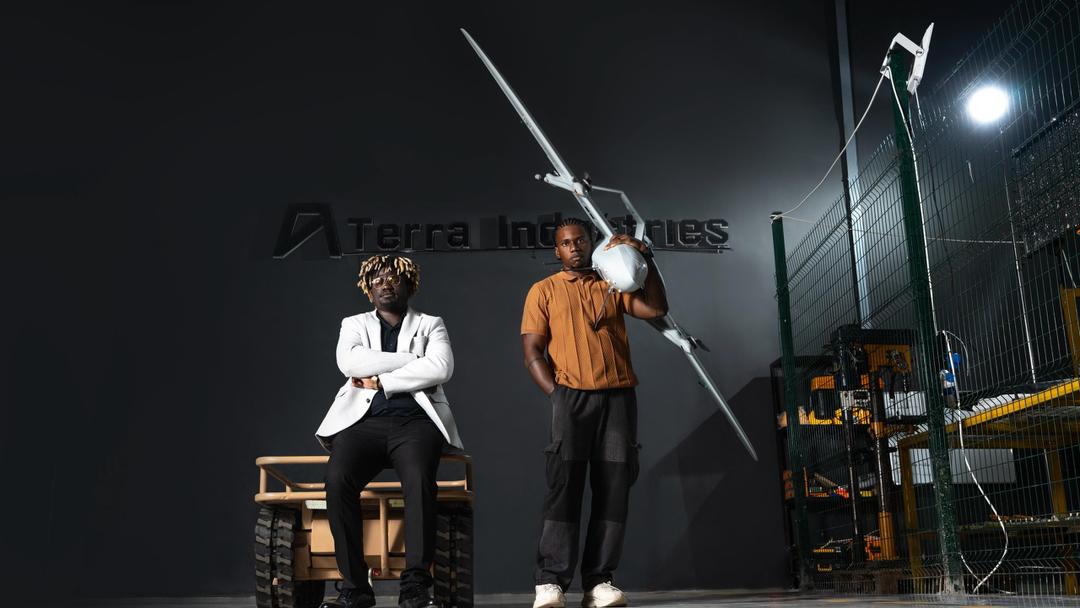
A groundbreaking initiative led by two young Nigerian entrepreneurs is poised to reshape Africa’s security landscape, moving the continent closer to self-reliance in defense. Nathan Nwachuku, 22, and Maxwell Maduka, 24, have successfully raised $11.75 million in a Series A funding round for their startup, Terra Industries. The company, which recently emerged from stealth mode, aims to develop and deploy advanced autonomous defense systems and infrastructure monitoring solutions tailored for the African context. This significant capital injection, spearheaded by Joe Lonsdale’s 8VC, underscores a growing global recognition of the urgent need for robust, continent-led security measures amidst rapid industrialization and persistent threats.
The African Security Imperative: A Continent at a Crossroads
Africa finds itself at a pivotal juncture, balancing immense economic potential with formidable security challenges. For years, the continent has grappled with a complex tapestry of threats, ranging from extremist groups like Boko Haram in West Africa and Al-Shabaab in the Horn of Africa, to localized insurgencies, piracy, and cross-border criminal networks. These challenges have tragically made Africa the region with the highest number of terror-related fatalities globally, according to various international reports. This pervasive insecurity acts as a significant impediment to the continent’s projected industrial revolution, deterring foreign investment, disrupting trade routes, and hindering socio-economic development.
Historically, many African nations have relied heavily on external powers for defense intelligence, military training, and hardware. This reliance, often a legacy of colonial eras or Cold War alliances, has sometimes led to a fragmented security approach, with varying technologies and doctrines that do not always align with specific local needs or foster true indigenous capacity. The consequences include vulnerabilities in intelligence gathering, slower response times to evolving threats, and a lack of proprietary control over critical defense infrastructure. The vision articulated by Terra Industries’ co-founder and CEO, Nathan Nwachuku, highlights this critical gap: the imperative to foster "sovereign intelligence" and place the defense of Africa’s vast resources and vital infrastructure firmly in the hands of Africans themselves.
Terra Industries: A New Defense Paradigm
Terra Industries was founded on the premise that Africa’s future prosperity is inextricably linked to its ability to secure its borders, protect its citizens, and safeguard its economic assets. After an initial venture in the edtech sector, Nwachuku recognized the continent’s dual trajectory of rapid growth and persistent insecurity. He joined forces with Maxwell Maduka, who brings a strong background in engineering and a history of innovation, including founding a drone company at the age of 19 and serving as an engineer in the Nigerian Navy. Together, they launched Terra Industries with the ambitious goal of becoming Africa’s premier defense prime contractor, focusing on sophisticated, autonomous defense systems.
The company’s strategic approach is rooted in a multi-domain philosophy, addressing threats across air, ground, and eventually, maritime environments. Their product portfolio currently includes long-range and short-range drones for aerial surveillance and reconnaissance, alongside ground-based surveillance towers and autonomous ground vehicles designed for monitoring and rapid response. Future development plans include advanced maritime technology aimed at securing crucial offshore assets, such as oil rigs and underwater pipelines, which are vital to many African economies. This comprehensive strategy is designed to create an integrated security net capable of covering vast and diverse geographical areas.
Technology at the Forefront: ArtemisOS and Real-Time Intelligence
At the heart of Terra Industries’ technological ecosystem lies ArtemisOS, a proprietary software platform. This advanced operating system is engineered to collect, analyze, and synthesize data from various sensors and autonomous systems in real-time. By processing this intelligence, ArtemisOS can identify potential threats with high precision, subsequently alerting relevant security agencies and response forces. This capability allows for proactive intervention rather than reactive measures, a significant shift in conventional security paradigms.
The company’s vision extends to "geofencing all of Africa’s critical infrastructure and resources." This involves creating virtual perimeters around vital assets such as power plants, mines, communication hubs, and transportation networks, continuously monitoring them for any anomalies or incursions. This proactive, data-driven approach is a stark contrast to traditional methods that often rely on static defenses or slower, human-intensive intelligence gathering. By leveraging artificial intelligence and machine learning within ArtemisOS, Terra aims to provide African governments and commercial entities with unprecedented levels of situational awareness and decision-making capabilities, fundamentally enhancing their ability to protect strategic assets.
Founders, Expertise, and Vision
The leadership team at Terra Industries is a testament to the blend of youthful innovation and seasoned military expertise. Nathan Nwachuku, as CEO, guides the company’s strategic direction, while Maxwell Maduka, CTO, spearheads the technological development. Their youth, combined with prior entrepreneurial success and deep understanding of the African context, positions them uniquely to address complex challenges with fresh perspectives.
Crucially, the company has strategically assembled a team rich in practical defense experience. A significant 40% of Terra’s engineering staff previously held similar roles within the Nigerian military, providing invaluable insights into operational requirements and on-the-ground realities. The advisory board further bolsters this expertise, including Nigeria’s Vice Air Marshal Ayo Jolasinmi, whose profound knowledge of air defense and strategic operations is a major asset. Additionally, Alex Moore of 8VC, an investor specializing in defense technology, serves on the board, bridging the gap between cutting-edge tech and venture capital acumen. This combination of military acumen and technological foresight is vital for developing solutions that are not only innovative but also practical and effective in real-world scenarios.
Investment and Market Confidence
The successful $11.75 million Series A round, following an earlier $800,000 pre-seed round, signifies robust investor confidence in Terra Industries’ mission and business model. The participation of prominent U.S. venture capital firms such as 8VC, Valor Equity Partners, Lux Capital, SV Angel, and Nova Global highlights a growing appetite among international investors for high-impact technology ventures in emerging markets, even in sensitive sectors like defense. The involvement of African investors like Tofino Capital, Kaleo Ventures, and DFS Lab further underscores the local belief in Terra’s potential and its pan-African aspirations.
This substantial investment reflects a broader understanding that security is a prerequisite for economic development. Investors are recognizing that addressing Africa’s security challenges through localized, technologically advanced solutions represents a significant, yet largely untapped, market opportunity. Terra Industries’ business model, which generates revenue from government contracts and commercial clients through system sales and recurring annual fees for data processing and storage, has already shown promising traction. The company has secured its first federal contract (details undisclosed) and generated over $2.5 million in commercial revenue, protecting assets valued at approximately $11 billion, predominantly within Nigeria. This early commercial success, particularly in safeguarding critical private infrastructure like hydropower plants and mines, provides a tangible demonstration of their solutions’ efficacy and market demand.
Socio-Economic Ramifications of Sovereign Security
The establishment and growth of companies like Terra Industries hold profound socio-economic and cultural implications for Africa. From an economic standpoint, enhanced security directly translates into a more stable environment for investment, trade, and economic growth. Protecting vital infrastructure ensures the continuous operation of industries, from resource extraction to manufacturing and energy production, which are the backbone of national economies. Reduced insecurity can also unlock potential in regions previously deemed too risky, allowing for agricultural development, tourism, and the expansion of essential services.
Socially, a stronger, indigenously controlled defense capability contributes significantly to public safety and well-being. It can reduce displacement caused by conflict, allow for better access to education and healthcare in affected areas, and foster a greater sense of stability and normalcy for communities. Culturally and politically, Terra Industries’ "Pan-African" vision challenges the narrative of dependency, promoting self-reliance and technological sovereignty. It instills pride in African innovation and demonstrates the continent’s capacity to address its own complex problems with cutting-edge solutions, potentially inspiring a new generation of entrepreneurs and engineers across various sectors.
Navigating the Future: Challenges and Pan-African Expansion
Terra Industries’ ambitious journey is not without its challenges. Scaling operations across a continent as diverse and geographically vast as Africa will require navigating complex regulatory environments, varying geopolitical landscapes, and different national security doctrines. Competition from established global defense contractors, along with the ethical considerations inherent in developing autonomous weapon systems, will also need careful management. Talent acquisition and retention in a highly specialized field will be another critical factor for sustained growth.
Despite these hurdles, the opportunities are immense. The company plans to leverage its fresh capital to expand its manufacturing capabilities, establishing more defense factories across Africa. This localized production strategy is intended to not only meet demand but also stimulate job creation and foster local expertise in advanced manufacturing. Furthermore, Terra aims to significantly enhance its software capabilities and expand its AI team, opening new software offices in tech hubs like San Francisco and London to attract global talent, while keeping core manufacturing firmly rooted in Africa. This dual approach ensures access to global innovation while prioritizing continental development.
In essence, Terra Industries embodies a powerful vision for Africa’s future: one where the continent’s immense potential is fully realized, underpinned by robust, sovereign security. By building Africa’s first truly Pan-African defense prime, Nathan Nwachuku and Maxwell Maduka are not just creating a company; they are helping to lay the foundation for a more secure, prosperous, and self-determined future for the entire continent. Their endeavor represents a significant step towards ensuring that Africa’s core resources and infrastructure are entirely protected, enabling it to fully embrace its industrial destiny and overcome the challenges that have historically constrained its progress.