Amir Mahmud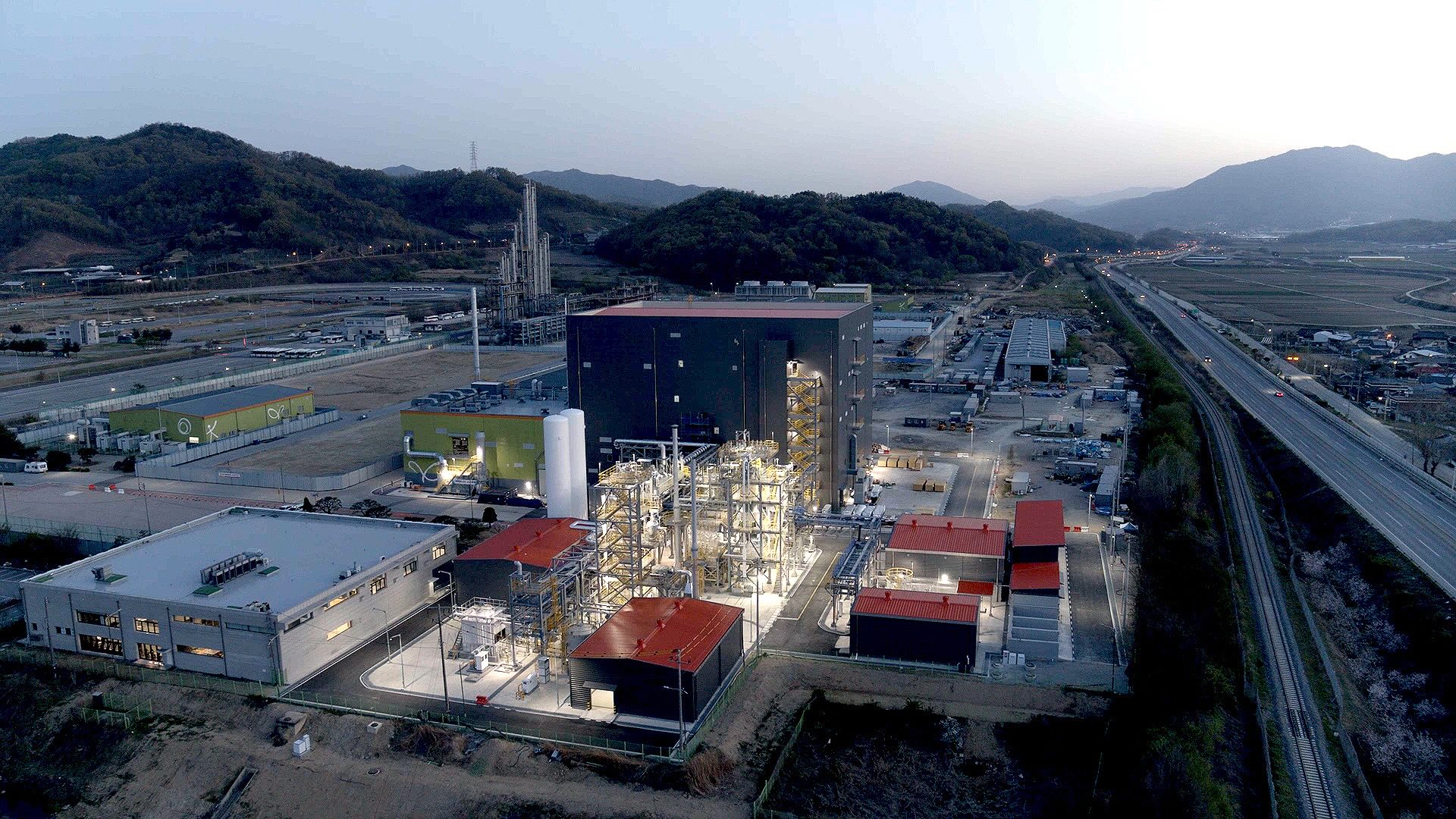
The global transition toward electric vehicles (EVs) hinges on continuous advancements in battery technology, with breakthroughs in energy storage capacity and charging speed acting as pivotal accelerators for widespread adoption. A significant step in this evolution has been taken with the commencement of production at Group14 Technologies’ state-of-the-art BAM-3 factory in South Korea. This facility is dedicated to manufacturing next-generation silicon anode materials, a critical component poised to dramatically enhance the performance metrics of electric vehicles and consumer electronics alike, pushing the boundaries of what is currently achievable with conventional battery chemistries.
The Enduring Quest for Superior Battery Chemistry
For decades, the lithium-ion battery has been the cornerstone of portable power, from early camcorders to the smartphones and electric cars of today. Commercialized by Sony in 1991, this technology revolutionized electronics by offering a rechargeable, high-energy-density power source. However, as demand for longer-lasting devices and faster-charging vehicles escalated, the limitations of traditional graphite anodes, the material primarily used to store lithium ions during charging, became increasingly apparent. While effective, graphite’s theoretical energy storage capacity is finite, prompting researchers worldwide to seek alternative materials.
Enter silicon. With a theoretical capacity up to ten times greater than graphite, silicon has long been identified as the "holy grail" of anode materials. Its abundance, low cost, and superior energy storage potential make it an ideal candidate for next-generation batteries. However, the path to integrating silicon into commercial batteries has been fraught with formidable scientific and engineering challenges. Pure silicon anodes are notorious for their significant volume expansion—swelling by as much as 400% during charging as lithium ions intercalate into its structure. This extreme expansion leads to mechanical stress, pulverization of the material, loss of electrical contact, and the repeated breakdown and reformation of the solid electrolyte interphase (SEI) layer, ultimately resulting in rapid capacity degradation and a short cycle life. These issues have historically rendered pure silicon unsuitable for the demanding long-term performance required by modern electronics and, especially, electric vehicles.
Group14’s Breakthrough: Stabilizing Silicon
Addressing these "vexing durability problems" has been a central focus for battery material innovators. Group14’s solution, known as Battery Active Materials (BAM), represents a significant leap forward in stabilizing silicon for practical application. The company’s patented approach involves a unique hard carbon scaffold structure that encapsulates minuscule silicon particles. This innovative architecture effectively mitigates the severe volume expansion issues typically associated with silicon. The robust carbon framework acts as a protective cage, holding the silicon nanoparticles in place and preventing them from swelling uncontrollably or crumbling under stress during repeated charge and discharge cycles.
Crucially, this scaffold is engineered with an intricate network of nanoscale pores. These microscopic channels are designed to facilitate the rapid and efficient transport of lithium ions and electrons throughout the anode material. This not only allows for significantly faster charging rates without causing damage but also maintains the structural integrity of the anode over thousands of cycles. By overcoming the critical hurdles of volume change and SEI layer instability, Group14’s BAM technology unlocks silicon’s inherent advantages, enabling batteries with both dramatically higher energy density—meaning longer range for EVs—and unprecedented fast-charging capabilities. This dual benefit positions the technology as a potential game-changer for the entire battery industry.
Scaling Up for the Electric Vehicle Revolution
While silicon anode materials have gradually found their way into niche consumer electronics, such as wearables and some premium smartphones, the ultimate prize remains the electric vehicle market. The sheer scale of the EV sector dwarfs consumer electronics by orders of magnitude, demanding vast quantities of advanced battery materials. To truly impact the burgeoning EV landscape, startups like Group14 need to transition from laboratory-scale production to industrial-level manufacturing.
The inauguration of the BAM-3 facility in South Korea marks Group14’s critical step towards achieving this necessary scale. Situated in a region renowned as a global hub for battery manufacturing and innovation, the factory is engineered for high-volume production. It boasts an annual capacity of up to 2,000 metric tons of silicon battery materials. To put this into perspective, this volume is sufficient to power approximately 10 gigawatt-hours (GWh) of energy storage, translating to enough material for roughly 100,000 long-range electric vehicles per year. This capacity is a testament to the company’s ambition and the growing industry demand for advanced anode materials. As Rick Luebbe, co-founder and CEO of Group14, noted, "It’s a big deal for us, and I think it’s a big deal for the industry, too." This sentiment underscores the transformative potential of scaling such a critical technology. Achieving this level of production is not merely a corporate milestone but a vital contribution to de-bottlenecking the EV supply chain and accelerating the global shift towards sustainable transportation.
Strategic Partnerships and Evolving Market Dynamics
The journey to establish BAM-3 highlights the complex and capital-intensive nature of developing and scaling advanced battery technologies. The facility initially broke ground as a joint venture between Group14 and SK, a prominent Korean battery manufacturer, with SK holding a 75% stake. However, the landscape shifted when SK divested its share to Group14 last summer. This strategic recalibration by SK, attributed by Luebbe to "financial and reprioritizing their battery and battery materials strategies," ultimately presented Group14 with a significant opportunity to fully acquire the facility and integrate it into its operations. Such movements are common in the rapidly evolving battery industry, reflecting the high stakes and constant strategic adjustments required to remain competitive.
Group14’s market validation extends beyond its manufacturing capabilities, cemented by a robust network of partnerships and investments. Automotive giants like Porsche have recognized the potential of Group14’s technology, with Porsche’s venture arm investing in the company and its battery division, Cellforce Group, actively collaborating. Other key partners include StoreDot, a pioneer in extreme fast charging technology; Molicel, known for high-power battery cells; and Sionic, another innovator in silicon anode batteries. These collaborations are crucial, not only for securing funding and market entry but also for validating the performance and manufacturability of Group14’s materials across diverse applications. For instance, some customers, like Sionic, are leveraging the silicon anodes to boost energy density by up to 50%, translating directly to extended driving ranges. Others, such as Molicel, are primarily focused on harnessing silicon’s fast-charging capabilities, exploring designs that could enable a battery to charge from empty to full in an astonishing 90 seconds.
Transforming the EV Driving Experience
The implications of Group14’s scaled production and its silicon anode technology are profound for the electric vehicle market and the broader energy landscape. One of the most significant psychological barriers to EV adoption has been "range anxiety"—the fear of running out of power before reaching a charging station. Automakers have largely addressed this by equipping EVs with increasingly larger battery packs, delivering ranges of 300 to 400 miles. However, these massive batteries add considerable bulk, weight, and cost to the vehicle, impacting performance, efficiency, and overall affordability.
Flash charging capabilities, enabled by advanced silicon anodes, offer a paradigm shift. If an EV can gain significant range in a matter of minutes—or even seconds—the need for exceptionally large batteries diminishes. As BYD, a leading Chinese EV maker, recently demonstrated with a new battery pack capable of charging from 10% to 70% in just five minutes (a technology Luebbe strongly suspects utilizes silicon-carbon), ultra-fast charging could redefine convenience. Imagine pulling into a charging station and replenishing hundreds of miles of range faster than it takes to fill a conventional gas tank. This would fundamentally alter consumer perceptions of EVs, making them as convenient, if not more so, than internal combustion engine vehicles. The ability to slim down battery packs would lead to lighter, more agile, and more cost-effective EVs, accelerating their mainstream appeal. Luebbe even envisions a future where concepts like inductive charging at stoplights, once considered futuristic, become feasible, potentially leading to a world where drivers "never think about charging ever again." This vision extends beyond mere convenience, potentially reshaping urban infrastructure and energy distribution.
Future Outlook and Challenges
The commercialization of advanced silicon anode materials at scale represents a pivotal moment for the battery industry. However, the road ahead is not without its challenges. Widespread adoption will depend on continued cost reduction, seamless integration into various EV platforms, and the establishment of robust, sustainable supply chains for the necessary raw materials. The competitive landscape is also dynamic, with other promising battery chemistries, such as solid-state batteries and enhanced lithium iron phosphate (LFP) technologies, also vying for market dominance.
Nevertheless, the opening of Group14’s BAM-3 facility signifies a tangible acceleration in the race to deliver superior electric vehicle performance. By tackling the fundamental limitations of traditional battery anodes, companies like Group14 are not just manufacturing materials; they are forging the building blocks for a future where electric mobility is not only environmentally sustainable but also inherently more convenient, efficient, and accessible for everyone. This innovation underscores the critical role of material science in shaping the trajectory of global energy transitions and promises to unlock unprecedented possibilities for electric vehicles and beyond.