Amir Mahmud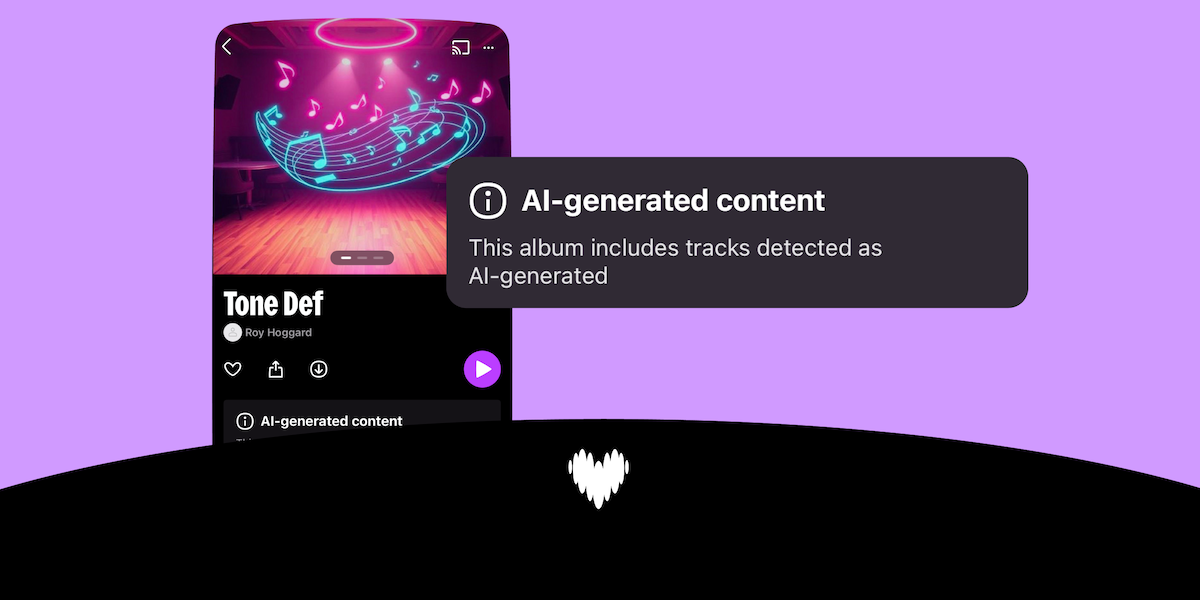
Deezer’s announcement to share its proprietary artificial intelligence detection tool marks a pivotal moment in the ongoing struggle to define the role of AI within the creative economy, particularly in music streaming. The initiative, unveiled recently, aims to equip other platforms with the means to identify and manage fully AI-generated tracks, a move prompted by escalating concerns over fraudulent streams and the imperative to protect human artistry in the digital age. This strategic decision by the Paris-based streaming service underscores a growing industry-wide realization that proactive measures are essential to maintain the integrity of music ecosystems and ensure fair compensation for human creators.
The company initially rolled out its AI detection capabilities last year, setting a precedent by automatically tagging fully AI-generated music for listeners and subsequently excluding it from algorithmic and editorial recommendations. Now, by offering this technology to its competitors, Deezer is signaling a collaborative approach to a problem that transcends individual platform boundaries. The core objective is multifaceted: to address the exponential rise of AI-created content, combat fraudulent streaming activities, promote greater transparency across the music industry, and crucially, ensure that human artists continue to receive the recognition and remuneration they rightfully deserve amidst a landscape increasingly populated by machine-generated sounds.
The Proliferation of Generative AI in Music
The emergence of sophisticated generative AI models has rapidly transformed various creative industries, and music is no exception. Tools like Suno and Udio, specifically mentioned by Deezer, allow users to create high-quality, full-length musical compositions with simple text prompts, often in a matter of seconds. This unprecedented accessibility has democratized music creation to an extent previously unimaginable, but it has also unleashed a torrent of new challenges for established distribution and monetization frameworks.
Historically, music production required significant investment in instruments, studio time, engineering expertise, and artistic talent. Digital audio workstations (DAWs) and software instruments lowered some barriers, but the fundamental requirement for human input and creative vision remained. Generative AI bypasses many of these steps, enabling the creation of vast quantities of music at minimal cost. While this innovation holds promise for new forms of artistic expression and creative assistance, it simultaneously poses existential questions for artists, labels, and platforms about authenticity, ownership, and value. The rapid pace of development means that AI-generated tracks are becoming increasingly indistinguishable from human-made music, complicating detection efforts and making the need for robust identification tools more urgent than ever.
The Genesis of Deezer’s Initiative
Deezer’s commitment to addressing AI-related challenges predates its recent tool-sharing announcement. In 2024, the company became the first music streaming platform to sign the global statement on AI training, a declaration advocating for ethical practices in the development of AI models, particularly concerning the use of copyrighted material for training data. This move placed Deezer alongside a diverse group of prominent creatives and organizations, highlighting its early recognition of the impending issues and its willingness to take a stand.
The development of its internal AI detection tool was a natural progression of this commitment. The platform’s internal data quickly illustrated the scale of the problem. Deezer reported that an alarming 85% of streams originating from fully AI-generated tracks were identified as fraudulent. This staggering figure points to sophisticated schemes designed to manipulate streaming systems, artificially inflate stream counts, and illicitly siphon royalties. The sheer volume of incoming AI content is equally concerning: the service now receives approximately 60,000 AI tracks daily, contributing to a colossal database of 13.4 million AI-detected songs. For context, in June of the previous year, fully AI-generated music constituted about 18% of daily uploads, surpassing 20,000 tracks. This exponential growth underscores the critical need for effective countermeasures to prevent the platform from being overwhelmed by non-human content.
The Mechanics of AI Music Detection and its Impact
Deezer’s AI music detection tool is engineered for high precision, boasting an accuracy rate of 99.8%, as confirmed by a company spokesperson. This sophisticated system is capable of identifying AI-generated tracks from leading generative models like Suno and Udio, which are at the forefront of AI music creation. Beyond merely flagging these tracks, the tool implements a multi-pronged strategy to mitigate their impact.
First, identified AI-generated tracks are excluded from algorithmic and editorial recommendations. This is crucial for maintaining the integrity of discovery pathways, ensuring that listeners are directed towards authentic human artistry and preventing AI content from unfairly dominating curated playlists or personalized suggestions. Second, and perhaps most significantly for artists, these tracks are demonetized and explicitly excluded from the royalty pool. This direct financial consequence aims to disincentivize fraudulent activities and uphold the principle of fair compensation for human musicians and songwriters, whose livelihoods depend on these royalty distributions. By removing AI-generated content from the monetization equation, Deezer seeks to realign the economic incentives within the streaming ecosystem towards genuine creative endeavors.
According to Deezer CEO Alexis Lanternier, there has been "great interest" in the tool, with several companies already having "performed successful tests." One notable early adopter is Sacem, the prominent French management company representing over 300,000 music creators and publishers, including globally renowned artists like David Guetta and DJ Snake. While Deezer has not disclosed specific pricing information, indicating that costs vary based on the nature of the deal, the willingness of a major collective rights management organization like Sacem to engage suggests a recognized and pressing need across the industry for such robust solutions.
The Economic and Ethical Landscape of Streaming
The music streaming economy, built primarily on a pro-rata royalty model, is particularly vulnerable to manipulation by AI-generated content and fraudulent streaming practices. In this model, all subscription and advertising revenue is pooled, and a proportion is then distributed to rights holders based on their share of total streams. This system means that every fraudulent stream dilutes the value of legitimate streams, effectively siphoning funds away from genuine artists. The more AI-generated tracks flood the market and accumulate fabricated streams, the less revenue is available for human creators.
The ethical concerns extend beyond financial fraud. The training of generative AI models often involves ingesting vast quantities of existing copyrighted material without explicit consent or compensation to the original creators. This practice raises fundamental questions about intellectual property rights in the digital age and the future of creative authorship. Artists and rights holders are increasingly vocal about the need for transparent sourcing and fair remuneration when their work contributes to the development of AI systems. The debate touches on the very definition of creativity: whether a machine synthesizing existing data can truly be considered an "artist," and what protections are necessary for human ingenuity.
This environment has led to legal skirmishes, such as the widely publicized lawsuits brought by various rights holders against AI companies for alleged copyright infringement in training data. It also highlights extreme cases of fraud, like the 2024 incident where the U.S. Department of Justice charged a North Carolina musician with creating AI-generated songs and using bots to generate billions of fake streams, reportedly stealing over $10 million in royalties. Such incidents underscore the urgent need for comprehensive solutions that combine technological detection with legal enforcement and industry-wide collaboration.
Industry Responses and Divergent Paths
The music industry’s response to AI has been varied, reflecting a complex interplay of opportunities and threats. Some platforms and entities have taken a firm stance against AI-generated music, while others appear to be exploring ways to integrate it.
Bandcamp, known for its artist-friendly policies, recently chose to ban AI-generated music entirely from its platform, citing concerns about ethical sourcing and artistic integrity. Spotify, the world’s largest streaming service, has updated its AI policy to address the rise of AI tracks, focusing on labeling content where AI is used, reducing spam, and explicitly prohibiting unauthorized voice clones. These actions demonstrate a recognition of the problem and an attempt to set boundaries for responsible AI integration.
However, major record labels have pursued a different strategy, in some cases resolving lawsuits with AI music startups like Suno and Udio and subsequently striking licensing deals. For instance, Universal Music Group and Warner Music Group both announced agreements with these AI companies last fall to license their vast music catalogs. This approach aims to ensure that artists and songwriters are compensated when their work is used to train AI models, essentially seeking to create a new revenue stream from AI rather than outright banning it. This dichotomy highlights the ongoing tension between outright rejection and controlled integration, driven by differing business models, legal interpretations, and philosophical views on AI’s role in creative expression.
Broader Implications for Artists and Audiences
The widespread adoption of AI detection tools and the establishment of industry standards for identifying and managing AI-generated music will have profound implications for artists and audiences alike. For human artists, it offers a glimmer of hope that their work will not be devalued or obscured by an avalanche of machine-made content. It provides a mechanism to protect their income from fraudulent schemes and reinforces the importance of human creativity. A clear distinction between human and AI-generated music could also foster a stronger appreciation for authentic artistry among listeners.
For audiences, greater transparency about the origin of music could empower them to make informed choices about what they consume. As AI-generated music becomes more sophisticated, listeners may increasingly value knowing whether a track was created by a human being with lived experiences and emotions, or by an algorithm. This could lead to a cultural shift where authenticity becomes a premium, influencing listening habits and even the perceived emotional resonance of music.
The Path Forward: Towards a Standardized Approach
Deezer’s decision to open its AI detection tool to other platforms represents a significant step towards establishing a unified industry approach to managing AI-generated music. While the specifics of pricing and wider adoption remain to be seen, the move could set a crucial precedent. A shared, accurate, and regularly updated detection system could become an industry standard, enabling all streaming services to consistently identify, tag, and manage AI content.
Such standardization would not only strengthen the fight against fraud but also provide a clearer framework for the ethical integration of AI into the music ecosystem. It could foster an environment where legitimate AI-assisted creativity can flourish without undermining the value of human artistry. The ultimate goal is to create a digital music landscape that is fair, transparent, and sustainable for all stakeholders, ensuring that the magic of human-created music continues to resonate and thrive in an increasingly automated world. The journey is complex, fraught with technological, legal, and ethical challenges, but Deezer’s move offers a potential blueprint for a more harmonized and responsible future for digital music.