Amir Mahmud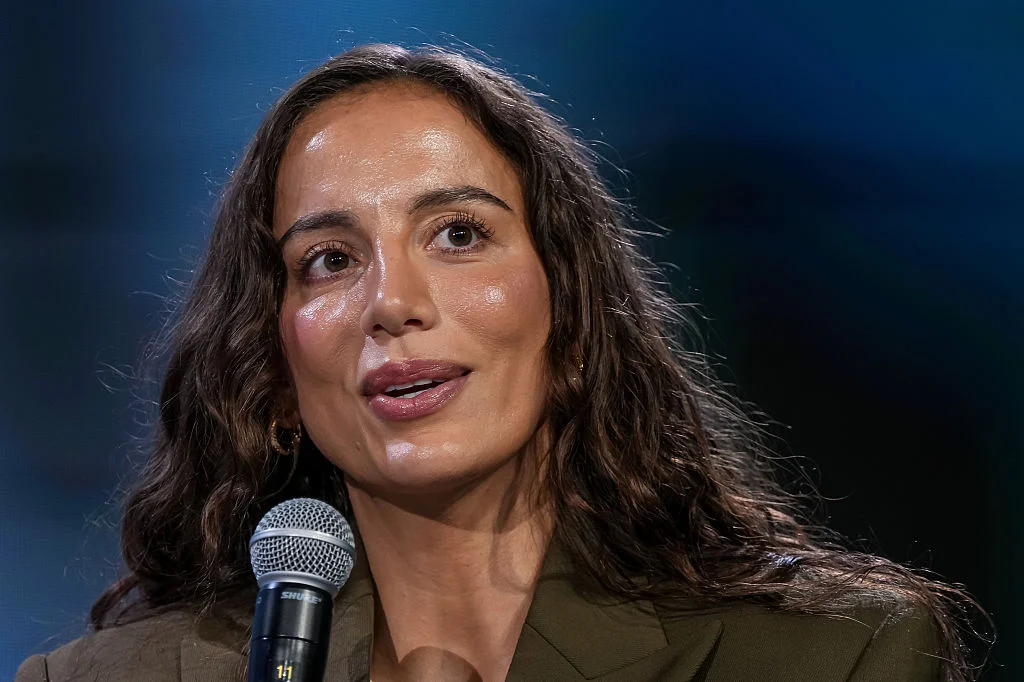
After a period largely dedicated to the foundational work of her burgeoning artificial intelligence venture, Mira Murati, the highly respected Chief Technology Officer of OpenAI during its formative years, recently re-entered the public discourse. Her appearance in a comprehensive interview marked her first significant media engagement in approximately 18 months, signaling a strategic shift for both her personal profile and her company, Thinking Machines Lab. This carefully orchestrated re-emergence underscores the intensifying competition and the critical need for visibility within the rapidly evolving AI landscape, where innovation, talent, and ethical considerations are constantly vying for attention.
Thinking Machines Lab: Emerging from the Shadows
For the better part of the past year and a half, Thinking Machines Lab has operated with a deliberate low profile, meticulously laying the groundwork for its ambitious vision. This period of quiet development is characteristic of many deep technology startups, which often spend initial phases in "stealth mode" to focus on research, secure intellectual property, and build core teams before a public launch. During this time, the company successfully raised capital, attracted key researchers, and developed its initial product, Tinker, an API designed for fine-tuning open-source AI models. Tinker’s functionality allows developers and enterprises to adapt general-purpose AI models to specific tasks and datasets, a crucial capability in making AI more practical and customized for diverse applications.
The decision to step into the public eye now is not coincidental but rather a strategic response to the dynamic and fiercely competitive environment of the artificial intelligence industry. The market for AI talent, investment, and customer attention has never been more intense. Companies like OpenAI, where Murati served as CTO for six years, continue to dominate headlines with groundbreaking developments and occasional controversies. Anthropic, another leading AI research company, has garnered significant momentum, attracting substantial funding and focusing intently on AI safety and ethical development. Meanwhile, Elon Musk’s xAI, with its integration into SpaceX and anticipation of a major public offering, exerts its own gravitational pull on the industry’s focus and capital. In such a high-stakes arena, prolonged silence can lead to diminishing returns, necessitating a proactive approach to remind the market of one’s existence and unique contributions.
Pioneering "Interaction Models": A New Frontier in AI Interface
During her interview, Murati offered a glimpse into Thinking Machines Lab’s flagship innovation: "interaction models." She described these as a fundamentally distinct approach to AI interfaces, moving beyond the prevalent turn-based, prompt-and-response dynamics that characterize most contemporary AI products. Instead, Thinking Machines’ models are engineered to continuously process streams of multimodal data, including audio, text, and video, in rapid 200-millisecond intervals.
This capability represents a significant leap towards more natural and intuitive human-computer interaction. Current large language models (LLMs) and chatbots, while powerful, often struggle with the nuanced, non-linear nature of human conversation. They excel at processing discrete queries but falter when confronted with interruptions, mid-sentence corrections, or even thoughtful pauses – elements that are integral to human communication. By processing continuous input, Murati’s "interaction models" aim to grasp the "texture" of human communication in something akin to real time, enabling AI systems to respond with greater contextual awareness and fluidity. Imagine a virtual assistant that doesn’t just wait for you to finish your sentence but understands your intent even as you rephrase it, or an AI collaborator that can pick up on unspoken cues during a video conference. This could dramatically enhance the utility of AI in diverse applications, from more sophisticated customer service bots to advanced educational tools and assistive technologies for individuals with communication challenges. While Murati was careful to frame this as an initial step rather than a fully realized product, she refrained from providing a specific release timeline, emphasizing the complexity and ongoing nature of such pioneering development.
The "Blip" and the Imperative of Governance in AI
Murati’s interview also delved into a pivotal moment that significantly amplified her public profile: the tumultuous week in November 2023 when OpenAI’s board unexpectedly dismissed CEO Sam Altman, thrusting Murati into the role of interim CEO. Internally, the dramatic five-day saga became known as "the blip," a period of intense uncertainty that reverberated across the global technology industry.
The crisis at OpenAI, a company at the forefront of AI development, highlighted fundamental questions about leadership, transparency, and governance in organizations wielding immense technological power. The original board’s decision, citing a lack of trust and concerns about Altman’s communication, plunged the company into chaos, with a vast majority of employees threatening to resign and join Altman at Microsoft. Murati, finding herself at the epicenter of this maelstrom, maintained that her decisions during that volatile period were clear-headed, driven by an unwavering commitment to protect OpenAI’s mission and its dedicated team. She asserted that her involvement was critical in preventing the company’s "implosion."
Looking back, however, Murati acknowledged that clarity of intent does not always translate to clarity about consequences. She expressed regret over the lack of sufficient information, a clear transition plan, and greater transparency during the crisis. While she skillfully sidestepped a direct question about her current trust in her former boss, Sam Altman, her responses steered toward a broader, more profound concern: the dangerous concentration of consequential decision-making power in the hands of too few individuals, not just at OpenAI but across the entire AI industry. Murati emphasized that her worry transcends the character of any single leader, acknowledging that even well-intentioned individuals can make flawed decisions. Instead, her core apprehension lies in the systemic "absence of structural checks" and balances, which she believes allows even well-meaning organizations to drift off course. Her commentary served as a pointed critique, suggesting that the industry has placed "too much attention… on virtue and too little to governance," advocating for robust frameworks that ensure accountability and responsible development as AI systems become increasingly powerful and pervasive. This perspective resonates with growing calls from policymakers and ethicists for stronger oversight and regulatory mechanisms in the AI sector.
The War for Talent and a Distinct Leadership Philosophy
The intense competition for top-tier AI talent is a defining characteristic of the current technological era, and Thinking Machines Lab has not been immune to its pressures. Murati was candidly pressed on the recent departures of several high-profile researchers from her company, a topic she had largely avoided in public discussions. She downplayed the significance of these exits, explaining that the accelerated pace of building a frontier AI laboratory from scratch naturally compresses years of organizational volatility into mere months. This perspective acknowledges the inherent challenges of startup life, where teams evolve rapidly and individuals seek opportunities that align with their personal and professional growth.
Murati also recognized the magnetic pull of the "nine-figure packages" – the astronomical compensation deals, often including substantial equity, that have become standard currency in the bidding war for elite AI researchers. While acknowledging that such offers "capture people’s imaginations," she suggested that financial incentives rarely tell the whole story. Her stance implies a belief that true motivation for top researchers extends beyond mere monetary gain, encompassing factors like intellectual challenge, alignment with a compelling mission, and a supportive research environment.
In a moment of lightheartedness that drew some audience laughter, Murati offered a revealing insight into her competitive philosophy: "When I wake up in the morning, I am not thinking about how to kill the competitor." This statement, delivered with a hint of her native Albanian accent, contrasts sharply with the often aggressive, winner-take-all mentality prevalent in Silicon Valley. It suggests a leadership approach focused more on internal innovation and problem-solving than on direct rivalry, prioritizing the development of groundbreaking technology over market dominance achieved through adversarial tactics. This philosophy, if consistently applied, could foster a distinct culture at Thinking Machines Lab, potentially attracting researchers who prioritize collaborative innovation and impact over cutthroat competition.
Navigating AI’s Future: A Call for Human Stewardship
The conversation naturally broadened to encompass the overarching trajectory of artificial intelligence and its profound implications for humanity. Questions regarding the potential for mass job displacement, the weaponization of AI, and the broader existential risks associated with advanced AI systems have become central to the global discourse.
Murati, known for her measured and thoughtful responses, pushed back against the prevailing narratives that frame AI’s future as an inevitable dystopia or an assured utopia. Her perspective is one of active human agency, arguing that neither extreme outcome is predetermined. Instead, she posited that the current period represents a critical juncture – the precise moment that will dictate the ultimate direction of AI’s development and its impact on society.
Her consistent message throughout the interview underscored the profound responsibility that humans bear in guiding this technological revolution. She reiterated, with earnest conviction, that if humanity were to "take its hands off the wheel too soon," the future would unfold in a "very different, and not better," way. This powerful metaphor serves as a stark warning against complacency and highlights the urgent need for proactive engagement in shaping AI’s trajectory. It implies a call for robust ethical frameworks, thoughtful regulatory measures, and ongoing public dialogue to ensure that AI development remains aligned with human values and serves the greater good. Murati’s perspective, informed by her deep technical expertise and her experience at the forefront of AI innovation, reinforces the idea that the future of AI is not something that will simply happen to us, but rather something we must actively and consciously construct.