Amir Mahmud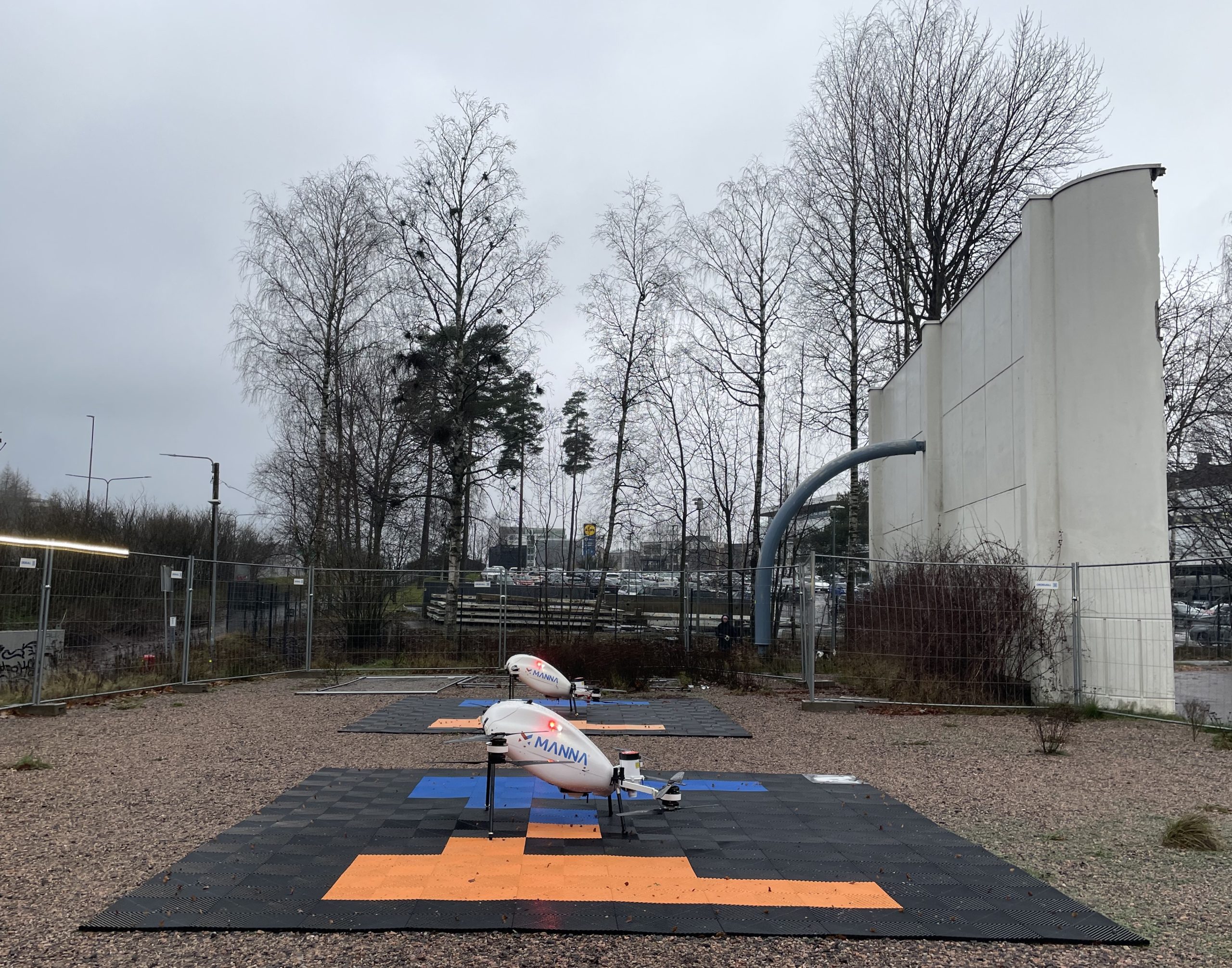
In a striking testament to innovation defying environmental challenges, Finland, a nation renowned for its severe weather conditions and a pioneering spirit in technology, is actively embracing autonomous aerial delivery. What might seem like a futuristic concept has become a tangible reality in the Helsinki metropolitan area, where a collaborative effort between an Irish drone logistics firm, a prominent food delivery platform, and a Finnish cloud kitchen startup is transforming the landscape of last-mile logistics. This groundbreaking initiative sees everyday meal orders and groceries taking flight, delivered by unmanned aerial vehicles (UAVs) directly to consumers, even as winter approaches with its characteristic chill and precipitation.
A New Era of Last-Mile Logistics Takes Flight
The genesis of this ambitious project lies in a strategic three-way partnership, forged in the wake of Helsinki’s annual Slush conference, a significant event in the global startup ecosystem. Finnish entrepreneur Ville Leppälä, founder of the cloud kitchen startup Huuva, offered an exclusive look behind the operational curtain. His company, whose name evocatively means "kitchen hood" in Finnish, has joined forces with Manna, an Irish drone delivery specialist, and Wolt, the DoorDash-owned food delivery giant with a strong Nordic presence. This alliance signifies a pivotal moment in the evolution of consumer delivery services, marrying culinary innovation with advanced robotics to overcome traditional logistical hurdles.
The global food delivery market has experienced explosive growth over the past decade, driven by shifting consumer habits and the convenience offered by digital platforms. However, the "last mile"—the final leg of a product’s journey to the customer’s doorstep—remains the most complex and expensive component of the supply chain. Companies worldwide are investing heavily in technologies to optimize this segment, from electric bikes and scooters to autonomous ground robots and, increasingly, drones. Finland, with its highly digitized society and a government generally supportive of technological advancement, provides an ideal testing ground for such innovations. The European Union’s harmonized drone regulations, overseen by the European Union Aviation Safety Agency (EASA), have also provided a clearer framework for such operations, albeit with specific national implementation.
Huuva’s Vision: Bringing Culinary Diversity to the Periphery
Huuva’s core mission, bolstered by a seed funding round led by General Catalyst in 2022, is to expand access to high-quality restaurant food beyond urban centers into underserved suburban areas. Initially rooted in the burgeoning cloud kitchen model, which utilizes shared kitchen facilities to prepare food solely for delivery, Huuva recognized the limitations of conventional road-based logistics in achieving its suburban reach effectively. While European suburbs might not exhibit the vast sprawl often seen in the United States, communities like Espoo, part of the greater Helsinki region, still experience a disparity in dining options compared to the capital’s vibrant culinary scene. Leppälä highlights that drone delivery serves as a crucial enabler, ensuring that popular restaurant brands, channeled through Huuva’s centralized preparation hubs, can reach these outlying populations with unprecedented speed and freshness.
The integration of drones into Huuva’s delivery network is a strategic move to enhance customer experience and operational efficiency. Customers ordering from Huuva’s Niittari location in Espoo now receive a notification stating, "If available, we’ll send your order with a drone." This direct communication not only manages customer expectations but also subtly introduces them to a novel delivery method. The underlying appeal lies in speed and consistency. Drones bypass traffic congestion, a common impediment for traditional delivery drivers, particularly during peak hours. This ensures that meals arrive at their destination faster and in optimal condition, a critical factor for maintaining food quality and customer satisfaction.
Manna’s Proven Flight Path: From Dublin’s Drizzle to Finland’s Frost
The operational backbone of this aerial delivery service is Manna, an Irish company that brings a wealth of experience from its extensive operations in Dublin. With a track record boasting over 50,000 successful deliveries in the Irish capital, Manna’s drones are engineered for resilience. Ireland’s often inclement weather conditions have served as an involuntary but effective proving ground, testing the UAVs’ ability to perform reliably amidst wind and rain. This prior experience was instrumental in facilitating a swift deployment in Finland, where, after securing the necessary regulatory permits, a pilot phase commenced in February. Within two months, the drone operations in Espoo transitioned to full commercial service, demonstrating the robustness of Manna’s technology and operational protocols.
The launchpad for these drone operations is strategically located in Espoo, co-situated with a Wolt Market, a delivery-only grocery store. This co-location offers a significant logistical advantage, enabling customers to order diverse food items from Huuva’s partner restaurants and simultaneously add groceries to their aerial delivery. Each Manna drone is capable of carrying approximately 4.4 pounds (2 kg) of payload, and the system allows for the dispatch of two drones concurrently to a single delivery zone, maximizing efficiency and capacity.
However, the Finnish climate presents unique challenges, even for battle-hardened drones. While Manna’s systems are designed to withstand significant wind and rain, the extreme cold and potential for icing demand specialized considerations. Makar Nalimov, Manna’s local operations and maintenance lead, explains that while snow generally falls within the parameters of their existing weather resilience, icing presents a distinct hurdle. In such conditions, alternative delivery methods are utilized. A critical constraint is the absolute prohibition of de-icing chemicals when food is involved, necessitating a reliance on robust operational planning and alternative ground-based solutions during severe weather events. This highlights the practical limitations that still exist for widespread, year-round drone delivery in all climates, emphasizing the need for hybrid delivery models.
The Mechanics of Aerial Delivery: A Glimpse into Operations and Safety
The sophisticated process of drone delivery involves a carefully choreographed sequence of events and stringent safety measures. Orders, once prepared at Huuva’s kitchen, are initially collected by delivery workers on e-scooters. These couriers transport the packaged food, typically in insulated bags, over a short distance to Manna’s launchpad, where ground operators take over. Under Nalimov’s supervision, the packages are meticulously weighed and balanced to ensure stability during flight, then carefully loaded into specialized, regulator-approved bags designed for drone transport.
Safety is paramount in autonomous aerial operations. Manna implements a multi-layered approach to ensure reliability and compliance. Batteries are systematically swapped before each flight, guaranteeing that every drone departs with a full charge. Redundancy is built into all critical systems, and comprehensive protocols are in place for various incident scenarios, including the deployment of a parachute as a last-resort safety measure. These measures are crucial for gaining public trust and satisfying the rigorous safety standards set by aviation authorities.
While ground staff manage the physical loading and local oversight, Manna’s Mission Control center, located in Ireland, orchestrates the aerial movements. Operators remotely assess detailed LiDAR maps, review proposed flight itineraries, and precisely drop a virtual pin for the drone’s delivery within a tight radius of the customer’s designated drop-off point. If any pre-flight conditions are not met—be it weather, airspace restrictions, or ground obstacles—the order automatically reverts to a traditional courier for delivery. If approved, the drone captures an image of the landing spot, requiring final human confirmation before it gently lowers the package to the ground using a biodegradable rope. This blend of autonomous flight and human oversight ensures both efficiency and safety, providing a critical human-in-the-loop mechanism.
Economic Promise and Environmental Considerations
The economic potential of drone delivery is a significant driver for its adoption. Huuva’s team estimates that conventional deliveries currently incur costs ranging from €5 to €6 (approximately $6-8) per order. In stark contrast, drone deliveries are projected to achieve costs as low as €1 (approximately $1.16). While this calculation does not yet fully factor in the substantial initial capital expenditure Manna incurs for establishing its Finnish infrastructure, the potential for long-term operational savings is compelling. By eliminating labor costs associated with human drivers, reducing fuel consumption, and bypassing traffic, drones offer a compelling model for sustainable unit economics in last-mile logistics.
Beyond cost, drone delivery also presents environmental advantages. Electric drones produce zero direct emissions during flight, offering a greener alternative to traditional fossil-fuel-powered delivery vehicles, especially as energy grids transition to renewable sources. This aligns with Finland’s strong commitment to sustainability and environmental stewardship. However, the environmental impact of battery production, charging infrastructure, and the full lifecycle of drone manufacturing are ongoing considerations for a truly holistic assessment. The reduced traffic congestion and faster delivery times also contribute to a more efficient urban environment, lessening the footprint of delivery services.
The Broader Landscape of Autonomous Delivery
The deployment of Manna’s drones in Finland is not an isolated experiment but part of a wider industry trend toward diversified last-mile delivery solutions. Wolt, a key partner in this initiative, is already actively integrating other autonomous methods into its Finnish operations, including sidewalk delivery robots from companies like Coco and Starship. Furthermore, its parent company, DoorDash, is aggressively pursuing its own autonomous strategies, having developed its own delivery robot, "Dot," which began operations in Arizona earlier this year. DoorDash has also partnered with Alphabet-owned Wing for drone deliveries in the Dallas-Fort Worth area, indicating a strong belief in the multi-faceted future of automated logistics.
These developments suggest a future where a portfolio of autonomous technologies—drones for faster, longer-distance, or difficult-to-reach areas; robots for pedestrian zones; and potentially larger autonomous vehicles for trunk lines—will operate in concert to create highly efficient, interconnected delivery networks. For specialized drone companies like Manna and innovative food platforms like Huuva, direct partnerships with major players like DoorDash (via Wolt) are strategically beneficial, providing access to vast customer bases and operational scale.
Navigating the Future: Expansion and Evolving Regulations
Looking ahead, Huuva is already exploring opportunities to expand its drone delivery operations to additional locations within Espoo. One potential future model involves establishing launchpads even closer to the kitchen facilities, allowing for direct handovers through a window, thereby streamlining the process further by eliminating the need for intermediate e-scooter couriers. This would optimize the entire workflow, from order preparation to aerial dispatch.
Manna’s local team is already experiencing increasing demand, handling double-digit deliveries daily, and is confidently preparing for its inaugural operational winter in Finland. This signifies a growing acceptance and reliance on the service from consumers. For Huuva, the success of this pilot program in Espoo has validated its vision, with one small, yet telling, wish: the company hopes to soon be permitted to affix its own logo onto the regulator-sanctioned drone delivery bags, a symbolic step towards full brand integration and public recognition of this pioneering service.
The journey of drone delivery, from experimental concept to daily reality in Finland, underscores a significant shift in how goods and services will be delivered in the coming years. While challenges remain in areas such as scalability, airspace integration, public perception, and evolving regulatory frameworks, the collaboration between Manna, Wolt, and Huuva demonstrates a tangible path forward. This venture not only promises enhanced convenience and efficiency for consumers in suburban areas but also positions Finland at the forefront of the global movement towards an autonomous, aerial-powered future of logistics.