Amir Mahmud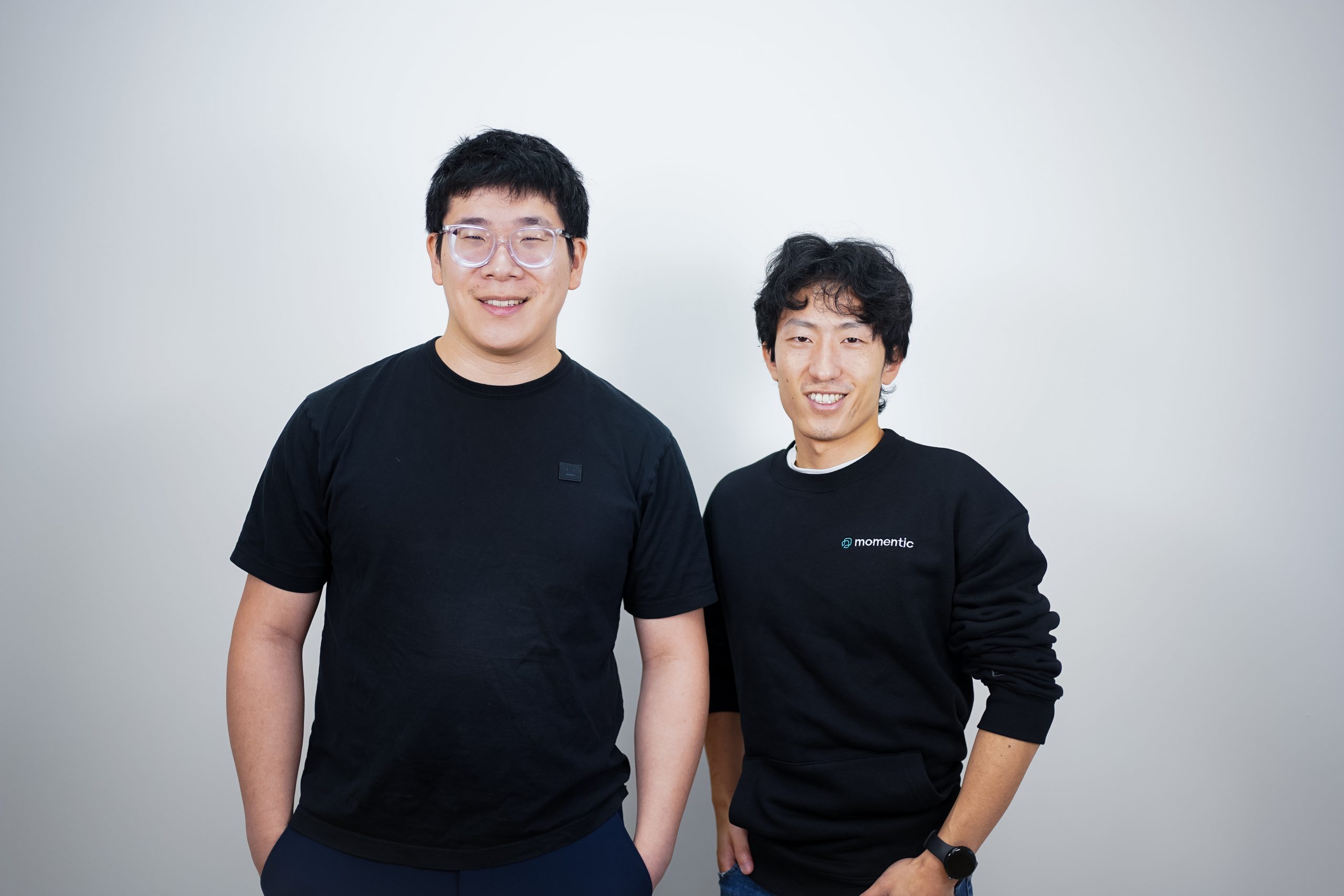
Momentic, a pioneering startup leveraging artificial intelligence to transform software testing, has announced the successful closure of a $15 million Series A funding round. This significant capital injection, led by Standard Capital with participation from Dropbox Ventures, underscores a growing investor confidence in AI’s capacity to streamline and enhance critical aspects of software development. Existing investors, including Y Combinator, FCVC, Transpose Platform, and Karman Ventures, also contributed to the round, building upon the company’s previously announced $3.7 million seed funding earlier this year. The investment arrives as the software industry increasingly grapples with the complexities of ensuring robust application performance and reliability amidst rapid development cycles.
The Ever-Evolving Landscape of Software Quality Assurance
In the digital age, software is the invisible infrastructure underpinning nearly every aspect of modern life, from communication and commerce to healthcare and transportation. The reliability of these systems is paramount, making software quality assurance (QA) an indispensable, albeit often overlooked, component of the development lifecycle. Historically, QA has been a labor-intensive process, relying heavily on manual testers to meticulously scrutinize applications for defects, performance issues, and user experience flaws. This traditional approach, while foundational, is inherently time-consuming, expensive, and prone to human error, often creating a bottleneck in agile development environments that prioritize speed and continuous delivery.
The evolution of software development methodologies, particularly the widespread adoption of Agile and DevOps, has placed immense pressure on QA teams to accelerate testing without compromising quality. This shift spurred the rise of test automation, with tools like Selenium, Playwright, and Cypress becoming mainstays for developers seeking to automate repetitive test cases. These open-source frameworks offer powerful, fine-grained control over testing processes, allowing for sophisticated script creation and execution. However, they typically demand specialized coding skills and considerable effort to set up, maintain, and adapt to rapidly changing user interfaces and application logic. The complexity of managing large suites of automated tests, often referred to as "flaky tests" due to their inconsistent results, remains a significant challenge, even for seasoned development teams.
This historical context highlights the persistent "pain point" that Momentic’s co-founder, Wei-Wei Wu, frequently encountered in his prior roles at developer tooling companies like Qualtrics and WeWork. Wu, a notable contributor to open-source projects like Node.js, observed that despite advancements in coding and deployment, the verification of code continued to be a major hurdle. The fundamental challenge has always been to make testing more efficient, scalable, and accessible, thereby ensuring that the "dull but critical work" of quality assurance keeps pace with the velocity of modern software innovation.
Momentic’s AI-Driven Solution: Simplifying Complex Testing
Momentic’s core proposition lies in its AI-driven platform, which aims to democratize software testing by simplifying the creation and execution of comprehensive test suites. Unlike traditional automation tools that require developers to write intricate code, Momentic enables users to describe critical user flows in plain English. The company’s artificial intelligence then translates these natural language descriptions into automated test steps, effectively abstracting away the underlying technical complexities. This approach significantly lowers the barrier to entry for test automation, allowing a broader range of team members—including product managers, business analysts, and even non-technical stakeholders—to contribute to the quality assurance process.
The vision articulated by Wu, that "we help our customers make sure their product works," encapsulates the direct value proposition. By allowing teams to articulate their testing needs in a human-readable format, Momentic’s AI reduces the cognitive load and specialized skill set typically associated with advanced test automation. This innovation is particularly pertinent in an era where software applications are becoming increasingly intricate, with dynamic user interfaces and distributed architectures. The ability to quickly generate, execute, and maintain tests that accurately reflect real-world user interactions is invaluable for companies striving to deliver flawless digital experiences.
The founders, Wei-Wei Wu and Jeff An, bring a wealth of experience in developer tooling and infrastructure, having navigated the intricate challenges of software development firsthand. Their collective insight into the developer experience has been instrumental in shaping a product that directly addresses long-standing frustrations within the QA domain. By focusing on simplicity and effectiveness, Momentic aims to transform testing from a necessary burden into an integrated, seamless, and intelligent part of the development workflow.
Market Traction and Broader Impact
Momentic’s AI-driven approach has already garnered substantial market traction, evidenced by its robust user base and impressive operational metrics. The company currently serves 2,600 users across a diverse range of clients, including prominent technology firms such as Notion, Xero, Bilt, Webflow, and Retool. This rapid adoption by notable companies underscores the immediate value and efficiency gains Momentic’s platform offers. While specific revenue and profitability figures remain undisclosed, the company’s growth trajectory has clearly resonated with investors, validating its market fit and future potential.
One of the most compelling demonstrations of Momentic’s impact is its ability to perform testing at an unprecedented scale. In a recent month, the platform automated over 200 million test steps. This figure is a testament to the transformative power of AI in QA, enabling organizations to achieve a volume of testing that would be logistically and economically impossible with traditional manual or even code-heavy automation methods. Such scale allows companies to conduct more thorough, frequent, and comprehensive testing, leading to earlier detection of bugs, reduced defect rates in production, and ultimately, a higher quality end-product for users.
The broader market implications of this technology are significant. The global software testing market is projected to continue its substantial growth, driven by increasing software complexity, the proliferation of digital services, and the imperative for faster release cycles. Momentic’s ability to automate and scale testing addresses these macro trends directly. By accelerating the QA process, the platform empowers businesses to bring new features and products to market more quickly, maintaining a competitive edge in rapidly evolving industries. Moreover, enhanced software quality directly impacts user satisfaction and trust, fostering stronger brand loyalty and reducing the costly repercussions of software failures, such as reputational damage, customer churn, and operational disruptions.
Navigating the Competitive Landscape and Future Outlook
While Momentic offers a compelling solution, it operates within a dynamic and increasingly competitive landscape. Its direct competitors include established open-source frameworks like Playwright and Selenium, which continue to be widely adopted due to their flexibility and community support. However, Momentic differentiates itself by leveraging AI to simplify the complexity inherent in these tools, catering to a market segment that values ease of use and rapid implementation over deep technical customization.
A more nascent, yet significant, competitive force comes from the burgeoning capabilities of large language models (LLMs) and foundation models developed by tech giants like OpenAI and Anthropic. These models are increasingly capable of understanding and generating code, and they are beginning to offer agentic testing functionalities, as demonstrated through tutorials and experimental platforms. The potential for enterprises to leverage these powerful general-purpose AI models directly for testing poses a long-term challenge for specialized Software-as-a-Service (SaaS) companies like Momentic.
However, Momentic’s strategic advantage lies in its domain-specific focus and product-market fit. While foundation models offer broad capabilities, specialized platforms typically provide tailored user experiences, pre-built integrations with existing developer toolchains, and a deeper understanding of the specific nuances of software testing workflows. Momentic’s ability to translate complex user flows into actionable test cases with minimal human intervention demonstrates a level of applied intelligence that general-purpose models may not achieve without significant customization. The "build vs. buy" decision will weigh heavily on companies, balancing the flexibility of foundation models against the out-of-the-box efficacy and support offered by dedicated solutions.
Looking ahead, Momentic’s immediate plans involve strategically deploying its new funding to further enhance its product offerings and expand its engineering team. The company recently launched support for mobile environments in August, a critical step given the pervasive nature of mobile applications. Future developments include building more sophisticated test-case management functionalities, which will further empower teams to organize, prioritize, and track their testing efforts more effectively.
Wei-Wei Wu articulates a clear vision for the future, positing that the rapid advancement of automated coding will inevitably lead to an explosion of new applications. Each of these applications, regardless of how it was generated, will demand rigorous testing to ensure quality and reliability. "All of these apps need testing," Wu emphasizes. "They care about quality, and we’re going to provide it for them." This forward-looking perspective positions Momentic not just as a tool for today’s development challenges but as a foundational enabler for the next generation of software innovation, promising to deliver the quality assurance that the increasingly automated digital world will undeniably require. The investment signals a belief that Momentic is well-positioned to ride this wave, transforming the critical, often arduous, task of software testing into an intelligent, scalable, and integral part of the modern development ecosystem.