Amir Mahmud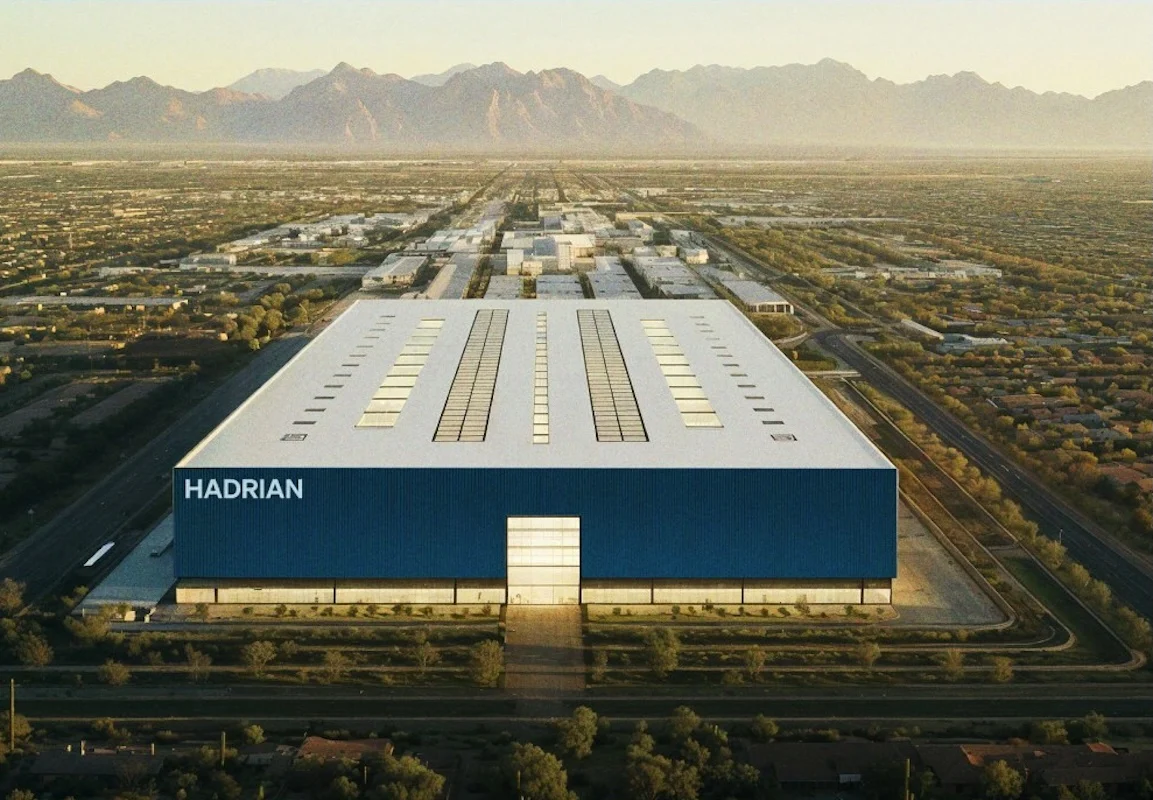
Hadrian, an emerging leader in advanced manufacturing for the defense sector, has successfully closed a substantial $1.37 billion Series D funding round, positioning the company with a robust valuation of $7.87 billion. This significant capital injection underscores a growing investor confidence in the modernization of the U.S. defense industrial base and the potential of automated, high-precision manufacturing to address long-standing supply chain vulnerabilities.
The funding round attracted a diverse and prominent consortium of investors. Lead investors included WCM Investment Management, Washington Harbour Partners, Valor Equity Partners, 137 Ventures, and Baillie Gifford, signaling broad institutional belief in Hadrian’s strategic vision. Adding to this formidable list, participating investors comprised 1789 Capital, Morgan Stanley Wealth Management, funds managed by Apollo and T. Rowe Price, alongside notable venture capital firms such as CapitalG, Andreessen Horowitz, Founders Fund, Lux Capital, and Altimeter. This latest financing event brings Hadrian’s total capital raised to approximately $2 billion, according to industry estimates, building upon previous successful rounds, including a $260 million Series C financing led by Founders Fund and Lux Capital about a year prior.
A New Paradigm in Defense Production
Hadrian’s strategic approach diverges from the conventional narrative of defense technology. Unlike many startups focused on developing novel weaponry or AI-powered combat systems, Hadrian has carved a niche in the foundational elements of defense capability: the manufacturing of critical components. The company’s core mission is to construct highly automated, state-of-the-art factories designed for the rapid, mass production of precision parts essential for the existing vehicles and systems that form the backbone of the military complex. This focus on "making things better, faster, and more affordably" rather than "making new things" represents a pragmatic yet revolutionary shift in how the defense industry approaches its industrial challenges.
These advanced manufacturing facilities leverage a suite of modern technologies, including sophisticated robotics, artificial intelligence for process optimization, advanced CNC machining, and rigorous quality control systems. By integrating these elements, Hadrian aims to dramatically reduce lead times, enhance production efficiency, and ensure the consistent quality of components vital for national security. The company envisions a future where the defense supply chain is more resilient, less susceptible to geopolitical disruptions, and capable of scaling production rapidly in response to evolving strategic needs.
The Geopolitical Imperative: Reshaping the Industrial Base
The substantial investment in Hadrian reflects a broader recognition of critical challenges within the U.S. defense industrial base. For decades, the American manufacturing sector, including its defense segment, has grappled with issues such as offshoring, an aging workforce, outdated infrastructure, and a reliance on complex, often brittle global supply chains. These vulnerabilities have become acutely apparent amidst recent geopolitical tensions, global pandemics, and increased competition from near-peer adversaries.
The need for a robust, responsive, and domestically anchored defense manufacturing capability has become a national priority. Lead times for critical components can stretch for months or even years, impeding the deployment and maintenance of essential military assets. The U.S. Department of Defense and policymakers have increasingly emphasized the urgency of industrial base revitalization, advocating for initiatives that foster innovation, accelerate production, and strengthen domestic supply chains. Hadrian’s model directly addresses these concerns by promising to deliver precision parts at a speed and scale previously unattainable through traditional methods. By building new, digitally integrated factories, Hadrian offers a pathway to bypass some of the legacy bottlenecks and accelerate the pace of defense procurement and sustainment.
A History of Growth and Strategic Investment
Hadrian’s journey from a nascent startup to a multi-billion dollar entity in a relatively short timeframe underscores the urgency of its mission and the efficacy of its execution. While specific founding dates and early funding rounds are not detailed in public announcements, the company has rapidly scaled its operations and attracted significant investor interest. Its Series C round, led by Founders Fund and Lux Capital, highlighted an early validation of its innovative approach to defense manufacturing. These firms, known for their investments in disruptive technologies, recognized the potential for Hadrian to modernize a sector often perceived as slow to adapt.
The company’s expansion has been marked by tangible progress. In March of the current year, Hadrian notably opened its fourth manufacturing facility, located in Alabama. This site is specifically dedicated to the mass production of parts for critical submarine programs, including the Columbia-class and Virginia-class submarines. The deal for this facility, structured as a public/private partnership, was valued at an impressive $2.4 billion. The Columbia-class submarines are pivotal to the U.S. nuclear deterrent, while the Virginia-class submarines represent a cornerstone of the Navy’s undersea warfare capabilities. Ensuring a reliable and expedited supply of components for these strategic assets is paramount to national security. Hadrian’s ability to forge such significant partnerships and rapidly operationalize specialized facilities demonstrates its capacity to execute on its ambitious vision and meet high-stakes defense requirements.
Economic and National Security Ramifications
The success of companies like Hadrian carries far-reaching implications, both economically and strategically. From an economic perspective, the establishment of advanced manufacturing facilities creates high-skilled jobs, fosters technological innovation, and contributes to regional economic development. The investment in domestic manufacturing capacity helps to reshore critical industrial capabilities, reducing reliance on foreign supply chains and bolstering economic resilience. Moreover, the integration of cutting-edge technologies like AI and robotics in defense manufacturing can drive broader advancements across the industrial landscape.
From a national security standpoint, Hadrian’s model promises enhanced military readiness and strategic advantage. Faster production cycles mean quicker deployment of new systems and more efficient maintenance of existing ones. This agility is crucial in an era of rapid technological change and evolving threat landscapes. By providing a reliable source of high-quality components, Hadrian helps to mitigate risks associated with supply chain disruptions, ensuring that the U.S. military can maintain its operational capabilities and technological edge. The ability to rapidly scale production in times of crisis could prove to be a decisive factor in future conflicts.
Challenges and the Path Forward
Despite the significant investment and promising trajectory, Hadrian, like any rapidly scaling enterprise in a complex sector, faces inherent challenges. Integrating with the sprawling and often bureaucratic defense acquisition system requires navigating intricate regulatory frameworks, stringent quality standards, and long contracting cycles. Ensuring interoperability with existing defense primes and adapting to their specific requirements will be an ongoing endeavor. Furthermore, attracting and retaining top engineering and manufacturing talent in a competitive market remains crucial for sustained innovation and growth. Cybersecurity also presents a continuous challenge, as highly automated, digitally connected factories become potential targets for adversaries seeking to disrupt defense production.
However, the current geopolitical climate and the imperative for industrial base revitalization create a favorable environment for Hadrian’s continued success. The company’s focus on foundational manufacturing, rather than speculative new weapon systems, positions it as a practical and immediate solution to pressing national security needs. As global tensions persist and the demand for robust defense capabilities intensifies, the role of advanced manufacturing innovators like Hadrian will only grow in significance. The $1.37 billion capital infusion not only validates Hadrian’s current achievements but also provides the necessary resources to accelerate its expansion, deepen its technological capabilities, and further solidify its position as a cornerstone of the revitalized U.S. defense industrial base. Its trajectory will be closely watched as a bellwether for the broader transformation of America’s manufacturing prowess in service of national defense.








 Azin Asro