Amir Mahmud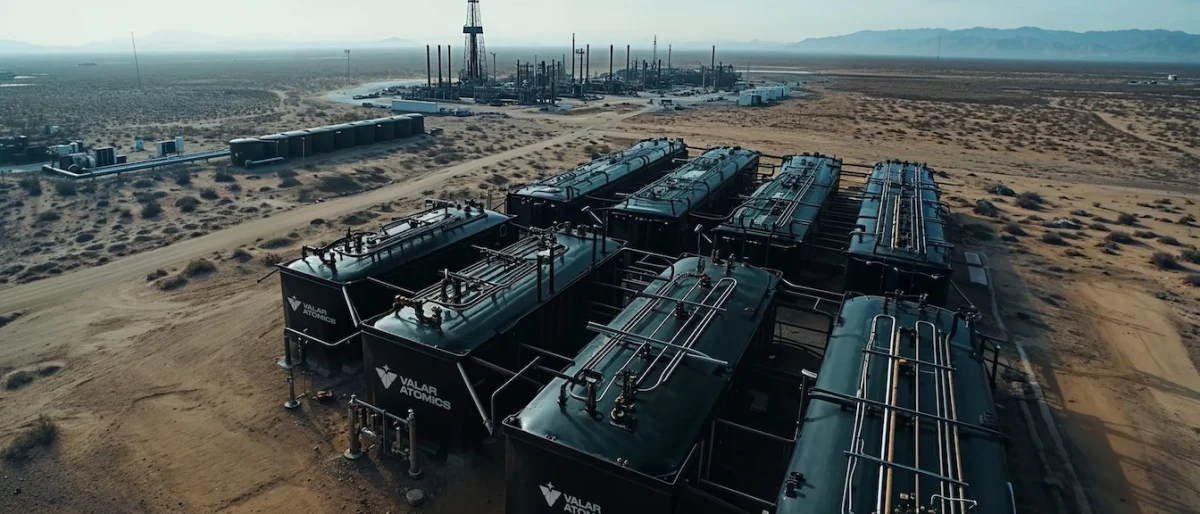
Valar Atomics, an emerging leader in advanced nuclear technology, has successfully closed a significant funding round, securing $1 billion in equity investment. This substantial capital injection, confirmed on August 3, 2026, was spearheaded by prominent venture capital firm Sequoia, with its partner Shaun Maguire slated to join Valar Atomics’ board of directors. In addition to the equity funding, the company also obtained a $200 million line of credit from Erebor and a consortium of other financial institutions, bringing its total new capital to $1.2 billion. While the precise post-money valuation was not officially disclosed by the company, financial reports from sources like Bloomberg indicated a valuation of $6 billion, underscoring the high investor confidence in the nuclear startup’s potential.
A Major Bet on Future Energy
This landmark investment signals a broader shift in the venture capital landscape, where "deep tech" and capital-intensive infrastructure projects are increasingly attracting significant funding. For decades, the energy sector, particularly nuclear power, was often perceived as too slow, too regulated, and too costly for the fast-paced, high-return expectations of Silicon Valley investors. However, growing global concerns over climate change, the urgent need for reliable baseload power, and advancements in nuclear engineering have spurred a renewed interest. Sequoia’s lead in this round, a firm renowned for backing transformative technology companies, highlights a strategic pivot towards foundational industries critical for the future. The firm’s involvement suggests a belief that Valar Atomics possesses not only groundbreaking technology but also a viable pathway to commercialization and scalability, challenging previous paradigms for nuclear development.
The Rise of Small Modular Reactors
At the heart of Valar Atomics’ ambitious vision are Small Modular Reactors (SMRs). These innovative nuclear power plants represent a significant departure from the monolithic, bespoke designs that have characterized the industry for over half a century. SMRs are fundamentally miniaturized versions of traditional nuclear reactors, designed to be factory-built, transportable, and installed more rapidly and cost-effectively. Their modular nature allows for greater flexibility in deployment, enabling them to power everything from remote communities and industrial complexes to large data centers. Valar Atomics, under the leadership of founder and CEO Isaiah Taylor, is specifically developing reactors like the Ward 250, which aims to provide a more agile and economically viable alternative to traditional large-scale nuclear power generation. The promise of SMRs lies in their potential to reduce construction times, lower capital costs, enhance safety features through passive cooling systems, and minimize the physical footprint of power generation facilities.
Historical Context: Nuclear Power’s Evolving Role
The journey of nuclear power has been marked by periods of immense promise and significant challenge. Following its initial development during World War II, nuclear energy was heralded as a limitless source of clean electricity, ushering in an era of rapid expansion in the 1960s and 70s. However, high construction costs, complex regulatory frameworks, and public anxieties following incidents like Three Mile Island (1979) and Chernobyl (1986) led to a significant slowdown in new plant construction in many Western nations. The Fukushima Daiichi accident in 2011 further exacerbated public apprehension and prompted some countries to phase out nuclear power entirely.
Yet, the tide has begun to turn once more. In the face of escalating climate change impacts and the imperative to decarbonize global energy systems, nuclear power is experiencing a renaissance. Governments worldwide are increasingly recognizing its role as a critical component of a stable, low-carbon energy mix, offering continuous, dispatchable power that complements intermittent renewable sources like solar and wind. Policy initiatives, such as the inclusion of nuclear power in some sustainable finance taxonomies and increased government funding for advanced reactor research, reflect this renewed commitment. This shifting geopolitical and environmental landscape provides a fertile ground for companies like Valar Atomics, positioning their innovative SMR solutions as a key part of the global energy transition.
Valar Atomics’ Technological Edge and Market Strategy
Valar Atomics’ strategy emphasizes a rapid iteration and data-driven approach to reactor development, a methodology more akin to software development than traditional heavy industry. The company claims that each successive reactor build generates invaluable engineering, manufacturing, and operational data, which is then fed back into the design process to improve subsequent generations. This iterative cycle is intended to dramatically accelerate development timelines. Isaiah Taylor has articulated this vision, stating, "It took two years to complete the NOVA core. It took seven months to take Ward 250 critical. With each reactor built, the tick rate will become smaller until Valar is producing tens, then hundreds, then thousands of reactors per year." This ambitious "tick rate" philosophy is central to Valar Atomics’ plan to move beyond bespoke reactor construction to the mass manufacturing of SMR fleets, a critical step for achieving cost reductions and widespread deployment. The $1 billion funding round is earmarked specifically to enable this transition from prototype demonstration to large-scale manufacturing and deployment.
Connecting Nuclear Power to the Digital Age: The Nvidia Partnership
A significant validation of Valar Atomics’ technology came in June, when it successfully demonstrated its Ward 250 reactor powering an Nvidia Blackwell system, a cutting-edge artificial intelligence platform. This demonstration was not merely a technical showcase; it led to a strategic partnership with Nvidia to develop a 30-megawatt (MW) waterless AI factory. This collaboration is particularly impactful, as it directly links advanced nuclear power to the rapidly expanding and energy-intensive artificial intelligence sector. Data centers, the backbone of the digital economy, require vast amounts of reliable and clean electricity. Traditional data center cooling methods often consume significant quantities of water, posing environmental and logistical challenges in many regions. Valar Atomics’ commitment to developing a waterless solution for this AI factory addresses a critical resource constraint, further enhancing the appeal and utility of its SMR technology for this high-growth market. This partnership not only provides a concrete deployment opportunity for Valar Atomics but also highlights the potential for SMRs to decarbonize sectors with rapidly escalating energy demands, far beyond traditional grid applications.
The Broader SMR Landscape and Competitive Field
Valar Atomics operates within an increasingly dynamic and competitive advanced nuclear landscape. Numerous startups and established energy companies are vying for leadership in the SMR market, each with distinct technological approaches and target applications. For example, NuScale Power, a U.S. pioneer, has made significant progress, including the first SMR design to receive standard design approval from the U.S. Nuclear Regulatory Commission. TerraPower, backed by Bill Gates, is developing a sodium-cooled fast reactor, the Natrium reactor, with an integrated energy storage system. X-energy, which recently raised $1 billion through its initial public offering (IPO), is focused on high-temperature gas-cooled reactors for both electricity generation and industrial heat applications, including data centers. Another company, Antares, recently secured $470 million to develop nuclear reactors specifically for military applications, demonstrating the diverse potential uses of advanced nuclear technology. The variety of designs, cooling methods, and fuel cycles across these companies underscores the broad innovation occurring within the sector, all aiming to overcome the limitations of conventional nuclear power and meet specific energy needs.
Investment Trends and the Path Forward for Advanced Nuclear
The substantial investments flowing into Valar Atomics and its peers reflect a broader trend of private capital seeking to accelerate the energy transition. Venture capitalists and institutional investors are increasingly recognizing that achieving ambitious climate goals will require not only renewable energy but also firm, dispatchable, and carbon-free power sources like advanced nuclear. The capital-intensive nature of building energy infrastructure means that large funding rounds are essential for these companies to move from concept and design to demonstration, manufacturing, and eventual commercial deployment. This synergy between private investment and ongoing government support through research grants, loan guarantees, and streamlined regulatory processes is crucial for de-risking advanced nuclear projects and enabling them to scale. The global market for SMRs is projected to grow significantly in the coming decades, with countries from North America and Europe to Asia and Africa exploring their potential to enhance energy security, reduce emissions, and provide power to remote areas.
Challenges and Opportunities for Scaling Nuclear Innovation
Despite the significant momentum and investment, Valar Atomics and the broader advanced nuclear sector face considerable challenges. Navigating complex and often lengthy regulatory approval processes remains a primary hurdle, even with efforts to streamline them for SMRs. Establishing a robust and scalable supply chain for specialized nuclear components, skilled labor, and advanced manufacturing capabilities is another critical undertaking. Public acceptance, while improving in some regions, still requires ongoing education and engagement to address historical concerns about safety, waste management, and proliferation risks. The economics of competing with increasingly cheaper renewable energy sources, even with the added benefit of dispatchability, will also be a continuous test for SMR developers.
Nevertheless, the opportunities are immense. If Valar Atomics can successfully execute its strategy of rapid iteration and mass production, its SMRs could play a transformative role in global decarbonization. By offering a clean, reliable, and flexible power source, advanced nuclear technology has the potential to power industrial growth, support critical infrastructure like AI factories, and contribute significantly to a future where energy is both abundant and environmentally sustainable. The $1.2 billion secured by Valar Atomics is not just an investment in a company; it is a profound vote of confidence in the future of nuclear energy as a cornerstone of the world’s clean energy transition.