Amir Mahmud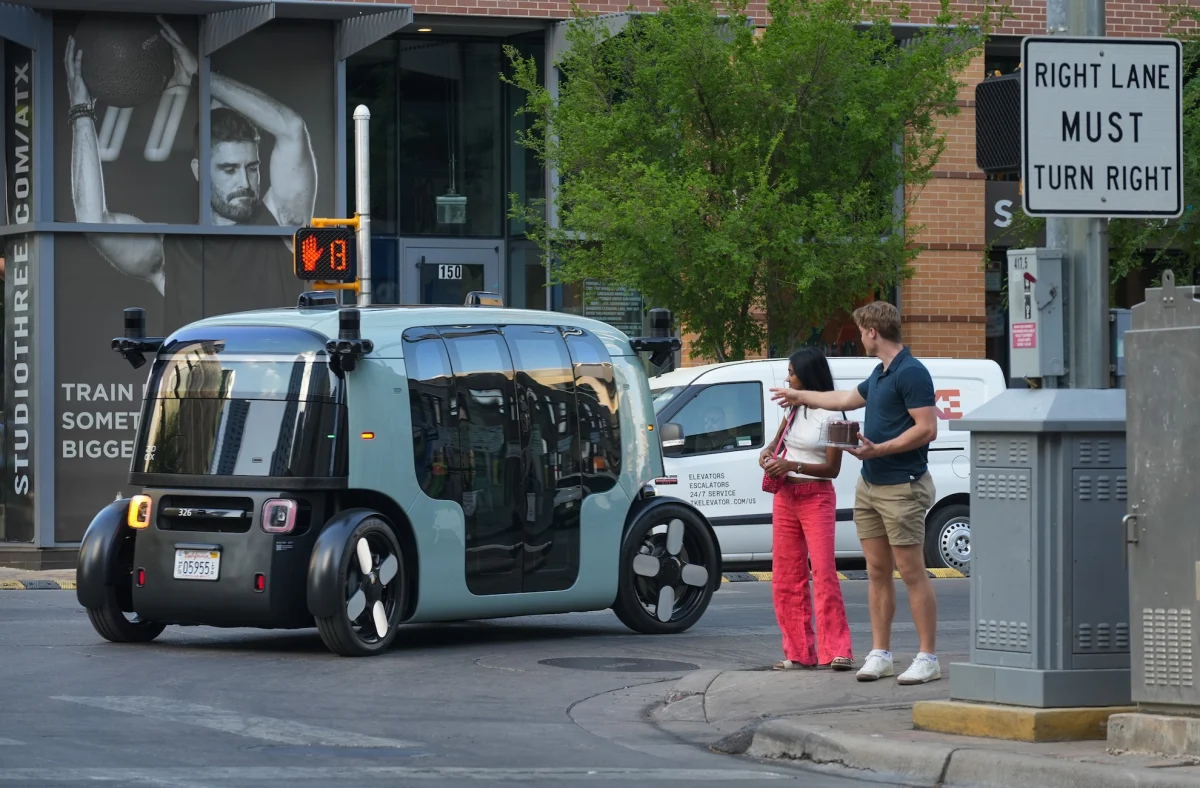
The burgeoning autonomous vehicle (AV) industry finds itself at a pivotal juncture, experiencing a significant divergence in regulatory approaches across the United States. While federal agencies are actively working to streamline processes and accelerate the deployment of self-driving technology, state and local authorities are increasingly applying the brakes, driven by growing public safety concerns and operational challenges. This creates a complex and often contradictory landscape for companies striving to bring their innovative mobility solutions to market.
The Federal Green Light for Innovation
A recent series of announcements from the National Highway Traffic Safety Administration (NHTSA) underscores the federal government’s commitment to fostering AV development. NHTSA, the primary U.S. agency responsible for vehicle safety, has historically balanced the need for innovation with its mandate to protect the public. Its recent actions are designed to reduce bureaucratic hurdles, thereby accelerating both the development and commercial deployment of autonomous systems.
One of the most notable decisions involved granting Zoox, an Amazon-owned robotaxi company, a temporary exemption from eight specific federal motor vehicle safety standards (FMVSS). This exemption is particularly significant because Zoox’s custom-built robotaxis, designed from the ground up without traditional controls like steering wheels or pedals, do not conform to standards originally written for human-driven vehicles. Such exemptions are crucial for companies pushing the boundaries of vehicle design, allowing them to innovate without being constrained by legacy regulations. The move effectively cleared one of the final significant regulatory obstacles for Zoox, paving the way for the company to begin charging customers for rides in its autonomous vehicles. According to Zoox, commercial operations are now imminent, with Las Vegas slated to be the first city where paid robotaxi services will launch. This development marks a critical step not just for Zoox but for the entire industry, signaling a transition from extensive testing phases to revenue-generating commercial services.
The historical context for NHTSA’s approach reveals a careful balancing act. For years, the agency has issued guidelines and frameworks for AV testing, but the transition to commercial operation of vehicles without traditional human controls presents novel challenges. The temporary exemption granted to Zoox suggests a willingness to adapt regulations to accommodate new forms of mobility, provided companies can demonstrate an equivalent or superior level of safety. This pragmatic approach aims to prevent regulatory stagnation from stifling technological progress while still upholding the core mission of safety.
Local Roadblocks and Safety Scrutiny
In stark contrast to the federal push, several state and local jurisdictions are expressing heightened skepticism and imposing stricter controls on autonomous vehicle operations. This resistance often stems from tangible incidents and the perceived inability of current AV technology to seamlessly integrate into complex urban environments. Waymo, a pioneer in the robotaxi space and a subsidiary of Alphabet, along with other operators, has faced increasing scrutiny over how its autonomous vehicles interact with emergency responders.
One high-profile incident occurred in San Francisco, where Waymo robotaxis became immobile during heavy July 4th traffic, reportedly running out of power and blocking key thoroughfares. Such events, while sometimes attributed to specific operational parameters or unexpected conditions, compound existing traffic problems and raise serious questions about public safety. San Francisco Mayor Daniel Lurie, responding to these concerns and similar incidents where AVs have interfered with emergency vehicles, publicly urged state regulators to strengthen oversight and establish more robust rules for autonomous vehicles. These calls reflect a growing sentiment among local officials that the rapid deployment of AVs must be accompanied by clearer guidelines and accountability mechanisms to ensure they do not impede vital public services.
The issue of AVs interacting with emergency services is not new. Reports from various cities have detailed instances of robotaxis stopping unexpectedly in critical situations, failing to yield to emergency vehicles, or even blocking access for first responders. These incidents erode public trust and underscore the need for sophisticated perception and prediction capabilities that can navigate unpredictable real-world scenarios, especially those involving human-driven emergency vehicles operating under duress.
Further reflecting this localized pushback, Representative Kevin Mullin (D-Calif.) proposed legislation aimed at directing federal regulators to establish minimum national safety standards for autonomous vehicle operators. During a press conference where Mayor Lurie also spoke, Mullin stated, "We have seen disturbing, and frankly, an unacceptable number of incidents where autonomous vehicles inadvertently interfere with emergency responders." This legislative initiative highlights a broader concern that without a unified national framework, a fragmented regulatory environment could lead to inconsistencies in safety, operational standards, and public confidence.
A Patchwork of Regulations: The National Debate
The current regulatory landscape in the U.S. for autonomous vehicles is best described as a patchwork. While NHTSA sets federal motor vehicle safety standards that apply to the design and construction of vehicles, the operational aspects of AVs, such as where and how they can be tested and deployed, largely fall under the purview of individual states and local municipalities. This division of authority has led to a varied environment where some states have adopted permissive laws to attract AV testing and deployment, while others have taken a more cautious approach.
The debate over federal vs. state/local control is central to the AV industry’s future. Proponents of federal preemption argue that a single, clear set of national standards would facilitate faster development and deployment, reduce compliance costs for companies, and ensure a consistent level of safety across the country. They contend that a fragmented approach stifles innovation and creates uncertainty. Conversely, advocates for stronger state and local control emphasize that local governments are best positioned to understand the unique traffic conditions, infrastructure challenges, and public safety needs of their communities. They argue that local oversight is essential to address specific operational concerns and maintain public accountability.
This tension between acceleration and caution is not merely a bureaucratic skirmish; it has profound implications for the pace of technological adoption, market penetration, and the ultimate societal impact of autonomous mobility. The industry finds itself navigating this complex terrain, seeking to demonstrate the safety and benefits of its technology while addressing legitimate public and governmental concerns.
Global Horizons: Robotaxi Expansion and Competition
Beyond the regulatory challenges in the U.S., the global race for robotaxi dominance is intensifying, with London emerging as a significant new battleground. As a major global financial and cultural hub with a dense urban environment and sophisticated public transport network, London presents both immense opportunities and formidable challenges for AV deployment.
Several major players are now testing or preparing to launch services in the British capital. Baidu, the Chinese tech giant, has initiated autonomous vehicle testing in London through a strategic partnership with Lyft and Freenow, the multi-mobility app now owned by Lyft. The companies have ambitious plans to invite the public to hail their robotaxis by 2027. This collaboration signifies the growing international nature of the AV industry, with global partnerships becoming key to market entry and expansion.
Waymo also entered the London market, commencing autonomous vehicle testing with human safety operators in April. This cautious approach mirrors its initial deployment strategies in U.S. cities. Uber, a dominant force in ride-hailing, and its self-driving technology partner, Wayve, have also announced intentions to launch a robotaxi service in London this year. The convergence of these industry titans in London signals the city’s strategic importance as a proving ground for advanced mobility solutions and a gateway to the broader European market.
The competition in London underscores the global aspirations of AV companies and the significant investment being poured into developing self-driving technology capable of navigating diverse urban landscapes. While the regulatory environment in the UK and Europe has generally been more conservative than in some parts of the U.S., there’s a clear appetite for exploring and integrating advanced mobility solutions, provided they meet stringent safety and operational standards. The success or failure of these ventures in London could significantly influence public perception and regulatory approaches in other major cities worldwide.
Beyond Robotaxis: Broader Trends in Future Mobility
The week’s developments extended beyond robotaxis, touching upon other facets of the evolving mobility landscape. The nascent on-demand drone delivery industry saw significant activity. Walmart and Alphabet’s Wing drone delivery service expanded operations across Central Florida, aiming to solve last-mile delivery challenges. Flytrex announced a partnership with autonomic logistics platform Nash, further solidifying the ecosystem for drone-based logistics. Perhaps the most impactful news came from DoorDash, which revealed plans to build its own drone delivery business, including proprietary aircraft, as an initiative developed by its robotics and autonomy team. This move signals a strategic shift for DoorDash, indicating a deeper integration of autonomous delivery solutions directly into its core business model, potentially transforming local commerce and logistics.
In the realm of electric vertical take-off and landing (eVTOL) aircraft, Florida made headlines by allocating $200 million, initially earmarked for the federal National Electric Vehicle Infrastructure program for EV chargers, toward building 32 landing pads with charging stations for eVTOLs. This controversial decision highlights the state’s forward-looking, albeit potentially misdirected, vision for urban air mobility. While eVTOLs promise to revolutionize inter-city and urban travel, the diversion of funds intended for ground-based EV charging raises questions about infrastructure priorities and the immediate needs of electric vehicle adoption.
Other notable tidbits included Alaska Airlines CEO and President Ben Minicucci joining Lyft’s board of directors, signaling cross-industry collaboration at the executive level. Rivian spinoff Also announced that its first e-bikes would finally begin deliveries after months of supply chain-related delays, reflecting the ongoing challenges in hardware manufacturing. In the luxury electric vehicle segment, Ferrari’s first all-electric vehicle, the Luce, reportedly achieved its annual sales target within just two months despite initial public criticism, demonstrating strong market demand for high-end EVs.
Shifting Gears in the Electric Vehicle Sector
A significant analytical piece highlighted a subtle but crucial shift in the broader electric vehicle (EV) market. A joint analysis by TechCrunch and Hudson Labs, a financial research firm, examined seven years of quarterly earnings calls from U.S. automotive giants General Motors (GM) and Ford. The findings revealed a noticeable decline in how frequently both companies discussed EVs compared to pre-pandemic levels.
This shift in corporate rhetoric reflects a recalibration of their ambitious electrification strategies. Initially, both GM and Ford had committed billions to build battery and EV factories, aiming to rapidly transition their portfolios to electric cars, trucks, and SUVs. This aggressive push was fueled by the success of Tesla, growing environmental regulations, and a desire to capture market share in the burgeoning EV space. However, recent market realities, including slower-than-anticipated consumer adoption, higher production costs, and intense competition, particularly from Chinese manufacturers, have led to a more cautious approach.
While both automakers continue to sell EVs and have new models in their product pipelines, their collective focus appears to have broadened, encompassing hybrid technologies, traditional internal combustion engine (ICE) vehicles, and other mobility solutions. This strategic adjustment could have far-reaching implications for the pace of the global EV transition, impacting everything from supply chain investments to consumer choices and environmental targets. It suggests a more pragmatic, demand-driven approach to electrification rather than a purely top-down, mandate-driven one.
Investment and Innovation: Fueling the Future
The capital-intensive nature of advanced mobility technologies was evident in several significant investment announcements. Lucid, the luxury EV manufacturer, secured additional funding from Prince Al Waleed bin Talal Al Saud, a member of the Saudi royal family. The billionaire prince acquired a 5% stake in Lucid Motors, underscoring the strategic interest of sovereign wealth and high-net-worth individuals in the future of automotive technology. This investment also aligns with Saudi Arabia’s Vision 2030, which aims to diversify the kingdom’s economy away from oil by investing in future-oriented industries.
Elon Musk’s tunneling venture, The Boring Company, was reportedly in talks to raise a substantial $4 billion funding round, which would value the company at $20 billion. The Boring Company’s ambitious goal of alleviating urban congestion through underground tunnel networks continues to attract significant investor interest, despite ongoing debates about the feasibility and scalability of its proposed solutions.
In the commercial fleet sector, Terminal, a Toronto-based startup specializing in telematics data infrastructure, successfully raised $20 million in a Series A funding round led by Battery Ventures. The round also saw participation from new strategic investors, including Intact Private Capital and Penske, alongside returning backers Y Combinator and Wayfinder Ventures. Terminal’s technology, which provides critical data for optimizing fleet operations, improving safety, and enabling predictive maintenance, highlights the growing importance of data analytics in modern transportation logistics.
Finally, in a development that fueled ongoing speculation about a potential corporate realignment, Tesla was reportedly considering selling off its China business ahead of a possible merger with SpaceX, according to the Wall Street Journal. While unconfirmed, such a move would represent a significant strategic shift for the EV giant. Amidst this speculation, Tesla also announced a major milestone, having produced its 10 millionth EV, cementing its position as a global leader in electric vehicle manufacturing.
The Road Ahead: Balancing Progress and Public Trust
The current state of the autonomous vehicle and broader mobility industries is characterized by dynamic tension. On one hand, federal support and significant private investment continue to push the boundaries of technological innovation, promising safer, more efficient, and more accessible transportation. Companies like Zoox are on the cusp of commercializing truly driverless services, while drone delivery and eVTOLs hint at a multi-modal future.
On the other hand, real-world incidents, coupled with a fragmented regulatory landscape, are creating legitimate concerns among local governments and the public. The push for national safety standards, as advocated by figures like Rep. Mullin, reflects a growing demand for clearer guidelines and accountability. The shift in rhetoric from major automakers regarding EV adoption also signals a necessary recalibration based on market realities rather than pure ambition.
The path forward for autonomous vehicles and other advanced mobility solutions will undoubtedly require a delicate balance. Innovation must continue, but it must be coupled with robust safety frameworks, transparent communication, and a genuine effort to build public trust. The success of this transformative technology hinges not just on its technical prowess, but on its ability to integrate seamlessly and safely into the fabric of society, addressing the concerns of all stakeholders along the way.





 Azin Asro