Amir Mahmud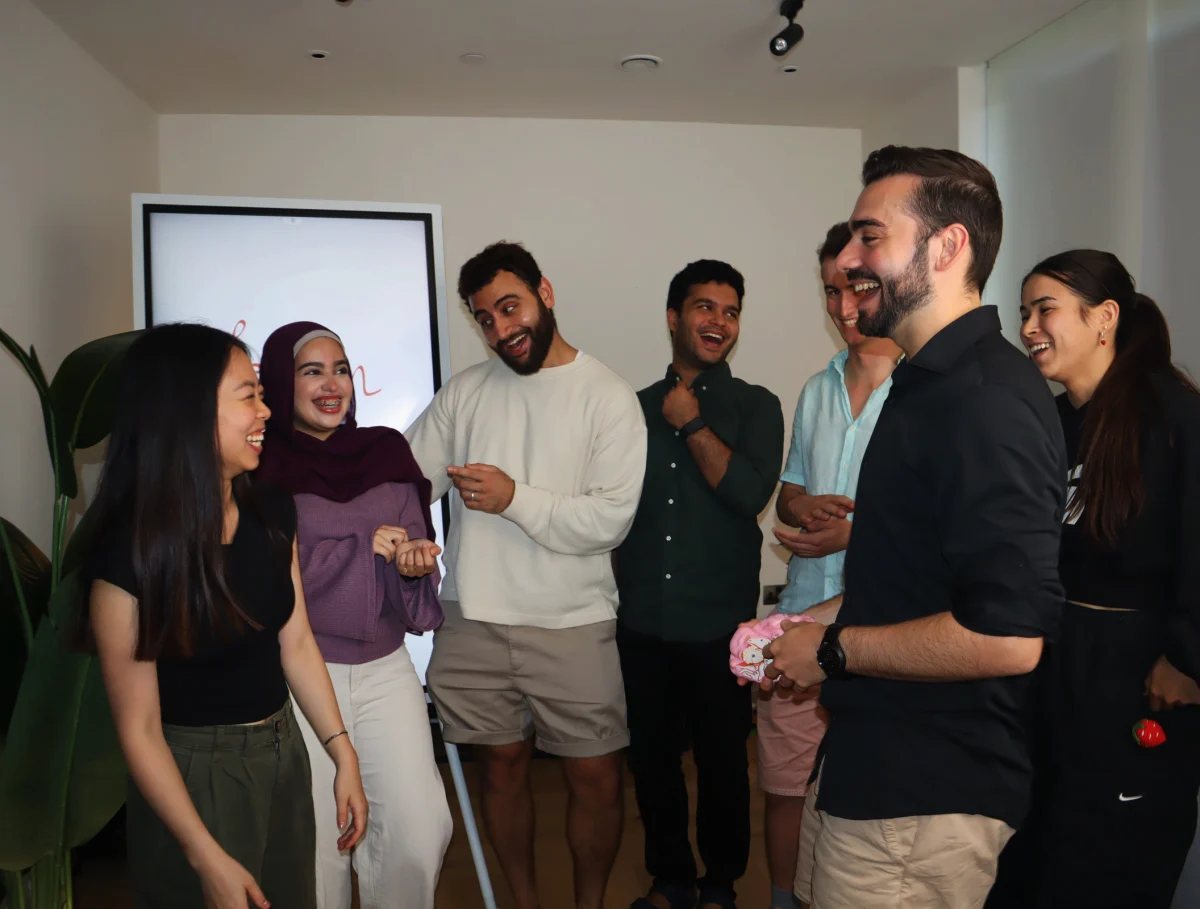
In a quiet corner of East London, a distinctive co-living space known as the London Island Founder House, or simply "Lift House," is challenging the established norms of the global startup ecosystem. Far removed from the frenetic, often unyielding pace synonymous with Silicon Valley’s famed hacker houses, this six-story residence is home to a collective of ambitious twentysomething entrepreneurs who are redefining what it means to build a company. Their guiding principle, as articulated by 26-year-old co-founder Rowan Aldean, is a "holistic improvement in life" – a stark contrast to the singular, all-consuming focus on "12 weeks, Demo Day is coming" that often characterizes their American counterparts.
The concept of the "hacker house" emerged from the heart of Silicon Valley, a natural extension of its high-octane startup culture. Historically, these communal living arrangements, often informal and sometimes even makeshift, served as incubators where young, driven technologists could live, work, and collaborate around the clock. The ethos was one of intense dedication, often glorifying long hours, minimal sleep, and an almost monastic devotion to product development. Stories abound of founders sleeping under desks, subsisting on ramen, and engaging in punishing, multi-day coding sprints, embodying the "996" work culture (9 am to 9 pm, 6 days a week) sometimes associated with intense tech environments. While these environments fostered rapid innovation and tight-knit communities, they also frequently came under scrutiny for promoting burnout, neglecting mental health, and fostering an insular "tech bro" culture.
The Genesis of a Balanced Model
Lift House, which officially opened its doors in March and welcomed Aldean and his wife, Zahraa (a 22-year-old pharmaceutical research PhD candidate), in May, represents a deliberate pivot away from this extreme model. Aldean, who successfully sold his previous company last year for a reported multi-million-dollar sum and now leads an applied AI startup, envisioned a space where professional ambition could coexist with personal well-being. The name "Lift House" itself is dual-layered, referencing both the building’s physical elevator and its mission to "uplift" tech founders in a comprehensive sense.
London, while a burgeoning global tech hub, has historically seen fewer dedicated co-living hacker houses compared to San Francisco, which boasts dozens, if not hundreds, at any given time. This relative scarcity provides Lift House with a unique position to set a new precedent. Its very existence is a wager that British founders can achieve monumental success without emulating the often-exaggerated hustle culture prevalent in certain Silicon Valley circles. Aldean points to the quiet, yet profound, achievements of London-based companies like DeepMind, a world leader in artificial intelligence, noting, "They’ve won Nobel prizes and built frontier innovation without any song and dance." This sentiment encapsulates the "Londonmaxxing" trend, a movement among founders seeking to leverage the capital’s unique advantages for a more balanced, yet equally ambitious, entrepreneurial journey.
London’s Ascendant Tech Scene
The rise of Lift House is set against the backdrop of London’s increasingly vibrant and mature tech ecosystem. Over the past decade, the city has cemented its status as a major global player, attracting significant investment and a diverse talent pool. Its strategic location bridges the time zones between North America and Asia, making it an attractive hub for international business. Sectors like FinTech, cybersecurity, and particularly Artificial Intelligence, have seen exponential growth. In 2026 alone, London AI startups reportedly raised an impressive $12 billion, contributing to a total of $14.7 billion secured by all London startups, according to data from Dealroom. This surge includes significant funding rounds for companies like Wayve, Superintelligence, ElevenLabs, Recursive, and Isomorphic Labs – the latter three notably founded by DeepMind alumni, underscoring the city’s deep expertise in the field.
This robust investment and the presence of world-class talent have instilled a palpable sense of optimism and dynamism within the UK tech scene. It has inspired a new generation of entrepreneurs, including those residing in Lift House, to pursue ambitious ventures, confident in the local infrastructure and support networks. The "Londonmaxxing" philosophy extends beyond mere business optimization; it’s a lifestyle choice, embracing the city’s cultural richness, diverse opportunities, and a more understated approach to success. Founders here seek not just market domination, but a sustainable path to it, integrating personal fulfillment into their professional trajectory.
A Sanctuary for Holistic Development
Life within the Lift House is a carefully curated blend of intense work and intentional self-care. Unlike the rigid, short-term accelerator models, the tenure for residents is flexible, ranging from a month to half a year or more. While groceries are purchased individually, communal cooking and shared meals are frequent occurrences, fostering a sense of camaraderie. Household chores are equitably divided, reinforcing the collective spirit.
The residents champion a balanced approach to ambition, a concept often considered unconventional by traditional San Francisco startup standards. Sundays are dedicated to communal journaling, a practice introduced by David Amor, 28, who leads a brain coaching and training company. This ritual encourages reflection on personal well-being metrics, such as time spent in nature, nutritional intake, and physical activity. Luke, 27, who co-runs an AI-marketing company and requested his last name be withheld, attests to the positive impact: "I’m eating healthier, working out more, and sleeping more. I always make sure to have lunch now, which is something that is simple, but I wasn’t doing before I lived here."
Evenings often feature group activities that prioritize connection and recreation. Tuesday evenings see the founders joining a local league as part of the house volleyball team. On other nights, Wan Ying L, 25, an AI startup alumna developing a new concept, might play the piano in the living room. The group occasionally engages in board games like Catan or explores London’s vibrant art exhibition scene. Presence Plumb, 25, a tech strategist, frequently hosts rooftop dinner parties, showcasing diverse cuisines from Iraqi to Spanish, inviting a mix of founders, researchers, investors, and operators to engage in substantive discussions about technology and investment trends. These gatherings cultivate a network that feels "calmer, balanced, authentic," as Plumb describes it, a deliberate move away from the "startup bro vibe."
Individual work routines vary, yet all residents integrate wellness practices. Amor, for instance, wakes by 8 a.m., dedicates the first part of his day to focused work, then takes a cold shower to boost dopamine levels. Luke and his co-founder, Varun, 27, begin their workday around 9 a.m. after Varun travels to the house for co-working. Aldean himself typically starts later, around 10 a.m., unless a crucial investor call demands an earlier start. The subtle cultural differences are even present in their beverages, with Aldean humorously noting, "Well, we drink tea together like Brits, and in SF folks just drink filtered coffee."
Cultural Nuances: British Ambition vs. Silicon Valley Drive
Beyond the surface-level differences, British founders navigate a unique cultural landscape that shapes their entrepreneurial journey. Aldean highlights a distinct set of pressures compared to their U.S. counterparts. The UK often exhibits a cultural aversion to excessive risk-taking, an inclination towards humility, and a particular shame associated with failure. This is often compounded by what is known as "tall poppy syndrome," a phenomenon where individuals who achieve exceptional success are sometimes resented or criticized, particularly by the media, potentially leading to a reluctance among founders to overtly publicize their wins. This contrasts sharply with the often-celebratory and sometimes self-promotional culture of Silicon Valley.
Despite these cultural specificities, London offers compelling advantages for early-stage founders. Luke praises the robust network, ample opportunities for early-stage capital, and the tangible option for a life beyond the confines of the tech world. The city’s diverse offerings, from founder-run clubs and wellness events to jazz nights, provide a rich tapestry of experiences. Furthermore, government initiatives like the Seed Enterprise Investment Scheme (SEIS) and Enterprise Investment Scheme (EIS) actively incentivize angel investments in local startups, offering significant tax relief to investors. Luke and Varun, for instance, have largely avoided traditional venture capital by leveraging these schemes, noting that "people will pay basically the same rate of tax if they give us the money versus if they pay income tax."
Aldean, recalling his own experiences in Bay Area hacker houses, describes a more cutthroat environment where collaboration was often overshadowed by competition and gossip. He felt a constant underlying anxiety about negative stories spreading, particularly if they could benefit a competitor. In contrast, he perceives the London ecosystem as less adversarial. Moreover, London startups frequently target slow-moving, large corporations rather than exclusively selling to other startups, which can foster a different kind of relationship-building. Varun observes a "relatively fleeting market" in the U.S. for quick wins, whereas in the UK, "it’s hard to close a customer, but if they close, they stay with you longer," suggesting a preference for sustained relationships over rapid, potentially volatile growth.
The Transatlantic Pull: Opportunities and Challenges
Despite the undeniable allure and growing strength of the UK tech ecosystem, the road for many British startups often leads, at least partially, to the United States. While the UK offers access to affordable top talent from world-renowned universities like Oxford and Cambridge, and a convenient time zone for collaboration across Europe, the Middle East, Asia, and parts of North America, the U.S. presents an irresistible draw: the world’s largest economy and an unparalleled density of investors willing to write substantial checks across all funding stages, from pre-seed to growth.
This dynamic creates a "factory line" effect, as Varun describes it: "You start here, and then you expand there or vice versa." The pressure to relocate is not uncommon. Many UK founders recount experiences where prominent U.S. investors explicitly condition funding on a move to America. Luke and Varun’s company has already embarked on its U.S. expansion, and despite their affinity for London, they acknowledge the possibility of relocating to be closer to their American customer base. This transatlantic tension is a defining characteristic of not just the UK’s, but much of Europe’s, tech landscape, as regional ecosystems grapple with retaining talent and capital in the face of immense U.S. opportunities. Presence Plumb notes, "I work with a lot of people trying to support the European ecosystem more," highlighting the collective effort to strengthen the continent’s tech infrastructure.
The Future of Founder Living
While London has yet to see the proliferation of co-living hacker houses found in San Francisco, the concept is gaining traction. Beyond Lift House, short-term gatherings like the Solana Hacker House meet-up series are common. Global co-living networks such as The Residency and BaseJump are also expanding their presence into London, indicating a growing demand for such spaces. However, Lift House differentiates itself significantly from earlier London experiments, such as "The London Founder House," which, though influential in its concept and networking, wound down last year. That house, covered by Sifted under the headline "The people here don’t want work-life balance," focused on intense work and required founders to have raised at least half a million dollars to even be considered.
In contrast, Lift House’s entry criteria are refreshingly human-centric: prospective residents must demonstrate a hobby outside their companies and an interest in fitness. This aligns with the broader "Londonmaxxing" narrative, which promises founders the ability to "have it all" – professional success coupled with a rich, balanced personal life. With about a year left on its current lease, there’s a strong sentiment among residents to continue the Lift House model for as long as possible. Their collective vision, as articulated by Aldean, is to "build something that lasts, not necessarily burn out chasing a flash." It’s a compelling vision for a new generation of entrepreneurs, demonstrating that peak performance can be achieved not through relentless grind, but through intentional balance and holistic well-being.








 Azin Asro