Amir Mahmud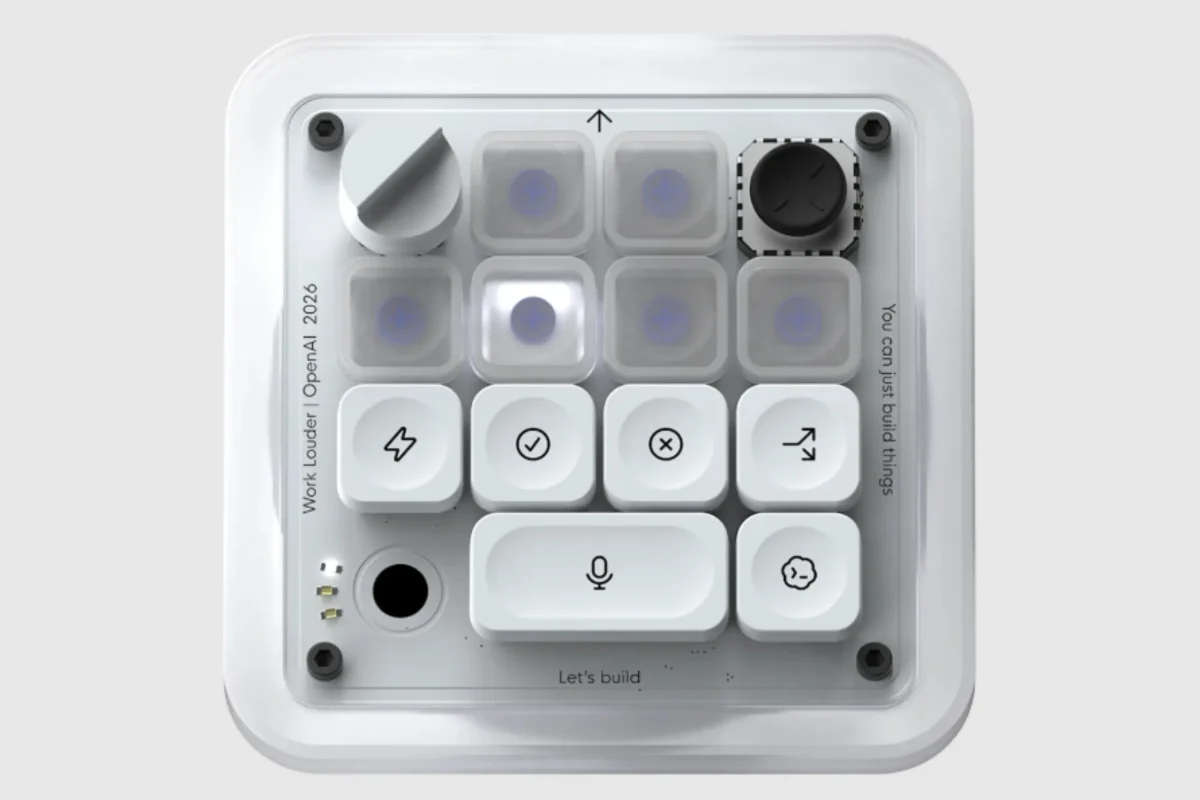
OpenAI, a company primarily known for its groundbreaking artificial intelligence software, recently ventured into the physical product market with its inaugural hardware offering: the Micro keypad. This compact, specialized device, developed in collaboration with bespoke keyboard designer Work Louder, signifies more than just a new peripheral; it suggests a potential strategic shift for the AI giant, eliciting both interest and a degree of confusion. Marketed as an "artisanal workplace novelty," the Micro is engineered to integrate seamlessly with ChatGPT and its agentic coding tool, Codex, aiming to streamline AI interactions for a dedicated segment of tech enthusiasts and professional developers. Its introduction, however, has been anything but quiet, unfolding amidst high-stakes legal challenges and persistent rumors of more ambitious hardware projects on OpenAI’s horizon.
OpenAI’s Strategic Entry into Hardware
The decision by OpenAI to produce a physical input device marks a significant, albeit unexpected, evolution for an organization that has historically focused on large language models and generative AI software. While many tech companies typically expand from hardware into software, or maintain distinct divisions, OpenAI’s inverse trajectory into hardware suggests a deeper strategic intent: to control and optimize the user experience for its powerful AI systems. In an increasingly competitive artificial intelligence landscape, where the core capabilities of AI models are rapidly advancing, the user experience—how individuals interact with and leverage AI—could emerge as the next crucial differentiator.
This strategic move places OpenAI within a nascent but rapidly expanding category of "AI-first" hardware. Recent launches like Humane’s AI Pin and Rabbit’s R1 device have captured headlines by proposing screenless, intuitive interfaces designed to prioritize direct AI interactions over traditional app-based ecosystems. While the Micro keypad presents a far less ambitious scope than a standalone AI device, it reflects a shared philosophy: that the future of human-computer interaction, particularly with sophisticated AI, may necessitate dedicated physical tools tailored to specific AI functionalities. By offering a tactile, programmable interface, OpenAI could be exploring avenues to reduce friction and enhance efficiency for its power users, potentially laying groundwork for more integrated and intuitive AI experiences in the future. The collaboration with Work Louder, a brand recognized for its custom, high-quality mechanical keyboards and macro pads, further underscores a commitment to premium design, aiming to appeal to a discerning market segment that values specialized, well-built peripherals.
Navigating Legal Storms and Future Hardware Visions
The launch of the Micro keypad has coincided with a turbulent period for OpenAI, adding layers of complexity to its public narrative. Weeks before the device’s unveiling, the company became embroiled in a high-profile lawsuit initiated by Apple, a formidable presence in both hardware and software. Apple’s complaint alleges trade secret theft, a charge that has sent ripples throughout the technology sector. The specifics of the lawsuit reportedly pertain to intellectual property related to AI development and integration, setting the stage for what legal analysts anticipate will be a prolonged and intensely scrutinized legal battle. This litigation not only casts a shadow over OpenAI’s current endeavors but also underscores the escalating competition and intellectual property disputes inherent in the rapidly advancing AI industry.
Adding another layer of intrigue, reports surfaced regarding OpenAI’s development of a separate, more ambitious smart home product: a screenless speaker designed for deep integration with ChatGPT. What made these rumors particularly noteworthy was the revelation that this supposed device was being engineered by a team comprising former Apple engineers. This detail immediately fueled speculation, given Apple’s extensive expertise in smart home technology with its HomePod line and its stringent intellectual property protections. The confluence of a lawsuit from Apple and the recruitment of its former talent for a competing hardware project paints a complex picture of OpenAI’s strategic maneuvering and its audacious expansion plans. These developments suggest that the Micro keypad, while significant as the company’s initial hardware offering, might merely be a precursor to a much broader, more integrated ecosystem of AI-powered devices envisioned by OpenAI. This strategy could aim to solidify OpenAI’s position not only as a leading AI model provider but also as a purveyor of the complete AI experience, from foundational models to user-facing hardware.
Micro’s Design and Functional Blueprint
Upon initial inspection, the Micro keypad presents itself as a robust and thoughtfully constructed device, offering a tangible contrast to the intangible nature of software. Reviewers have consistently highlighted its substantial weight and sturdy build quality, conveying a premium feel despite its compact dimensions. The packaging itself, a minimalist white box with clean lines, has drawn comparisons to Apple’s iconic product presentation—an observation not lost on industry watchers given the ongoing legal battles. Whether this aesthetic choice is a subtle nod, a market strategy to evoke a sense of familiarity and quality, or simply coincidental, it contributes significantly to the product’s overall impression.
The core functionality of the Micro revolves around its intuitive, programmable layout. The device features twelve distinct keys, divided into two primary sections. At the top, six "agent" keys are fully customizable, allowing users to assign specific ChatGPT sessions or functions within OpenAI’s