Amir Mahmud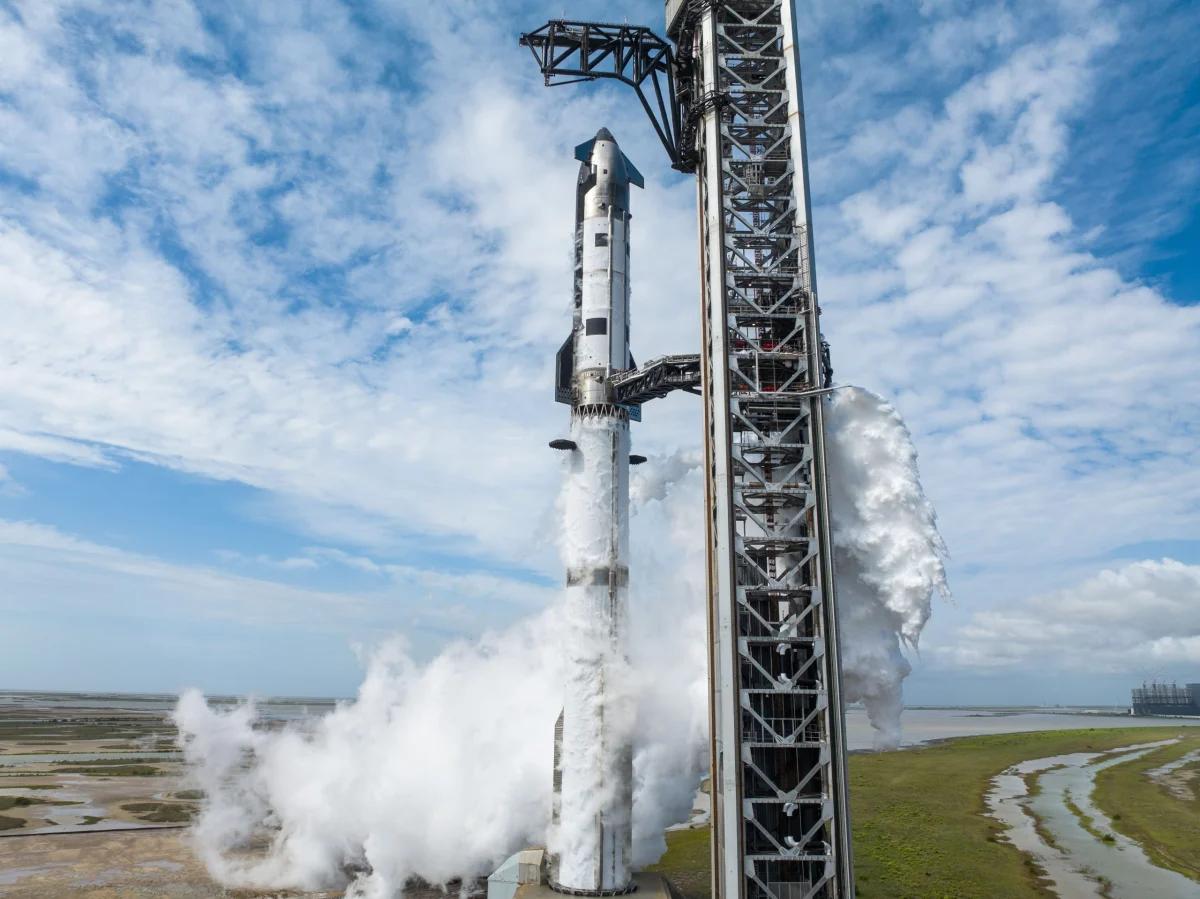
The Federal Aviation Administration (FAA) has granted its clearance for SpaceX to proceed with the next orbital flight test of its colossal Starship rocket system. This pivotal approval follows a thorough investigation into the Super Heavy booster failure that occurred during Starship’s previous integrated flight in May, with SpaceX identifying and addressing the probable causes. The aerospace firm indicated over the weekend that the launch window for this highly anticipated mission could open as early as this Thursday, July 16, marking only the second integrated test of the third iteration, or V3, of the Starship system. Significantly, this flight is slated to carry the inaugural batch of third-generation Starlink internet satellites into orbit, a crucial step beyond the dummy payloads flown previously.
The Genesis of a Martian Dream: Starship’s Ambitious Vision
Starship represents SpaceX’s audacious vision for a fully reusable, super heavy-lift launch system designed to ferry humans and cargo to the Moon, Mars, and beyond. Conceived as a two-stage vehicle, it comprises the Starship upper stage, which doubles as a spacecraft, and the Super Heavy booster, both powered by SpaceX’s cutting-edge Raptor engines. Standing at an imposing 407 feet when stacked, Starship is the tallest and most powerful rocket ever built, a testament to engineering ambition aimed at revolutionizing space travel by dramatically reducing the cost per launch through complete and rapid reusability. The program has been a cornerstone of CEO Elon Musk’s long-term aspirations for humanity to become a multi-planetary species, driving a development philosophy often characterized by rapid iteration, testing, and learning from failures—a process Musk himself famously refers to as "rapid unscheduled disassembly" rather than explosions.
The development journey of Starship has been a spectacle, unfolding over several years at SpaceX’s Starbase facility near Boca Chica, Texas. Early prototypes, such as Starhopper, demonstrated key technologies like vertical take-off and landing. Subsequent Starship prototypes (SN series) conducted high-altitude test flights, often culminating in fiery landings or explosions, yet each provided invaluable data. These tests paved the way for the fully integrated Starship and Super Heavy stack, which first attempted an orbital flight in April of the previous year. That initial attempt, while providing critical data, ended prematurely with the vehicle failing to stage properly and subsequently undergoing a controlled detonation. The May flight, therefore, represented a significant step forward, demonstrating crucial milestones despite its ultimate booster anomaly.
Navigating Regulatory Waters: The FAA’s Critical Role
The FAA plays a vital role in ensuring the safety of commercial space launches, issuing licenses and overseeing investigations into anomalies. This regulatory oversight is critical for protecting public safety, property, and the environment. Following any launch mishap, the FAA mandates a thorough investigation to determine the root cause and ensure that corrective actions are implemented before subsequent launches can proceed. This process, while sometimes perceived as slowing down development, is a fundamental pillar of responsible aerospace engineering, especially for a system as powerful and experimental as Starship.
The clearance granted to SpaceX signifies that the FAA has reviewed and accepted the company’s findings regarding the May booster failure and its proposed corrective measures. This rigorous process underscores the balance between fostering innovation in the burgeoning commercial space sector and upholding stringent safety standards. For SpaceX, securing this approval is not merely a procedural step but a validation of its engineering prowess and its commitment to learning from setbacks, allowing it to continue pushing the boundaries of space exploration.
Dissecting the May Flight Anomaly
The previous Starship integrated flight test on May 22 achieved several significant milestones before encountering an issue with its Super Heavy booster. The massive rocket successfully lifted off from Starbase, its 33 Raptor engines generating immense thrust to propel the 407-foot vehicle skyward. The flight progressed through max-Q (maximum aerodynamic pressure), a critical phase, and successfully executed the hot-staging maneuver—a complex procedure where the Starship upper stage ignites its engines while still attached to the booster, a technique designed for increased efficiency. The upper stage then continued its trajectory, deploying 20 satellite simulators along with two modified Starlink units equipped with cameras to capture external footage, and even simulated a landing in the Gulf of Mexico, a key objective that had previously proven challenging.
However, the Super Heavy booster, which was intended to perform a controlled descent and simulated landing in the Gulf, experienced an anomaly. Instead of its engines properly re-igniting for the landing burn, the booster plummeted into the water. According to investigations by both SpaceX and the FAA, the problem originated during the booster separation phase. SpaceX attributed the issue to "slight differences in engine startup on the ship," which caused the booster to unexpectedly rotate 90 degrees off its intended axis. The FAA’s independent assessment corroborated these findings, additionally citing "heat effects on propulsion system components during the [rocket’s] ascent and erroneous engine alarm system settings" as probable root causes. Furthermore, the Starship upper stage, while largely successful in its mission objectives, lost one of its three vacuum-optimized Raptor engines during its flight, highlighting another area for improvement.
Engineering Solutions and Forward Steps
In response to the detailed findings from the May flight investigation, SpaceX has implemented a series of hardware and operational modifications designed to prevent similar failures in the future. To address the booster’s unexpected rotation, the company revised the engine startup sequence, aiming to enable the Super Heavy to "more reliably flip in the desired direction" during separation. Enhancements were also made to "improve re-light reliability" for the booster’s landing burn.
Regarding the FAA’s identified issues, SpaceX confirmed modifications to Starship’s engine alarm and abort systems, intending to mitigate the risk posed by erroneous settings and heat-induced component degradation. For the Starship upper stage, which lost an engine, SpaceX stated that "several hardware and operational modifications" have been enacted to ensure all engines function optimally throughout the flight. These iterative improvements are central to SpaceX’s development philosophy, where each test flight, regardless of outcome, provides critical data for refining the design and operational procedures. This "build-test-learn" cycle is a departure from traditional, more conservative aerospace development, aiming for faster progress in exchange for higher-frequency, publicly visible test failures.
Starship’s Critical Role in SpaceX’s Vision
The upcoming flight test holds immense strategic importance for SpaceX, particularly concerning the deployment of its Starlink V3 satellites. Starlink, SpaceX’s rapidly expanding satellite internet constellation, has emerged as a cornerstone of the company’s financial health. In the period leading up to SpaceX’s highly anticipated initial public offering (IPO) on the Nasdaq Stock Exchange on June 12, Starlink was reportedly the only consistently profitable segment of the business. This IPO, which raised nearly $86 billion and briefly positioned SpaceX among the world’s ten most valuable companies, underscored investor confidence in its long-term vision, even as it embraced a "fly, fail, fix" development model that can lead to dramatic, if controlled, mishaps.
The third-generation Starlink satellites are designed to significantly enhance the network’s capacity and user speeds. SpaceX plans to deploy 20 of these advanced satellites during the upcoming launch. These V3 units feature enhanced capabilities, including high-capacity laser links that allow them to communicate directly with other satellites in the constellation, reducing reliance on ground stations and improving latency, especially over oceans and remote areas. Following their deployment, these satellites are designed to de-orbit and burn up harmlessly in the atmosphere approximately 20 minutes later, ensuring minimal space debris. A subset of six satellites will also be equipped with external cameras to capture additional footage of the Starship’s performance. The successful deployment of these V3 satellites by Starship is crucial for Starlink’s continued growth and its competitive edge in the global satellite internet market.
The Broader Commercial Space Landscape
Starship’s successful development and operationalization are not only vital for SpaceX’s internal goals but also for the broader commercial space industry and global space exploration efforts. Its unprecedented payload capacity and target for full reusability promise to drastically lower the cost of sending mass to orbit, potentially enabling a new era of space-based industries, from manufacturing and energy generation to advanced scientific research.
Furthermore, Starship is central to NASA’s Artemis program, specifically as the Human Landing System (HLS) for returning astronauts to the lunar surface. SpaceX secured a multi-billion dollar contract with NASA to adapt Starship for lunar landings, emphasizing its critical role in the nation’s return to the Moon. Beyond lunar missions, the vehicle’s ultimate purpose remains the establishment of a sustainable human presence on Mars, a goal that could fundamentally alter humanity’s long-term trajectory.
The public listing of SpaceX also introduces a new dynamic, exposing its ambitious, high-risk development cycles to the scrutiny of public markets. While the company’s "fly, fail, fix" approach has been effective in accelerating development, it now operates under the watchful eyes of investors accustomed to more predictable returns. Balancing this aggressive innovation with market expectations and regulatory requirements will be a key challenge for SpaceX as it continues to pursue its transformative objectives.
As the launch window approaches, the world watches with anticipation. This next Starship flight is more than just another test; it is a critical step in a journey that seeks to redefine humanity’s relationship with space, offering a glimpse into a future where interplanetary travel and widespread space access are not just dreams, but tangible possibilities.