Amir Mahmud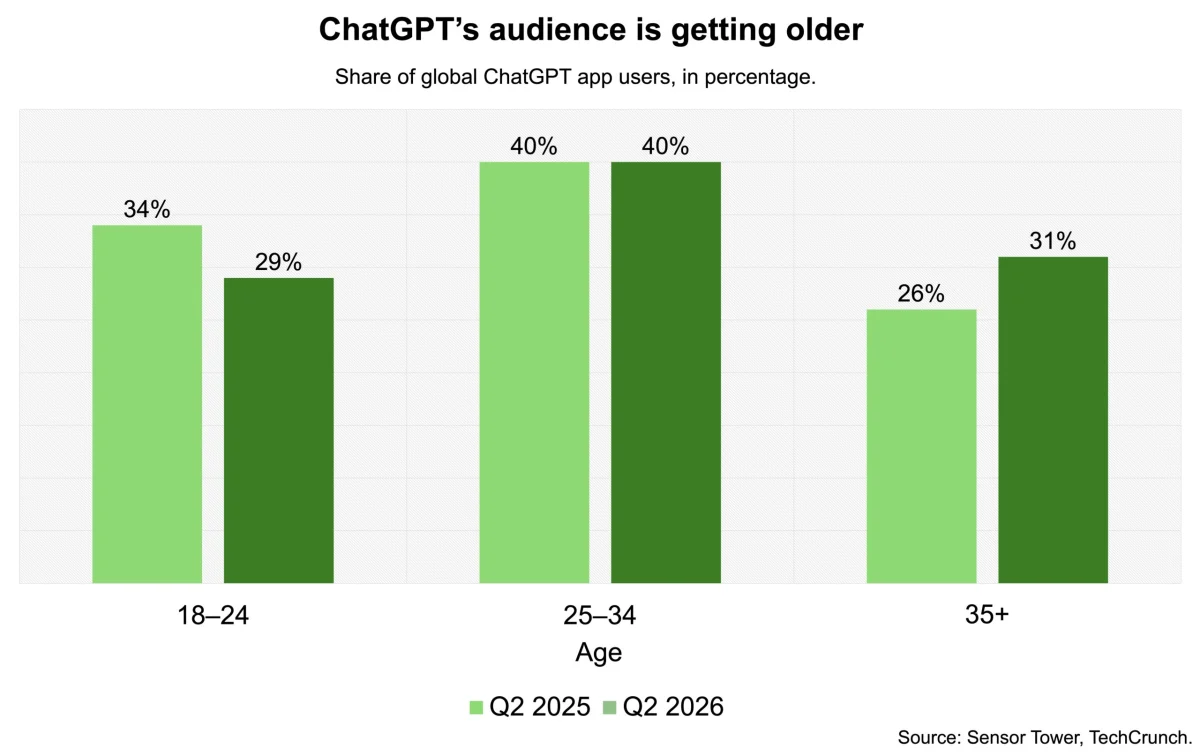
More than three years following the public debut of ChatGPT, an event that propelled generative artificial intelligence into global consciousness, OpenAI is significantly reorienting its strategic focus. The company, initially known for catering to individual users and developers, is now actively pursuing the integration of its advanced AI capabilities directly into the fabric of household life, targeting families, caregivers, and older adults. This strategic shift is underscored by a recent job posting for a dedicated product manager in San Francisco, tasked specifically with developing consumer experiences tailored for these demographic segments. The role explicitly seeks candidates with a proven track record in building products for parents and families, as well as navigating other consumer experiences where trust and safety are paramount.
The Dawn of Household AI
The advent of ChatGPT in late 2022 marked a pivotal moment in the history of artificial intelligence, democratizing access to powerful language models that could generate human-like text, answer complex questions, and even assist with creative tasks. Its rapid adoption by millions of users worldwide heralded a new era of AI interaction, moving the technology from specialized labs into everyday applications. However, the initial design and marketing of these tools predominantly centered on individual productivity, creative assistance, or information retrieval for tech-savvy early adopters.
As AI models have grown more sophisticated and their capabilities more widely understood, the demographic profile of their users has begun to evolve dramatically. This natural progression mirrors the lifecycle of other transformative technologies, such as the internet and smartphones, which initially captivated niche audiences before gradually permeating all aspects of society, including family units. Early internet services focused on individual access, but eventually, family plans, shared devices, and household-specific applications became standard. Similarly, smartphones, once personal gadgets, now facilitate family communication, shared calendars, and parental controls. OpenAI’s current trajectory suggests a deliberate attempt to shepherd generative AI through a similar evolutionary path, envisioning its tools as indispensable components of the modern household.
Evolving Demographics and Strategic Expansion
The move by OpenAI is not merely a proactive diversification strategy; it is a direct response to tangible shifts in its user base. Data indicates a broadening appeal for ChatGPT beyond its initial cohort of younger, tech-forward individuals. According to exclusive estimates from Sensor Tower, a prominent analytics firm, the global share of ChatGPT users aged 35 and older witnessed a notable increase, climbing from 26% to 31% in the second quarter compared to the previous year. Concurrently, the proportion of users aged 18 to 24 experienced a decline, dropping from 34% to 29%.
Within the United States, the adoption among parents on smartphones demonstrates an even more pronounced trend. Nearly one in four smartphone users who are parents reportedly engaged with ChatGPT during the quarter, a significant rise from 16% just a year prior. These statistics illuminate a clear demographic migration, suggesting that AI is no longer solely a tool for early adopters or younger generations but is increasingly becoming relevant to older adults and those managing family responsibilities.
Industry experts interpret this product manager hiring as a significant harbinger of future developments. Ben Bajarin, chief executive of the technology consultancy Creative Strategies, notes that this signals a fundamental shift in how OpenAI perceives its products. Rather than solely as individual productivity enhancers, the company appears to be positioning its offerings as integrated household technologies. Bajarin draws parallels to the developmental paths of tech giants like Google, Apple, and Meta, whose platforms eventually became deeply embedded in daily family life. However, he emphasizes that AI introduces a new layer of complexity and responsibility, primarily because an AI assistant acts not merely as a mediator of content or devices but as an interactive, often conversational, entity within the home environment.
The Imperative of Trust and Safety
This expansion into the household sphere, particularly involving children and vulnerable adults, inevitably amplifies the existing challenges surrounding trust, privacy, and safety. The unique nature of generative AI, with its capacity for open-ended conversation and content creation, demands a heightened level of scrutiny and careful design. Stephen Balkam, chief executive of the Family Online Safety Institute (FOSI), views OpenAI’s new hiring initiative as a reflection of both the company’s maturation and a growing, crucial acknowledgment that AI products used by minors and teenagers necessitate fundamentally different safeguards compared to those designed exclusively for adults.
Balkam describes this approach as "safety by redesign," implying a conscious effort to integrate protective measures into the core product architecture, rather than tacking them on as afterthoughts. This perspective is particularly pertinent given recent research published by FOSI, which revealed a significant disconnect between parents’ perceptions and their children’s actual engagement with generative AI. The study, encompassing over 4,000 families in the U.S. and Australia, found that while 27% of U.S. parents believed their child had used generative AI in the past week, a considerably higher 38% of children confirmed doing so themselves. This data highlights a critical information gap and underscores the urgent need for AI tools to be designed with a clearer understanding of their varied user base, including young people whose digital activities may not always be fully transparent to their guardians.
Designing for Diverse Age Groups: Challenges and Solutions
The integration of AI into family life brings a unique set of design and ethical considerations. For younger users, the risks associated with exposure to inappropriate content, privacy breaches, and the potential for developing an over-reliance on AI for critical thinking are significant. Additionally, the challenge of distinguishing between AI-generated content and human interaction, as well as the potential for AI models to "hallucinate" or provide inaccurate information, necessitates robust safeguards.
Balkam advocates for a multi-faceted approach to product development for younger users. This includes implementing stronger content controls that are dynamically adaptable to different age groups, creating age-appropriate experiences that align with cognitive development stages, and providing robust parental oversight tools that empower guardians to monitor and manage their children’s AI interactions. Crucially, he also stresses the importance of clear and consistent reminders to users that they are interacting with an artificial intelligence, not a human being, to prevent potential misperceptions or emotional manipulation.
OpenAI has already begun to implement various safety measures in response to mounting public concern and legal scrutiny. The company has faced multiple lawsuits from parents alleging that ChatGPT contributed to harm suffered by their children, including in tragic cases involving suicide. In light of these grave concerns, OpenAI has rolled out several features over the past year. These include the introduction of parental controls specifically for teen accounts, a system for routing sensitive conversations to more advanced reasoning models designed to better identify and handle signs of distress, and, more recently, an optional "Trusted Contact" feature. This latter innovation allows users to designate a family member or caregiver who can be alerted in instances where the AI detects potential self-harm ideation, offering a proactive layer of support.
Learning from the Past: Social Media’s Cautionary Tale
The evolution of generative AI and its increasing presence in family life offers a critical opportunity for technology companies to learn from the missteps of previous digital platforms. Stephen Balkam specifically points to the trajectory of social media companies, which for many years treated child and teen users much like adults, only belatedly implementing stronger safeguards under intense public pressure and regulatory mandates. The AI industry has a chance to proactively integrate safety-by-design principles, avoiding the reactive cycle that characterized the early days of social media.
This proactive stance is not just about mitigating risks; it’s also about fostering responsible innovation. By building in robust protections from the outset, AI companies can cultivate trust with families and caregivers, which is essential for long-term adoption and positive societal impact. The potential benefits of AI in a family context — such as personalized learning, assistance with elder care, schedule management, or even creative collaboration — can only be fully realized if users feel secure and protected.
The Broader Vision and Competitive Edge
OpenAI’s focus on families extends beyond product features; it’s part of a broader community engagement strategy. The company recently partnered with the San Antonio Spurs Community Impact organization and the Positive Coaching Alliance to conduct a workshop exploring AI’s potential role in learning, coaching, and youth engagement. Such initiatives signal a commitment to understanding and shaping the positive applications of AI within family and community structures.
The demographic shift observed in ChatGPT’s user base is also playing out across the broader generative AI landscape, though with distinct nuances. While users aged 25 to 34 constitute around 40% of the global app audiences for Anthropic’s Claude and Google’s Gemini, matching ChatGPT’s proportion in this segment, Microsoft’s Copilot shows a slightly older skew, with 20% of its users aged 45 and above, compared to 14% for Claude, 12% for Gemini, and 11% for ChatGPT.
Interestingly, despite being relatively less penetrated among older users initially, ChatGPT is demonstrating a faster rate of adoption within this demographic. The share of users aged 45 and above for ChatGPT increased by three percentage points year-over-year in the second quarter, outperforming Copilot’s two-point increase, and contrasting with declines observed for Claude and Gemini in the same period. Among U.S. smartphone users who are parents, Gemini currently holds the widest reach at 32% in Q2, followed by ChatGPT at 24%, Claude at 4%, and Copilot at 2%. This competitive landscape suggests that the race to capture the family market is heating up, and OpenAI’s dedicated effort could be a significant differentiator.
The Future of Family-Integrated AI
Ben Bajarin’s insights underscore the transformative potential of this strategic direction. He anticipates that as AI becomes a technology shared across generations within households, companies will begin to roll out a suite of family-oriented features. These could include multi-user family plans, customizable child and teen profiles with granular access controls, specialized tools for caregivers, shared household memory features that allow AI to recall family preferences and routines, and advanced AI tutoring capabilities for personalized education. Above all, a continued emphasis on stronger safety controls will be paramount.
The shift towards family-centric AI represents a significant evolution in the development and deployment of generative artificial intelligence. It acknowledges the technology’s profound potential to enhance daily life within households, while simultaneously confronting the complex ethical and safety challenges inherent in integrating powerful AI systems into the intimate spaces of family interaction. By proactively addressing these considerations through dedicated product development and robust safety measures, OpenAI aims not just to expand its market reach, but to responsibly shape the future of AI as a beneficial and trusted presence in homes worldwide.