Amir Mahmud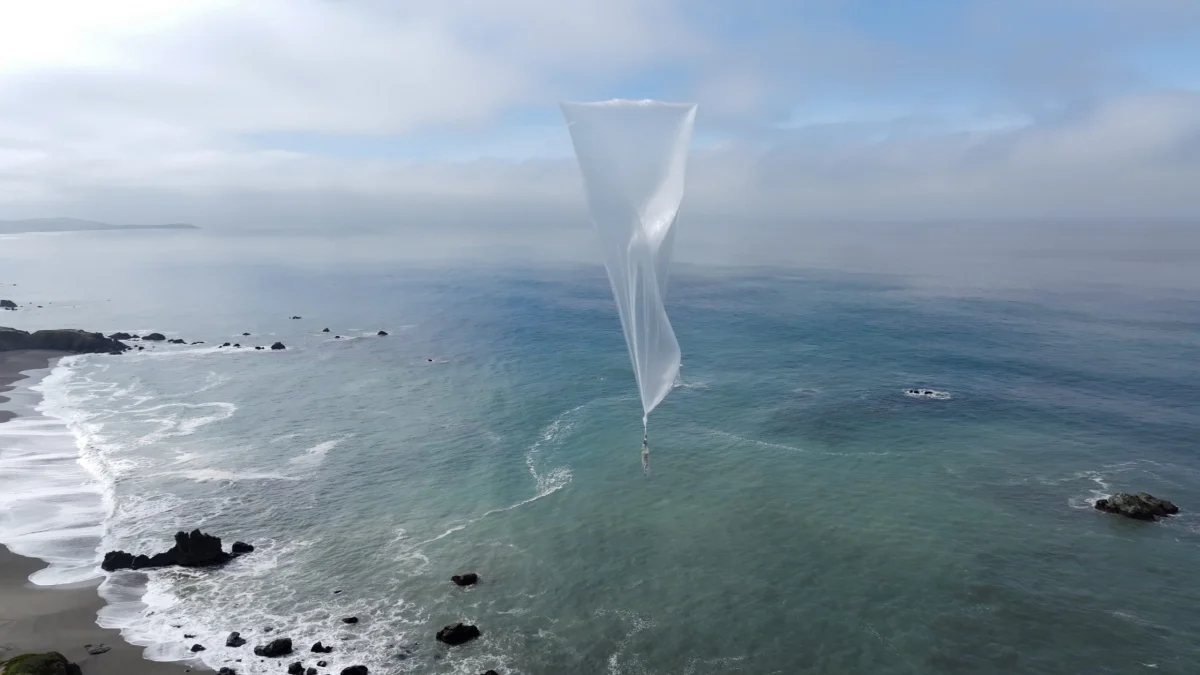
A burgeoning artificial intelligence startup, Windborne Systems, is making significant waves in the meteorological community, claiming its newly released AI-powered weather forecasting tool, WeatherMesh 6, delivers more frequent and accurate predictions than even the world-leading systems developed by European government agencies. This assertion marks a potential paradigm shift in a field traditionally dominated by massive intergovernmental organizations and national meteorological services, largely driven by innovative advancements in how sensor readings are processed and integrated into sophisticated deep learning models.
The Genesis of a Meteorological Innovator
Windborne Systems traces its origins to a group of forward-thinking Stanford students in 2019. Their initial vision was not to build a forecasting model, but rather to revolutionize data collection itself. They embarked on developing advanced weather balloons, intending to gather and sell high-quality atmospheric data. This early focus on proprietary data acquisition proved to be a prescient move, laying the groundwork for their future success.
The landscape of weather prediction began to shift dramatically around 2022 with the emergence of powerful deep learning models specifically tailored for atmospheric science. Recognizing this burgeoning trend and the immense value proposition, the Windborne team pivoted strategically. They realized that merely selling data was a precursor; the greater opportunity lay in leveraging their unique data streams to build their own proprietary forecasting model. This pivotal decision led to the development of WeatherMesh, and its sixth iteration, released recently, represents a culmination of their innovative approach.
WeatherMesh 6: Redefining Forecasting Benchmarks
The official unveiling of WeatherMesh 6 positions Windborne Systems as a formidable challenger to established giants. The company asserts that this latest version of its model surpasses both the traditional physics-based and newer AI-driven forecasts produced by the European Centre for Medium-Range Weather Forecasting (ECMWF). The ECMWF, an independent intergovernmental organization supported by 35 European states, has long been regarded by meteorologists globally as the gold standard for accurate medium-range weather prediction, setting a high bar for any newcomer.
Windborne Systems highlights several key performance indicators where WeatherMesh 6 demonstrates superior accuracy across various variables. Kai Marshland, Windborne’s chief product officer, articulated the improvement succinctly: WeatherMesh 6 achieves an accuracy level five days into the future that is comparable to what a traditional forecast provides just one day ahead, particularly regarding surface temperature measurements. This represents a substantial leap in predictive capability, extending the horizon of reliable short-to-medium-range forecasts.
Beyond accuracy, the new model also boasts significantly enhanced frequency and resolution. Traditional numerical weather prediction (NWP) models typically generate forecasts every six hours. In stark contrast, WeatherMesh 6 produces a comprehensive forecast every hour, offering a much more dynamic and up-to-the-minute understanding of atmospheric conditions. Furthermore, its spatial resolution has been refined to an impressive 3 kilometers in critical regions such as Europe and the continental United States, areas where the density and quality of observational data are highest, allowing for more localized and precise predictions.
The Science Behind the Forecasts: Traditional vs. AI
Understanding the significance of Windborne’s achievement requires a brief delve into the methodologies underpinning modern weather forecasting.
Traditional Physics-Based Models: For decades, the backbone of global weather prediction has been complex physics-based models, known as Numerical Weather Prediction (NWP). These systems rely on intricate mathematical equations simulating atmospheric processes like fluid dynamics and thermodynamics on a three-dimensional grid. Running NWP models demands immense computational power, often requiring expensive supercomputers. This computational intensity limits forecast frequency and spatial resolution across vast areas, despite their robustness and explainability