Amir Mahmud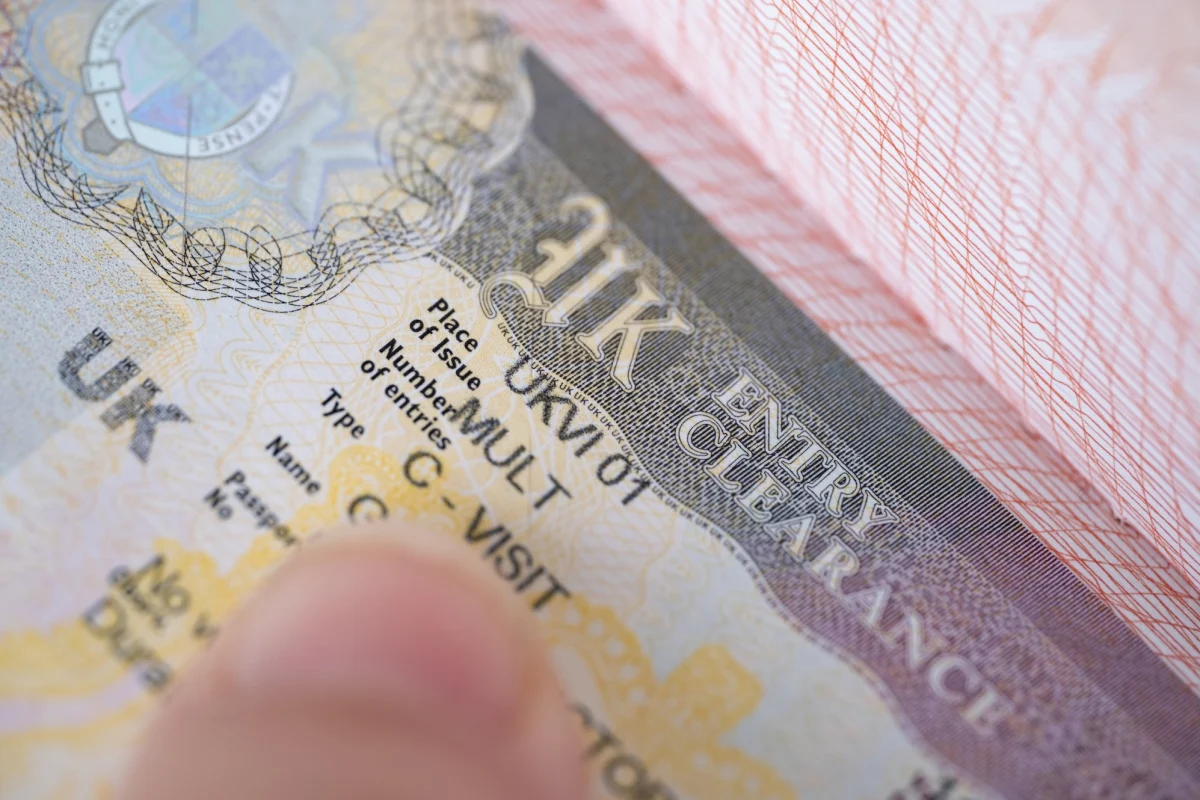
A significant security vulnerability has left an estimated 100,000 sensitive documents, including passports and selfie photographs, belonging to individuals applying for UK immigration visas, publicly accessible online. The data exposure stems from a website operating under the name "UK Visa Portal," a private entity that operates independently of the official UK government. This incident underscores the precarious nature of entrusting highly personal information to third-party services, particularly when official channels are available and recommended.
The Breach Uncovered
The alarming data leak came to light following a notification to technology news outlet TechCrunch from an anonymous source. Upon investigation, TechCrunch was able to independently confirm the authenticity of the exposed data, reaching out to affected individuals to verify the accuracy of their compromised information. The vulnerability exposed a trove of personal identifiers, with passport scans containing full names, dates of birth, nationalities, passport numbers, and other identifying details. The inclusion of "selfie photos," often used for biometric verification in modern visa application processes, further compounds the risk, potentially enabling sophisticated identity theft and fraud schemes. Despite being alerted to the ongoing security lapse, the UK Visa Portal has reportedly not taken steps to rectify the issue, leaving applicants’ confidential data vulnerable.
Understanding the "UK Visa Portal"
The "UK Visa Portal" website, which is the source of this data breach, is not officially affiliated with His Majesty’s Government or any of its departments, including the Home Office or UK Visas and Immigration (UKVI). This distinction is crucial, as many applicants, particularly those less familiar with digital application processes or navigating complex international regulations, may mistakenly believe they are interacting with an official government service. Online forums and communities dedicated to UK immigration reveal instances where individuals have expressed confusion, having paid fees to this third-party company under the impression they were dealing directly with the government, only to later discover the official GOV.UK website.
The proliferation of such third-party services is a growing concern across various governmental processes, from visa applications to tax filings. While some reputable immigration law firms and agencies offer legitimate assistance, these often make their affiliation and services transparent. Unofficial portals, like the UK Visa Portal in question, often mimic the appearance or branding of official sites, sometimes charging additional fees for services that are either free or available at a lower cost directly from the government. The lack of clear contact information for management or a dedicated channel for reporting security issues on the UK Visa Portal’s website further exacerbates the problem, hindering prompt resolution of critical vulnerabilities.
The Peril of Personal Data Exposure
The type of data exposed in this breach—passports and selfies—represents some of the most sensitive personal information an individual possesses. A passport is a cornerstone document for identity, containing a wealth of details that can be leveraged by malicious actors. With this information, criminals can engage in various forms of identity theft, opening fraudulent bank accounts, applying for loans or credit cards, or even creating synthetic identities for more elaborate scams. The selfie photos, often used for facial recognition and biometric verification, add another layer of risk. In an increasingly digital world where many services rely on visual authentication, these images could potentially be used for impersonation or to bypass security measures.
Beyond direct financial fraud, the exposure of such data can lead to targeted phishing attacks, where criminals use the leaked information to craft highly convincing emails or messages designed to extract further sensitive details or install malware. The psychological impact on affected individuals cannot be understated; the knowledge that their core identity documents are circulating online can cause significant stress, anxiety, and a prolonged sense of vulnerability, often requiring substantial time and effort to monitor for and mitigate potential fraud.
Regulatory Frameworks and Accountability
In the United Kingdom, data protection is governed by stringent regulations, primarily the UK General Data Protection Regulation (UK GDPR) and the Data Protection Act 2018. These laws impose significant obligations on any organization that collects, processes, or stores personal data of individuals within the UK or offers services to them. Key principles include ensuring data security, transparency in data handling, and accountability for data breaches.
The Information Commissioner’s Office (ICO) is the independent authority responsible for upholding information rights in the public interest in the UK. When a data breach occurs, organizations are typically required to report it to the ICO within 72 hours if it poses a risk to individuals’ rights and freedoms. Failure to comply with data protection regulations can result in substantial fines, potentially reaching millions of pounds or a percentage of global annual turnover, depending on the severity and nature of the infringement. Even though the UK Visa Portal is a private entity, it is still subject to these regulations if it processes the personal data of individuals in the UK or those applying for services relevant to the UK. The ongoing nature of the leak and the reported difficulties in contacting the company’s management raise serious questions about its adherence to these fundamental data protection principles and its overall accountability.
The Broader Landscape of Third-Party Services
The existence of the UK Visa Portal and similar entities highlights a broader challenge in the digital age: how individuals navigate official government processes online. For many, particularly those from non-English speaking backgrounds or those unfamiliar with complex bureaucratic procedures, third-party services can appear to offer a convenient, simplified pathway. However, this convenience often comes at a cost, not just in terms of inflated service fees, but also in heightened security risks.
The UK government itself has been progressively modernizing its immigration system, including the phased introduction of the Electronic Travel Authorization (ETA) scheme. This new system, which will eventually require non-visa nationals to obtain permission before traveling to the UK, aims to streamline entry but also introduces new digital touchpoints that could be confusing. Unofficial websites often capitalize on such changes, creating a landscape where distinguishing between legitimate and misleading platforms becomes increasingly difficult for the average user. This incident serves as a stark reminder of the critical importance of digital literacy and due diligence when engaging with online services that handle sensitive personal data, especially those related to international travel and immigration.
Impact on Individuals and Public Trust
For the tens of thousands of individuals whose passport and selfie data has been exposed, the immediate impact is a profound sense of vulnerability. Beyond the immediate threat of identity theft, there is the potential for long-term monitoring of credit reports, identity protection services, and the ongoing stress of knowing their personal details are in unknown hands. The incident also erodes public trust, not only in the specific third-party service but potentially in online application processes generally, and inadvertently, in the perceived security of official government systems.
The societal impact extends to the immigration ecosystem itself. If applicants become wary of online processes due to security concerns, it could inadvertently complicate and slow down legitimate applications, or force more individuals back to potentially less efficient paper-based methods. This runs counter to the global trend of digitalizing public services for efficiency and accessibility.
Navigating Visa Applications Safely
In light of this incident, it is imperative for individuals seeking UK visas or any other government-related service to exercise extreme caution. The fundamental advice remains: always use the official government website. For UK visas and immigration, this is GOV.UK (www.gov.uk). Official government websites typically use a ".gov.uk" domain in the UK, or ".gov" in the United States. These domains are exclusive to government entities and are a strong indicator of legitimacy.
Applicants should be wary of websites that appear similar but have different domain extensions (e.g., .com, .org, .net), or those that advertise heavily through search engines, sometimes appearing above official government links. It is advisable to manually type in the known official URL or access it through trusted government portals rather than clicking on potentially misleading advertisements or search results. Furthermore, official government visa applications typically do not require applicants to use third-party portals unless they are specifically retaining the services of a registered immigration attorney, who would operate under their own professional regulations and clearly defined services.
Ongoing Concerns and Future Implications
As of the latest reports, the security lapse at the UK Visa Portal remains unfixed, highlighting a critical challenge in cybersecurity: the difficulty of compelling unresponsive entities to address vulnerabilities. TechCrunch’s repeated attempts to contact the company’s management directly, bypassing general customer support due to the sensitivity of the data, proved unsuccessful, with communications routed through purported attorneys and PR firms without resolution. This scenario underscores the need for clearer mechanisms for security researchers and the public to report vulnerabilities, and for swifter action from organizations entrusted with sensitive data.
The incident serves as a stark reminder for both individuals and regulators about the ongoing threats posed by data breaches, particularly from less transparent third-party providers. It reinforces the necessity for robust data protection practices, rigorous oversight, and continuous public education on how to safely navigate the increasingly complex digital landscape of international travel and immigration. Without immediate remediation, the thousands of individuals affected by this leak face an indeterminate period of heightened risk, a troubling prospect in an era where personal data is an increasingly valuable, and vulnerable, commodity.