Amir Mahmud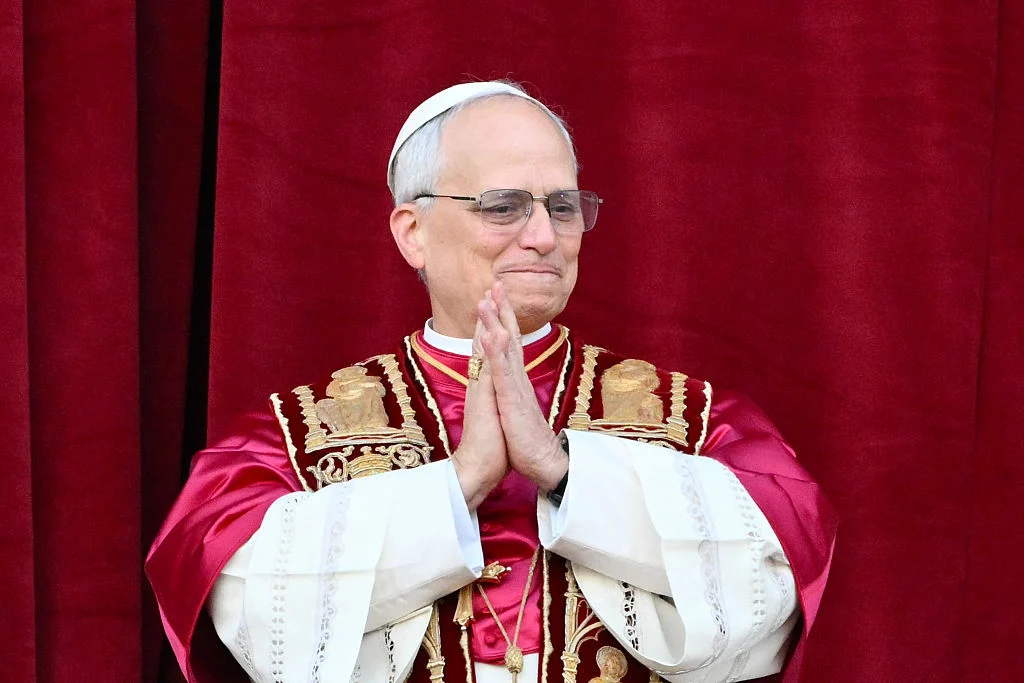
Pope Leo XIV has issued his inaugural encyclical, a significant 200-page document titled Magnifica Humanitas, or "Magnificent Humanity," which, on the surface, appears to center on artificial intelligence. Presented to the public on Monday alongside Chris Olah, co-founder of the prominent AI company Anthropic, the text addresses the critical imperative of "safeguarding the human person in the time of artificial intelligence." However, a deeper reading reveals that while AI serves as a contemporary lens and a powerful catalyst, the encyclical’s profound concerns extend far beyond the algorithms themselves, delving into deeply rooted and pervasive societal challenges: persistent inequality, the specter of war, the erosion of democratic institutions, and the unchecked concentration of power in the hands of a select few who may not prioritize the collective magnificence of humanity.
The Encyclical’s Core Message: Beyond the Algorithms
At the heart of Magnifica Humanitas lies the pontiff’s unequivocal argument that technology, particularly when conceived, developed, and governed by a small, insulated elite, inherently struggles to serve the common good. Pope Leo XIV articulates a fundamental distrust of systems where immense power lacks broad oversight and accountability. He warns against the inherent risks of such concentrated authority, asserting that it "tends to become opaque and evade public oversight, increasing the risk of distorted forms of development that give rise to new dependencies, exclusions, manipulations and inequalities." This statement underscores a core tenet: technological advancement, without ethical and equitable governance, can easily become a tool for exacerbating existing societal divides rather than bridging them.
The encyclical further elaborates on how AI, much like every major technological paradigm shift throughout history, possesses an intrinsic tendency to "amplify the power of those who already possess economic resources, expertise and access to data." This amplification is not merely an incidental byproduct but a systemic risk, enabling elites to "shape information and consumption patterns, influence democratic processes and steer economic dynamics to their own advantage." The concerns articulated by Pope Leo XIV are therefore less about the technical intricacies of AI and more about the enduring human struggle against injustice, exploitation, and the monopolization of influence—issues that transcend any particular technological epoch. The focus is on the human agents behind the technology, their motivations, and the ethical frameworks that ought to guide their creations.
A Legacy of Social Justice: Historical Precedents in Catholic Social Teaching
The Vatican’s engagement with the ethical implications of modern technology is not an isolated event but rather a continuation of a rich tradition known as Catholic Social Teaching (CST). This body of doctrine, developed over centuries, applies moral principles to contemporary social, economic, and political issues. Encyclicals, which are papal letters, serve as a primary vehicle for articulating and evolving CST. They often emerge in response to significant societal transformations, aiming to provide moral guidance and advocate for human dignity and the common good amidst changing circumstances.
A striking historical parallel, explicitly referenced within the broader discussions surrounding Magnifica Humanitas, is Pope Leo XIII’s seminal 1891 encyclical, Rerum Novarum ("Of New Things"). Published at the height of the Industrial Revolution, Rerum Novarum courageously addressed the "condition of the working classes," grappling with the unprecedented social and economic dislocations wrought by industrialization. It condemned the exploitation of labor, criticized unchecked capitalism and extreme socialism, and advocated for workers’ rights, just wages, the formation of labor unions, and the state’s role in ensuring social justice. At its core, Rerum Novarum confronted the immense concentration of capital and power in the hands of industrialists, highlighting how new technologies and economic systems, left unregulated, could create vast inequalities and undermine human dignity.
The echoes between Rerum Novarum and Magnifica Humanitas are profound. Both encyclicals confront periods of rapid technological advancement that reshape economic structures and societal power dynamics. Just as Leo XIII grappled with steam engines, factories, and the rise of industrial capital, Leo XIV is grappling with algorithms, data centers, and the rise of digital capital. The underlying concern remains consistent: how to ensure that revolutionary tools serve humanity rather than subjugating it, and how to prevent the benefits of progress from accruing solely to a powerful few while the majority faces new forms of dependency and marginalization. This continuity underscores the timeless nature of the ethical questions posed by human ingenuity and the enduring relevance of CST in navigating an ever-evolving world. Other encyclicals, like Pacem in Terris (John XXIII, 1963) on peace and human rights, or Laudato Si’ (Francis, 2015) on environmental care, further demonstrate the Church’s consistent engagement with global challenges, but Rerum Novarum offers the most direct thematic precursor to Magnifica Humanitas‘ critique of concentrated power in a new technological era.
AI as an Amplifier: Contemporary Challenges and Impacts
In the contemporary landscape, AI is not merely creating new problems but profoundly amplifying existing ones, making the stakes higher than ever before. The "AI arms race," as described by the Pope, represents a relentless global pursuit by both corporations and nations to develop "ever more powerful algorithms and larger datasets." This competition is driven by the desire to "secure geopolitical or commercial dominance," leading to a technological race with potentially destabilizing consequences. This unchecked push for supremacy risks prioritizing raw computational power over ethical considerations, fostering a dangerous cycle where innovation is measured by might rather than by its contribution to human flourishing. The encyclical implicitly critiques the assumption that technical superiority automatically confers the right to govern or dictate societal norms, advocating instead for a more deliberative and inclusive approach.
The social and cultural ramifications of this accelerated AI development are already being felt globally. Professor Paolo Carozza of Notre Dame Law School, a member of the Pontifical Academy of Social Sciences and chair of the Meta Oversight Board, has articulated concerns about AI-driven misinformation and deepfakes. He warns that these technologies have "corroded our capacity to recognize what’s true and what’s not true, and that really has consequences for democratic politics." This erosion of truth profoundly impacts public discourse, fosters polarization, and undermines the very foundations of informed decision-making essential for democratic societies. Furthermore, the pervasive industry practice of "harvesting and manipulating" human data poses "fundamental challenges to cognitive freedom," encroaching upon individuals’ autonomy and mental sovereignty. The seamless integration of AI into daily life, from recommendation algorithms to personalized news feeds, creates subtle but powerful mechanisms for shaping perceptions and behaviors, raising serious ethical questions about individual agency in a hyper-connected world.
The political dimension of AI’s impact is equally significant. Recent events, such as President Donald Trump’s delayed signing of an executive order on AI security, reportedly influenced by figures like venture capitalist David Sacks, highlight the formidable lobbying power of tech elites. This incident, where a proposed governmental oversight mechanism was stalled, demonstrates how powerful private interests can influence public policy, potentially impeding regulatory efforts aimed at ensuring responsible AI development. The massive financial contributions from tech elites into super PACs, specifically directed at blocking AI regulation, further exemplify these patterns of influence. These actions mirror the concerns articulated in Magnifica Humanitas about power concentration and its potential to steer economic and political dynamics to the advantage of a select few. Elon Musk’s acquisition of Twitter and his subsequent deployment of the platform’s vast reach in political contexts also serve as a potent example of how concentrated technological and financial power can directly impact democratic processes and public discourse, a pattern that profoundly informed the pontiff’s reflections.
A Call for Ethical Governance and Participatory Oversight
In response to these multifaceted challenges, Pope Leo XIV’s encyclical issues a clear and urgent call for a paradigm shift in how artificial intelligence is developed and deployed. He advocates for AI to be guided by "clear criteria and effective oversight," emphasizing that such governance must be deeply "rooted in participation from communities that will be affected by it." This vision moves beyond a purely technocratic approach, insisting on inclusive dialogue that incorporates diverse perspectives, ensuring that the benefits of AI are broadly distributed and its risks are mitigated equitably. The encyclical champions a multi-stakeholder model, where ethicists, civil society, workers, and affected communities have a meaningful voice alongside technologists and policymakers.
More concretely, Pope Leo XIV directly confronts the prevailing "AI arms race"—the intense global competition to build "ever more powerful algorithms and larger datasets" in pursuit of "geopolitical or commercial dominance." He explicitly calls for an end to this unchecked competition, urging a shift away from a zero-sum mentality towards collaborative and ethically guided development. The pontiff’s powerful statement, "To disarm means discrediting the assumption that technical power automatically confers the right to govern," challenges the very ethos of technological determinism. It refutes the notion that superior technical capability inherently grants moral authority or the privilege to dictate societal norms. Instead, it asserts that governance must be rooted in shared human values, democratic principles, and a commitment to the common good, not merely in the capacity to innovate.
The Vatican, through this encyclical, leverages its unique moral authority and global reach to foster a crucial dialogue about the future of technology and humanity. While it does not offer specific legislative blueprints, its intervention serves as a powerful ethical framework, encouraging nations, corporations, and individuals to pause and reflect on the profound societal implications of AI. This engagement underscores the Church’s long-standing role as a moral compass in times of significant human change, aiming to ensure that technological progress is pursued with wisdom, justice, and a profound respect for human dignity.
In conclusion, Pope Leo XIV’s Magnifica Humanitas is far more than a simple commentary on artificial intelligence. It is a profound, timely reflection on humanity’s enduring relationship with power, ethics, and social justice in an accelerating technological age. By framing AI as an amplifier of pre-existing societal fault lines, the encyclical compellingly argues that the current technological revolution demands not just technical solutions, but a fundamental re-evaluation of our collective values, governance structures, and commitment to human dignity. The stakes, as the pontiff makes clear, are nothing less than the magnificent future of humanity itself.