Amir Mahmud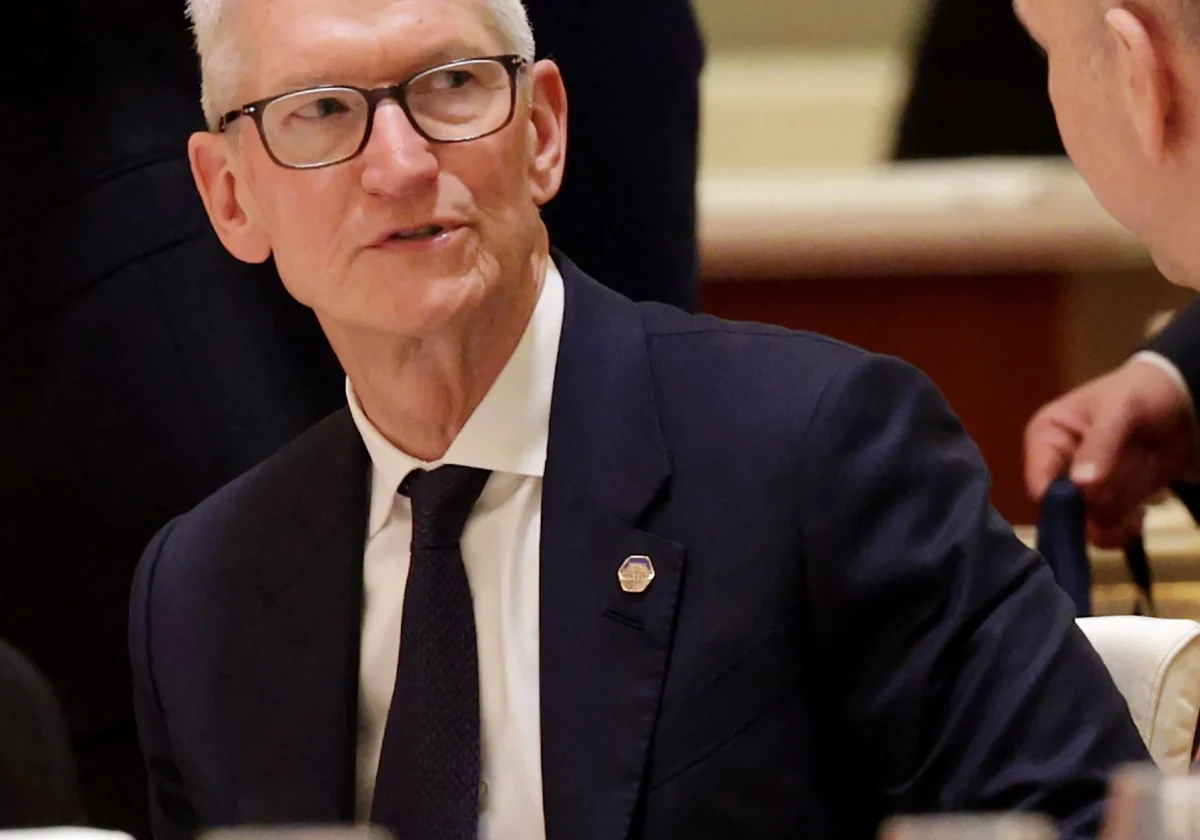
A notable incident unfolded on May 15, 2026, as a United States delegation, led by President Trump, concluded two days of high-level talks in Beijing with the Chinese government under President Xi Jinping. Prior to boarding Air Force One for the return journey, an extraordinary directive was issued: White House staffers, members of the press corps, and other travelers were instructed to surrender various items acquired or used during their visit. This mandate saw individuals discarding staff burner phones, official credential badges, and even decorative lapel pins provided by China into a collection bin positioned at the base of the aircraft’s stairs, an observation relayed by a journalist traveling with the White House press pool.
A Precautionary Protocol
"Nothing from China allowed on the plane," reported Emily Goodin, the White House correspondent for the New York Post, in a post on X, encapsulating the strictness of the order. This unusual measure underscored the profound security concerns inherent in high-stakes diplomatic engagements, particularly with nations identified as significant intelligence adversaries. Images from the trip had previously shown several prominent figures within the U.S. government delegation, including President Trump himself, White House communications director Steven Cheung, and even leading American tech executives like Apple chief executive Tim Cook and Nvidia’s Jensen Huang, sporting these pins on their attire. Secret Service agents were also visibly adorned with them.
While official spokespeople for the White House offered no immediate comment on the specific reasons behind the directive, the rationale for such rigorous precautions is widely understood to stem from the advanced intelligence and espionage capabilities attributed to certain state actors, including China. The United States and its allies have a long-standing history of accusing Beijing of engaging in extensive cyberattacks and sophisticated spying operations targeting government agencies, private corporations, and individuals. The concern is that seemingly innocuous items, from souvenir pins to official credentials, could potentially be embedded with listening devices, tracking technology, or malware. Similarly, even dedicated "burner phones," intended for secure, temporary use in hostile environments, are assumed to be susceptible to compromise through various means, necessitating their complete discard rather than reuse or detailed forensic examination.
The Broader Context of US-China Relations
The incident reflects the intricate and often fraught relationship between the United States and China, two global powers whose interactions shape international politics, economics, and technology. The summit itself, held in Beijing, focused on critical discussions encompassing bilateral economic cooperation, investment opportunities, and shared strategic concerns such as Iran’s nuclear ambitions. However, according to Chinese state media, President Xi Jinping also reiterated the paramount importance of the Taiwan issue, cautioning that any mishandling could severely strain U.S.-China relations. This backdrop of both cooperation and profound geopolitical tension provides essential context for understanding the heightened security posture adopted by the U.S. delegation.
Over recent years, the relationship between Washington and Beijing has been characterized by increasing competition across multiple domains: trade disputes, technological rivalry (especially in areas like 5G, AI, and semiconductors), human rights concerns, military assertiveness in the South China Sea, and diplomatic friction over Taiwan and Hong Kong. This environment of strategic competition has naturally led to an escalation in intelligence-gathering efforts by both sides, making every diplomatic exchange a potential vector for espionage. The precautionary measures taken on Air Force One are not isolated events but rather manifestations of an ongoing, low-intensity intelligence conflict that underpins much of the bilateral relationship.
Historical Precedents in Diplomatic Security
The apprehension regarding potentially compromised items is not without historical foundation. Espionage through seemingly harmless objects has been a staple of intelligence operations for decades. One of the most famous examples dates back to the Cold War, involving the "Great Seal bug." In 1945, the Soviet Union presented a carved wooden replica of the Great Seal of the United States to the U.S. Ambassador in Moscow. This gift, which hung in the ambassador’s residence for seven years, contained a passive listening device known as "The Thing" or the "Bug of the Month." It required an external radio signal to activate and transmit audio, making it incredibly difficult to detect with conventional sweeping methods of the era. The device was only discovered in 1952.
Another historical instance involved the "Moscow Gold Bug," a miniature microphone hidden within the emblem of the U.S. Embassy in Moscow, discovered in 1960. These historical examples serve as stark reminders that state-sponsored intelligence agencies have long employed ingenious methods to infiltrate secure environments by compromising diplomatic gifts or official paraphernalia. Such precedents reinforce the contemporary necessity for extreme vigilance, even in an era dominated by digital threats.
The Modern Espionage Landscape
While physical bugs remain a concern, the modern espionage landscape is largely dominated by cyber threats. State-sponsored actors possess sophisticated capabilities to conduct cyberattacks, ranging from targeted phishing campaigns and malware injection to supply chain compromises. For a high-profile delegation traveling to a nation with advanced cyber capabilities, the risk extends beyond physical listening devices. Burner phones, while intended to mitigate risk by providing a clean, temporary communication channel, are prime targets. During a visit, such devices could be subjected to "zero-click" exploits, where malware is installed without any user interaction, or compromised through Wi-Fi networks, charging stations, or even via covert physical access.
The lapel pins or credential badges, though seemingly simple, could be equipped with tiny GPS trackers, radio frequency identification (RFID) chips, or even micro-transmitters capable of broadcasting audio or location data over short distances. The act of discarding these items isn’t merely about preventing direct listening but also about eliminating any potential vector for long-term tracking or data exfiltration that could compromise future operations or personnel. This comprehensive approach to security acknowledges the multi-faceted nature of modern intelligence threats, which blend traditional spycraft with cutting-edge digital capabilities. The U.S. government’s protocol reflects an understanding that any item, no matter how insignificant it appears, could be a conduit for intelligence gathering.
Implications for Tech and Business Leaders
The presence of prominent American tech executives like Apple’s Tim Cook and Nvidia’s Jensen Huang within the delegation highlights the intricate ties between U.S. industry and the Chinese market. These leaders often accompany presidential delegations to foster economic ties and represent significant American business interests abroad. However, their inclusion also places them directly within the crosshairs of geopolitical security concerns. For companies like Apple and Nvidia, which rely heavily on global supply chains and access to vast consumer markets, navigating the complex U.S.-China relationship is a delicate balancing act.
The security measures taken on Air Force One serve as a stark reminder to these corporate leaders and their staff about the pervasive nature of state-sponsored espionage. While their primary objective might be economic cooperation, they operate within a framework where their devices, data, and even personal items could be targets. This necessitates robust internal security protocols for corporate travel, especially to high-risk regions. The incident underscores the broader societal and economic impact of geopolitical tensions, where the lines between national security and commercial interests increasingly blur. It also reinforces a culture of extreme caution for anyone involved in sensitive international engagements, emphasizing that vigilance is not just for government officials but for all participants.
Navigating a Complex Geopolitical Arena
The directive to discard items upon departure from China is a powerful, albeit silent, diplomatic signal. It communicates the U.S. government’s acute awareness of potential espionage threats and its unwavering commitment to protecting its sensitive information and personnel. This action, while practical, also subtly conveys a message of distrust, even amidst official talks aimed at cooperation. It represents a pragmatic approach to national security in an era defined by great power competition and technological rivalry.
Such protocols are not unique to U.S. interactions with China; similar measures are often employed in other sensitive environments. They reflect a broader shift in diplomatic security, moving from reactive measures to proactive, preventative strategies that assume compromise is always a possibility. As global powers continue to engage in a complex dance of cooperation and competition, these visible security measures will likely become more common, serving as a constant reminder of the underlying strategic rivalries that shape international relations in the 21st century. The incident on Air Force One, therefore, is more than just a security precaution; it is a snapshot of the enduring geopolitical realities faced by nations operating in an increasingly interconnected yet wary world.