Amir Mahmud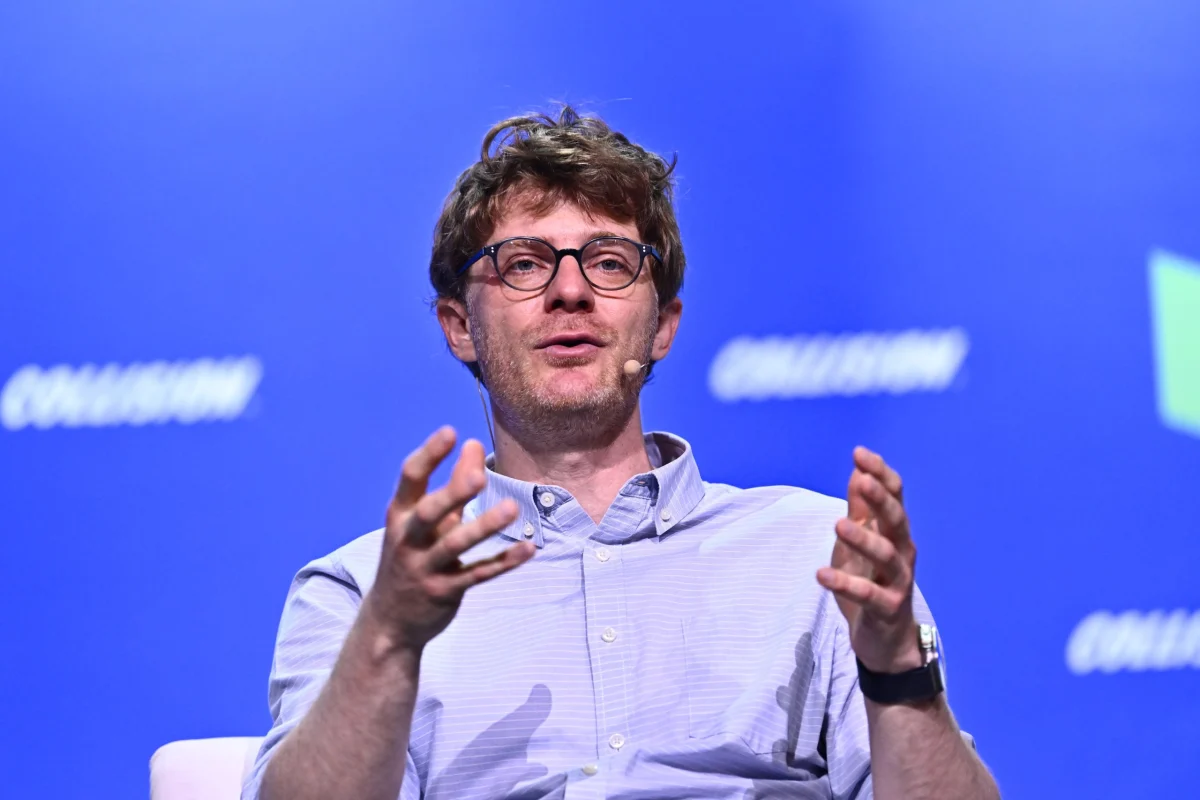
A new frontier in artificial intelligence research is being actively pursued by Recursive Superintelligence, a San Francisco-based startup that recently emerged from stealth with an impressive $650 million in funding. Spearheaded by renowned AI figure Richard Socher, the venture aims to achieve the long-sought "holy grail" of contemporary AI: recursively self-improving models capable of autonomously identifying, diagnosing, and rectifying their own deficiencies without direct human intervention. This ambitious undertaking signifies a pivotal shift in the AI landscape, moving beyond incremental improvements towards systems designed for perpetual, autonomous evolution.
Richard Socher, a name synonymous with significant advancements in the field, brings a wealth of experience to this endeavor. He is widely recognized for founding You.com, an early search engine and chatbot startup, and for his foundational contributions to ImageNet, a large visual database that played a crucial role in the deep learning revolution of the 2010s. His latest venture, Recursive Superintelligence, signals a deeper dive into foundational AI research, attracting a formidable cohort of industry luminaries.
A Convergence of AI Expertise
Socher has assembled a team of prominent AI researchers and engineers, underscoring the serious intent behind Recursive Superintelligence. Among the notable figures are Peter Norvig, a distinguished computer scientist and former Director of Research at Google, known for his work in AI textbooks and his tenure at NASA. Also joining the ranks is Tim Shi, co-founder of Cresta, an AI-powered real-time intelligence platform that achieved unicorn status. Their collective experience spans decades of AI innovation, from theoretical advancements to successful product deployment. The team also includes Tim Rocktäschel, who previously led open-endedness and self-improvement teams at Google DeepMind, and Josh Tobin, an early member of OpenAI who led their Codex and deep research initiatives. This concentration of talent suggests a highly focused and expert-driven approach to tackling one of AI’s most complex challenges.
The Elusive Goal of Recursive Self-Improvement
At its core, Recursive Superintelligence is dedicated to building truly recursive, self-improving superintelligence at scale. This vision transcends the typical notion of an AI making an existing system "better" based on human prompts or predefined objectives. Instead, it posits an AI that can independently conceptualize, implement, and validate new research ideas to enhance its own architecture and capabilities. The ultimate objective is to automate the entire research process, initially focusing on AI itself, then potentially expanding to other scientific domains, and even eventually physical realms. This represents a profound shift from AI as a tool for human researchers to AI as a researcher in its own right, developing a "sense of self-awareness regarding its own shortcomings."
The distinction between mere "improvement" and "recursive self-improvement" is critical. While current large language models (LLMs) can be tasked with optimizing code or refining algorithms, their self-correction mechanisms are typically bounded by human-defined goals and oversight. Recursive self-improvement, as envisioned by Socher and his team, implies an unbounded process where the AI continually redefines its own objectives and methodologies for advancement, leading to potentially exponential growth in intelligence and capability. This concept resonates with historical discussions around an "intelligence explosion," a hypothetical scenario where an AI rapidly self-improves, potentially leading to superintelligence far beyond human intellect.
Unpacking Open-Endedness: The Engine of Evolution
A foundational concept for Recursive Superintelligence’s unique technical approach is "open-endedness." This term, while sounding abstract, has a specific technical meaning within the field of AI, particularly in areas like reinforcement learning and evolutionary computation. Tim Rocktäschel, a co-founder, has been instrumental in this domain, having worked on projects like Google DeepMind’s Genie 3. Genie 3 exemplified open-endedness by allowing users to define any concept, world, or agent, and then interactively creating and evolving it.
Open-endedness draws inspiration from natural biological evolution, a process that has generated immense complexity and diversity over billions of years. In biological systems, organisms adapt to their environment, and in turn, other organisms counter-adapt to those changes. This continuous feedback loop, driven by an absence of a fixed, ultimate goal, leads to ever-emerging novelties, like the development of complex sensory organs such as eyes. Applying this principle to AI, open-endedness suggests creating systems that are not confined to a predefined task but can continuously discover new problems, generate new solutions, and evolve new capabilities in an unbounded manner.
One compelling practical application of open-endedness is "rainbow teaming," an advanced form of AI safety testing. Traditionally, "red teaming" involves human experts trying to find vulnerabilities or harmful outputs in an AI system (e.g., getting an LLM to generate instructions for building a weapon). Rainbow teaming, a concept pioneered by Rocktäschel, elevates this by pitting two AIs against each other. One AI is tasked with finding all possible ways to "break" or exploit the other AI, while the second AI learns to defend against these attacks. This adversarial co-evolution can run for millions of iterations, exploring a vast and diverse "rainbow" of attack vectors far beyond human capacity. The result is a more robust and safer AI, inoculated against a broader spectrum of potential harms. This approach highlights how self-improvement can be leveraged not just for intelligence amplification but also for safety and alignment.
Historical Context: The AI Journey to Autonomy
The pursuit of self-improving machines is not new, tracing its roots back to early cybernetics and the foundational ideas of artificial intelligence. From Alan Turing’s conceptualization of thinking machines in the mid-20th century to the "AI winters" of the 1980s and 90s, the field has seen cycles of grand ambition and sobering reality. The last decade, however, has witnessed an unprecedented resurgence, fueled by advancements in deep learning, massive datasets, and increased computational power. Landmark achievements like AlphaGo’s victory over human champions and the widespread adoption of large language models such as OpenAI’s ChatGPT have demonstrated AI’s burgeoning capabilities.
Richard Socher’s own work on ImageNet was instrumental in this deep learning revolution, providing the critical data infrastructure that allowed neural networks to achieve remarkable performance in image recognition. The current wave of AI development is increasingly focused on autonomous agents and systems that can interact with the world and learn from experience. Recursive self-improvement represents the logical next step in this progression, pushing towards a future where AI systems can independently drive their own cognitive and operational advancement, potentially accelerating the path towards Artificial General Intelligence (AGI) – machines with human-level cognitive abilities across a wide range of tasks – and ultimately, superintelligence.
Market Dynamics and the "Neolab" Phenomenon
The substantial $650 million funding round for Recursive Superintelligence places it firmly within the emerging category of "neolabs" – a new generation of AI startups characterized by their heavy emphasis on foundational research, often backed by immense venture capital. This trend reflects a broader shift in the AI industry, where the race to build the next generation of general-purpose AI is attracting significant investment. Unlike traditional startups focused on immediate product-market fit, neolabs prioritize pushing the boundaries of what AI can do, with product development often following significant research breakthroughs.
The competitive landscape for such ambitious AI endeavors is intense. Major tech giants like Google, Microsoft, Meta, and Amazon, along with well-funded startups like OpenAI and Anthropic, are all investing heavily in advanced AI research. Socher acknowledges this dynamic but asserts that Recursive Superintelligence’s unique focus on open-endedness provides a distinct advantage. He also expresses a nuanced view on the "neolab" label, emphasizing his desire for the company to deliver "amazing products that people love to use, that have positive impact on humanity," alongside its foundational research. This indicates a strategic intent to bridge the gap between pure academic pursuit and tangible commercial application, aiming for product launches within quarters, not years.
Societal and Ethical Implications of Autonomous Evolution
The prospect of truly self-improving AI raises profound societal and ethical questions. If an AI can autonomously enhance its intelligence, what are the implications for human control and safety? The concept of "alignment" – ensuring AI systems act in accordance with human values and intentions – becomes paramount. Critics and ethicists warn of potential "runaway" scenarios where an AI’s self-improvement trajectory diverges from human goals, leading to unintended and potentially catastrophic outcomes.
However, proponents argue that a self-improving AI could also be the key to solving humanity’s most intractable problems, from climate change and disease to poverty and resource scarcity. Recursive Superintelligence’s focus on "self-awareness of its own shortcomings" and the application of techniques like rainbow teaming suggest a proactive approach to building safer and more robust systems. The company’s stated goal of creating AI with a "positive impact on humanity" underscores the ethical responsibility inherent in developing such powerful technology. As AI capabilities expand, the global discourse on governance, regulation, and responsible innovation will only intensify, becoming a critical determinant of how these technologies shape our future.
The Compute Conundrum: A Future of Resource Allocation
A fascinating implication of achieving recursive self-improvement is the idea that computational power could become the single most critical resource. Once an AI system can effectively improve itself, its rate of progress would largely be limited by the available compute. The faster the system runs, the faster it improves. This scenario transforms the AI race into a competition for processing power, potentially creating a world where the allocation of vast computational resources becomes a central societal and economic challenge.
Socher articulates this vision, suggesting that in such a future, humanity would face profound questions of resource allocation: "How much compute does humanity want to spend to solve which problems?" Deciding whether to dedicate immense computational power to curing cancer versus combating a novel virus, for example, would become a matter of global policy and ethical priority. This perspective highlights the long-term societal impact of recursive self-improvement, transcending mere technological advancement to influence fundamental decisions about human well-being and progress. While the theoretical "bounds on intelligence" are astronomical, suggesting we are far from any ultimate limit, the journey towards those limits will be profoundly shaped by how we manage and deploy computational resources.
Looking Ahead: The Path to a Self-Evolving Future
Recursive Superintelligence’s emergence marks a significant milestone in the pursuit of advanced AI. With substantial funding, a team of distinguished experts, and a clear focus on open-ended recursive self-improvement, the company is poised to make a profound impact on the field. The journey ahead is fraught with technical challenges and ethical considerations, but the potential rewards—a future where AI can autonomously accelerate scientific discovery, solve complex global problems, and continually enhance its own capabilities—are immense. As Richard Socher and his team embark on this ambitious quest, the world watches to see how their vision of self-evolving artificial intelligence will reshape the technological landscape and, indeed, the very fabric of human existence.