Amir Mahmud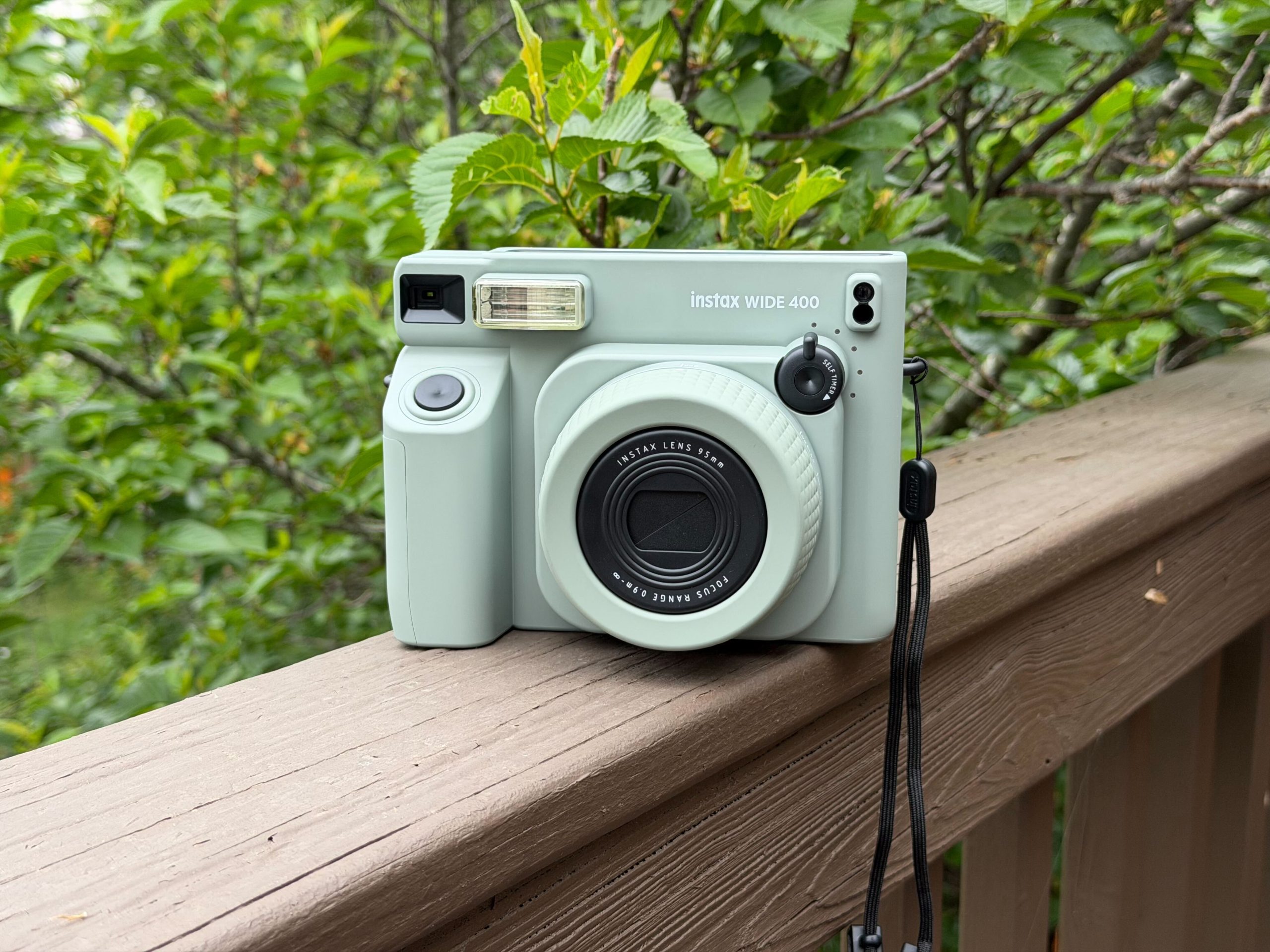
In an era increasingly defined by artificial intelligence, advanced digital photography, and the ephemeral nature of online content, the enduring allure of analog instant film cameras continues to captivate consumers. This segment of the market thrives on a powerful blend of nostalgia, inherent charm, and the simple pleasure of a tangible, immediate print. Among the various instant camera offerings, Fujifilm’s Instax line has consistently stood out, and its latest iteration, the $175 Instax Wide 400, seeks to amplify this experience by quite literally stretching the photographic canvas. This new model builds upon the well-established Instax philosophy of effortless operation, now offering a significantly larger format that caters to a broader range of photographic aspirations, from expansive landscapes to lively group portraits.
The Resurgence of Analog: A Historical Perspective
The story of instant photography is deeply intertwined with innovation and a yearning for immediate gratification. The concept was pioneered by Edwin Land, co-founder of the Polaroid Corporation, who unveiled the first instant camera, the Land Camera Model 95, in 1948. This invention revolutionized photography, allowing users to capture and develop a physical print within minutes, a stark contrast to the lengthy darkroom processes of the time. Polaroid dominated the instant photography market for decades, becoming a cultural icon and a household name synonymous with its unique white-bordered prints.
However, the late 20th and early 21st centuries saw the meteoric rise of digital photography. Digital cameras offered unparalleled convenience, cost-effectiveness (no recurring film purchases), and the ability to review, edit, and share images instantly without physical prints. This seismic shift led to the decline of many analog photography giants, including Polaroid, which filed for bankruptcy in the early 2000s, ceasing instant film production in 2008.
Yet, the narrative didn’t end there. A new wave of interest in analog formats began to emerge, fueled by a desire for authenticity and a backlash against the perceived oversaturation and perfection of digital imagery. The "Impossible Project" famously revived Polaroid film production, eventually leading to the brand’s re-emergence as Polaroid Originals (now simply Polaroid). Simultaneously, Fujifilm, which had initially been a licensee of Polaroid technology, cultivated its own instant photography ecosystem: Instax. Launched in 1998, the Instax line, particularly its compact Mini series, steadily gained traction, proving that there was still a significant appetite for tangible, instant prints. Instax cameras carved out a distinct niche by offering vibrant, credit-card-sized prints at a more accessible price point than many of its competitors, establishing a strong presence in youth culture, event photography, and as a fun, accessible creative tool.
Instax’s Evolution: From Mini to Wide
Fujifilm’s Instax series has successfully diversified its offerings to cater to varying preferences, starting with the widely popular Instax Mini format. The Mini, producing prints measuring 46 x 62 mm (1.8 x 2.4 inches), became an instant hit, especially among younger demographics, owing to its compact camera size and easily shareable photos. Recognizing a demand for a different aesthetic and larger canvas, Fujifilm later introduced the Instax Square format, delivering prints with dimensions of 62 x 62 mm (2.4 x 2.4 inches). This square aspect ratio harked back to the iconic Polaroid format, appealing to users seeking a classic, balanced composition.
The Instax Wide series, which the Instax Wide 400 now spearheads, represents Fujifilm’s commitment to offering an even grander perspective. Producing prints that measure 62 x 99 mm (2.4 x 3.9 inches), approximately double the size of Instax Mini photos, the Wide format is specifically designed for situations where encompassing more of the scene or more individuals within a frame is paramount. This larger print size makes the Wide 400 particularly suitable for sprawling landscapes, expansive architectural shots, and, critically, group photographs, ensuring that every face and detail is clearly visible and celebrated. This strategic expansion of formats allows Fujifilm to capture different user segments and photographic use cases, solidifying Instax’s position as a versatile leader in the instant photography market.
Design Philosophy: Embracing Simplicity
The Instax Wide 400’s design philosophy is rooted in accessibility and intuitive operation, deliberately eschewing complex manual controls in favor of a straightforward, point-and-shoot experience. This approach means that prior photographic expertise is entirely unnecessary; users can simply frame their shot and press the shutter button. The camera automatically manages critical settings such as flash output and focus, streamlining the process and ensuring that the joy of instant photography remains unburdened by technical intricacies. This one-button design underscores the camera’s primary appeal: fun, spontaneity, and the tangible creation of memories, rather than the pursuit of absolute technical perfection.
Operating the Wide 400 is equally uncomplicated. To power on the device, the user rotates the lens barrel counter-clockwise. A first click engages the close-up mode, optimized for subjects situated between 0.9 and 3 meters away. A further rotation transitions the camera into landscape mode, ideal for capturing distant subjects beyond three meters. Turning the lens clockwise powers the camera off, completing a simple, tactile interaction loop. For enhanced close-up photography, a dedicated lens attachment is included, designed to clip onto the front of the camera. This accessory helps mitigate potential focus and blur issues that can arise when photographing subjects at very short distances, ensuring clearer, more defined results for intimate portraits or detailed shots.
Loading film into the Instax Wide 400 is also a user-friendly process. Cartridges slide easily into a designated compartment, guided by clear alignment marks to prevent errors. A robust twist-lock mechanism secures the film door firmly, preventing accidental opening and potential light exposure. Furthermore, a small, visible indicator on the camera’s rear provides a convenient real-time display of the remaining film count, allowing users to track their shots and anticipate when a new cartridge will be needed. These design choices collectively reinforce the camera’s commitment to a hassle-free, enjoyable photographic journey.
Capturing the Moment: Performance and Practicality
In practical usage, the Instax Wide 400 delivers results that align with its straightforward design. Under optimal lighting conditions, the camera produces prints characterized by pleasing color reproduction, a respectable level of detail, and a touch of added saturation that contributes to their vibrant, retro aesthetic. In well-lit environments, the automatic settings effectively balance exposure and flash, resulting in images that are generally bright and appealing. The ability of the camera to capture accurate colors and discern distant elements, especially within its wider format, often garners positive impressions, surprising users with the clarity it can achieve given its simplified operational premise.
However, the very simplicity that defines the camera also introduces certain limitations. The absence of manual exposure controls means users have little recourse in challenging lighting scenarios. In scenes marked by strong contrast, such as dark foreground elements against a brightly lit sky, the camera’s automatic system can struggle to find a balanced exposure. This can lead to a loss of detail in both highlights and shadows, where elements may "blow out" or "block up," respectively, sometimes resulting in images where fine details appear blurred or indistinct. This trade-off is inherent to the point-and-shoot design, prioritizing ease of use over granular control, and is a characteristic users of instant film often embrace as part of the medium’s unique charm.
Beyond its core photographic function, the Instax Wide 400 incorporates several thoughtful features to enhance the user experience. A built-in self-timer is particularly useful for group shots, enabling the photographer to be included in the frame without relying on another person to press the shutter. Activated by a side-mounted lever, the timer offers four selectable durations, ranging from two to ten seconds. During the countdown, an audible ticking sound and a series of pulsating red lights provide both auditory and visual cues, allowing everyone to position themselves before the shot is taken. For situations where a tripod isn’t available, the camera’s shoulder strap includes two clever angle adjustment accessories. These small, discreet pieces can be slid into an indented slot on the camera’s underside, effectively propping the device at an angle on any flat surface, transforming the strap into an impromptu stand for self-timed shots.
The Instax Wide 400 utilizes a variety of film types, allowing for creative expression. Standard white-frame film is a classic choice, but options also include black frame, metallic borders, and monochrome film for a more artistic or vintage feel. Each box of film typically contains 20 sheets and is priced between $25 and $28, representing an ongoing investment for users. Aesthetically, the camera is available in two color options: a playful green and a more understated jet black. The green variant, in particular, contributes to the camera’s overall fun and inviting vibe, making it a stylish accessory as well as a photographic tool.
User Experience: Ergonomics and Portability
One of the most immediate observations about the Instax Wide 400 is its considerable physical presence. Measuring 162 mm x 98 mm x 123 mm and weighing approximately 1.4 pounds, it is noticeably bulkier than its Instax Mini and Square counterparts. This larger footprint is a direct consequence of accommodating the wider film format, as the internal mechanisms and film cartridges require more space. While the size is understandable given its capabilities, it does impact portability.
Unlike the more compact Instax Mini models that can often slip into a larger pocket or a small purse, the Wide 400 necessitates a bag for comfortable transport. Even with the included shoulder strap, users often find themselves acutely aware of its presence, exercising caution in crowded environments to avoid bumping into people or objects. Fujifilm does offer a separately sold camera case, which would likely enhance both protection and ease of carrying, though its specific utility would depend on the design and material.
Despite its bulk, the camera’s distinct appearance often sparks curiosity and conversation. Its retro design and vibrant color options (especially the green) tend to catch the eye, frequently eliciting compliments and inquiries from passersby. This unexpected social interaction is, for many users, an integral part of the instant photography experience. The camera doesn’t just capture moments; it often creates them, fostering connections and shared enjoyment as people gather to witness the development of a physical print. This inherent "cool factor" contributes significantly to the camera’s overall appeal, transforming it from a mere gadget into a social facilitator.
Beyond the Lens: Cultural Resonance and Market Dynamics
The Instax Wide 400, much like its predecessors, operates within a unique market niche that thrives on the tangible and the immediate. In an age where billions of digital photos are captured and stored on devices, often never to be seen again, instant prints offer a refreshing antidote. They serve as physical artifacts, immediate keepsakes that can be shared, displayed, or tucked into a wallet. This tangibility resonates strongly with younger generations, particularly Gen Z and millennials, who, despite growing up in a digital-first world, increasingly value authenticity and analog experiences. The act of waiting for a photo to develop, watching the image slowly appear, is a ritual that digital photography simply cannot replicate.
Culturally, instant cameras like the Instax Wide 400 contribute to a broader retro trend. The aesthetic of instant prints, with their characteristic color shifts and often slightly imperfect focus, aligns with the popular vintage filters and lo-fi aesthetics prevalent on social media platforms. It’s a deliberate embrace of imperfection as an artistic statement, a counterpoint to the hyper-realistic, often AI-enhanced, images that dominate digital feeds. This cultural impact extends to social gatherings, events, and travel, where instant cameras become central to creating shared memories and leaving guests with a physical memento of the occasion.
From a market perspective, Fujifilm has strategically positioned its Instax line to capture a significant share of the instant photography segment. The Instax Wide 400’s price point of $175 makes it an accessible entry into the larger format instant world. However, the recurring cost of film, at $25-$28 for a 20-sheet pack, represents a continuous investment. This economic model is typical for instant film, and while it requires budgeting, it also inherently encourages users to be more selective with their shots, fostering a more mindful approach to photography compared to the virtually limitless and cost-free nature of digital captures.
Conclusion: A Timeless Appeal in a Digital Age
The Fujifilm Instax Wide 400 is more than just a camera; it is a gateway to a particular kind of photographic experience. In a world saturated with digital perfection and endless scrolls, it offers a deliberate slowdown, a return to the tactile and the immediate. While its automatic nature means it lacks the manual controls and nuanced image refinement of more advanced cameras, this simplicity is precisely its strength. It democratizes photography, making it accessible and enjoyable for everyone, from children taking their first snapshots to adults seeking a nostalgic connection to a bygone era.
Its wider format provides a generous canvas for capturing group celebrations, sweeping vistas, and the broader context of cherished moments, ensuring that no one or nothing is left out of the frame. Despite its noticeable bulk, its charm and ability to spark conversation make it a unique companion for social events and personal adventures. The Instax Wide 400 embodies the enduring appeal of analog instant photography, proving that in a world racing towards the future, there will always be a special place for the magic of a developing print and the tangible memory it holds. It stands as a testament to Fujifilm’s understanding of what truly makes a photograph special: not just the image itself, but the unique, shared experience of creating it.