 Amir Mahmud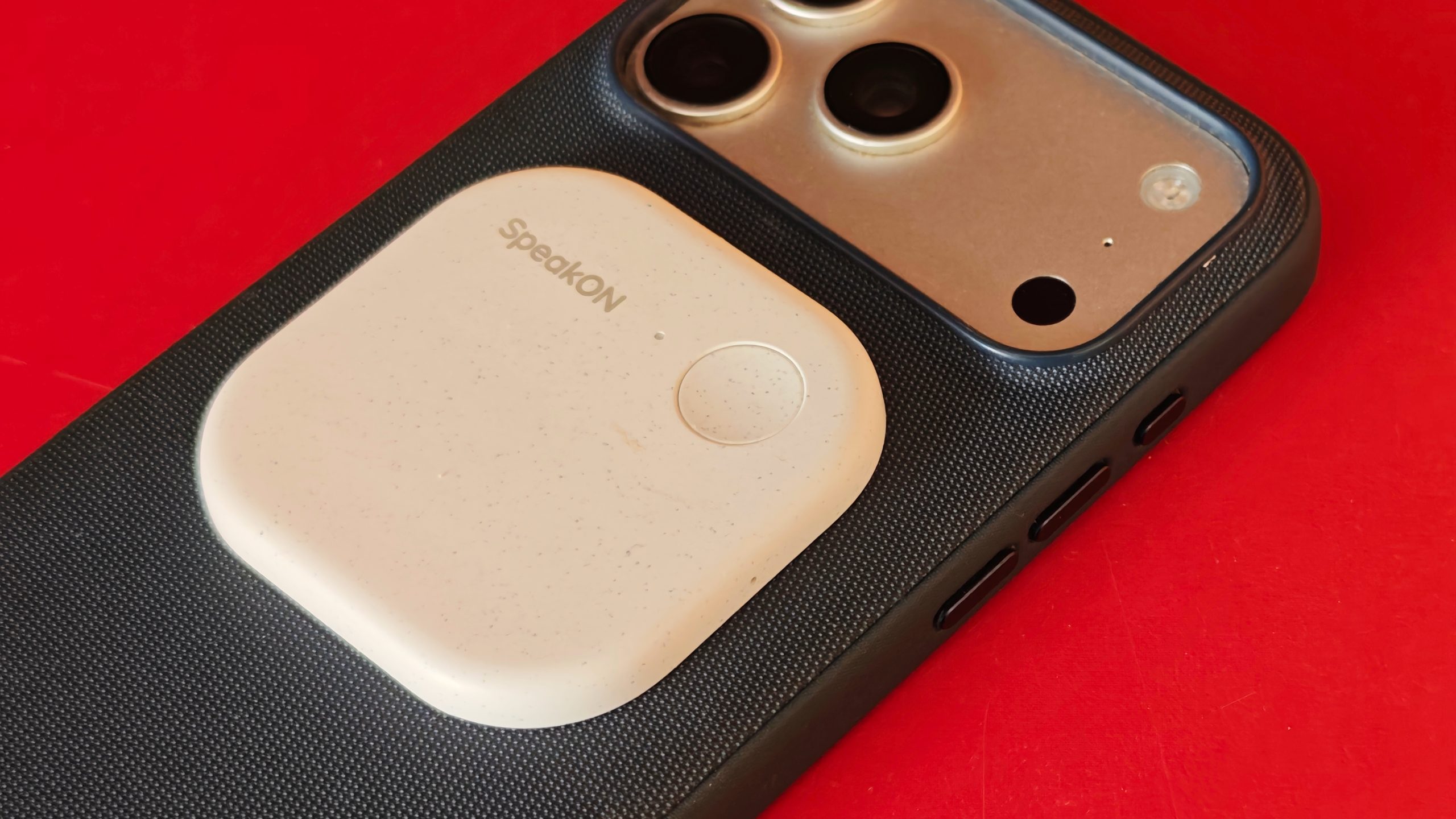
The realm of digital communication has undergone a profound transformation, with voice input emerging as a critical interface for interacting with our devices. From early, rudimentary speech-to-text systems to today’s sophisticated artificial intelligence-powered assistants, the evolution of voice technology reflects a continuous quest for more intuitive, efficient, and hands-free interaction. For many, relying on integrated smartphone microphones or wireless earbuds like AirPods for dictation has become a daily ritual for composing messages and emails across various platforms. However, these general-purpose audio inputs often fall short, struggling with ambient noise, inconsistent pickup, and the inherent limitations of multi-functional hardware. It is against this backdrop that companies like Notta-owned SpeakOn are venturing into the specialized hardware market, proposing dedicated dictation devices designed to overcome these common frustrations.
The Evolving Landscape of Voice Input
The journey of voice recognition technology is a fascinating one, marked by decades of research and development. Early pioneers in the 1950s laid the groundwork, but it wasn’t until the 1990s, with the advent of software like Dragon NaturallySpeaking, that consumer-grade speech recognition became a tangible reality. These desktop applications, while revolutionary for their time, often demanded extensive training and robust computing power. The subsequent explosion of mobile computing in the 21st century, coupled with advancements in cloud processing and machine learning, brought voice assistants like Apple’s Siri, Google Assistant, and Amazon’s Alexa into the mainstream. These integrations made voice dictation ubiquitous, embedding the capability directly into operating systems and everyday applications.
Despite this progress, a gap persists between the convenience offered by integrated voice features and the precision often required for professional or high-volume text input. Users frequently encounter accuracy issues, particularly in less-than-ideal acoustic environments, and the inherent design of smartphones prioritizes portability and general utility over specialized audio capture for dictation. This ongoing challenge has spurred innovation, leading to the development of enhanced software solutions and, more recently, a renewed interest in dedicated hardware solutions that promise superior performance by focusing solely on the task of voice capture and transcription. The market, therefore, is ripe for devices that can deliver on the promise of highly accurate, context-aware dictation, freeing users from the limitations of their existing mobile ecosystems.
Introducing SpeakOn: A Dedicated Approach
SpeakOn emerges as a notable contender in this evolving space, introducing a purpose-built device specifically engineered to enhance the dictation experience. The product, a small, pebble-shaped gadget, signifies a strategic pivot towards specialized hardware in a market largely dominated by software-centric solutions. Its design philosophy emphasizes portability and seamless integration with existing mobile ecosystems, particularly Apple’s iPhone. Weighing a mere 25 grams, its lightweight construction ensures it adds negligible bulk, whether magnetically attached to the back of an iPhone via MagSafe—a design choice reminiscent of other modern accessories like the Plaud AI meeting notetaker—or carried independently in a pocket.
The core premise behind SpeakOn is to offload the critical function of audio capture from the iPhone’s multi-purpose microphone to a dedicated unit. This design choice aims to mitigate common issues such as poor audio pickup, background noise interference, and the need for constant vigilance over microphone activation settings on the host device. By providing its own, singular microphone, SpeakOn seeks to offer a more focused and potentially higher-fidelity input source for speech, thereby improving the accuracy and reliability of transcription. This strategic move highlights a broader trend where specific tasks, once handled adequately by general-purpose devices, are now being addressed by specialized gadgets promising optimized performance.
Design and Core Functionality
SpeakOn’s operational simplicity is central to its user experience. The device pairs with a companion iOS application that functions as a specialized keyboard. This design allows users to activate dictation by simply pressing a physical button on the SpeakOn device, and then releasing it to conclude the recording. This tactile interaction offers a clear, deliberate control mechanism, contrasting with the often more abstract software-based activation methods. The device’s integrated microphone, designed to capture audio within a two-foot radius, processes speech directly.
A significant advantage cited by the manufacturer is the device’s ability to operate independently of the iPhone’s internal microphone. In conventional dictation apps, the smartphone’s mic must remain continuously active for the duration of a dictation session, which can impact battery life and raise privacy considerations for some users. SpeakOn’s self-contained audio capture mechanism circumvents this, potentially offering a more efficient and secure way to dictate. Furthermore, the accompanying software keyboard features intelligent post-processing capabilities. It automatically filters out common filler words and can format transcribed text into lists, aiming to deliver a cleaner, more organized output, thereby reducing the need for manual editing after dictation. The device’s promise of robust functionality across any application where a software keyboard is active underscores its ambition to integrate seamlessly into a user’s workflow.
Performance: Bridging Promise and Reality
Despite its innovative design and compelling concept, the SpeakOn device, in practical application, faces challenges that underscore the complexities of specialized hardware development. A primary concern for early adopters has been the actual performance of its dedicated microphone. While the theory of a purpose-built mic suggests superior audio capture, reports indicate that the device often underperforms in real-world scenarios. Users find that, contrary to expectations, the device still requires close proximity—within approximately two feet—to effectively pick up speech. Even within this range, the microphone’s sensitivity to ambient noise appears to be a significant limitation, leading to transcription inaccuracies in environments that are not perfectly quiet. This discrepancy between the promised advantage of a dedicated mic and its observed output quality highlights a critical area for future hardware refinement.
Beyond audio capture, the device’s integration with the iOS ecosystem also presents usability friction. The current design necessitates manually switching to the SpeakOn keyboard within the iOS interface to initiate dictation. While this is standard for third-party keyboards, it introduces an extra step that detracts from the desired seamlessness of a dedicated device. Users express a desire for more intuitive activation, such as a double-tap gesture on the device itself to automatically summon the SpeakOn keyboard or, ideally, to begin dictation without any keyboard switching at all. These are, however, often system-level limitations imposed by mobile operating systems, presenting a formidable hurdle for third-party developers striving for deeper integration. The lack of compatibility with other computing platforms, notably macOS, further restricts its utility for users who operate across multiple devices, diminishing its potential as a universal productivity tool.
Software Integration and User Experience
The software component of SpeakOn, particularly its AI-driven editing and tone-changing features, also merits closer examination. While the aspiration to provide context-aware text refinement is commendable, the execution has proven to be a double-edged sword. The "attune" feature, designed to adjust the tone and vocabulary based on the application being used, sometimes produces edits that feel forced or unnatural. Examples such as transforming "Does this app work automatically?" into "Does this application operate automatically?" or "Sure, no worries" into "There is no need to be concerned" illustrate how AI intervention, when not finely tuned to user preference, can hinder rather than help. Many users ultimately opt to disable these features to ensure the output remains true to their original spoken intent, indicating a need for greater user control and more sophisticated, less intrusive AI algorithms.
On a more positive note, the device does offer practical features beyond basic transcription. Its integrated translation capability, supporting a dozen languages including English, Japanese, Spanish, French, and Arabic, adds significant value, especially for professionals operating in multilingual environments. This feature underscores the potential for dedicated voice devices to go beyond simple text conversion, offering intelligent language processing on the go.
Battery performance, a crucial aspect for any portable device, also presents a mixed picture. SpeakOn claims a substantial 10 hours of continuous use and an impressive 20-day standby time. However, real-world testing has revealed that the actual standby duration is considerably shorter, often only a few days. This disparity suggests that the device, by default, might not enter an optimal low-power state, leading to quicker battery drain. Implementing an automatic power-off feature after periods of inactivity could significantly enhance the user experience by extending standby time. Fortunately, the device does boast rapid charging capabilities, achieving a full charge from empty within an hour, or providing sufficient power for several minutes of dictation with just a brief plug-in.
The Business Model and Market Position
SpeakOn’s pricing strategy places it squarely within the premium accessory market, with the device itself priced at $129. This cost is augmented by a subscription model that offers 5,000 words of dictation per week with the device purchase, with an option for unlimited words at $12 per month. This hybrid model—hardware purchase combined with a recurring software subscription—is increasingly common in the tech industry, allowing companies to generate continuous revenue while offsetting development costs for both the physical product and its underlying AI services. When compared to purely software-based dictation apps, which might offer a free tier with a lower word count (e.g., Wispr Flow’s 2,000 words per week), SpeakOn’s model aims to justify its higher entry cost with the promise of superior hardware performance and a more generous initial word allowance.
In the broader market, SpeakOn finds itself with an early mover advantage in the nascent category of dedicated dictation hardware. This position allows it to define user expectations and establish a foothold before more competitors emerge. However, this advantage is fleeting. The relative simplicity of sourcing components and packaging them into alternative form factors means that other companies could quickly enter the market, potentially offering more refined hardware, broader platform compatibility, or more competitive pricing. The success of SpeakOn, therefore, hinges not just on its initial innovation, but on its ability to rapidly iterate, address user feedback, and expand its ecosystem support to include platforms beyond iOS.
The Future of Specialized Voice Hardware
The emergence of devices like SpeakOn represents a critical inflection point in the evolution of human-computer interaction. As voice interfaces become more sophisticated, the demand for highly accurate, reliable, and context-aware dictation tools will only grow. While current iterations of dedicated dictation hardware face challenges related to microphone performance, system integration, and software refinement, the underlying concept holds immense promise. For professionals, content creators, individuals with accessibility needs, and anyone seeking to streamline their text input, a truly seamless and accurate voice dictation experience remains an aspirational goal.
The market for specialized voice hardware will likely bifurcate: some devices will cater to niche professional applications, demanding unparalleled accuracy and specific integrations, while others will aim for broader consumer appeal, prioritizing ease of use and affordability. SpeakOn’s journey highlights the delicate balance between hardware innovation and software ecosystem integration. To truly thrive, future versions will need to overcome current limitations by enhancing microphone technology, achieving deeper, more intuitive operating system integration, and refining AI algorithms to offer truly helpful, non-intrusive text refinement. The potential for dedicated voice devices to unlock new levels of productivity and accessibility is undeniable, but realizing this potential will require continuous innovation and a keen understanding of user needs in a rapidly evolving technological landscape.








 Azin Asro
