 Amir Mahmud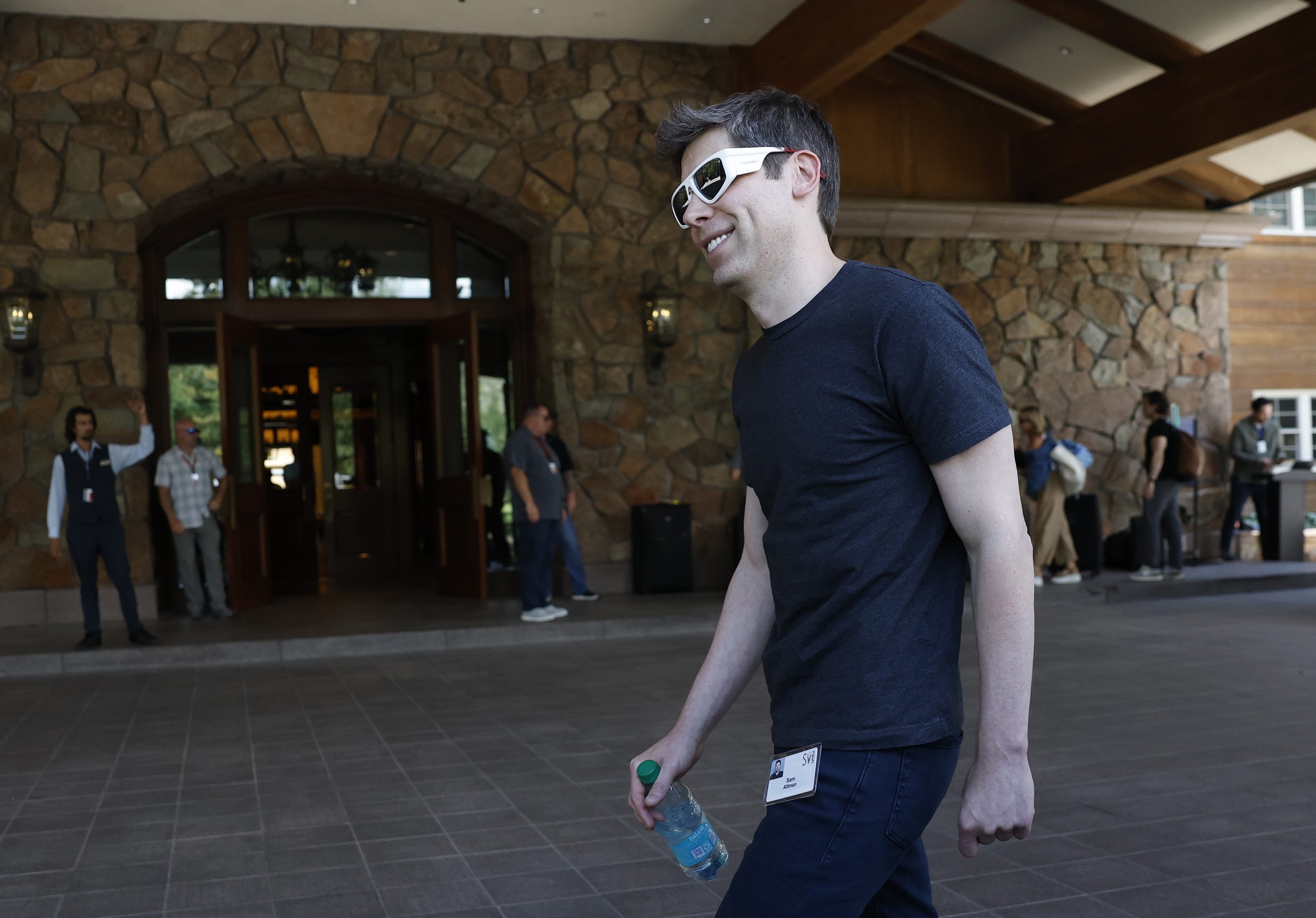
In a rapidly evolving digital landscape, where the lines between human and artificial intelligence blur with increasing frequency, Sam Altman’s World project is embarking on a significant expansion of its human verification technology, aiming to establish a universal "proof of humanity" across a myriad of online platforms. The latest phase of this ambitious undertaking, unveiled at a high-profile event near the bustling San Francisco pier, signals a strategic pivot towards broad integration, with prominent partnerships like dating application Tinder leading the charge into global markets. This move by Tools for Humanity (TFH), the company behind World, underscores a growing industry-wide recognition of the urgent need for robust identity solutions in an era profoundly shaped by advanced AI capabilities.
The Genesis of Digital Identity: Responding to AI’s Rise
The impetus behind World’s expansive vision stems directly from the accelerating advancements in artificial intelligence. As AI models become more sophisticated, capable of generating hyper-realistic text, images, audio, and video, the fundamental question of verifying genuine human interaction online has become paramount. Sam Altman, a key figure in the AI revolution, articulated this concern to a captivated audience at The Midway venue. He emphasized that the world is on the cusp of experiencing "very powerful AI" that, while offering numerous benefits, also heralds a future where AI-generated content could soon outnumber human creations. This paradigm shift inevitably leads to a pervasive uncertainty: "Am I interacting with an AI or a person, or how much of each, and how do I know?" This existential query forms the core problem World seeks to address, positioning its technology as a crucial bulwark against the potential for widespread digital impersonation and misinformation.
Historically, online identity verification has traversed various stages, from simple username-password combinations to multi-factor authentication and social logins. However, none of these methods were explicitly designed to differentiate between human and sophisticated AI agents. The advent of deepfakes, highly convincing synthetic media, and increasingly intelligent chatbots has exposed critical vulnerabilities in existing systems, making the quest for a definitive "proof of human" more critical than ever. World aims to fill this void by providing a cryptographic, privacy-preserving method to confirm an individual’s humanity without revealing their personal identity.
World’s Technological Foundation: The Orb and Zero-Knowledge Proofs
At the heart of World’s verification system lies the Orb, a distinctive spherical device that employs iris biometrics. Users engage with the Orb by having their eyes scanned, a process that converts their unique iris pattern into an anonymous, cryptographic identifier known as a verified World ID. This identifier serves as a digital passport, confirming that the holder is a unique, living human without storing any personally identifiable biometric data. The genius of this approach, and a cornerstone of its privacy claims, lies in its utilization of zero-knowledge proof (ZKP) based authentication.
Zero-knowledge proofs are a cryptographic technique that allows one party (the prover) to prove to another party (the verifier) that a statement is true, without revealing any information beyond the validity of the statement itself. In World’s context, this means a user can prove they possess a valid World ID (and thus are a verified human) to a digital service without disclosing their actual identity or the raw biometric data used to create their World ID. This sophisticated cryptographic alchemy is designed to strike a delicate balance between robust verification and individual privacy, a critical consideration in an age of heightened data security concerns. While the World app can be accessed without an Orb-verified ID, the Orb remains the gold standard for the highest level of "proof of human" within the ecosystem.
Evolution and Expansion: From Crypto to Comprehensive Identity
World, initially known as Worldcoin, first emerged with a broader vision that intertwined universal basic income (UBI) with a global identity system, leveraging cryptocurrency as a distribution mechanism. The idea was to create a globally accessible financial network alongside a verifiable digital identity for everyone. Over time, the project, under the umbrella of Tools for Humanity, has refined its focus, increasingly emphasizing the identity verification aspect as its primary mission, particularly in response to the emergent challenges posed by AI. This strategic evolution underscores a pragmatic adaptation to market needs and technological shifts, moving from a somewhat niche cryptocurrency application to a more universal utility for digital life.
The project’s early days were not without controversy. The concept of scanning irises for identity verification, especially in exchange for cryptocurrency, raised significant privacy concerns among regulators and privacy advocates globally. Critics questioned the long-term implications of collecting such sensitive biometric data, even if anonymized, and the potential for surveillance or misuse. These debates have shaped World’s communication strategy and technological development, leading to a strong emphasis on the privacy-preserving features of ZKP and the local processing of biometric data where possible.
Integrating into Everyday Digital Life: Tinder and Beyond
The recent announcements mark a significant leap in World’s ambition to permeate mainstream digital interactions. The integration with Tinder, a global dating behemoth, represents a pivotal moment. Following a successful pilot program in Japan, World ID verification is now rolling out to Tinder users in global markets, including the U.S. This integration allows users to display a World ID emblem on their profiles, signaling to potential matches that they have been authenticated as a real person.
The social and cultural impact of such an integration on dating apps could be profound. Catfishing, romance scams, and the proliferation of bot accounts are persistent problems that erode trust and create frustrating experiences for users. By offering a verifiable "proof of human," World ID could significantly enhance safety and foster more authentic connections, potentially making online dating a more secure and trustworthy environment. However, it also introduces new dynamics, such as potential biases against non-verified users or questions about the perceived value of such a badge.
Beyond dating, World is actively courting the entertainment industry with its new "Concert Kit." This feature allows musical artists to reserve a portion of concert tickets exclusively for World ID-verified humans, directly combating ticket scalping bots that often snatch up inventory, driving up prices and frustrating genuine fans. Partnerships with major acts like 30 Seconds to Mars and Bruno Mars, alongside compatibility with ticketing giants like Ticketmaster and Eventbrite, suggest a serious intent to disrupt the exploitative secondary ticketing market. This initiative could democratize access to live events, ensuring that tickets primarily go to fans rather than automated profiteers.
The expansion also targets the business sector, addressing vulnerabilities in corporate communications and transactions. A new integration with Zoom aims to mitigate the threat of deepfakes in virtual meetings, ensuring participants are indeed human and not AI imposters. Similarly, a partnership with Docusign seeks to guarantee that digital signatures originate from authenticated individuals, bolstering the integrity of online contracts and legal documents. These enterprise-level applications highlight World’s versatility and its potential to enhance trust across diverse digital ecosystems.
Navigating the Agentic Web: Human-AI Collaboration
Looking ahead to the "agentic web," where AI agents will increasingly act on behalf of humans, World is developing features like "agent delegation." This functionality allows individuals to securely delegate their World ID to an AI agent, enabling it to perform online activities on their behalf while retaining a verifiable link back to a human principal. A collaboration with authentication firm Okta is already piloting a system that verifies an agent’s authorized action on behalf of a human. This intricate framework ensures that when an agent operates online, websites can confirm that a verified person stands behind its actions, crucial for maintaining accountability and trust in future human-AI interactions. This represents a forward-thinking approach to managing digital identity in an increasingly autonomous online world.
Overcoming Scaling Hurdles: Accessibility and Tiered Verification
Historically, one of World’s most significant hurdles has been the scalability of its Orb-based verification process. Requiring users to physically visit a designated location to have their irises scanned by an Orb proved to be an inconvenient, and for some, an unusual experience. This friction significantly hampered mass adoption, despite the compelling vision.
Recognizing these challenges, Tools for Humanity has implemented a multi-pronged strategy to enhance accessibility and incentivize verification. Earlier efforts included offering Worldcoin, a crypto asset, to initial verified users, creating a financial incentive. The company also strategically placed Orbs in retail locations, allowing users to verify themselves while performing everyday tasks like shopping or getting coffee. More recently, World has dramatically increased Orb saturation in major metropolitan areas such as New York, Los Angeles, and San Francisco, and introduced a service offering remote Orb verification directly to users’ locations.
Crucially, World has also introduced a tiered verification system to accommodate varying levels of security needs and user convenience. The Orb verification remains the "gold standard" for its robust, privacy-preserving proof of humanity. Below this, a mid-level tier leverages anonymized scans of official government IDs via their NFC chips, offering a balance of security and reduced friction. A newly introduced "low-level" or "low-friction" tier, dubbed Selfie Check, allows users to verify their humanity simply by taking a selfie. While this method, as noted by TFH executives, maximizes local processing on the user’s device to maintain privacy, it inherently offers lower security and is more susceptible to spoofing by fraudsters, a known challenge with selfie-based verification. Developers integrating World’s services can now select the appropriate verification tier based on the specific security requirements of their platform. This pragmatic approach acknowledges the diverse needs of the digital landscape, balancing the ideal of unassailable proof of humanity with the realities of widespread usability and adoption.
The Broader Implications: A Future of Verified Digital Existence?
World’s ambitious expansion raises fundamental questions about the future of digital identity and its implications for society. If successful, it could usher in an era where verifiable human identity becomes a default expectation for many online interactions, fostering greater trust and accountability. However, the path forward is complex, fraught with ethical considerations, regulatory scrutiny, and the ongoing challenge of user adoption. Debates surrounding data privacy, the potential for a "digital divide" where access to verification tools might exclude certain populations, and the philosophical implications of a centralized (even if privacy-preserving) global identity system will undoubtedly continue.
As AI technology continues its inexorable march, the need for clear distinctions between human and machine will only intensify. World, through its evolving technology and strategic partnerships, positions itself at the forefront of this crucial battle for digital authenticity, striving to build a more trustworthy and human-centric online world amidst the burgeoning capabilities of artificial intelligence. The success of this endeavor will depend not only on the robustness of its technology but also on its ability to navigate the complex interplay of privacy, accessibility, and public trust.







 Azin Asro
