 Amir Mahmud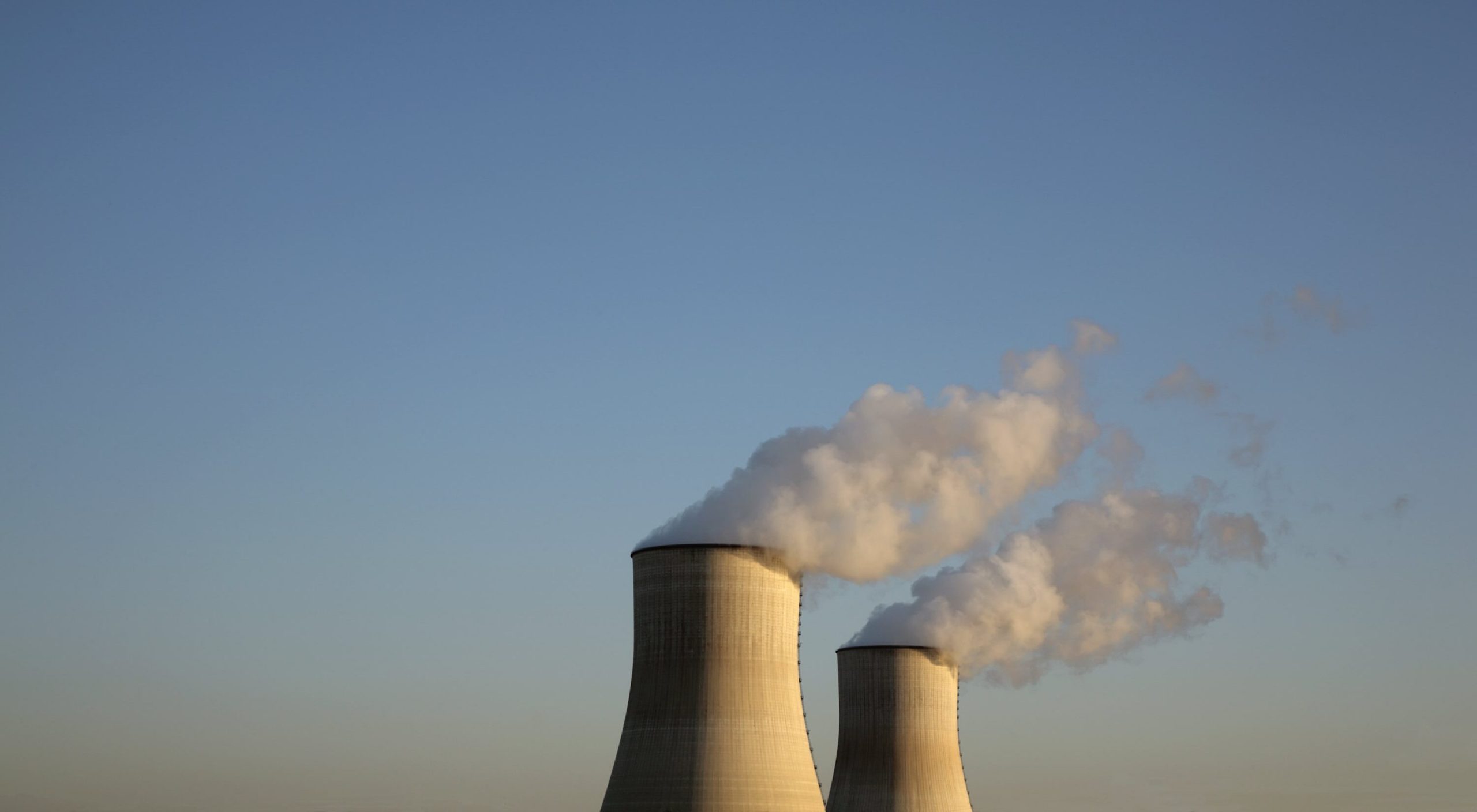
X-energy, a leading developer of advanced small modular nuclear reactors, has formally initiated its investor roadshow, signaling its intent to go public with an initial public offering (IPO) targeting a raise of up to $800 million. Documents filed with the U.S. Securities and Exchange Commission reveal a proposed share price range of $16 to $19, a valuation that could see the nuclear startup net an impressive $814.3 million if shares list at the higher end of the spectrum. This move marks a significant milestone for the company and underscores a burgeoning global interest in nuclear fission as a solution to escalating electricity needs driven by the proliferation of AI data centers and broader societal electrification efforts.
A New Dawn for Nuclear Energy: Contextualizing the Revival
The global energy landscape is undergoing a profound transformation, marked by an urgent need for reliable, carbon-free power sources. For decades, nuclear energy’s promise was overshadowed by public apprehension, high capital costs, and the specter of catastrophic accidents like Three Mile Island (1979), Chernobyl (1986), and Fukushima Daiichi (2011). These events, coupled with stringent regulatory frameworks and the rise of the environmental movement, led to a significant decline in new nuclear plant construction, particularly in Western nations. The industry stagnated, often perceived as an expensive, slow-to-deploy technology of the past.
However, the tide has begun to turn. The undeniable realities of climate change, the imperative for energy security in an increasingly volatile geopolitical climate, and the massive, unyielding power requirements of the digital age have reignited interest in nuclear power. Unlike intermittent renewables such as solar and wind, nuclear fission offers consistent, baseload electricity generation with virtually zero greenhouse gas emissions during operation. The sheer energy consumption of modern data centers, for instance, which are essential for AI computations and cloud services, demands a stable, high-capacity power supply that traditional grids are struggling to provide efficiently and cleanly. This confluence of factors has paved the way for a "nuclear renaissance," spearheaded by innovative companies like X-energy.
X-energy’s Path to Public Offering: A Journey of Resilience
X-energy’s decision to pursue a traditional IPO reflects a strategic pivot and a testament to its resilience. The company has attracted substantial private investment, with PitchBook data indicating approximately $1.8 billion poured into its development to date. A significant portion of this capital comes from tech titan Amazon, which led a $500 million Series C-1 funding round. Beyond financial backing, Amazon has also committed to purchasing up to 5 gigawatts of nuclear power from X-energy by 2039, a substantial vote of confidence that validates the startup’s technology and commercial potential. This strategic partnership highlights a growing trend of major corporations investing directly in advanced energy solutions to meet their ambitious sustainability targets and secure future energy supplies.
The current IPO attempt follows a previous endeavor in 2023, where X-energy sought to go public via a reverse merger with a special purpose acquisition company (SPAC). That deal, valued at $2 billion, was mutually terminated as the SPAC market, once a popular shortcut to public listing, experienced a significant downturn and loss of investor appetite. The shift to a conventional IPO demonstrates X-energy’s adaptability and its ability to attract capital through more traditional, rigorous channels, signaling greater maturity and investor confidence in its long-term viability. For its existing investors, a successful IPO would undoubtedly provide much-anticipated liquidity and validation for their substantial commitments.
Inside X-energy’s Innovation: The Xe-100 and TRISO Fuel
At the heart of X-energy’s offering is its advanced reactor design, the Xe-100, a high-temperature, gas-cooled reactor (HTGR). This technology represents a significant departure from the light-water reactors (LWRs) that form the vast majority of the world’s operational nuclear fleet. The Xe-100 utilizes a unique fuel system known as TRISO (TRistructural ISOtropic) fuel. Unlike traditional uranium pellets, TRISO fuel encapsulates uranium particles within multiple layers of ceramic and carbon materials, forming small, robust spheres. These spheres are then packed into graphite pebbles, which constitute the reactor core.
The cooling mechanism for the Xe-100 is also distinct: instead of water, it employs inert helium gas. This gas circulates through the core, absorbing heat from the fission process. The superheated helium then transfers its thermal energy to a steam turbine loop, which drives generators to produce electricity. The inherent safety features of TRISO fuel are a cornerstone of X-energy’s appeal. Its robust, multi-layered design is engineered to contain fission products even under extreme accident scenarios, preventing their release into the environment. Furthermore, the high thermal inertia of the graphite core and the use of helium as a coolant contribute to passive safety characteristics, meaning the reactor can safely shut down and cool itself without active intervention, even in the event of a power outage. While TRISO fuel is not yet widely used commercially, its potential for enhanced safety and operational flexibility is a key differentiator for advanced reactor developers.
Navigating the Complexities: Patent Disputes and Regulatory Hurdles
The path to commercializing advanced nuclear technology is fraught with challenges, extending beyond engineering and financial hurdles. X-energy’s SEC filing reveals it is embroiled in a patent dispute concerning its fuel fabrication technology. The company alleges that Ultra Safe Nuclear Corporation (USNC), which declared bankruptcy in 2024 and saw its assets acquired to form Standard Nuclear, infringed upon its proprietary fuel fabrication patents. This ongoing legal battle, which X-energy claims was not resolved to its satisfaction during USNC’s bankruptcy proceedings, highlights the fierce competition and intellectual property stakes within the nascent advanced nuclear sector. Such disputes can introduce uncertainty and potentially impact a company’s financial outlook and operational focus.
More broadly, the development of new nuclear reactors, particularly outside of China, has historically been plagued by significant delays and massive cost overruns. The construction of large-scale conventional nuclear plants often stretches over decades and billions of dollars, deterring investors and slowing deployment. This is precisely the challenge that the new breed of small modular reactor (SMR) startups aims to overcome. By designing smaller, standardized, and factory-producible reactors, SMR developers hope to streamline manufacturing, reduce construction timelines, and mitigate the financial risks associated with bespoke, gigawatt-scale projects. However, while the promise of SMRs is compelling, none of these startups have yet brought a commercial power plant online. The journey from design and licensing to actual power generation is lengthy and capital-intensive.
The SMR Ecosystem: A Race to Criticality and Commercialization
The SMR market is a vibrant, competitive space with several companies vying for leadership. While X-energy focuses on its HTGR design, other players, such as NuScale Power, are developing SMRs based on more conventional light-water reactor technology. The regulatory pathway for these novel designs is also complex and demanding, requiring extensive testing and validation by bodies like the U.S. Nuclear Regulatory Commission (NRC).
A significant milestone for any nuclear reactor is achieving criticality—the point at which a sustained fission chain reaction is initiated. The Trump administration had set an ambitious, albeit arbitrary, deadline of July 4 for some SMR projects to reach this stage. While many developers may miss this specific date, the pursuit of criticality remains a crucial engineering and regulatory target. However, achieving criticality is merely the first step on a long and arduous road to commercial operation and profitability. Industry experts estimate that it can take around a decade for mass manufacturing processes to mature and for the economic benefits of scaled production to materialize and start paying dividends.
The concept of "Nth-of-a-kind" reactors is central to the SMR business model. The "first-of-a-kind" (FOAK) reactor, being a prototype, typically incurs significant design, licensing, and construction costs. Subsequent units, the "Nth-of-a-kind," are expected to benefit from lessons learned, optimized manufacturing processes, and economies of scale. X-energy anticipates that by the time its reactor production techniques are mature, it will be able to reduce costs by 30% compared to the initial unit. This cost reduction is critical for the long-term viability and competitiveness of SMRs. Investors will be closely scrutinizing the actual cost of X-energy’s first operational reactor, as its financial performance could significantly impact the company’s prospects and the broader perception of SMR economics. Moreover, the number of reactors these companies plan to build might, while higher than previous large-scale projects, still not be sufficient to fully unlock the true benefits of mass manufacturing and achieve optimal cost efficiencies.
Market Impact and Future Outlook
A successful IPO for X-energy would send a strong signal to the market, indicating growing investor confidence in advanced nuclear technology as a viable and essential component of the future energy mix. It would also provide critical capital for X-energy to advance its Xe-100 project, including further research, development, licensing, and eventual construction of its first commercial reactors.
The societal and environmental impacts of advanced nuclear power are potentially immense. By providing a reliable, emissions-free source of baseload power, SMRs like the Xe-100 could play a pivotal role in decarbonizing electricity grids, supporting the integration of intermittent renewables, and providing critical power to energy-intensive industries and data centers. From an economic perspective, a thriving SMR industry could foster job creation, stimulate manufacturing innovation, and enhance national energy independence.
However, the journey ahead for X-energy and the entire SMR sector remains challenging. Regulatory hurdles, public acceptance, the long lead times for construction, and the substantial capital requirements are formidable obstacles. The success of X-energy’s IPO and its subsequent commercialization efforts will be a critical test case for the broader advanced nuclear industry. It will determine whether the promise of smaller, safer, and more affordable nuclear power can finally be realized, ushering in a new era for an energy source that has long been both revered and reviled. The stakes are high, not just for X-energy and its investors, but for the global effort to combat climate change and meet the world’s escalating energy demands.









 Azin Asro
