 Amir Mahmud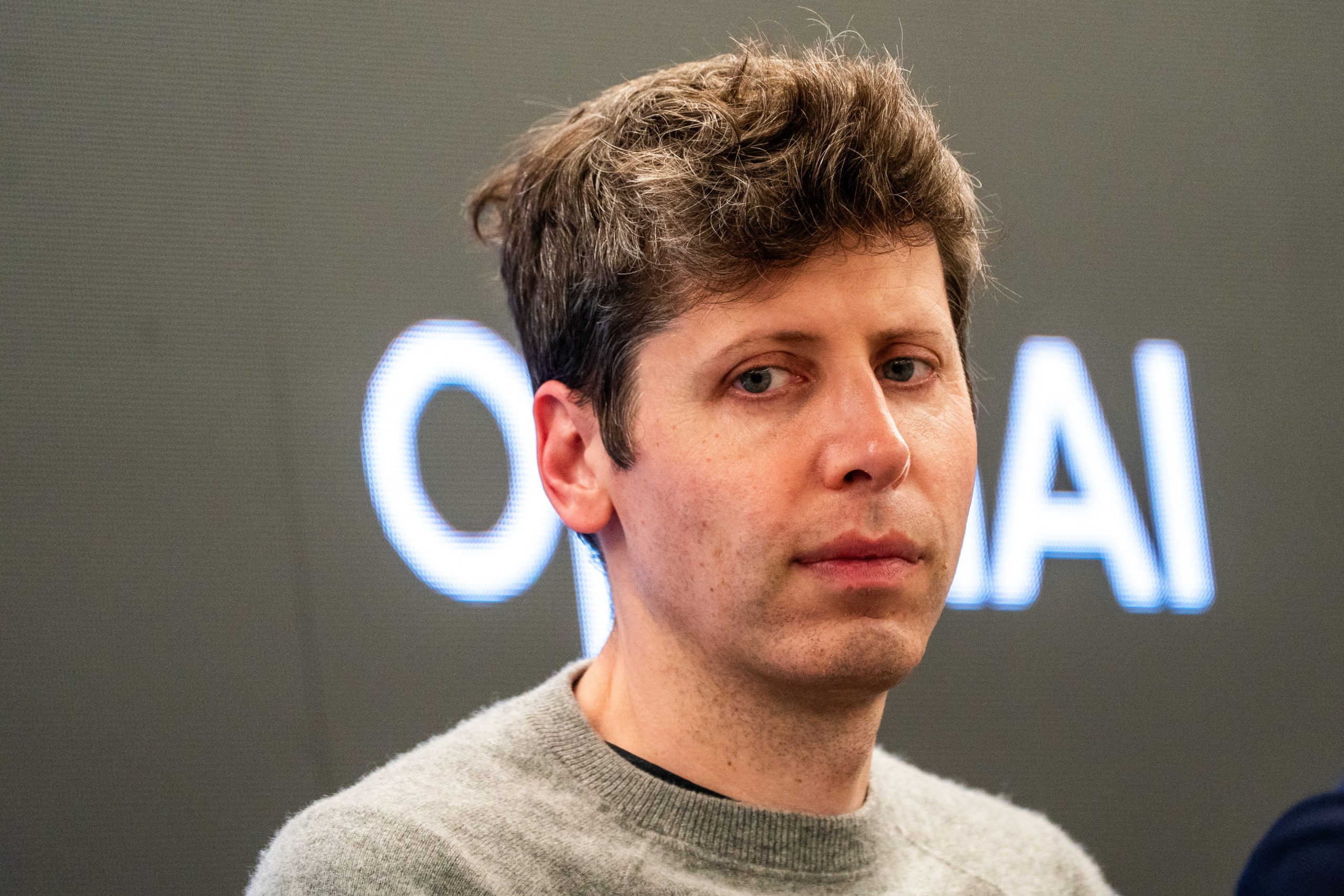
OpenAI CEO Sam Altman recently found himself at the center of a storm, addressing both a deeply unsettling physical attack on his San Francisco residence and a critical journalistic profile that questioned his leadership and integrity. The convergence of these events has cast a harsh spotlight on the intense pressures and profound anxieties surrounding the rapid advancement of artificial intelligence, particularly as embodied by one of its most prominent figures.
The dramatic developments unfolded over a tumultuous period. In the early hours of a recent Friday, an assailant allegedly hurled a Molotov cocktail at Altman’s home, a brazen act that, while causing no injuries, sent shockwaves through the tech community. Authorities quickly responded, and a suspect was later apprehended at OpenAI’s headquarters, reportedly making threats to set fire to the building itself. While law enforcement has maintained discretion regarding the suspect’s identity and motive, Altman publicly connected the incident to a recently published, "incendiary" article. He reflected on an earlier suggestion that such a high-profile, critical piece, released amidst widespread apprehension about AI’s future, could escalate personal danger—a warning he admits he initially "brushed aside" but now regards with stark regret.
The Rise of a Tech Titan and OpenAI’s Genesis
To understand the current maelstrom, it is crucial to trace Sam Altman’s trajectory and the origins of OpenAI. Altman, a Stanford dropout, first gained prominence as a co-founder of Loopt, a location-based social networking service, which was acquired in 2012. His true ascent began when he became president of Y Combinator, the influential startup accelerator, transforming it into a powerhouse that funded thousands of companies and shaped the modern tech landscape. Known for his keen intellect, strategic vision, and extensive network, Altman cultivated an image as a shrewd investor and a visionary leader.
In 2015, Altman co-founded OpenAI with a cohort of other prominent figures, including Elon Musk. The organization’s founding mission was ambitious and altruistic: to ensure that artificial general intelligence (AGI)—hypothetical AI that matches or exceeds human cognitive abilities—benefits all of humanity, rather than being concentrated in the hands of a few. Initially structured as a non-profit, OpenAI aimed to conduct cutting-edge research in a safe and transparent manner, prioritizing ethical development and long-term societal well-being over commercial gain. This mission was a direct response to growing concerns within the scientific community about the potential existential risks posed by unchecked AI development.
However, the path of OpenAI, much like the broader AI industry, has been anything but straightforward. The organization’s evolution from a pure non-profit to a "capped-profit" entity, established in 2019 to attract the vast capital required for large-scale AI training and research, marked a significant shift. This structural change, while enabling unprecedented advancements like the development of GPT series models, also introduced complex tensions between its original mission and the commercial realities of developing world-changing technology.
A Physical Threat: An Alarming Escalation
The Molotov cocktail attack on Altman’s home represents a stark and alarming escalation of the anxieties surrounding AI. Such an act of violence, targeting a prominent figure in a highly scrutinized industry, goes beyond mere protest or criticism. It underscores the profound emotional and ideological divisions that AI’s rapid progress has ignited within society. For many, AI represents a beacon of human ingenuity and potential, promising solutions to complex global challenges. For others, it embodies a looming threat—to jobs, privacy, social structures, and even humanity’s long-term survival.
The suspect’s subsequent apprehension at OpenAI’s headquarters, allegedly threatening further destruction, further amplifies the gravity of the situation. It suggests a targeted act, potentially driven by intense anti-technology sentiment or specific grievances related to OpenAI’s work or Altman’s persona. In a cultural climate where online rhetoric can quickly translate into real-world actions, this incident serves as a chilling reminder of the responsibility that influential leaders and powerful technologies bear in shaping public perception and managing societal fears.
The New Yorker Profile: A Deep Dive into Trust and Power
The "incendiary" article Altman referenced was a lengthy, investigative piece published in The New Yorker, co-authored by Pulitzer Prize-winning journalist Ronan Farrow, known for his groundbreaking investigative work, and Andrew Marantz, a seasoned technology and politics writer. Their collaboration brought significant journalistic weight to the profile, which was based on interviews with over 100 individuals with firsthand knowledge of Altman’s business dealings and leadership style.
The article painted a complex and often unflattering portrait of Altman, with many sources describing him as possessing "a relentless will to power that, even among industrialists who put their names on spaceships, sets him apart." This characterization suggests an ambition that transcends typical corporate drive, positioning Altman as a singular force within the competitive and high-stakes arena of advanced technology. More controversially, the article relayed concerns about his trustworthiness, with one anonymous board member quoted as describing a paradoxical combination of "a strong desire to please people, to be liked in any given interaction" alongside "a sociopathic lack of concern for the consequences that may come from deceiving someone."
These allegations are not entirely new. Other journalists who have profiled Altman in the past have touched upon similar themes, depicting a leader whose charm and strategic acumen are sometimes accompanied by a perceived detachment or a willingness to navigate ethical gray areas in pursuit of his objectives. Such narratives fuel a broader societal skepticism towards powerful tech executives, often viewed as wielding immense influence with limited accountability, and raise critical questions about the kind of leadership necessary to guide humanity through the transformative era of AI.
Altman’s Response: Acknowledging Flaws and Past Turmoil
In his public response, Altman adopted a tone of introspection and humility. He acknowledged that his career trajectory, particularly at OpenAI, has been marked by both significant achievements and considerable missteps. "A lot of things I’m proud of and a bunch of mistakes," he wrote, reflecting a self-awareness perhaps spurred by the recent events.
Among the "mistakes," Altman specifically highlighted a personal tendency towards being "conflict-averse," a trait he admitted "caused great pain for me and OpenAI." This admission gains significant context when viewed through the lens of the dramatic events of November 2023, when Altman was abruptly ousted by OpenAI’s board of directors, only to be reinstated days later following immense pressure from employees, investors, and key partners like Microsoft. He alluded to this period directly, stating, "I am not proud of handling myself badly in a conflict with our previous board that led to a huge mess for the company."
That extraordinary episode, often described as a corporate coup and counter-coup, exposed deep fissures within OpenAI’s governance structure and leadership. It pitted the original safety-focused non-profit board against the commercial imperatives of the capped-profit subsidiary, ultimately resulting in a reshuffling of the board and a reaffirmation of Altman’s leadership. The incident underscored the inherent tensions in OpenAI’s dual structure and the immense power dynamics at play, demonstrating how quickly internal disagreements could destabilize an organization at the forefront of a technology deemed critical to the future. Altman’s current acknowledgment serves as a rare public concession regarding his role in that tumultuous period, signaling a recognition of the personal and organizational costs of those conflicts.
He concluded this segment of his response with a poignant statement: "I have made many other mistakes throughout the insane trajectory of OpenAI; I am a flawed person in the center of an exceptionally complex situation, trying to get a little better each year, always working for the mission. I am sorry to people I’ve hurt and wish I had learned more faster." This apology, while general, attempts to humanize a figure often portrayed as larger than life and provides a glimpse into the personal toll of leading such a consequential enterprise.
The "Ring of Power" and the Future of AI Governance
Perhaps the most philosophically significant part of Altman’s response was his use of J.R.R. Tolkien’s "Ring of Power" analogy from The Lord of the Rings. He observed what he termed "so much Shakespearean drama between the companies in our field," attributing it to a "‘ring of power’ dynamic" that "makes people do crazy things." This metaphor speaks to the intoxicating allure of controlling a technology as potent as AGI, a power that could reshape human civilization.
Altman clarified that he doesn’t view AGI itself as the "ring," but rather "the totalizing philosophy of ‘being the one to control AGI.’" This distinction is crucial. It shifts the focus from the technology itself to the human desire for ultimate dominion over it. The history of technological innovation is replete with examples of powerful tools being used for both immense good and profound harm, often depending on who wields them and for what purpose. From nuclear energy to the internet, the question of control and governance has always been paramount.
In the context of AI, the stakes are arguably higher than ever. The race for AGI has intensified globally, with nations and corporations pouring billions into research and development. This pursuit has ignited a complex debate about AI governance: Should development be open-source and collaborative, or tightly controlled and proprietary? What role should governments, international bodies, and civil society play in regulating this technology? How can humanity ensure that the benefits of AGI are distributed equitably and that its risks are mitigated effectively?
Altman’s proposed solution—"to orient towards sharing the technology with people broadly, and for no one to have the ring"—aligns with OpenAI’s original founding principle, albeit reinterpreted through its current commercial structure. It suggests a future where the power of AGI is decentralized and accessible, rather than concentrated in a single entity or nation. This vision, however, faces significant practical challenges, including intellectual property concerns, national security interests, and the sheer difficulty of establishing truly global and equitable governance frameworks for such a powerful technology. The cultural impact of this "ring of power" dynamic is evident in the intense competition for talent, the rapid pace of innovation, and the high-stakes investment decisions that characterize the current AI landscape.
A Call for De-escalation in a High-Stakes Debate
Altman concluded his reflective post by extending an olive branch, welcoming "good-faith criticism and debate" while reaffirming his fundamental belief that "technological progress can make the future unbelievably good, for your family and mine." This statement attempts to pivot the discourse from personal attacks and divisive rhetoric to a more constructive engagement with the profound implications of AI.
His final plea—"While we have that debate, we should de-escalate the rhetoric and tactics and try to have fewer explosions in fewer homes, figuratively and literally"—underscores the critical juncture at which society finds itself. The development of advanced AI is arguably the most significant technological undertaking of our time, carrying with it both unprecedented opportunities and existential risks. The public discourse surrounding it is often polarized, fueled by sensationalism and fear on one side, and unbridled optimism on the other.
The physical attack on Altman’s home serves as a stark warning against the dangers of unchecked hostility and the potential for real-world consequences when anxieties are amplified. As the world grapples with how to ethically and safely integrate increasingly powerful AI systems into society, the imperative for reasoned discussion, mutual respect, and collaborative problem-solving has never been greater. The leadership of key figures like Sam Altman, and their willingness to engage with both personal and societal challenges, will undoubtedly play a crucial role in shaping the trajectory of this transformative technology.








 Azin Asro
