 Amir Mahmud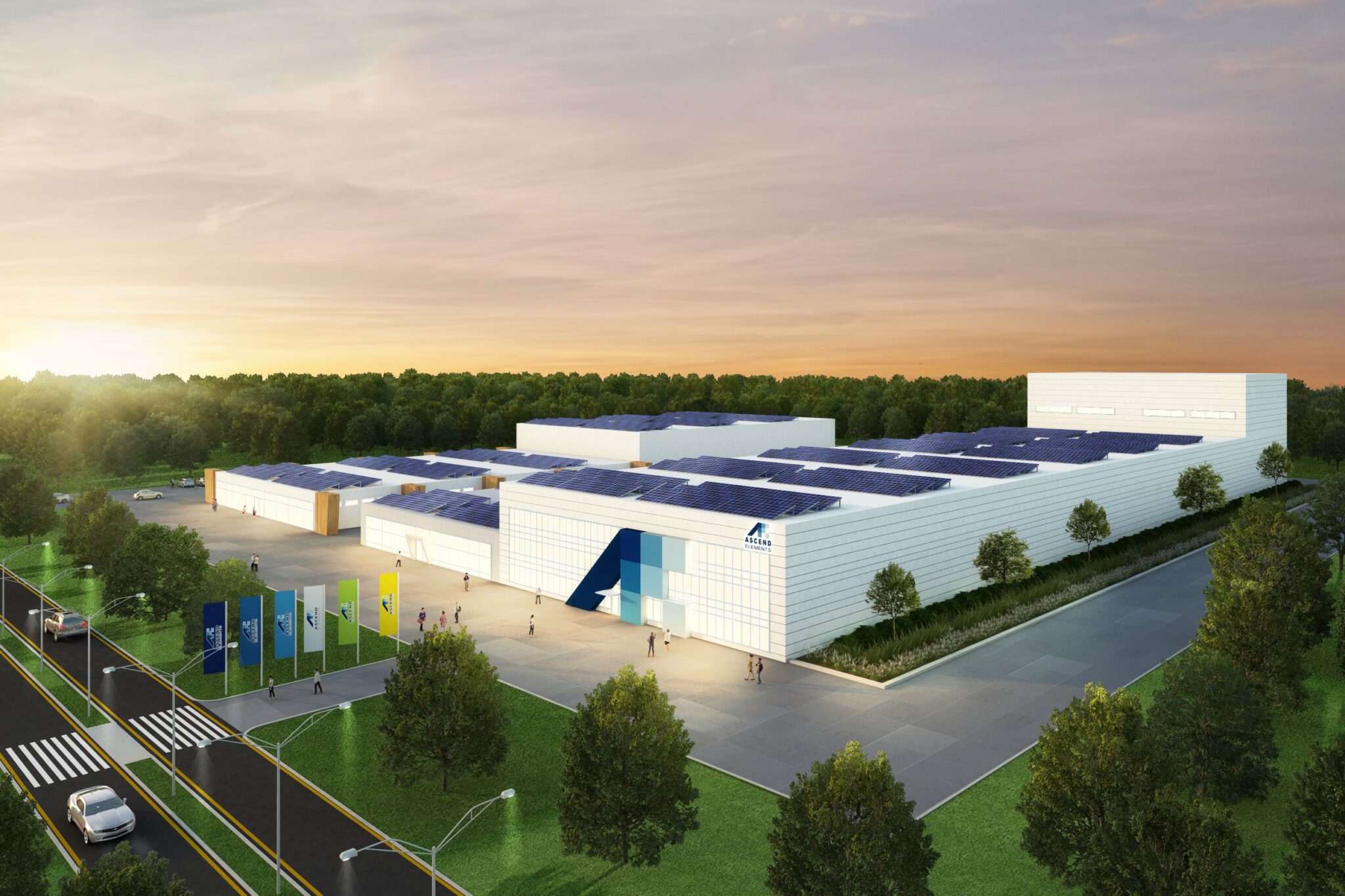
Ascend Elements, a company positioned at the forefront of sustainable battery material recovery, has initiated Chapter 11 bankruptcy proceedings in the United States, delivering a significant blow to investors who collectively poured nearly $900 million into the venture. The decision, publicly announced by CEO Linh Austin in a late Thursday night LinkedIn post, cited "insurmountable" financial challenges as the primary driver behind the company’s filing. This development sends ripples through the nascent but critical U.S. battery recycling industry, highlighting the complex interplay of technological innovation, ambitious scaling, market volatility, and governmental policy in the evolving green economy.
The Vision of a Circular Battery Economy
The very existence of companies like Ascend Elements is rooted in the burgeoning demand for electric vehicles (EVs) and the broader energy transition. As the world accelerates its shift away from fossil fuels, the need for advanced battery technologies, primarily lithium-ion, has skyrocketed. These batteries, while essential for EVs, grid-scale energy storage, and portable electronics, rely on a finite supply of critical minerals such as lithium, cobalt, nickel, and manganese. Mining these materials is often environmentally intensive, socially contentious, and geopolitically sensitive, with many key resources concentrated in a few regions.
This backdrop makes battery recycling not just an environmental imperative but also an economic and strategic one. A circular economy for batteries aims to minimize waste, reduce reliance on new mining, and create a more secure, domestic supply chain for critical materials. Ascend Elements was founded on this principle, developing an innovative process to extract these valuable minerals from spent EV batteries, manufacturing scrap, and other end-of-life battery products. Their stated goal was to streamline the recycling process, reducing the number of steps required to transform shredded waste into high-purity precursor materials ready for new cathode production, a crucial component of battery manufacturing. This promised a more efficient and environmentally friendly method compared to traditional pyrometallurgical or hydrometallurgical techniques.
A Trajectory Halted: Ascend Elements’ Journey
Ascend Elements, formerly known as Battery Resources, emerged from the research labs of Worcester Polytechnic Institute in 2015. Over the years, it attracted significant attention and capital from a diverse range of investors, including venture capital firms, corporate partners, and strategic investors keen on the promise of a sustainable battery supply chain. The nearly $900 million in funding underscored the high expectations placed on the company to become a cornerstone of America’s battery independence. These investments were seen as critical not just for the company’s growth but for the broader national strategy to onshore manufacturing and reduce reliance on foreign supply chains, particularly from China, which currently dominates much of the battery manufacturing and recycling landscape.
The company’s ambitious growth trajectory included plans for massive infrastructure development. Central to this was the construction of a 1 million-square-foot facility in Hopkinsville, Christian County, Kentucky, dubbed the "Apex 1" plant. This facility was envisioned as a flagship operation, designed to process vast quantities of battery materials and scale Ascend’s innovative recycling technology to an industrial level. The scale of the project reflected the perceived urgency and opportunity in the battery recycling market. However, as local reports indicate, this monumental undertaking was not without its tribulations, having been "beset by lawsuits and delays" even before the bankruptcy filing, hinting at the operational and financial complexities inherent in such large-scale industrial projects.
Navigating a Volatile EV Landscape
Ascend Elements’ financial unraveling coincides with a palpable slowdown in the U.S. electric vehicle market, a critical demand driver for recycled battery materials. While EV sales experienced a significant surge leading up to the expiration of certain federal tax credits in September of the previous year, the momentum has not been sustained. Industry analysts widely attribute this to a phenomenon where prospective buyers "pulled forward" their purchases to take advantage of the expiring incentives, effectively depleting near-term demand.
This softened market has sent jitters through the automotive sector, prompting several major manufacturers to recalibrate their ambitious EV production targets and investment plans in the U.S. For instance, Volkswagen recently announced its decision to halt production of the all-electric ID.4 at its Chattanooga, Tennessee, factory. Instead, the plant will pivot back to manufacturing the gas-powered Atlas SUV, a move that starkly illustrates the shifting priorities and market realities faced by automakers. Other manufacturers have similarly paused or scaled back planned EV model launches or expanded investments in hybrid technologies as a bridge.
The reasons for this market cooling are multifaceted. Beyond the tax credit expiry, factors such as higher interest rates impacting financing costs, persistent consumer concerns about charging infrastructure availability and reliability, "range anxiety," and the relatively higher upfront cost of EVs compared to their internal combustion engine counterparts have all contributed to a more cautious consumer sentiment. While the long-term trajectory for EVs remains upward, the immediate deceleration presents a challenging environment for companies like Ascend Elements, whose business model is intrinsically linked to the volume of EV battery production and end-of-life availability.
Government Support and Shifting Sands
A critical factor in Ascend Elements’ downfall was the unexpected withdrawal of a significant federal grant. The company had been awarded a $316 million grant from the U.S. Department of Energy (DOE) for its Kentucky facility, part of broader federal initiatives aimed at bolstering domestic manufacturing and critical supply chains. At the time of the cancellation, $204 million had already been disbursed, providing a vital injection of capital for the capital-intensive construction of the Apex 1 plant. However, the Trump administration’s subsequent decision to revoke the remaining funds created an immediate and substantial shortfall.
This sudden cessation of anticipated government funding left Ascend Elements scrambling to secure alternative capital to cover the gap. Such abrupt policy reversals underscore the inherent risks for private enterprises relying on government support, particularly in politically charged sectors like green technology and domestic manufacturing. While federal programs like the Inflation Reduction Act (IRA) have generally aimed to incentivize domestic production and reduce reliance on foreign entities, the specific grant cancellation highlights the vulnerability of projects to shifting administrative priorities and political tides. For a company in the capital-intensive phase of building a massive industrial facility, the loss of over $100 million in expected funding could be catastrophic, forcing it to either find quick replacements in a tightening market or face severe liquidity issues.
The Cost of Ambition: Facility Delays and Financial Strain
The ambitious scale of Ascend Elements’ Kentucky facility, while a testament to its vision, also became a significant vulnerability. Building a 1 million-square-foot industrial plant is an undertaking of immense complexity and cost. Beyond the initial capital investment, such projects are frequently susceptible to unforeseen challenges, including construction delays, rising material and labor costs, and regulatory hurdles. The local reports mentioning "lawsuits and delays" further illustrate the operational quagmire that can ensnare large-scale infrastructure projects. These delays not only push back the timeline for revenue generation but also inflate costs, creating a continuous drain on financial resources.
In the challenging and "cutthroat" industry of battery materials, where Chinese manufacturers benefit from substantial state support and economies of scale, driving down costs globally, the stakes are exceptionally high for new entrants. Automakers, the primary customers for recycled battery materials, operate on long lead times and frequently modify their specifications for battery components, adding another layer of complexity and uncertainty for suppliers. This dynamic demands significant financial resilience and agility, qualities that Ascend Elements, despite its innovative technology, found difficult to maintain amidst its various headwinds.
The Broader Industry Picture: Challenges and Pivots
Ascend Elements’ bankruptcy serves as a stark reminder of the significant challenges facing startups in the capital-intensive battery sector. The industry demands not only groundbreaking technology but also robust financial backing, efficient execution, and a keen understanding of market dynamics. While the long-term prospects for battery recycling remain strong due to the sheer volume of batteries entering and exiting the market, the journey to profitability and scale is fraught with obstacles.
Some competitors in the battery recycling space have already begun to diversify their strategies to mitigate these risks. Redwood Materials, another prominent U.S. battery recycling startup, for example, has strategically pivoted to incorporate the reuse of some battery packs. By re-purposing certain end-of-life battery packs into larger, grid-scale energy storage systems capable of powering data centers and other industrial applications, Redwood has tapped into the booming market for stationary energy storage. This allows the company to generate near-term revenue streams while continuing to develop and scale its core battery recycling operations. Such strategic diversification provides a buffer against the volatility of the EV market and the long lead times associated with establishing a fully circular supply chain.
Future Implications for the Green Economy
The bankruptcy of Ascend Elements is more than just the failure of a single company; it has broader implications for the U.S. green economy and its ambitions for energy independence. It raises critical questions about the stability of government funding for emerging technologies, the ability of domestic startups to compete with globally dominant players, and the overall resilience of the EV supply chain.
For investors, this event may inject a degree of caution into future funding rounds for capital-intensive green tech ventures, potentially favoring companies with more diversified revenue streams or proven market traction. For policymakers, it highlights the need for consistent, long-term industrial strategies that can weather political shifts and market fluctuations. The U.S. still faces an uphill battle in building a robust, domestic, and circular battery ecosystem. While the underlying need for battery recycling remains undeniable, the path to achieving it is proving to be complex, costly, and riddled with unforeseen challenges. The hope for a sustainable, domestically sourced battery future now rests on the ability of remaining players to learn from these setbacks, adapt to market realities, and secure stable pathways to scale.










 Azin Asro
